Billy’s Picture Book by Terry Bisson, a collection of jarringly twisted short stories for adult children, has a set of illustrations by Rudy Rucker. The stories follow one precocious Billy through the harrowing and sickening ordeal of being a kid. If your kid has a mind that is easily warped or disturbed or if your kid is just plain crazy, don’t read these stories to them! But if your kid has a casual interest in murder and mayhem, well this might be just the book for the little monster.
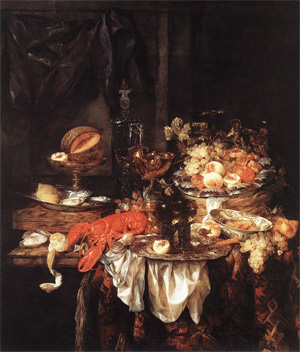
Artist John Baldessari has designed a curiously dopey iPhone app that allows a user to rearrange most of the objects in a 17th century still life painting called Banquet Still Life, by Abraham van Beyeren. Looking at this mess of a Dutch painting is like being beaten about the eyes with a hammer. But Baldessari is promoting his huge current retrospective, Pure Beauty, at the Los Angeles County Museum of Art. The show is extraordinary. If you are in L.A. between now and September 12, you should certainly go see it.
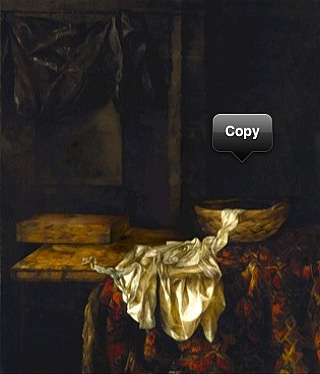
This is the still life I came up with on my iPod Touch. I got rid of all the annoying little objects and just kept the good part of the painting. But my main question is, who painted in the parts of the background that are hidden in the original? Baldessari? That would be mildly amusing. Frankly, it would be more interesting than the app. Original missing parts of 17th century paintings by John Baldessari!
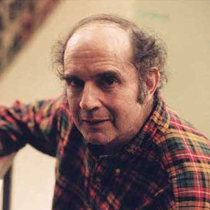
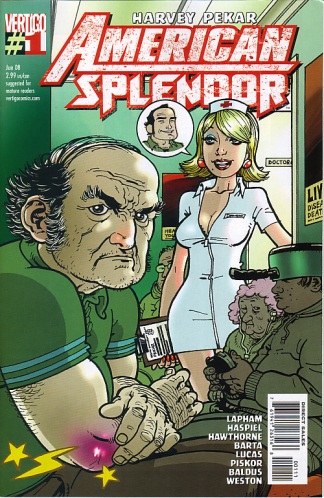
American comics genius Harvey Pekar has passed away at the age of 70. I think Pekar was the greatest writer of comics because he treated the form as literature – for real – not like most of the dimwits writing ‘graphic novels.’ Pekar was serious and nervous and funny and angry, with very little separation between. His observations of everyday life run a full range from fixing a flat tire in a snow storm to surviving cancer to trying to find a file folder at work. He looked at his life and wrote it all down for his comic books.
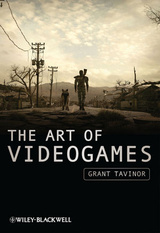
Here’s a relatively uninteresting article by Grant Tavinor called Video Games and the Philosophy of Art. Can video games be art? I don’t know. Can a tree be art? Can a car be art? Can a rear end be art? Certainly, under certain circumstances they can all be art. But forgive my asking why do people spend so much time discussing a question that is equivalent to, ‘Can a hairbrush be art?’
In most cases I think a video game can only be art because of the player. Any video game, no matter how crappy, can be art in the hands of… well… an artist. Artists make art. If you ain’t an artist you can’t get no art. An artist can load up a copy of Grand Theft Auto on their Xbox 360 and walk into that gigantic world of violence and stand perfect still on a virtual street corner doing nothing but stare at a lamp post for days on end and turn that video game into art. It’s magic. Not theory. Magic. You know it when you see it.
Here’s a film with my own use of a video game as art. Well, I think it’s art, but you may think it’s idiotic. Check it out. You’ll know it when you see it. It contains extreme violence and nudity (just like video games!). It’s intended for an adult audience. There’s my disclaimer. Here’s the film.
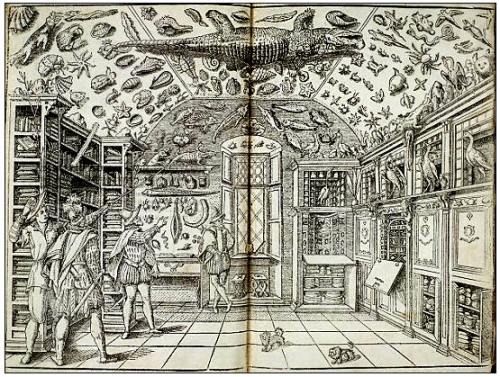
Open Letters Monthly has an article called In Defense of the Memory Theater, by Nathan Schneider in which he argues that books on shelves perform the function of reflecting memories back at us. They are a constant reminder of the various events, stages, and emotional states of our lives. We look at our shelves and can instantly catapult ourselves back in time to events surrounding our reading of various volumes.
Schneider mentions a 16th-century memory theater that used images and symbols of the cosmos to inspire observers and enhance their intellectual powers. Books, for Schneider, do something similar when they are visible on our shelves. I agree up to a point. I am often taken back in time by my own books upon their shelves. But so am I transported by nearly every object in my home. Objects all have this power. Books are not exceptional in this regard.
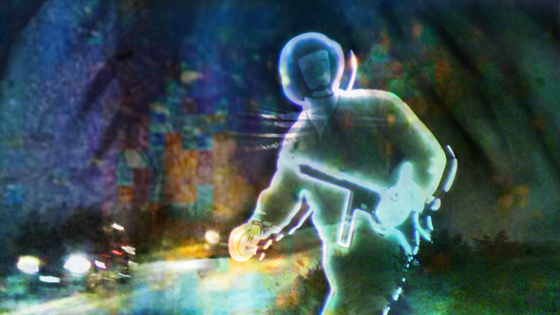
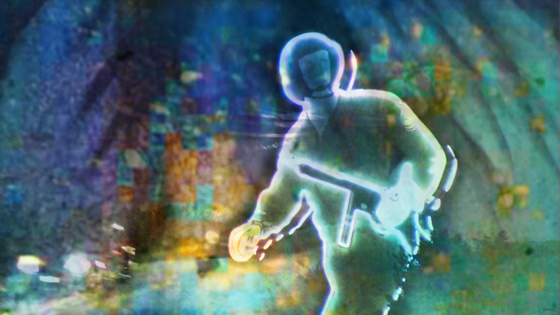
Here’s the little art problem I’ve been working on for the past few weeks. It’s one of those things where I have no theory or rule to fall back on in order to make the decision. Aside from some small touches like removing the Sergeant stripes from the figure’s shoulder, I was mainly trying to decide whether the right side of the image should be dark or light. Ultimately, after scrutinizing the picture from a distance time after time, I decided that it was more dramatic if it depicted a night scene and if the figure was moving away from a more painterly zone toward a more digitized one. I also made the road on the left a little more defined. But canvas isn’t that expensive and I might just decide to hang both versions right next to each other in a gallery.
My own favorite part of the picture is right around the figure’s legs where you can see through to the landscape with that slight glow on the ground and how the shrubbery overlaps the neon line of the leg. The image is about fear. It is also connected directly to Jean Cocteau and the myth of Orpheus. The figure looking back is from a single frame of video I shot of a store sign while walking along Hollywood Boulevard at night. The road is a sharp bend in Laurel Canyon Boulevard near Mulholland Drive above Los Angeles that I shot through a windshield. The background landscape is a shoreline I shot from a moving car near Rehoboth Beach, Delaware. The dark palm fronds hanging down are from some throw-away footage I shot in high winds. The pixelation is the product of blowing up a frame of a digital copy of decomposed celluloid film until the digital artifacts became pronounced. I made all of these things individual layers and then went in with a digital pen and worked on a trial and error basis to make things come out the way they did. What is interesting to me about making such an image is how I begin with an initial image – the glowing figure – and shuffle parts of other images on top of and underneath it to build a new image. It requires an extreme confidence that you will know what you need exactly when you see it. So you start going through piles of video or photos both on screen and in your head and pull out the pieces that snap into place for a new picture. It’s like walking up to a leaf on a tree and taking it as the basis for a painting. You know that from the leaf you will be able to connect to other things and end up with exactly the right final result.
This print measures 68″ x 38″. It’s an original work created from elements used in my film Yellow Plastic Raygun.
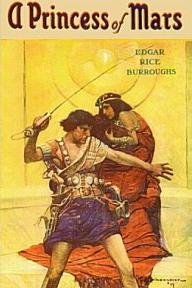
This is the first John Carter of Mars novel by Edgar Rice Burroughs, the author of the Tarzan books. It was his first novel, published in 1917 and it’s a work of rip-roaring science fiction that has inspired many of the great writers in the genre.
Chapter 19: John Carter makes a new friend in prison but must face a day of fighting to the death in the arena.
The National Film Board of Canada produced this cartoon adaptation of a story by E.B. White. He did the narration too! It’s a far-fetched tale of logical and methodical silliness that ends in an eruption of accidental death and mayhem. Simply marvelous.
Chris Roth animated this little video spot for a new children’s book coming out in August. It’s message is all about books being books and they don’t have anything more to them than the story they’re telling. I love a good e-reader perfectly well, but I still want a real book more than my e-reader. Every good book should have a cover. It’s as simple as that.
In 1962 John and Faith Hubley won an Oscar for this short that features a conversation between jazz musician Dizzy Gillespie and George Matthews. It’s about two construction workers down in a hole having an intense discussion about accidents that goes totally nuclear. Fascinating Cold War film that is still just as relevant today.
From an Italian master of short film memory, Fabio Scacchioli, comes this beautiful 23-minute work that expresses the illusion of solid permanence and the heroic attempt to build a reality based on fragments of memory. Even found memories and images can become part of one’s own person. This fleeting and subtle idea becomes more discernible as the film progresses. The impressive imagery revolves around the recent earthquake in L’Aquila, Italy and compares the desolation of a town reduced to rubble with the lives that once literally danced through home movies. It is a film about looking for ghosts.
This book contains pirate battles, violence and death. Please use your judgment before playing for very young children.
Here’s the concluding podcast chapter of our fantastic pirate adventure novel written for young readers. It’s got hidden scrolls, time travel, ships, battles, navigation, gold, islands, jungles and helicopters in it.
Description:
Young Jack Spencer sees his father’s boat-building business destroyed by a powerful land developer. Then Jack unearths three ancient scrolls that propel him on a dangerous adventure through time in search of a pirate treasure.
When Jack finds himself aboard the pirate ship Revenge with Captain Jameson’s crew, he enters a life or death world of ship battles, jungle islands, prison escapes, gold, and treachery.
Set during the golden age of Caribbean piracy, Pirate Jack combines rollicking adventure with the moving story of a boy’s love for his father and a courageous effort to save a way of life.
This book contains pirate battles, violence and death. Please use your judgment before playing for very young children.
Here’s a free podcast of our fantastic pirate adventure novel written for young readers. It’s got hidden scrolls, time travel, ships, battles, navigation, gold, islands, jungles and helicopters in it.
Description:
Young Jack Spencer sees his father’s boat-building business destroyed by a powerful land developer. Then Jack unearths three ancient scrolls that propel him on a dangerous adventure through time in search of a pirate treasure.
When Jack finds himself aboard the pirate ship Revenge with Captain Jameson’s crew, he enters a life or death world of ship battles, jungle islands, prison escapes, gold, and treachery.
Set during the golden age of Caribbean piracy, Pirate Jack combines rollicking adventure with the moving story of a boy’s love for his father and a courageous effort to save a way of life.
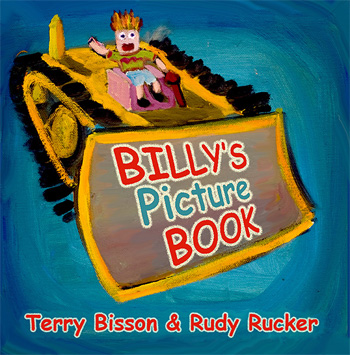 Billy’s Picture Book by Terry Bisson, a collection of jarringly twisted short stories for adult children, has a set of illustrations by Rudy Rucker. The stories follow one precocious Billy through the harrowing and sickening ordeal of being a kid. If your kid has a mind that is easily warped or disturbed or if your kid is just plain crazy, don’t read these stories to them! But if your kid has a casual interest in murder and mayhem, well this might be just the book for the little monster.