The Little Mermaid: 1968 Soviet Animation of the Tale by Hans Christian Andersen

Mermaid1

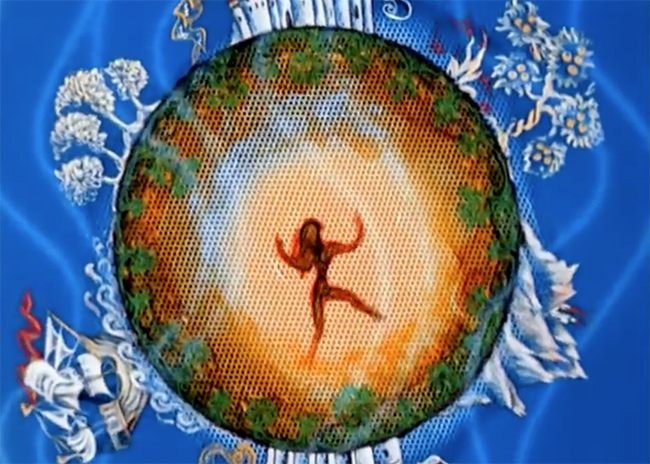
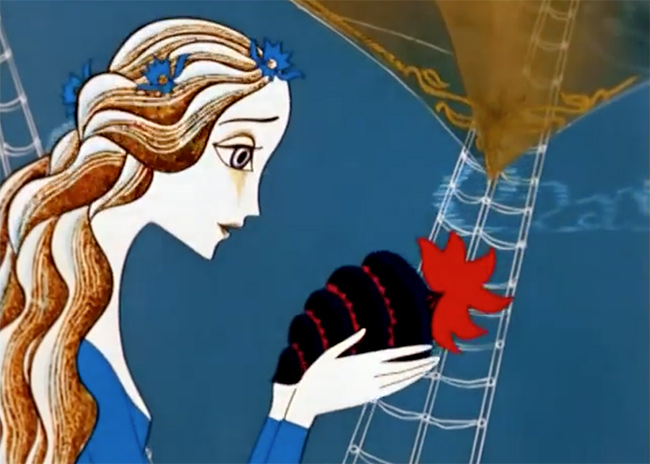
This is a beautiful 1968 Soviet adaptation of ‘The Little Mermaid,’ by Hans Christian Andersen. It was produced by the great Soyuzmultfilm studio. There are no subtitles. Just enjoy it as a brilliantly animated musical approach to a great tale.

The film begins with a busload of tourists sightseeing in Copenhagen. Then it moves to sea and our story begins…

Mermaid2

1964 Bell Labs Film About How to Make Films with a Computer

ATTComputerFilm

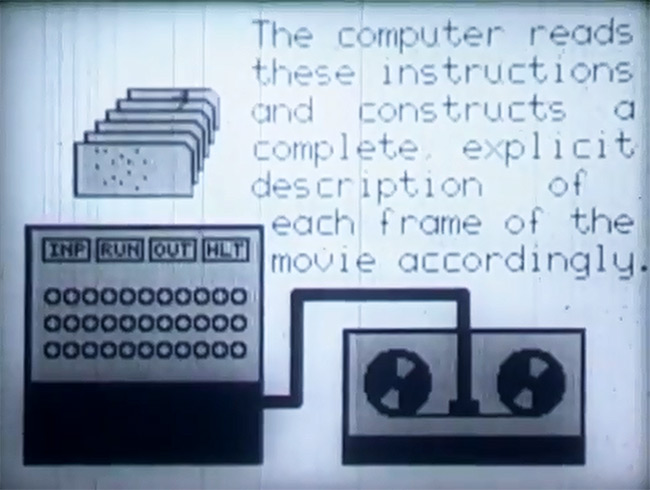
This fascinating film was produced at AT&T’s Bell Labs in 1964. It was made by Ken Knowlton to describe the use of computers to make animated films. The film itself was created entirely on a computer. This is a glimpse into the groundbreaking work that led to the computer graphics we all enjoy so frequently today. Knowlton was both an artist and a computer graphics programmer who developed several programming languages for producing bitmap animations.

Interestingly, Ken Knowlton worked closely with pioneering experimental filmmaker Stan Vanderbeek at the Bell Labs on many early computer animations. Vanderbeek is the subject of my prior post about his short film, ‘Science Friction.’


Western Italian Style: 1968 Spaghetti Western Documentary

SpaghettiWestern1

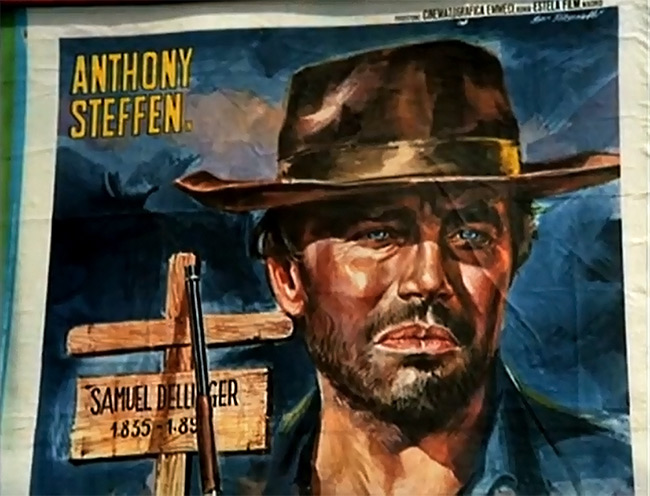
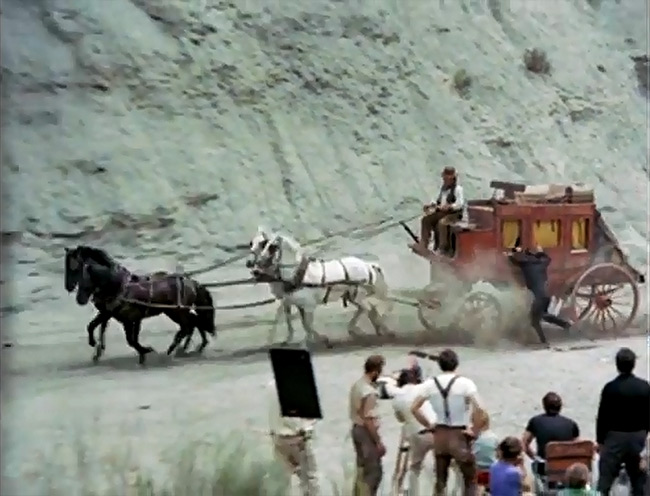
This is a 1968 television documentary about the Italian film phenomenon known as the Spaghetti Western. These bold, violent, colorful movies took a dark and sometimes comic look at the western genre. In many cases, I think these films surpassed the American westerns they emulated by playing more loosely with the violence and morality that often made for a kind of stiffness in the American films. If you aren’t familiar with the full scope of the Spaghetti Western, it’s really amazing how many full length versions are available on YouTube.


SpaghettiWestern2

Camera Eye: 1967 Film on Vietnam by Jean Luc Godard

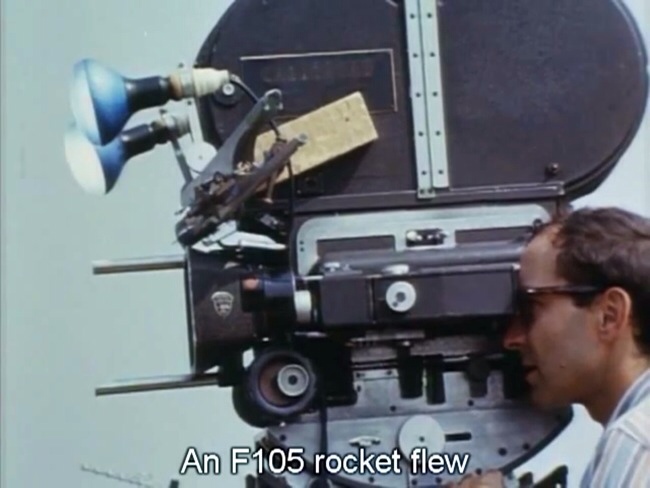
Godard was asked to make a short piece on Vietnam as part of an omnibus film called ‘Far From Vietnam’ that was being edited by the great experimental filmmaker Chris Marker. He was unable to actually go there so he used film clips and shot himself looking through a 35mm camera. His voiceover connects the war in Vietnam to his own life and to social struggles going on in Paris. He makes a fascinating attempt to express the futility of making a film about the war without any real understanding of it.


1966 Chinese Nuclear Testing Film

ChinaNuclear

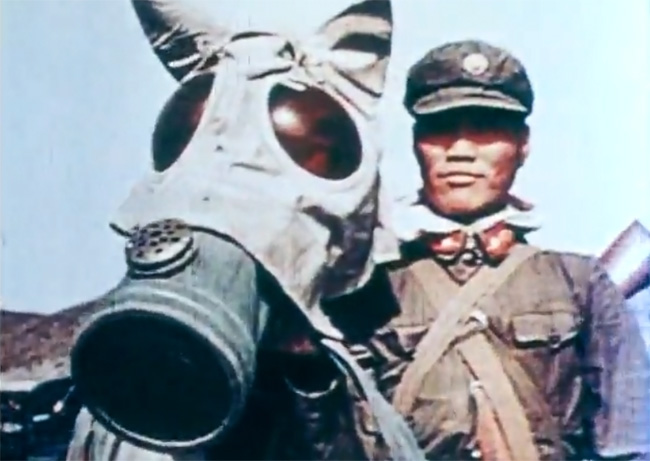
This is a Chinese propaganda film from 1966 about the communist country’s first nuclear weapons tests starting in 1964. The film shows the preparation of the testing area and the participation of the scientists and workers organized for the event which shocked the world. The soundtrack features a complete English translation of the narration which is delivered in a rather deadpan fashion, contrasting with the obvious enthusiasm of the original Chinese narrator.

ChinaNuclear3Most interesting to me in nuclear testing documentaries, both from the communist and democratic worlds of the mid-twentieth century, is the willingness of researchers to subject both animals and people to the effects of nuclear fallout. One would think that some of those U.S. and Chinese soldiers placed out in the desert to weather a nuclear blast with sunglasses would have decided to pick up some machine guns and slaughter a few commanding officers rather than risk the deadly radiation. That’s the problem with being a soldier. You have to follow some idiot’s orders and those orders can easily place you right up against a threat to your life and health that may be totally unnecessary. The twentieth century was filled with masses of people who willingly subjected themselves to the instructions of leaders and dropped themselves right into the meat-grinder of war, sacrificing themselves to some vague idea of glory which was actually just the glory of the guys at the bank. We’re doing it a little differently now in the U.S., making war with drones and ‘volunteer’ armies. But the fact is that people are still sacrificing themselves for some idea that’s never been properly explained to them. So they tell themselves that the idea they fight for is ‘freedom.’ We’ve somehow used the events of 9/11 to convince many people to volunteer for a fight they don’t understand. 9/11 was a criminal act by a criminal organization, not a true act of war. The inability to understand that has led to decades of hatred and an all-encompassing worldwide war of vagueness that infiltrates every daily activity, even those as simple as taking a photograph in a subway or near an airport. The terror organizations we fight all over the world could only ever hope to kill as many people in a single year as the drug cartels do. So why aren’t we flying drones over Mexico, killing anyone who looks like a cartel member?

So enjoy the film. What it’s really about is how people turn themselves into horses.

Filmmakers of Our Time: John Cassavetes – 1968 French Documentary

John Cassavetes’ first film was called ‘Shadows.’ It was made in 1959 and I think it might be the greatest film about race in America that’s ever been made. Cassavetes has always struck me as having an element of that required con-man aspect of the personality that is present in many good actors. When he talks he seems impressed with what he is saying and he knows how to deliver it with just the right amount of humor and a few self-deprecating remarks. But he means every goddamn word of it and he puts all of his thoughts into his film works. He’s one of those rare objects of confusion that sometimes crop up in American art. I’ve been watching a bunch of his films lately and I don’t think I’ve ever seen a filmmaker so interested in looking at the inability of the American adult to understand or even perceive the meaning of their habitual mannerisms. For me, his films illuminate what it means to be a grownup and how the performance required of grownups contrasts with what they really want to be.

Cassavetes on making ‘Shadows:’

That people can go out with nothing and through their own will and through their determination make something that exists… out of nothing. Out of no technical know-how, no equipment. There wasn’t one technician on the entire film. There wasn’t anybody who knew how to run a camera… walked in and started to read the directions of how to reload it. Got a Movieola and looked at it. Did all the things in the world and we made eight million mistakes. But it was exciting and fun.

This is a 1968 French documentary that was probably shot just after or during the making of his great marriage disaster film, ‘Faces.’

7362: 1967 Experimental Film by Pat O’Neill

Patrick O’Neill is one of the Los Angeles artists currently featured in the huge citywide exhibit known as ‘Pacific Standard Time.‘ He has made many experimental films using techniques perfected with an optical printer. This film incorporates footage of oil derricks in Venice, California and nude models filmed in the artist’s studio. Its synthesizer score is by Joseph Byrd. I don’t know much about optical printers, but I do know that they allow images or films to be projected and rephotographed by a movie camera. So my guess is that one could set up multiple layers of screens and projections to film them and blend them into a single image. Optical printers were used to create special effects in Hollywood films. I think perhaps the most famous use of the printer was in the creation of the light show sequence near the end of Stanley Kubrick’s ‘2001: A Space Odyssey.’

O’Neill is one of the people who form the incredible fabric of the Los Angeles art scene post World War II. I did not know of him until I found his work through the Pacific Standard Time exhibit which is really something remarkable and I think that its effects will be felt in the art world for quite some time. Its broad scope, grouping and explanation of the Los Angeles art history and its significance cannot help but influence artists here in the city and far beyond. It’s essentially saying, ‘Look, here’s a great and fascinating body of work inspired by a city for the second half of the twentieth century. Here’s how it all happened, who the people were and what they were trying to do.’ It’s a very strong impression to make on a city. It must be a very great honor for an artist to be included in it.

O’Neill from a 1997 Millennium Film Journal interview:

I finished my first film in 1962. Then I started doing abstract or composite films. I began to use the camera as a sort of gathering device to provide elements for manipulation through re-photography. This led to 7362 which was finished in 1967. I didn’t have much knowledge about the history of the medium at that time. I’d had maybe three film classes at UCLA and beyond that the midnight screenings at the Coronet and the Cinema Theater were my education. That series at the Cinema Theater was going on from the early sixties.

The artist’s Lookout Mountain Studios has a web site.

1964 Documentary on Spanish Surrealist Film Director Luis Buñuel


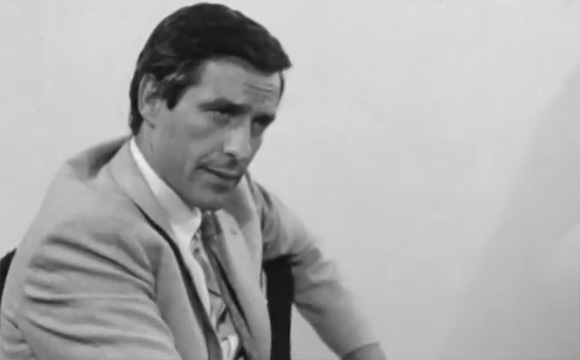
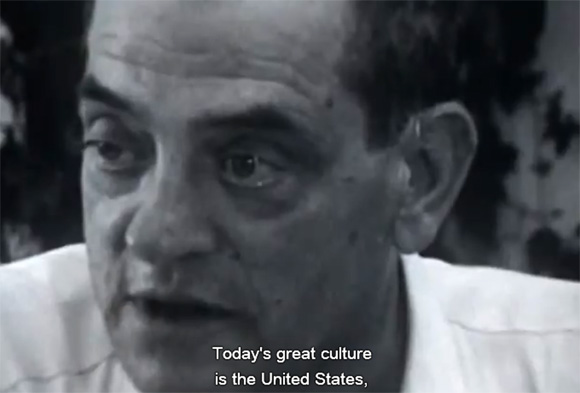
Luis Buñuel was the great Spanish film director who made ‘Un Chien Andalou’ and ‘L’Age d’Or,’ two of the original surrealist films. This documentary, directed by Robert Valey, was made in 1964. The director talks freely and with a certain charming guile about his influences, friends, paranoias, enjoyments and his impressions of various countries. He once smacked Salvadore Dali down on 5th Avenue in New York city!

I enjoy listening to people like him talk about their work because they talk about how they see things – how they interpret the world. Compare the way he talks in this film to what you normally see coming from people like Steven Spielberg or Martin Scorsese. Those people don’t seem real. They don’t seem to have any point of view. Notice how people in the film consistently associate Buñuel’s filmmaking with the work of painters. It is the continual grinding down of art into business that destroys real culture. One should immerse one’s self in better ideas and more subtle things if one wants to avoid the dullness that permeates most film work currently going on in the United States. I have found it to be a general rule that people with real talent who are artists answer questions in a slightly confusing manner. Clarity is another word for fake. Buñuel appears to me to fit this general principal.

Buñuel wrote a short and very beautiful autobiography called ‘My Last Sigh.’ I recommend it very highly if you want to know more about the mind behind Surrealist film.

And of course, here is the great Surrealist short film, ‘Un Chien Andalou,’ made by Buñuel in 1929.

The Life of an Agent: Hungarian Secret Police Training Films From 1958 – 1988


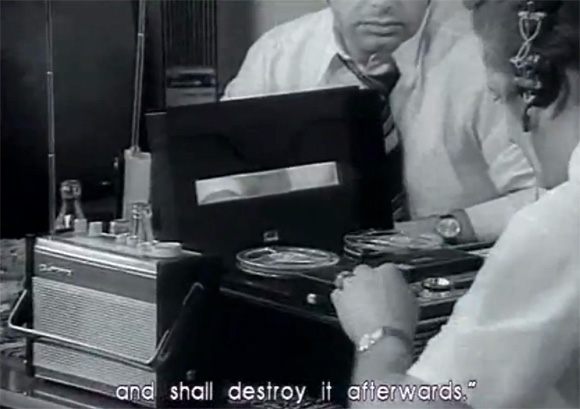
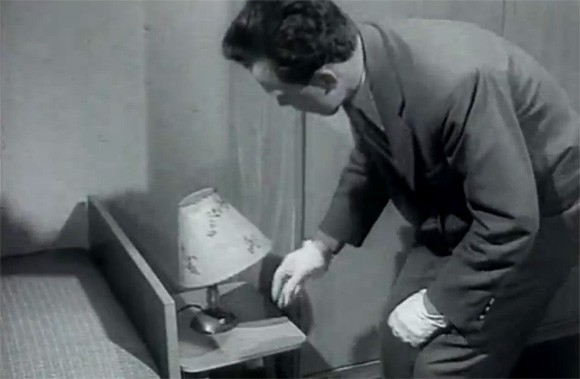
This is a 2004 film compilation by Gábor Zsigmond Papp that presents a ‘best of’ series of clips from thirty years of Hungarian secret police training films geared toward protecting the socialist regime. Subjects covered include: how to place a bug, how to film people from handbag cameras, how to follow someone, how to secretly search a home, how to recruit agents, and how to effectively network for information gathering. These are all marvelous skills for finding a job in today’s high-tech world of modern American surveillance. But I view the film from an artistic perspective and find it fascinating in its easy ability to create mood and tension with the bare minimum of cinematic effort.

Das Kleine Chaos: 1966 Short Film by Rainer Werner Fassbinder


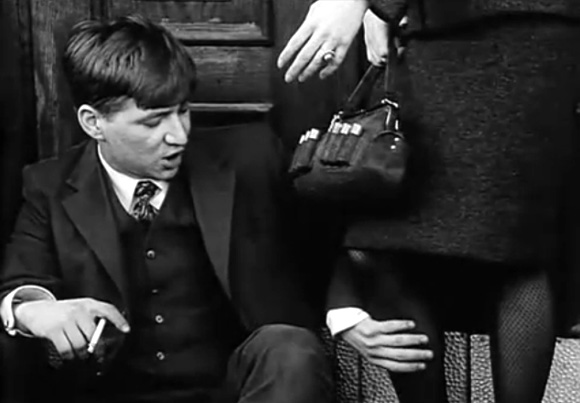
Here’s a 1966 short crime film by a young and learning Rainer Werner Fassbinder. The great and too-soon-departed German filmmaker actually plays one of the three young criminals who decide to invade a woman’s home to terrorize and rob her. The film is relentlessly cool and begins at around the 3 minute mark to really show how deeply Fassbinder was mining the work of Jean Luc Godard. Those shots in the apartment with Fassbinder reading the novel out loud in front of a wall of pinned art prints is straight up Godard stuff. But it’s just fine to imitate other filmmakers as long as your real intention is to destroy them from the inside. Fassbinder was just that kind of filmmaker.

Here’s an article about Fassbinder on the Senses of Cinema site.

For the Beats Killing Women Was Not a Problem


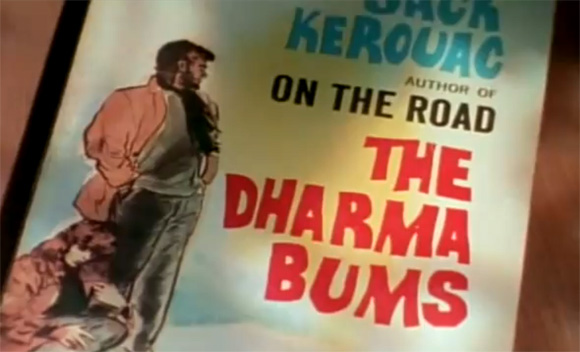
I have very mixed feelings about the core group of writers known as ‘The Beats.’ They were Jack Kerouac, William S. Burroughs, and Allen Ginsberg. Kerouac’s ‘On the Road’ is one of the milestones (or millstones, depending on point of view) of American literature. Ginsberg’s ‘Howl’ is one of the great twentieth century poems, and Burroughs wrote the distorted fever dream of homo-erotica known as ‘Naked Lunch.’ There’s lots of intensity in Beat literature and poetry. There’s a willingness to seek out the world and experience. There’s a seeming openness of mind. But every time I delve into the Beats and their work, I become listless, bored, irritable and worried. I find the general direction of their writing to be toward a distinct and virulent hatred of women. The glassy-eyed hero worship of these writers seems odd to me. Wouldn’t it be better to try rejecting their premises? Why do they still have such a hold over the popular imagination? Why hasn’t poetry been able to dispense with these people yet?

What I like about this documentary is that it does in fact touch upon this subject. What I don’t like about it is Johnny Depp prancing around with an unsmoked cigarette trying to convince us of his Beat/hipster/baggy jacket coolness.

The Beat hatred of all things female manifests itself most obviously in the fact that Burroughs stood his wife, Joan Vollmer, up against a wall in Mexico and blew her brains out with a gun. There’s great mystery surrounding his escape from the authorities in Mexico who quite naturally wanted to investigate and prosecute the man for murder. I would have prosecuted him too. He told various stories about playing a game of ‘William Tell,’ or inebriation or drug use to explain how it happened. But in order to fire a bullet through his wife’s forehead he had to lift the gun and point it at her. It sort of goes without saying. Would you be able to point a gun at your spouse? Hopefully not. I wouldn’t be able to even lift a gun in my wife’s general direction. So why was a man who blasted his wife’s head open welcomed back into his little group of Beat friends? Why would such a man become the life of the party in literary circles? Why would such a man love guns and fire them at tin cans in his backyard for the rest of his life? Good questions. Easily answered. Nobody gave a shit about the man’s dead, blown-open wife. She was just a lady in Mexico married to a bisexual genius. That’s the problem with the Beats. That’s the rock bottom attitude of the most important literary movement in America during the twentieth century.

Here’s what Burroughs had to say about killing his wife:

I am forced to the appalling conclusion that I would never have become a writer but for Joan’s death, and to a realization of the extent to which this event has motivated and formulated my writing. I live with the constant threat of possession, and a constant need to escape from possession, from control. So the death of Joan brought me in contact with the invader, the Ugly Spirit, and maneuvered me into a life long struggle, in which I have had no choice except to write my way out.

Let me translate that for you: “I killed my wife and was so inspired by the act of killing a female that I became a great writer. And I want to kill again. I have to constantly struggle with the urge. My writing helps with that.”

Get the idea? Murder inspires good writing… according to one-third of the Beat literary movement. The other two-thirds were just fine with that.

You may think I’ve gone too far or have some literary ax to grind. But I would suggest that reading the Beats without keeping these ideas in mind is self-deception. It’s all right there on the page if you actually read the stuff. These guys weren’t gentle spirits with open hearts and minds. They were brutal little elitists from Columbia University who were willing to kill and dump dead bodies into rivers in order to protect their group. Kerouac helped a friend dispose of a murder weapon, then took the murderer out to a movie. That murder, which was in fact the brutal slaughter of a gay man who was making advances, led to inspiration for Kerouac, Burroughs and Ginsberg who all attempted and partially succeeded at novels based on the incident.  Again, murder inspires Beat writings. If one really wants to get down in it, one would go so far as to say that the prime mover behind the Beat movement – its basic inspiration – was a gay-bashing murder in Riverside Park. People may say whatever they like about writers trying to work out the demons, but I see something much darker than that.

Kerouac later based the main character of ‘On the Road’ on Neal Cassady, a man who appears on film to be a psychopath. I’d be looking for dead bodies buried under any house that guy ever lived in.

I think the Beat movement should be done over for the twenty-first century. This time, try not to blast anyone’s brains out across a wall.

Continue reading

Ikarie XB-1: 1963 Czechoslovak Science Fiction Film of a Stanislaw Lem Novel

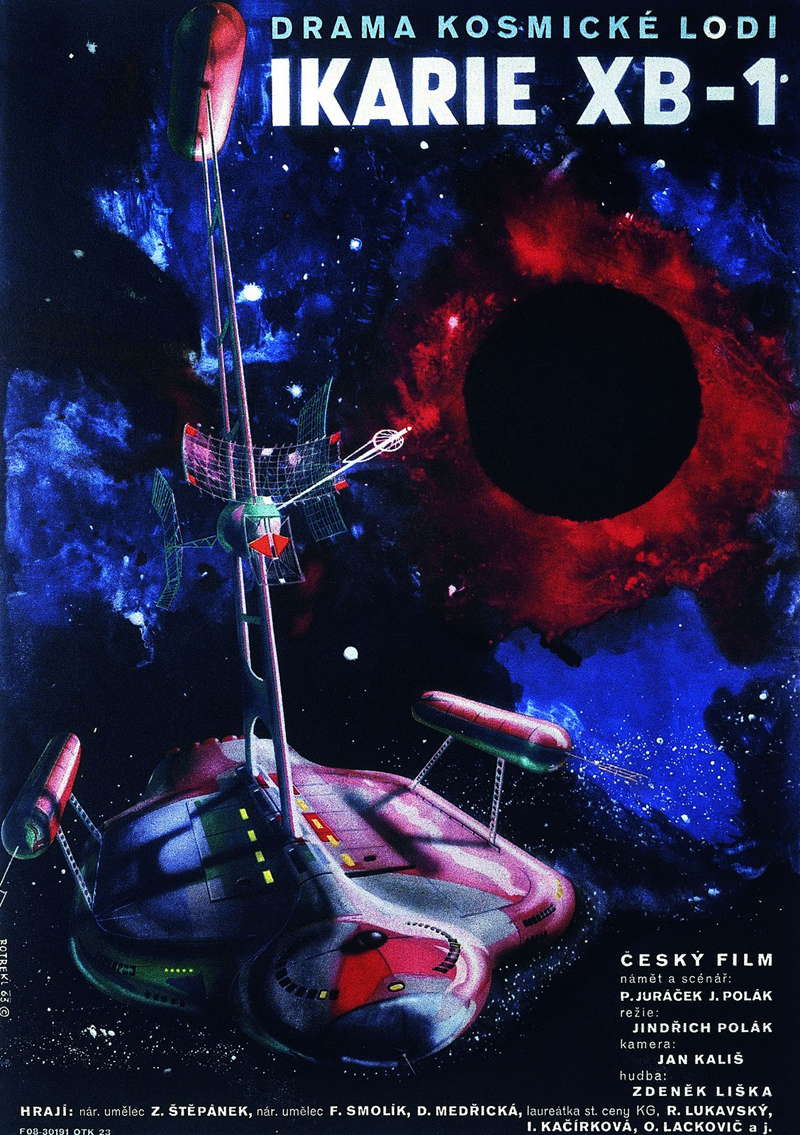
This 1963 Czechoslovak science fiction film directed by Jindrich Polák is an adaptation of a Stanislaw Lem novel called ‘The Magellanic Cloud.’ Reflexively, one tries to find similarities between this film and Kubrick’s ‘2001: A Space Odyssey.’ But I think the better place to look for influence is in Andrei Tarkovsky’s 1972 film, ‘Solaris,’ which was also a Lem adaptation. ‘Ikarie XB-1‘ follows the crew of a ship sent to investigate a planet orbiting Earth’s nearest star, Alpha Centauri. On the way, they encounter a derelict space ship from 1987 Earth which appears to originate from the United States and carries a load of deadly poison and nuclear weapons. Crew members begin to inexplicably fall asleep. The ship also finds a giant dark star that emits an unknown type of radiation from which the humans are mysteriously rescued. The end of the film is a stunning sequence of mental breakdown leading to fantastic and life-affirming discovery.

But the various events do not matter as much as the way the film dwells on the people within their technological surroundings. It’s the focus on the mental status of the crew as opposed to exciting episodes that makes for the strength of this film and its influence on ‘Solaris.’ The film has a calm and quiet approach, simply trying to let us feel the vast distances traveled by the crew. The sets and visual effects hover between beautiful and unconvincing. But they work and are often effective. It’s really a pretentious art film in space. If you like Eastern Bloc science fiction and Stanislaw Lem’s peculiar writing, this is a must see.