The Charles Bukowski Tapes by Barbet Schroeder

Bukowski

During the lengthy production of the film ‘Barfly,’ director Barbet Schroeder conducted a series of short interviews with the poet Charles Bukowski. This is the complete set of those interviews and comes in at nearly four hours. Observe Bukowski and see what you think of his style. He was an incredibly sensitive soul trying to be a boxer. He was also one of those people who when they speak you just can’t wait to hear what they might say next. A real page-turner of a person.

If you want to read a fascinating book about the time of making Barfly, read Bukowski’s novel, ‘Hollywood.’ He changes the names of all the people involved, but you can easily figure out who they are. It is the best book about making a movie I have ever read in my entire life – without exception.

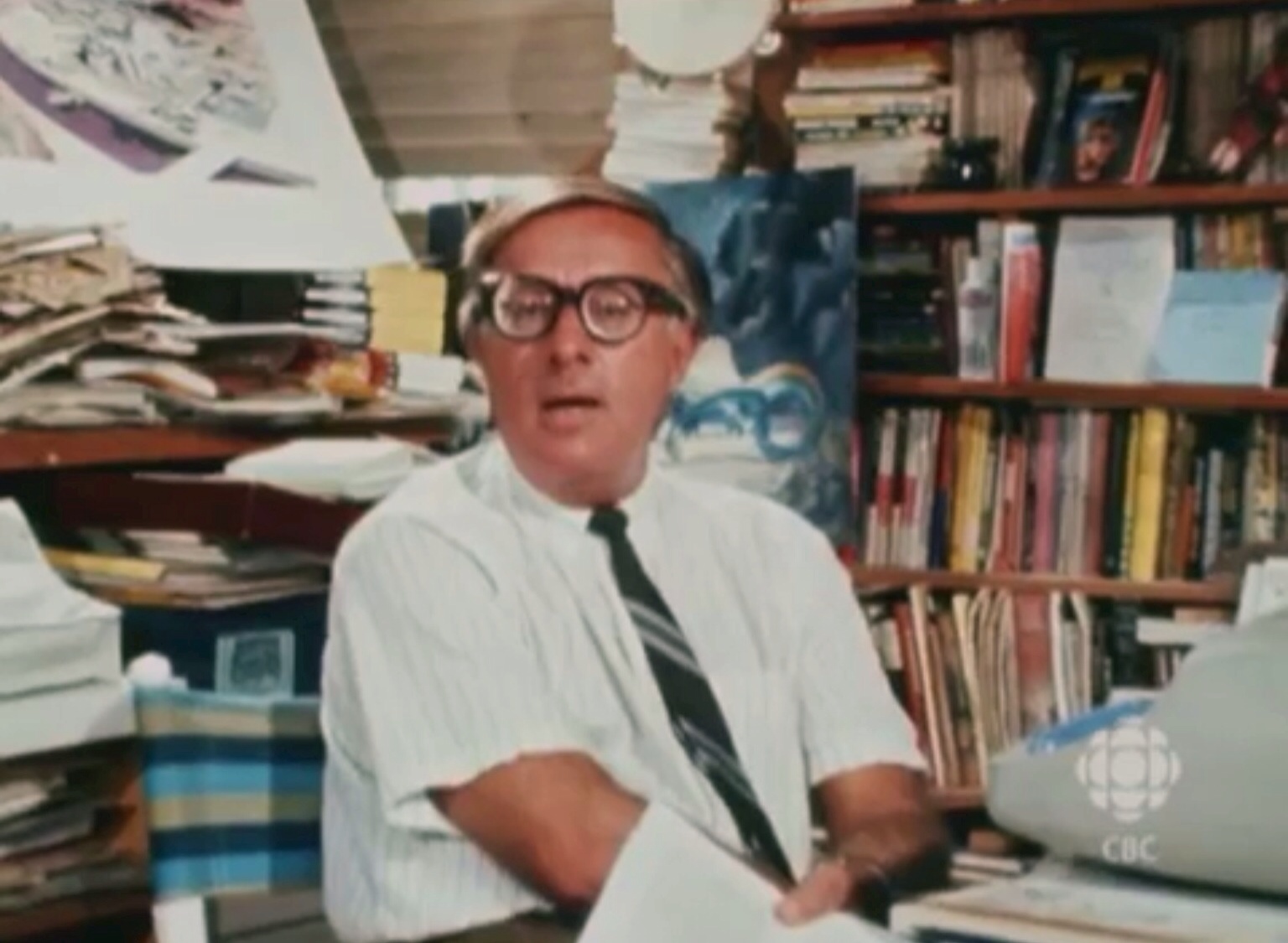
Ray Bradbury Has Died at 91

It’s a sad day for writing and for science fiction. Legendary and iconic author Ray Bradbury has died at the age of 91. We should count ourselves fortunate that we had him for so many years, firing the imaginations of children and adults worldwide. I will never forget reading his ‘Martian Chronicles,’ ‘Fahrenheit 451,’ and ‘The Illustrated Man.’ I recently re-read 451 after many decades and thoroughly enjoyed it to the same extent that I had as a teenager. He was one of those writers more interested in the life of the imagination than in hard-core science fiction. He wrote not about the spaceship, but more about how one thought about a spaceship.
 
He provided much material for the movies, including the peculiar and not entirely successful Francois Truffaut adaptation of ‘Fahrenheit 451.’ He will be sorely missed and probably never equaled.
 
Here is a 1963 television documentary about Bradbury produced by David L. Wolper. It contains a film version of one of his short stories called ‘Dial Double Zero.’
 
Video found via Paul Gallagher at Dangerous Minds.


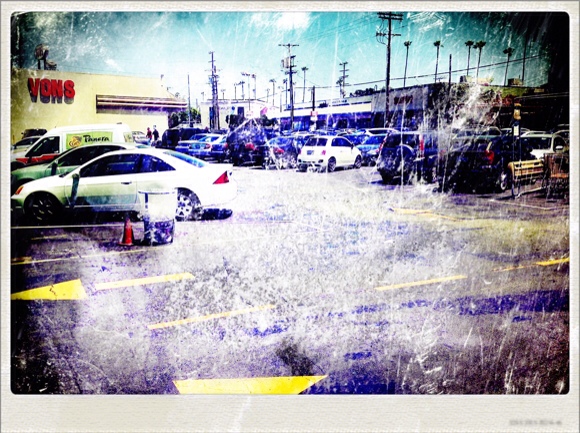
Glass Letter Boxes at Lunch by a Parking Lot in Los Angeles

 
I hated Steve Jobs. Now that he’s dead I like him better. Looked snotty to me, but he came up with some nice things. I’m using an iPad right now, trying to master the stiff-finger jabbing action in my lap with the thing leaning in front of a Greek salad on a greasy streaked patio tabletop out of the sun in a breeze that keeps flipping my napkins over and threatening to send them back toward the door from which my food came – delivered to a number on a stick. The number’s gone now. She must have taken it when she placed my trays in front of me. So far, the finger-jabbing is workable if not entirely productive. My problems with Steve Jobs notwithstanding, I dig this pad and carry it everywhere, even when I should know that it makes me look like – what do you call them – a goddamn geek. But I have too much face-breaker in me to ever be mistaken for a geek with an iPad. I annoy geeks because they sense the lout underneath the programmer.
 
So anyway or anywho as all the wannabe smarties like to say – if someone says anywho to you, just casually punch their front teeth out, understand? Even if it’s me. The use of the word indicates a fractured personality who wants to present itself as innocuous. Anyhow, there’s a thing about iPads and rear-facing cameras, filters, touch screens, Wifi connections, and trying to capture the moment or the under-moment of a place as surface-oriented and deeply mysterious as Los Angeles. You can’t let snobbery and distaste for a personality prevent you from diving into what you identify as bullshit for a nice swim in the same dirty water everyone else is so interested in. Sometimes, for the artist, immersion is essential. You can’t stand on the shoreline watching the swimmers, critiquing their bathing suits and lovely fat rolls. You’ve got to go in and swim around between their legs like a lingering shark looking for easy meat. You can still be a little separated as far as viewpoint, but you must try the water. That’s my theory behind the photo of the parking lot. It was taken on the move from parking spot to Panera Bread, then filtered up, framed and filtered again while trying to control the napkin traffic across my lunch. It’s a little like painting really. Despite the stupidity of the millions of photos uploaded to the hellish quagmire known as Instagram, the digital photo/filter combo just might be vastly superior to the instamatic toy point and shoots that it so cleverly imitates. You know, art’s a funny thing. It crops up in odd places. There’s that photographer – can’t remember his name now – maybe it was William Eggleston… don’t know… but any… who? Anyway, back in the seventies when galleries and museums – if there’s a difference – were all showing black and white photos as art… well this guy throws a bunch of color snapshots into a suitcase, travels to New York, walks into the Museum of Modern Art and demands a showing. He becomes one of the great photo artists of the 20th century and sets off the realization that color photographs can be shown as art. Everyone at the time of course really knew that, but they didn’t act as if they knew it. There’s a huge step in between.

Ray Bradbury on Writing

Ray Bradbury talks about the function of the writer in civilization and some of how he approaches his work. I often think this writer says stupid things and writes tepid uninspiring books for simple children. But there’s not much here for me to disagree with.


On Reading Thomas Pynchon’s Gravity’s Rainbow – Part 1

Every word in Thomas Pynchon’s deranged dance macabre, ‘Gravity’s Rainbow,’ seems, like HTML, to link out to some other subject. The book seems for me to exist in-between worlds, barely attached to this one while trying desperately to connect us with another fuzzily glimpsed, just-hinted, vague world, suggested by pure chance connections between ideas and events here on a fractured and demented earth. I’m barely one hundred and sixty-five pages into this book and I’m reacting for it and against it in nearly equal measure. It’s a goddamn blast. It’s also a motherfucking bitch. Every page of it so far mentions some kind of rocket trajectory, launch pad, descent, explosion or blast of light. Everyone in the book seems to be living out one debauchery or another while all the time expecting to be blown away in bits, perhaps even looking forward to it. Death, for Pynchon, seems on the surface like fun. The book almost makes a mockery of dark humor, of dying. It’s as if Pynchon wants to give the finger straight into the yawning mouth of death’s favorite century.

Things I notice so far about the book: Rockets of course. Everywhere and in every mind of the characters. It’s all about predicting bomb hits and finding the rockets. People want to understand how one of the characters can possibly manage to have sex in various locations just prior to those spots being bombed into oblivion by German V-2 rockets. The books seethes with sexual excitement that’s a death-wish. I also notice that Pynchon is associating Hansel & Gretel, the forest and the witch’s oven with Germany and the events of World War II. The Holocaust is looming over this book on every page. There are constant mentions of cause and effect, how it operates and whether it might be possible to break out of its logic. Can a rocket attack be sensed before it even hits? Psychological early warning system. Brain radar. Statistical analysis for making predictions.

Imagine a missile one hears approaching only after it explodes. The reversal! A piece of time neatly snipped out…a few feet of film run backwards…the blast of the rocket, fallen faster than sound–then growing out of it the roar of its own fall, catching up to what’s already death and burning…a ghost in the sky…

Quite a few references to film in this book so far up to page one hundred and sixty-five.

What could be more paranoid than a constant worry about bomb rockets? The book seems like a grotesque exaggeration at first. But that’s the joke I think. It’s actually an understatement and proves paranoia to be the most well-placed and logical mental operation in a century during which people were dug into trenches and told to march toward each other like polite firing squads. A century in which men marched millions of people into gas chambers and pushed them through ovens. A century in which entire cities were blown off the face of the planet while the citizens were out shopping for groceries. Pynchon seems like an author who is not afraid of any of it. He’s like a guy laughing at the scene of a traffic accident. Or photographing it like Warhol did. And the book’s laugh-in-a-sort-of-half-shocked-way funny. Here’s a bit from a funny scene where a guy visits a nurse he wants to sleep with but must endure a lengthy sit-down with an older woman patient who wants to share her candy:

Under its tamarind glaze, the Mills bomb turns out to be luscious pepsin-flavored nougat, chock-full of tangy candied cubeb berries, and a chewy camphor-gum center. It is unspeakably awful. Slothrop’s head begins to reel with camphor fumes, his eyes are running, his tongue’s a hopeless holocaust. Cubeb? He used to smoke that stuff. “Poisoned…” he is able to croak.

“Show a little backbone,” advises Mrs. Quoad.

“Yes,” Darlene through tongue-softened sheets of caramel, “don’t you know there’s a war on? Here now love, open your mouth?”

It’s funny, no? But it should also set off sparks off recognition in your head that link up with gas chambers. You just can’t trust Pynchon to be genuinely funny. He’s watching you laugh and getting ready to slit your careless throat. No wonder Pynchon uses a secret identity. He’s dangerous. He seems slightly criminal. This guy loves conspiracies. He must have some really excellent ideas about who killed Kennedy. I mean he’d probably say Oswald did it, but it’s why Oswald thought he was doing that makes it interesting.

I love it when authors hide their identities. Pynchon has been effectively doing this for about fifty years now. This reminds me, as all secret identities do, of Batman.
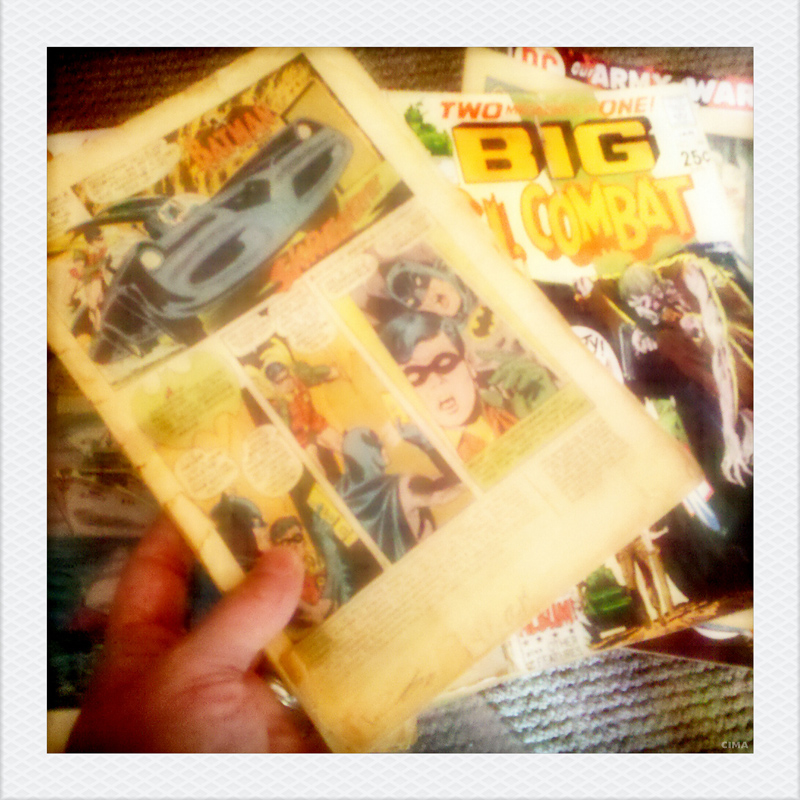
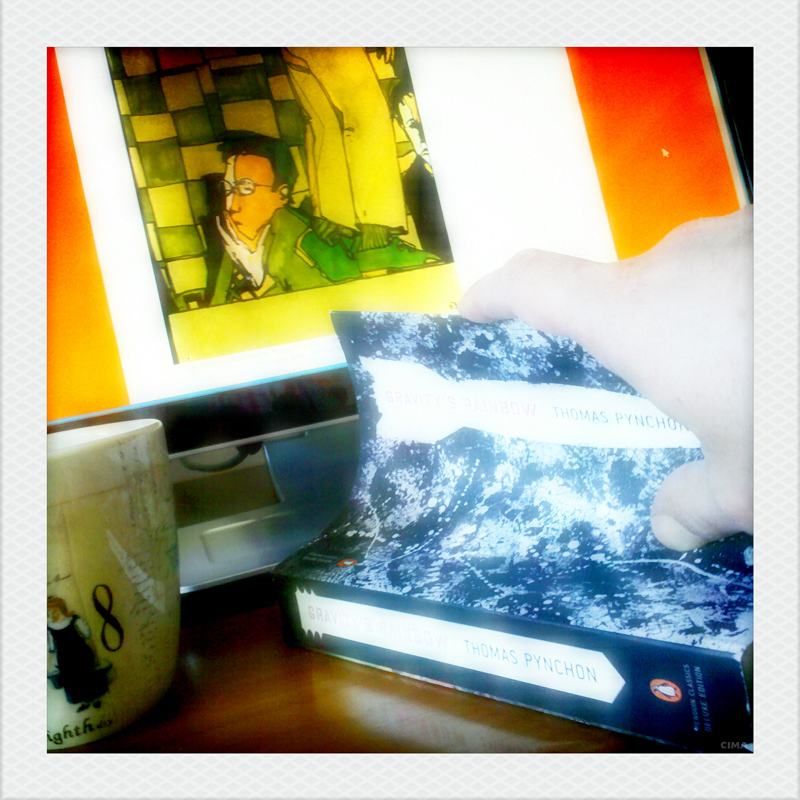
Here’s my ancient and torn copy of a Batman giant issue from 1969. Down in the lower margin there I wrote ‘fuck.’ I’m not sure why I would have done something so charming to a Batman comic. I must have been practicing my favorite words or something. What does an old comic book have to do with Pynchon? I don’t really know but it seems to fit. In fact, comic artist Frank Miller did the cover for the recent Penguin edition of Gravity’s Rainbow. That’s the copy of the book in the first photograph above. Behind the book in that photo is a computer screen showing a drawing by artist Zak Smith who did a thing he called ‘Illustrations for Each Page of Gravity’s Rainbow.’ It’s been shown at the Whitney Museum and you can buy it in book form.

It’s strange how much I’m enjoying this book because I hated ‘Ulysses’ by James Joyce. I think Pynchon snagged some stuff from Joyce. He even resorts to script format for some portions of the book the way Joyce did. But I only like the first part of Ulysses which takes place on top of a tower and has a character shaving. I also enjoy the part about Bloom in the park watching the girl’s underpants. But that book suggests to me that Joyce was mentally ill. With Pynchon I get the feeling that the world and everyone in it is mentally ill.

There’s also a definite connection between Pynchon and William S. Burroughs. In fact I wouldn’t be surprised if they were the same person. But that’s impossible. They both like secret organizations of scientists or researchers though. They share this fascination with science gone crazy and used to control minds – populations. But Pynchon is a better writer – less concerned with gimmicks. His language is a constant beauty which is the great antidote to his hilariously murderous world view. His entertaining and wildly connecting sentences indicate to me that Thomas Pynchon is an optimist. But, as with Joyce, I find myself constantly shutting the book and wondering, ‘How did he do it?’ How for fuck’s name did this guy not only maintain a secret identity but accumulate so much esoteric knowledge in the late sixties so as to be able to jam-pack every single sentence in the bloody book with some reference or other to some event or other that no sane person would ever have heard of in a lifetime? What the hell is going on in this man’s mind that allowed him to achieve Google knowledge density in 1973?

For all the good it might do anyone, I’ll keep reading the book and make a few more posts about it. I tend to relate work like Pynchon’s to my own video work. It’s something to do with the density of thought and imagery. It’s always good to read solid evidence of someone being crazier than you are so that you can get down and work at your own stuff with a little less embarrassment.

Henry Miller Discusses Life, Love, Sex, Art, Writing, Jung and Enlightenment in His Bathroom

MATURE CONTENT – NUDITY:

The great American writer, Henry Miller, walks into his bathroom in 1973 and talks about all the fascinating pictures on the walls. Here’s a guy who can kill zombies with his words. I’ve always considered him to be an antidote to the lifeless people one must engage with on a daily basis. The people who get into cars and make their way to offices, then return to relax with a television and cook at the barbecue built into the island on the patio. You can reconnect with life by reading Miller’s books. You can once again feel that the world is actually a place where art and passion exist. Miller excites imagination. He makes you want to live harder and better. Listen to him talk in his bathroom! Anyone who can be this fantastic in his bathroom has got something marvelous going on.  The film was shot and directed by Tom Schiller.

William S. Burroughs Ditched Scientology

Here’s an article from I09.com about how William S. Burroughs was, for a period, fascinated by Scientology.  He joined and even used many of the group’s principals in some of his work.  But he eventually turned against the group because he recognized that they were more interested in maintaining a corporate hierarchy of secrecy than in pursuing genuine ideas.  It’s natural for a writer of Burroughs’ genius to be curious and to find the best in a group like Scientology.  It is also natural for him to see through the horse shit and ditch the idiots in a Hollywood Boulevard gutter.

Here’s a good read about Burroughs and Scientology from Dangerous Minds.

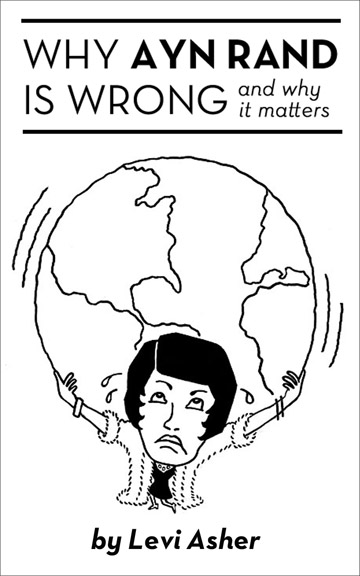
Why Ayn Rand is Wrong (and Why It Matters): Kindle Book by Levi Asher

Levi Asher, the writer behind the long-running Literary Kicks site, has decided to move into the world of Kindle ebook publishing.  He’s starting the series off with a philosophical essay on the Objectivism of Ayn Rand.  Why Ayn Rand is Wrong (and Why It Matters) expands upon several posts Asher has made recently in his ongoing Philosophy Weekend discussions.  The focus on philosophy and its requirements for logical thinking and argument is especially needed right now in a political and ideological world of harsh opinion and attack masquerading as argument.  I often do this kind of attack-dog arguing myself.  It’s fun and it clears the sinuses effectively.  But it does not really serve much purpose.  Rational philosophical debate does serve a purpose and tends to foster respect between opposing parties.

Ayn Rand, for me, is simply the author of a very readable but rather simplistic novel, The Fountainhead.  I tried to read Atlas Shrugged, but gave up after two hundred pages, finding it so belabored and filled with lunkheaded ideas that I simply couldn’t put up with another speech from one of its cutout characters.   However, Rand also has a body of philosophical writing that seems to have been very influential and is having some kind of a resurgence lately among mostly conservative-minded people.

I have always thought that Rand was basically reacting violently to the mass-mindedness she saw everywhere in the first half of the twentieth century.  That mass-mind quality led millions to death via the trenches of World War I or the concentrations camps and genocide of Hitler and Stalin.  In the face of such horror, I think I too would have found solace in elevating the individual above all else.

I have purchased my copy of the Kindle book but I have not read it yet.  When I do finish the book and if I feel competent to do so I will try to write a little review.  But since I know Levi Asher’s writing very well from his fascinating blog I can certainly recommend that you head over to Amazon and buy a copy of a book that is for thinking.

Get Why Ayn Rand is Wrong (and Why It Matters) on Amazon

Take This Opportunity to Deface My Art

My latest artwork is an image that is never quite the same twice. I worked hard on it. Framed it. Hung it in a gallery. Now you come along with your paints and markers and mess it all up. I’m curious to see what you decide to do. So when you deface my best work ever just hit the ‘upload art’ button to send your artwork to me. You can get a copy for yourself by clicking the ‘download’ button. You get 3 uploads, so try to make it count.

Have fun destroying one of my proudest creations!

The Secret Identity of Author B. Traven

B. Traven was the mysterious best-selling author of the novel, The Treasure of the Sierra Madre, which was made into a classic film by director John Huston in the 1940s. But who was B. Traven? The mystery surrounding his identity remains fascinating to this day. There have been many theories about who he was, whether he was several people, whether he was an expatriate German or perhaps even the President of Mexico. People in the film world apparently thought they would have meetings with him, but were then informed that a representative would show up. But was the representative actually B. Traven?

When an artist hides his or her identity many theories develop. Modern figures who have cribbed from Traven’s playbook are the novelist Thomas Pynchon and the painter Banksy who really have no reasons for remaining anonymous beyond the artistic jolt that a secret identity personally gives them. It’s not the crooks that interest Batman after all – it’s the secret identity. A secret identity makes you better in every way because it turns you immediately into a work of art. All artists should be mysteries. At the very least, they should tell lots of lies.

I present this post and its excellent documentary as part of my preparations for an upcoming film. Getting the right mood.

Part 2

Parts 3 – 6 after the jump.

Continue reading

The Penultimate Truth About Philip K. Dick

This is a 2007 documentary produced by Martín Florio on science fiction author Philip K. Dick.  The great author behind the novel Do Androids Dream of Electric Sheep?, the basis for the ultimately disappointing Blade Runner film, is portrayed by his many former wives and friends as having been obsessed with images that he perceived as having a divine origin.  I detect a fair amount of condescension on display here from these former close relations, especially from fellow science fiction author K.W. Jeter.  I think the general sort of hand-waving dismissal of Dick’s ideas and visions is foolish and indicates to me that Philip K. Dick made the relatively common mistake of surrounding himself with dimwits.  Decide for yourself as you watch this interesting film.

Watch parts 2 – 9 after the jump.

Continue reading

I Write Like David Foster Wallace

Apparently, I write like somebody named David Foster Wallace. I know… it’s weird. Who would have thought? Who is David Foster Wallace? I think he’s kind of high literary serious-minded and wild sort of college professor type stuff. I should just do a Wikipedia on him, but I don’t really want to know who this person is that I supposedly write like. Below, you can see my official badge that proves the Wallace connection:

I Write Like by Mémoires, Mac journal software. Analyze your writing!

I got my writing-like-David-Foster-Wallace badge from I Write Like. It could not have been easier. I simply pasted several of my very opinionated and slightly acidic blog posts into the I Write Like form and then pressed the button. Each time, this David Foster Wallace guy popped up. One blog post that I dribbled out because I had nothing of interest to say on that day came up as Dan Brown. No surprise there because Dan Brown is so numbingly uninteresting that his brain should be transplanted into the body of Tom Hanks where it would dwell very contentedly for some time I would suppose.

I Write Like is really loads of fun. I could paste entries into it all day long and feel that I had spent my time well. That’s what I’m doing today. For the entire rest of the day I’m going to sit here dropping my blog posts into this machine to find out if maybe I really am David Foster Wallace.  I may even start to make stuff up just for this writing machine and eventually maybe I’ll see my own name pop up: I write like…

Three-Minute Fiction Contest on NPR

Write a short story inspired by this photograph.

National Public Radio’s web site is hosting a three-minute fiction contest. NPR book critic Alan Cheuse will choose a winning story to be read on-air and the best entries get posted on the site. The rules are simple. You just write something that can be read in under three minutes.

My camera is a digital one.  Not the old kind with rolls of film in it.  I took this photo to show you something about the street where I work.  Lots of people there do things the old way.  They read newspapers and get on buses to go across town.  Things like that.  I always think of lists and smeared fingers when I see a newspaper.  And I think about people looking for jobs or fast horses.  They’re always folding the pages and scanning them while they wait for something else, like a sandwich or a cup of coffee.  So that’s why I took the photo of the paper as I passed.  No one was using it.  They’d left.  The place was empty.  Not even a person behind the counter, though the door was open.  People sometimes leave papers for the next person.  Happens all the time on the subway or a plane.  ‘Well I’ll just leave it right here in the seat so the next person can have something nice to read.’  Really they’re just littering like a Christian.

I went home and bought a Kindle.  Now I can read my news each morning in electronic ink without any smears.  It’s under my control and I can have it all delivered before I wake up.  When I canceled my paper delivery the representative of the Times spent forty-five minutes on the phone with me trying to find an argument that would keep my driveway on their delivery route.  I asked why I should pay for something I can get for free online.  He told me that all the people who work at a newspaper need my money so they can keep gathering important news.  I told him if someone’s willing to do it for free then it’s free.  He said he certainly hoped I would return soon and have a nice day.

I felt like I had started a war.

Student Essay Winners Announced in Wilmington, Ohio: Third Place Winner

essaywinnersCandlelight’s favorite children’s author, Artie Knapp, working with the Wilmington News Journal, sponsored a fourth grade student essay writing contest and the winners have been announced! The students were asked to write about Clinton County, Ohio where they live. Their essays were judged by education majors at Wilmington College.

This is one of those encouraging activities that can really make a kid feel like they’re at the top of their game. It makes them want to keep writing and reading and learning. Artie tells me that Clinton County has been absolutely devastated by high unemployment since DHL moved out. Rachel Ray and Jay Leno have recently done free shows there to help feed some of the people who are hurting. I think these three kids who can write so well are really helping everybody in their county to feel good this holiday season.

Excellent job, kids! Keep up the fantastic work and keep writing!

Here is the third place winner by Katlyn Jamiel, a student at Sabina Elementary School.

What I like best about Clinton County
By KATLYN JAMIEL

jamiel, katlynI love Clinton County.

These are some things that happen in Clinton County. Clinton County has good places to have a home. In Clinton County police keep us safe. In Clinton County you meet new and nice people. Clinton County has nice jobs for parents too. Sabina is a nice place because it is very small and has nice homes. That’s some of the things I like about Clinton County.

In Clinton County these are some festivals and parades that go on during the year. One of my favorites is the Clinton County Fair. I like all the rides that they have at the fair because they are fun to ride, because they’re all different.

These are some activities that I do in Clinton County. I go to the bowling alley and I go to the YMCA to exercise and swim. I go do putt-putt golf and sometimes I go to the track too.

These are some of the restaurants and shops I go to. I go to Subway and Frosties too. I also go to West Side and IGA. I go to the China Buffet and Family Dollar. I go to Walmart and Dollar Tree. I also go to Corner’s Pizza and Charlie’s place too. These are some of the places I go to.

I go to school and the library too. I like Clinton County because there are a lot of fun things to do with my family. When I moved to Sabina it was a great feeling. Clinton County is a wonderful place because there are a lot of fun activities and some great jobs for parents. Clinton County is a wonderful place because it has a lot of space for new houses. When you first move to Clinton County you won’t believe what you see. I like Clinton County because it is a nice peaceful place. Clinton County is a great place because your kids get a good education. At Clinton County schools you learn new and great things.

If you lived in Clinton County you would have a lot of fun with your family and friends because there are a lot of activities, like putt-putt golf, the bowling alley, and more. Your kids will like Clinton County because there are a lot of parks and a lot of nice children. I like Clinton County because there are a lot of new restaurants. I like Clinton County because Walmart has a lot of good things at a lot of good prices. I like Clinton County because there are a lot of wonderful people. (When I go to school I learn a lot of great things like multiplying and dividing. I like going to school because I get to learn a lot of great things.) I like Clinton County because every time I go somewhere in Clinton County I fell like I’m learning more and more about it. I like Clinton County when Halloween comes because you get to walk around town and you get candy and you get to dress up into a costume.

I also like Clinton County because at Wilmington College I got trained by a Wilmington College coach. I like Clinton County because I get to go to Wilmington park and practice soccer. I like Clinton County because there are ducks you can feed at the Wilmington park and there are picnic tables where you can eat too. I like the Sabina park because you get to watch baseball and ride your bike and run track if you want to. I like Clinton County because most of my family lives here and I get to see them a lot.