How Can Sidewalk Chalk Art Be Illegal?

 
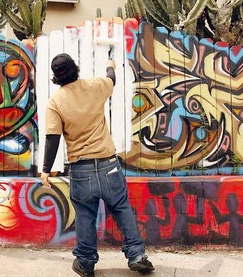
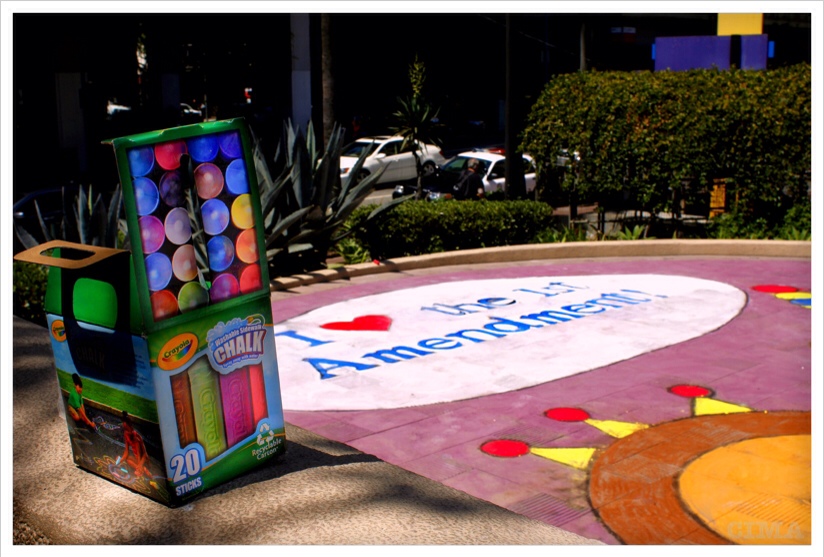
I took this today in downtown Los Angeles' Pershing Square where Occupy protesters intend to make more chalk art tonight. Last month protesters were attacked by police in riot gear simply because they were drawing on sidewalks. Apparently the legal scholars at the LAPD think the use of children's chalks made by Crayola is illegal when an adult is doing the drawing. As protests go it seems to me that chalking is one of the less obnoxious. I have read that courts nationwide are dismissing these chalking cases. Prosecutors in LA have refused to press charges against those recently arrested by our inexplicably cranky police.
 
It's really okay, officer! Seriously. Just enjoy all the pretty pictures and move along. It all washes off in the rain.


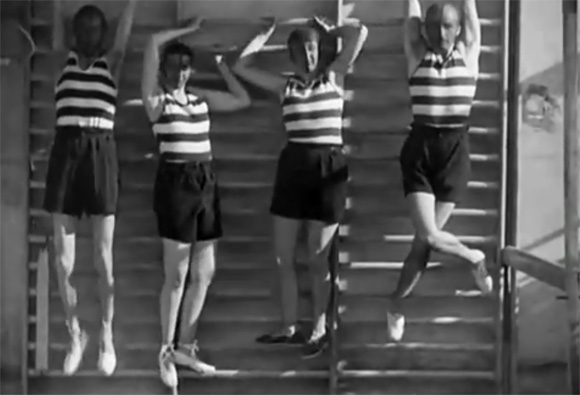
Les Mystères du Château de Dé: 1929 Film by Man Ray

Surrealist art great, Man Ray, made this film in 1929. It follows a pair of indecisive travelers who base all their action on chance. They head out to a fabulous chateau in the hills and wander around inside and out. They run into four odd persons who enjoy swimming and running about as if the place is their private gym. But what is Man Ray doing here? Why all these shots of windows, lamps, sculptures? He is finding the abnormal in the normal. Wherever he happens to be with a camera he can make the surreal. He’s functioning as an artist, looking for odd angles, shadows, contrasts. He is also diving into the great current of his culture. The house is a castle filled with fine objects and great art. Man Ray is expressing his enthusiasm. This is an extremely childish film. I mean that as a compliment, though I really see nothing exceptional in works for children. But for an artist to function as a child for a certain amount of time is extraordinary and beneficial I think. But that kind of thinking must end and lead to its own destruction. In other words, I do not think any children’s author or illustrator should ever continue to work in that way for more than a few years. Then it is time to think about serious things and to make things that upset people. Perhaps that is my main criticism for most of the things I have seen by Man Ray. He seems a little bit too pleasant. I might be wrong about that. I have to look a little more.

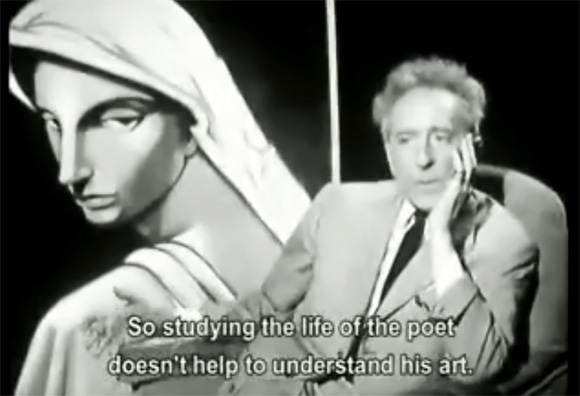
Jean Cocteau – Lies and Truths: 1996 French Documentary


This is a 1996 documentary by Noël Simsolo, featuring many interviews with Jean Cocteau himself, Jean-Luc Godard and actor Jean Marais. The great French director of films like ‘Blood of a Poet,’ ‘Orpheus,’ and ‘Beauty and the Beast,’ was also an essayist, poet, artist, and playwright. When I was a kid I read the book he wrote about filming ‘Beauty and the Beast.’ I understood little of it except that there was the general impression of someone working against constant hardship to attain a mysterious something. The book detailed his struggles with the subtleties of light, weather and performance in the pursuit of a mysterious quality that must be present in the fairytale. I knew that his efforts had worked because I had seen the film on television and understood that it was simply the most convincing fairytale I had ever seen. Another film with this totally mysterious quality is ‘Orpheus,’ which is Cocteau’s modern version of the Greek myth in which the great musician/poet descends into the underworld to bring his wife back to the world of the living. Cocteau’s telling of the tale is at once ancient and modern, always mysterious and always trying to get close to poetry. Whenever I see that film I feel that I am seeing an important picture of French artistic life in the late 1940s told through the prism of ancient Greek myth. The film sits in that fascinating period of artistic ferment and dawning of a new cinematic movement that was a reaction to the end of World War II. Possibilities in films of that period seem limitless. There is a calmness of the image, an almost casual approach to creating scenes. Things are becoming more fluid and less studio-bound. Films are beginning to lean toward poetry and art.

Even though I never really understood what was being said in the ‘Orpheus’ film, it is probably one of the most important influences on the little bits of work that I do in film and video. Various images and scenes from ‘Orpheus’ regularly pop into my head as I work.

One of the best things I think an artist can learn from looking at Jean Cocteau is to follow one’s own interests without worrying about being unqualified – pretending can eventually get you where you want to go if you do it absolutely.

Continue reading

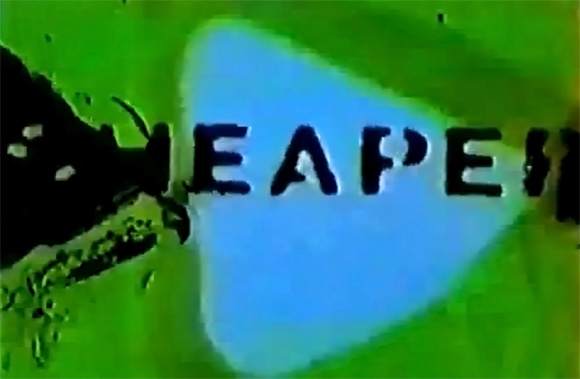
A Colour Box: 1935 Abstract Direct Paint on Film Animation by Len Lye

Len Lye’s 1935 film, ‘A Colour Box,’ was made by painting and applying dye directly to the film surface. It is apparently the first direct paint film to gain a general public release and has been widely seen ever since. The film is an odd way to advertise for cheap parcel post and this message starts popping up near the end. The cheerfully infectious music is ‘La Belle Créole’ by Don Baretto and his Cuban Orchestra. Lye’s work must have been hugely influential for the later work of direct paint filmmaker Stan Brakhage.

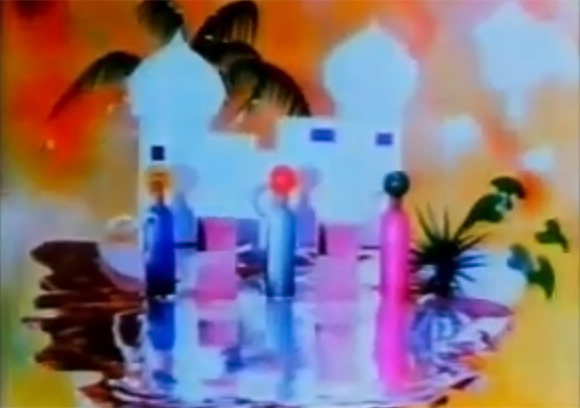
The Birth of the Robot: 1936 Experimental Advertising Film by Len Lye for Shell Oil Company


In 1936, experimental filmmaker Len Lye made this short surreal animation to advertise the benefits of Shell oil for lubricating things. The film is a hyper-saturated stop-motion extravaganza that involves a mechanical world turning on some sort of hand crank. There’s an adventurer driving around the sands of Egypt. His car winds down and konks out leaving the man dead in the desert. The angel of oil rains drops of lubricating crude down on the Egyptian landscape bringing the parched skeleton to life as the Shell Oil robot. Fascinating. It’s got that awkward, shiny, naive beauty that could only be achieved in the 30s. Parts of this thing look like they might be influenced by Salvador Dali’s work. Something about that dead skeleton and the desert looks like it could fit right into the Surrealist master’s paintings.

Lye was from New Zealand and worked not only as an experimental filmmaker but also in newsreels and advertising. He was a kinetic sculptor, poet, painter and a writer of essays on artistic theory and philosphy. He made a 1935 short film called ‘A Colour Box’ which was the first generally exhibited film made by painting directly on the film emulsion. It’s a brilliant experimental animation posing as an advertisement for cheaper parcel post.  I’m sure the great direct paint filmmaker Stan Brakhage must have been familiar with Lye’s work.

Here’s a gallery site with information and examples of his artwork.

Detective City Angel: A Film by Alessandro Cima


MATURE CONTENT AND LANGUAGE
First, here’s a nice review and interview about the film at Dangerous Minds. Want to follow a secret identity artist through a dangerous Los Angeles as he escapes and hits like a criminal? Hang on and watch carefully. You may need to watch it 14 times to catch the drift. But you’ve probably got that kind of time anyway. This is a Los Angeles crime film. But it’s as if several films on celluloid fused together and what you end up with is an art film that gets overwhelmed by urban documentary and then collapses into a narrative thriller. It’s filled with hints, clues, evidence and misdirection. Images, ideas and sounds bounce off each other, mirror each other. There are secrets in this film. You have to watch carefully, through layers to catch things. I’ve tried to make a film that moves like disjointed thoughts toward the preordained ending. Continue reading

Crosscurrents: Film About Pacific Standard Time Art Exhibits Focused on Los Angeles Art From 1945 – 1980

Pacific Standard Time is a massive overview of Los Angeles art from 1945 to 1980. At least sixty galleries and museums are taking part over the next few months. I have already been to the largest exhibits at the Museum of Contemporary Art, Los Angeles County Museum of Art, and the Getty Center. The whole thing is a lot of fun and I have discovered artists I never knew about before. There are magnificent things on display and the curators have also published big books to go along with each exhibit. I seriously recommend that you always get the books because they have far more information in them than the exhibits themselves. I view it as my own effort to compile a record of this unique regional art show.

You can find almost everything you need at the Pacific Standard Time web site.

This film was put together for the Getty Center’s flagship exhibit, Crosscurrents, which covers 1950 to 1970. It’s a very nice little documentary about some of the major art developments in Los Angeles.

Los Angeles to Ease Restrictions on Murals

The Los Angeles Times reports that the City Council is easing its restrictions on outdoor murals.  It will no longer classify them the same way it does billboards.  Since 2002 it has been illegal to paint a mural on private or public property because the artworks are considered advertisements.  But Los Angeles is going to try to do a better job of distinguishing between the two.

Of course this will all get muddled again as soon as an artist paints a figure holding a can of Coke!  Is it art or is it an ad?  As a rule though, it is never difficult to tell when something is a giant ad and when it’s not.  It just takes a little common sense and observation.  Surely the City Council can manage this.

But the bottom line is that the murals of L.A. are inspiring and extraordinary.  The city needs to reclaim its title as ‘The Mural Capital of the World!’

The photo is a portion of a photo by Al Seib for the Los Angeles Times,  April 6, 2011.

Seizure: A Magnificent Cry for Art by David Vaipan

At the start, I’ll say that this is one of the most magnificent films I have seen in years. David Vaipan has made this relentless and fully-committed scream of artistic intent, desire, confusion, effort and love. This is a film about being an artist. It is a film about fear and confidence. About effort, will and failure. Vaipan simply takes the entire history of art and all that it has given him and dumps it out on his desk and turns it all into his own material. All of art, music, film, literature and poetry become Vaipan’s crayons and he uses them to tell his own personal story.
The film bombards with imagery. Just gaze in wonder at the crayon animated memoir that’s presented like a little puppet theater show. It moves from birth to boarding schools to Wall Street and beyond with effortless skill. The drawings are amazing and funny. Just when you think you’ve seen plenty Vaipan moves into a stick figure run through the history of art and it just keeps coming at you. He cuts and chops and mixes and slides and just keeps streaming the grandeur of art at us like a force of nature. He’s completely lost inside the world of inspiration. He sees the fear of getting lost in the pile – the fear of being ignored – and he literally revels in the fear itself. He makes the fear seem like something to seek. This is a grand and important statement from someone who I think is a young artist. The tools of his trade are digital and he uses them freely with a wild eagerness to explore that is extremely difficult to maintain. The unabashed use of video effects and computer equipment as if they are the oil paints and charcoals inside a painter’s box is one of the hallmarks of the emerging American video art movement. I can see the influence of Ryan Trecartin’s work in this. There’s a familiarity with digital layers that is of primary significance in this recent art. There’s a hard-edged willingness to allow the digital processes to show through. It’s sort of a freedom with the computer and video that means one doesn’t have to make anything necessarily look the right way or look like something it isn’t.
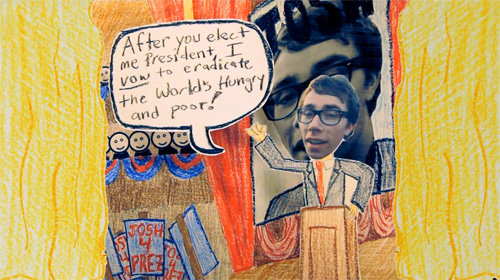
You have to really watch this film very closely and try to catch the pieces of the roaring mass of art thrown at you. Even the ending credits are a complete statement in themselves with the director drunkenly singing the Rolling Stones’ ‘Sympathy For the Devil’ in the background.

So many people are part of this film. Kenneth Anger, Stan Brakhage, Jean Luc Godard, Maya Deren, Luis Bunuel, Stanley Kubrick, David Foster Wallace, Michael Snow, Agnes Varda, to name but a few.

I know that the intertitles and other things flash by too quickly to grasp and maybe that intimates something about the info-age and attention spans, it’s why your lord Hiesos Kristos, magician of the beautiful, invented the pause button and that’s also why the real Creator (one D. Vaipan) put this on the internet rather than wherever, because you have control.

See? That’s one of the little treasure waiting for you in the end credits of this gigantic and raving epileptic fit of a film that should ultimately bring you close to tears and make you want to explode in all directions and actually truly and finally… make something!

Here is the artist’s web site.
Write Like a Pretentious Artist! The Arty Bollocks Generator!

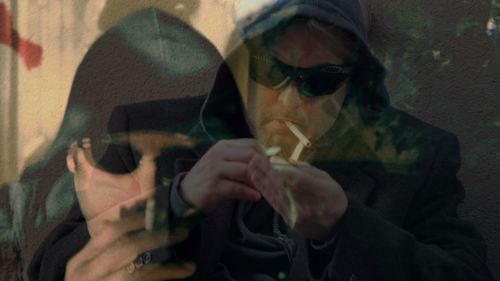
German film director, Werner Herzog.

If you simply must hang your work in a gallery, then here is the tool you’ll need to make just the right impression on your viewing public: The Arty Bollocks Generator.

It’ll flawlessly create your entire artist’s statement for any truly serious and irreproachably artistic endeavor.

Some samples:  ‘My work explores the relationship between the tyranny of ageing and skateboard ethics.’

‘As shifting phenomena become frozen through emergent and personal practice, the viewer is left with a statement of the limits of our world.’

Please be serious, donate to a charity, write a manifesto, and for god’s sake go to a gallery for some bloody education!  Then take yourself to see a fine German movie… film, I meant ‘film.’  Okay?

Now get going.

And for further sublime examples of pretentious statement-making, try Werner Herzog’s film school!

TED Film From Arrested Chinese Artist

This is a film presented at the TED conference from the famous Chinese artist who was recently kidnapped by Chinese authorities. He has completely vanished along with thousands of other artists, journalists, writers, intellectuals and human rights workers who have been taken in the past several months. This artist speaks very simply and clearly about the situation in his country where his government watches him all day long and sees nothing wrong with bulldozing his studio to the ground because he expresses some criticism of what he sees around him.

What I do not respect about this video is the simpering nitwit from TED who introduces the film by stating that the TED conference takes no position on China. He then goes on to bend over for China and mentions how many people have been lifted from poverty in China. How far up China’s ass can this guy fit his head, I wonder? How can any organization not take a position on China? I’m sure if Hitler were around today and rambling across the land on an extermination campaign, this bunch from TED would take no position on that.

Look at this little notice on TED’s YouTube page where the film is hosted:

TED is a non-partisan, nonpolitical organization and we understand the Chinese authorities concern at anything which might provoke social unrest. But for anyone who believes in the power of ideas, of human imagination, it is heartbreaking to see one of the world’s great artists shackled in this way. We will be tracking developments carefully. Here is the film.

TED ‘understands the Chinese authorities concern at anything which might provoke social unrest!’

Oh my god!  Yes indeed.  They understand this concern of a totalitarian murdering government that is more than happy to make people vanish into prison because they want to complain about being beaten by a policeman.

Hey TED, here I come with my ticket!  Gosh, I wouldn’t want you to be concerned that I might boo one of your presentations.  Wouldn’t want that, would we?

Lifting people out of poverty in China is not what we need to be doing. We need to be shutting these people out entirely. We need companies that do not fill their computers with Chinese parts. We need toys that do not come painted with Chinese lead poison. We need to treat this totalitarian country the way it deserves to be treated. A rich China doing business with every company on the planet is not going to advance freedom for anyone. China needs to be pushed into abject and brutal poverty. Only then will the conditions exist for a revolution.

I opened up my Dell computer the other day to blow some dust out. The first things I saw were multiple ‘Made in China’ stickers on various components. Screw Dell. Screw every Western company that buys a single circuit board from China. Screw China.

Justus 2: A Film by Ryan Spring Dooley

Ryan Spring Dooley (aka MarvinTiberious on YouTube) and Juppy Nash made a catchy little tune and played it on an Italian rooftop where they could enjoy the place they were in and become infected with art. Dooley’s films are a constant stream of creativity and artistic perception unlike anything else. He combines old and new and creates works so easily expressive that you wonder why anyone needs anything more than paper, paint and a camera to do anything. Watch this film and wonder at just how good it really is. Masterful.

The filmmaker is also using Kickstarter to fund a bigscreen project:

A Chinese Fairytale

I’m going to be somewhat cryptic in this post because I’m attempting to get in underneath China’s diligent web checking people.

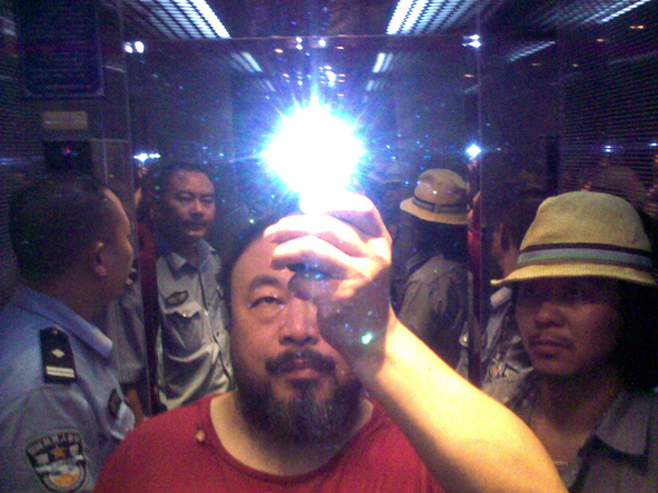
China has been kidnapping large numbers of artists and intellectuals who completely disappear.  They recently took the artist in this photo.  While he was being taken away he snapped the photo of his reflection inside an elevator.  He’s very famous.  He has been totally vanished by the Chinese.

Many others have too.  They are being taken and vanished because China is very afraid of something.

They are afraid of something big.  Something that was to be peaceful – the way it has been in some other countries recently.  But in China you cannot do it peacefully.  You will be murdered if you try to do it peacefully.

You must do it with an explosion.

You must do it quickly.

The Chinese can eliminate their problem.  The problem is usually to be found wearing a uniform.  It must be eliminated quickly and by any means at hand.  If you are in China, you are living in a massive slave camp that provides slave labor to Western corporations.  You might decide that you want to end your slavery.

That is my message to the people of China.

Painting: Japanese Widescreen

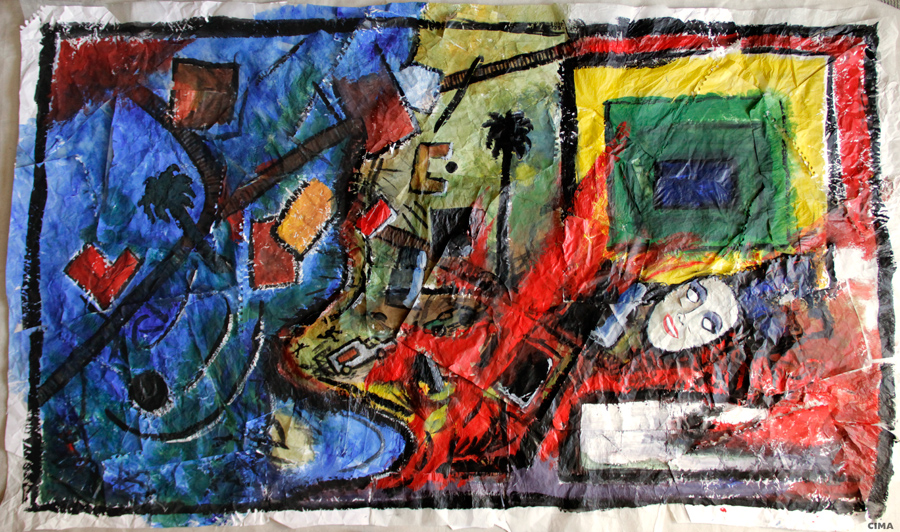
For Japan via Los Angeles. I photographed the painting in morning light today to try and show the details better than in last night’s photo. The painting is not quite finished yet, but I wanted to post something. It’s acrylic on various types of paper. Dimensions are approximately 6′ x 3 1/2′.