The Fantastic Flying Books of Mr. Morris Lessmore: Oscar Winning Short Animation

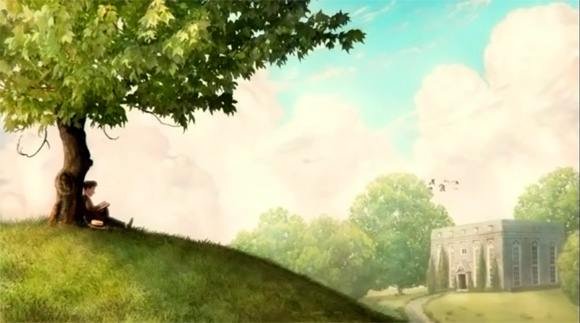
This is the 2011 Oscar winning short animation, ‘The Fantastic Flying Books of Mr. Morris Lessmore.’ It’s the first film from Moonbot Studios in Shreveport, Louisiana. It was co-directed by William Joyce and Brandon Oldenburg

The film is also an iPad app that combines animation with an interactive picture book narrative.

Here’s a Cartoon Brew interview with the filmmakers..

Visions of the Future – Science Fiction Art of the Second Golden Age

This is an amazing and obsessive immersion in science fiction illustrations from what is known as the Second Golden Age. It’s mainly lots of cool science fiction imagery from the 1970s and 1980s.

Part 2

Parts 3 – 5 after the jump

Continue reading

Artie Knapp Children’s Book Announcement and Online Tales

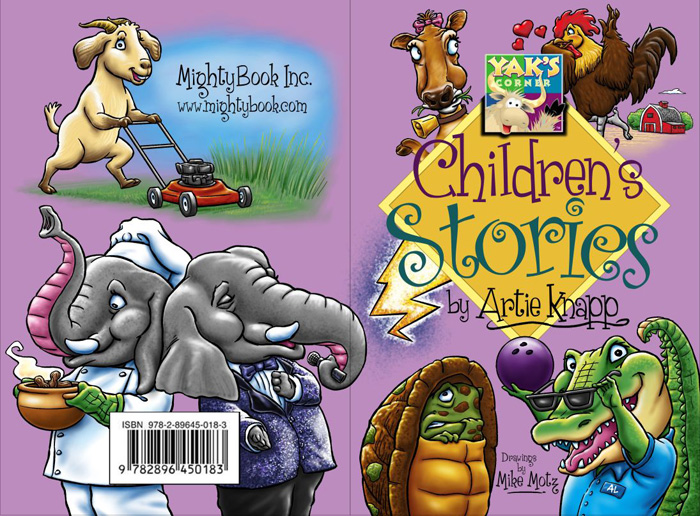
Artie Knapp writes marvelous, cheerful and gently humorous tales for children.  He’s been offering his stories to this site for years and I always look forward to a new one.  Knapp’s latest accomplishment is an illustrated book of stories published by Mighty Book, Inc. and illustrated by Mike Motz. The stories included were previously published by Detroit Free Press/Yak’s Corner.  It will be available soon and I’ll post an update when it hits the shelves!

In addition to the upcoming print collection, Knapp has begun offering his children’s stories through Mighty Book’s web site.  His recent story, Stuttering Stan Takes a Stand, is available as an animated read-aloud/read-along that is a perfect way to introduce your kids to the Artie Knapp story universe.  I am proud to say that I produced the audio and narration for the read-along and I think Mighty Book has done a wonderful job creating an interface for children.

It has also won some recent awards, including the Speech Woman’s Speech-Language Pathology Site of the Month Award for January 2011 and the Stop, Think, & Speak Award, which was a student nominated award from Penn State University.

You can also buy Stuttering Stan Takes a Stand from Amazon.

Mighty Book will soon publish more Knapp stories, including The Wasp and the Canary, The Hummingbird Who Chewed Bubblegum, and There’s a Crocodile in Our Pickle Jar, as fully illustrated Flash-animated books.

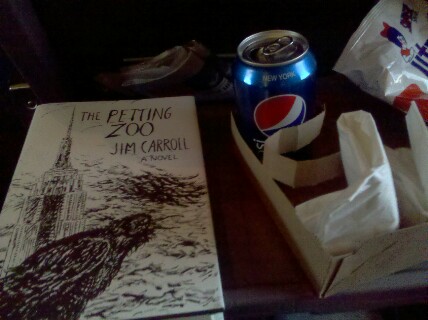
The Petting Zoo by Jim Carroll

image

Oh boy have I found a great book!  Poet Jim Carroll was finishing this thing up when he passed away in 2009.  I have only read 73 pages so far but I recognize this as one of the greatest novels I have ever read.  A New York painter reacts strongly to some paintings by Velazquez, stumbles into Central Park and winds up in the looney bin where he finds some time to think straight.  Simple and magnificent.  What a damn great writer!  I think this will actually be the first novel I write a review of.  Now back to reading.

The Books of Anselm Kiefer

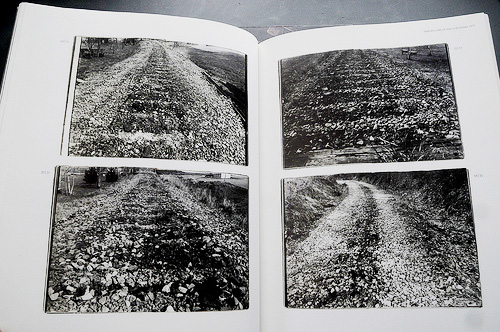
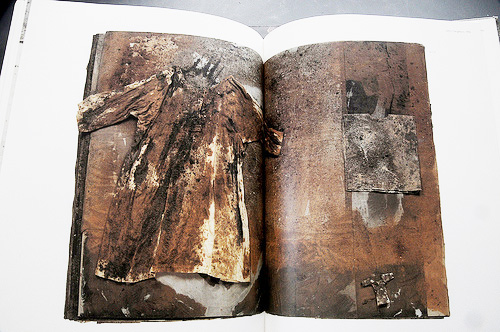
The Art of Memory, a blog that specializes in minimal film, music, literature, poetry and art, has posted a series of images from a rare book called The Books of Anselm Kiefer, 1969-1990Kiefer has worked on books since the sixties and incorporates many different materials in them, including photography, painting, sand, straw, cloth, and metal.  The books are one of a kind artworks and are seldom seen.

There is always something fascinating about a book made by the hand of an artist.  The problem with seeing books in museums is always the same though: you can only see two pages of any given book.  But since most people have no experience with turning a book’s pages, you simply would not want to trust patrons with this responsibility.

One of Kiefer’s main instincts has always been to try to look directly at the horrific history of Germany in the twentieth century.  These book pages contain some of his attempts to do so.

Film: Sweetheart

Here’s a music video made entirely out of illustrations, photos, and text from second-hand books! I never watch music videos all the way through. But I watched this one and admired its clever associations of images to lyrics. It’s all spelled out for you in the most charming and humorous way.  Good song too!  Ben Reed made this for a band called The Wave Pictures.

Gojin Ishihara’s Freak Art for Kids

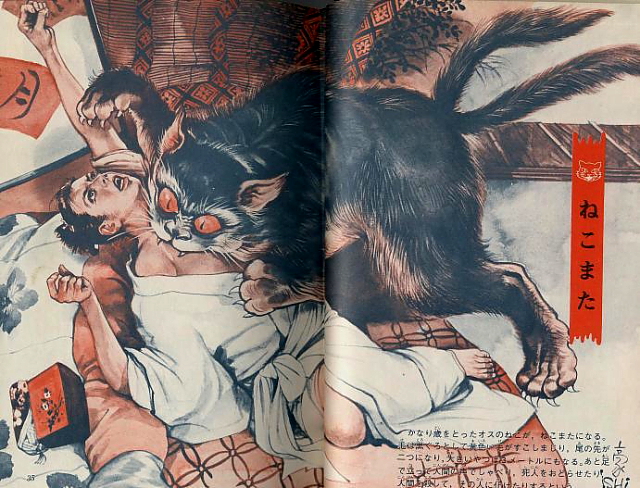
Pink Tentacle has an amazing collection of freakishly bizarre Japanese children’s book illustrations by Gojin Ishihara from the 1970s.  His marvelously comforting work features various humans being eaten, strangled, decapitated, tortured and generally threatened by every sort of demonic beast possible to imagine.

Well worth your time.

Visit the macabre collection of sweet children’s pictures.

Do Books Work as Memory Theater?

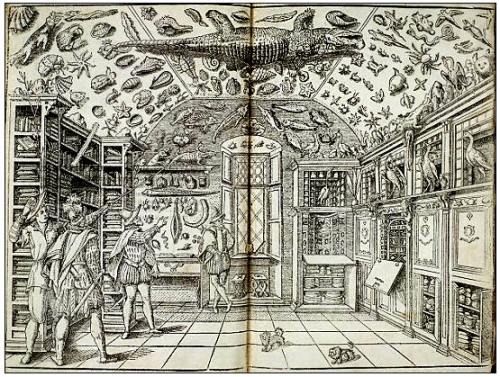
Open Letters Monthly has an article called In Defense of the Memory Theater, by Nathan Schneider in which he argues that books on shelves perform the function of reflecting memories back at us.  They are a constant reminder of the various events, stages, and emotional states of our lives.  We look at our shelves and can instantly catapult ourselves back in time to events surrounding our reading of various volumes.

Schneider mentions a 16th-century memory theater that used images and symbols of the cosmos to inspire observers and enhance their intellectual powers.  Books, for Schneider, do something similar when they are visible on our shelves.  I agree up to a point.  I am often taken back in time by my own books upon their shelves.  But so am I transported by nearly every object in my home.  Objects all have this power.  Books are not exceptional in this regard.

Continue reading

Newsreel Film From 1947: Making Books

“This man is an author. He writes stories. He has just finished writing a story. He thinks many people will like to read it.” So begins this 1947 Encyclopedia Britannica film about how books are printed and bound. Almost none of what you see in the film, with the possible exception of the book trimming blade, exists anymore. It’s fascinating and horrifying at the same time. Fascinating because we get to see the mysterious process of making a book. Horrifying because we see how machines dictate the movements of human beings in an assembly line environment.  It’s so dreadful that I may never want to read an old book again.  Perhaps e-books are some kind of salvation after all.

Is Stealing eBooks Ethical?

Is it ethical to steal an eBook if you’ve purchased the hardback version?  Sure.  Stealing the hardbacks themselves is much more fun though.  Is it ethical for a publisher to charge what they charge for hardbacks?  No way at all.  Sorry publishers, your pricing sucks and you know it.  So, certainly it’s ethical to steal an eBook if I’ve been robbed by the hardback price already.

Now of course all the minimum wage proof readers in New York City will pounce on me and call me terrible names because they dread being turned into temp workers.

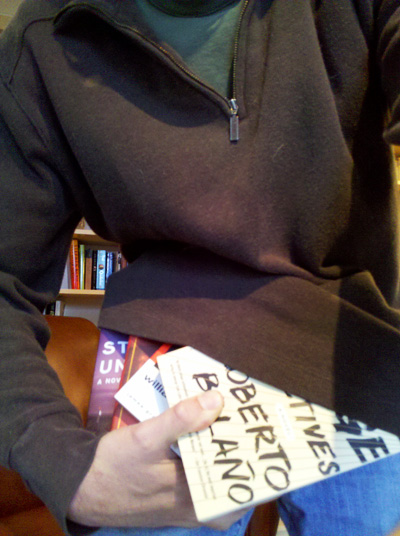
But stealing books is a real talent.  You need a big army jacket that has lots of giant pockets inside and out.  It’s best to steal them from large grocery and discount stores.  eBooks are too easy to steal and you never really know what’s waiting for you on the other end of a download link anyway.  The photo is of me demonstrating my own book-stealing technique.  I have amassed quite the respectable library this way.  But I never lend books out because they seldom make their way back home.

Here is an effort by a New York Times writer to answer the question of whether stealing ebooks is ethical or not if you’ve already bought the hardback.

But here’s a better piece at The Millions about an eBook pirate who’s pretty clear about what he likes.

Also, if you want to see how stealing books actually improves the world and culture, read The Savage Detectives by Roberto Bolaño.
The Nature of the Book

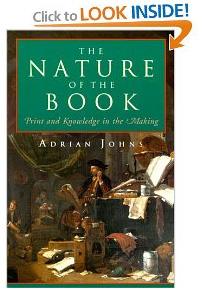
I sat down with my Kindle e-reader on Saturday morning to read the Los Angeles Times.  There was an article about an L.A. used bookstore called Iliad Books.  Sounded nice.  So I went.  What should I find but a section of books about books and publishing.  There was a copy of The Nature of the Book: Print and Knowledge in the Making by Adrian Johns. The author’s main thrust is to examine how books in early modern England influenced and largely caused the development of the modern scientific method and the general acquisition and spread of knowledge. He wonders why readers assume that books are accurate and fixed. This is an interesting inquiry in light of the recent changes in publishing which involve ever-changeable electronic publishing and web postings. The history of the effort to make books fixed and true representations of their authors’ intentions and ideas is a fascinating one. It includes an analysis of widespread piracy that dogged publishers of books from the very beginnings of printed material.

Thinking about the nature of books and their history, along with the underworld of book manipulation, piracy, copyright, and the conveying of knowledge is essential as publishing undergoes its greatest changes since the beginnings of the printed page.

An Aerial Literature Puzzle

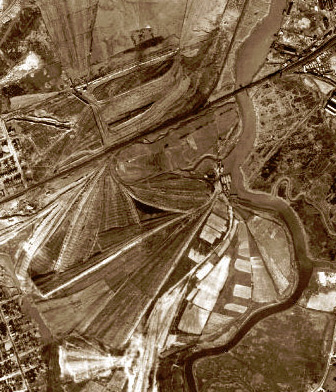
Head over to Literary Kicks to try your literary knowledge against a cool puzzle.  Guess what the picture is of and what it has to do with a book.  This kind of thing can keep you going for hours while you hunt through your book collection for clues and learn about fascinating web sites you never knew existed.  I spent quite some time going comfortably down quite the wrong track with this little puzzle.  But then… Aha!  My mistake became obvious.

Try the contest at LitKicks.com.

Barnes & Noble Nook is a Dreadful Failure

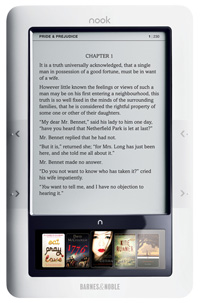
I’ve been so waiting with my bated breath and all for this magical Nook machine from Barnes & Noble.  I was in a right dither tonight about an hour and a half ago as I shoved my reading glasses into my pocket, put my regular glasses on my face and piled into my car for the short ride to my nearest Barnes & Noble bookseller.  But I stopped first at the Lenscrafters to run in and have them adjust my frames because my glasses are so new and have been drifting over lopsided all week.  So the woman there fixed them up nicely and shined them good.  Then I drove on toward my Nook encounter.

The store had a lone unit attached to an anti-theft device that scared the hell out of me because I tend to demonstrate new devices to myself until nearby customers think I’m a lunatic and I certainly didn’t want to raise any alarms.  The Nook said, ‘Press the Power Button to Wake Up.’  I spun the device around several times until I located said button embedded in the upper edge of the Nook.  I pressed it.

I waited.

Then I pressed it perhaps fourteen or fifteen times to try and make something wake up.  Then the screen went through a series of blinks, flashes and some rather frightening symbols appeared and then disappeared.  And then the machine said, ‘Press the Power Button to Wake Up.’

Continue reading

Planisphere: New Book of Poems by John Ashbery

PlanispherePoet John Ashbery has published a new book of poems called Planisphere.  Boy, I hated this guy’s poems a few years ago.  But I kept reading them because of some instinct for self-inflicted mental damage.  And I kept reading him.  Not understanding him at all.  But I liked the words as they passed me by.  They sort of slide on by you.  Smooth, but switching and becoming something totally unexpected, unrelated to what just happened before.  His poems sort of shimmer and seem a bit brittle, like glass.  When you read this guy you certainly know that you are not reading someone else.  He’s in his eighties, but his work seems like a young man’s.  He has a gently rebellious foolishness that I greatly admire.

His publisher, Harper Collins, has a preview of his new book that offers quite a few of the poems.

So does this sound like the writing of an eighty-year-old?

I dream of married couples having sex, shopping, everything,
and often get the giggles, staying here,
expecting something new to come along every five seconds.
That’s new to me, I expect others will have heard about it.

B—’s Mysterious Greeting

And here’s the guy: