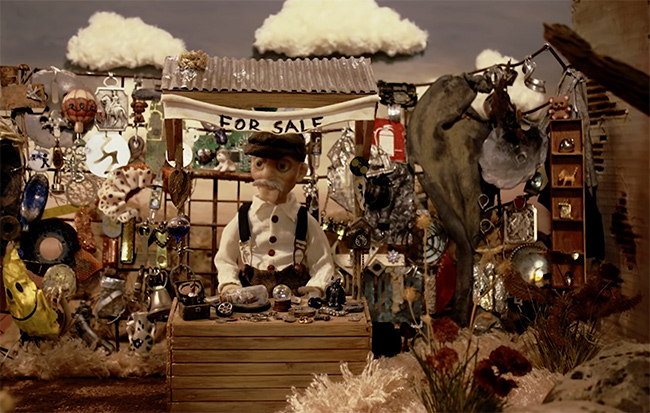
Stan: Beautiful Hand-Crafted Animated Film by Meirav Haber

StanTheFilm

I recently went into the Hive Gallery in downtown Los Angeles. Making my way toward the back of the long row of artists’ stalls – for all intents and purposes an artists’ neighborhood – I encountered an animated film playing on an iPad that was hung on the wall of the display area for artist Meirav Haber. It caught my attention because of the gorgeous and finely detailed handmade dolls she uses for her animation. This kind of filmmaking has become something of a rarity in our CG world. So now the eye seeks out the human touch. Finding it is a pleasure.

Haber has an unusually quiet and calm approach to telling her story. We are encouraged to watch the character and look for the details in his surroundings. The details are incredible. Watch the film through, then go back and pause it to have a look around. Enjoy the work of a master at her craft.

This kind of animation is done in a small studio on tabletop sets built by the artist. It’s all about imagination connected to the hand.

Stan is a simply told tale about a man who was born with an unfortunate resemblance to the Devil. His efforts to gain acceptance and companionship essentially turn him toward an appreciation for odd objects that closely resembles the artistic impulse. Haber’s beautiful film is made entirely with the magnificent hand-crafted artworks of an amazing artist.
Continue reading

Jeff Keen’s Dreams of the Archduke Sketchbook

JeffKeen1

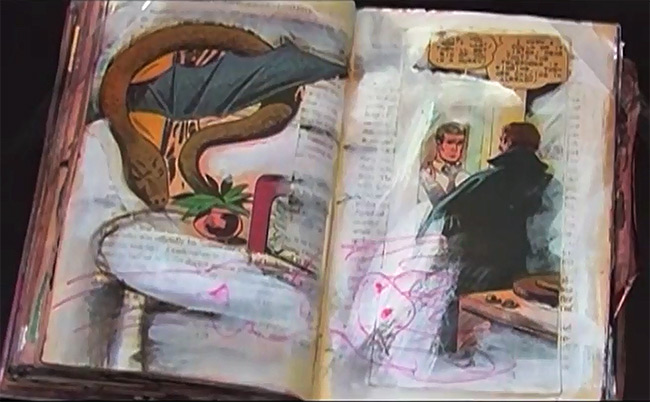
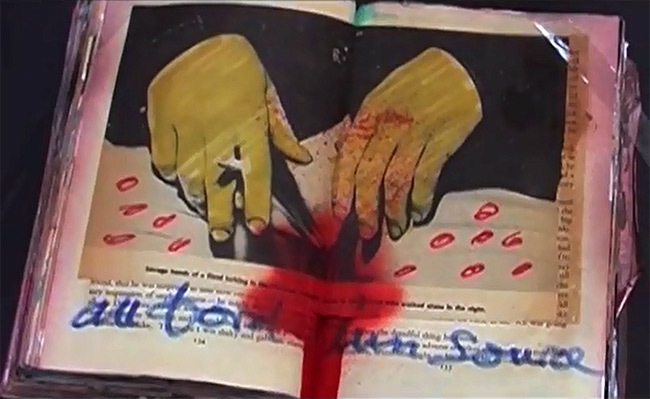
This is a short film made for a gallery showing of works by the late great British artist and filmmaker, Jeff Keen. It’s a soundless page turn through a series of brilliant and inspiring pages in a sketchbook. If you are at all familiar with his amazing film work, you will see how directly connected to that work these pages really are.


JeffKeen2

If you are unfamiliar with Keen’s incredible and very influential film work, here is a treat for you. It’s his ‘Marvo Movie’ from 1967.


Masters of Photography: Diane Arbus

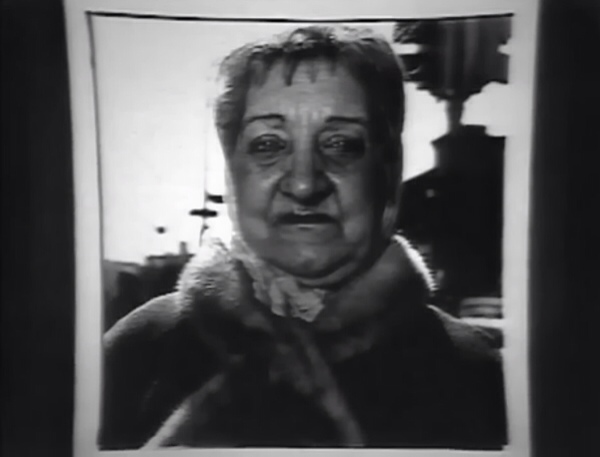
This 1972 documentary on the brilliant photographer Diane Arbus contains her own words which turn out to be quite possibly some of the most penetrating observations and comments about the art of photography that one will ever hear. She says she never takes a photograph that she intended. She says what a photograph is of is more important than what it is.


Grand Central: Animation by Fred Aujas

Okay, I have no idea what this is but it was submitted to my Vimeo short films group and I like it. It has a goofy look and it just makes me laugh even though it’s in French. It actually appears to be the work of a graphic designer named Fred Aujas. Here is how his web site describes this little film:

Outrageously Ferocious and vulgar !
A trashy animated series worthy of the great grindhouse films of the 70s.

I mean seriously this thing should just go straight through to a full-blown TV series. Right now.

The artist has a very cool web site.

The Quixotic Videos of Steve Roden

Artbound produced this short documentary video about artist and video-maker Steve Roden whose recent work has taken inspiration from composer John Cage, philosopher Walter Benjamin and choreographer Martha Graham.

The artist says,

I think failure is one of the most important things you have as a maker because that’s when you learn the most and you realize what you want. It’s not just about doing something bitchin’.

Artbound has an article about the artist’s recent exhibition.

Tormenta by Los Angeles Artist Gronk

 
Whenever I'm in a Los Angeles art gallery if I notice a piece by Gronk I always get snagged and hang around in front of it for too long. I tire easily of galleries and museums because of the general impatience you encounter in those places. People are at their absolute bottom level of stupidity when they saunter through a gallery, stopping for just an exquisitely timed observation period sometimes directly in front of where you happen to be standing. They also tend to move around a room in the same direction, going with the flow or listening to their little tape-recorded tours. I like to go backwards and jam these people up a little. I also like to massively flirt with pretty women but often get into trouble with their boyfriends whom I haven't noticed lurking in the opposite corner.
 
Gronk makes me feel at home in a gallery because I like to stand before greatness. I'm not fond of the equalization of creativity. This guy just casually blows everything off the walls like he's the kind of great artist we made in the time of Pollock. There's an air of hard-edged bohemian mixed with muralist mixed with art history scholar. In other words, he knows what he’s doing. He's got an enormous classical underpinning that may sometimes get obscured if you too closely associate him with the Los Angeles street. I mean classical in the more inaccurate general sense of an artist that has a deep connection to the artists and major movements that came before him. I see a calm and understanding continuation of American art history coming through the few Gronk works I have had the pleasure of standing in front of.
http://www.youtube.com/watch?v=nxbgDQHRyks
 
Gronk on ArtNet.
L.A. Times 2005 profile of Gronk
Complete list of works


A Brief History of John Baldessari: Narrated by Tom Waits

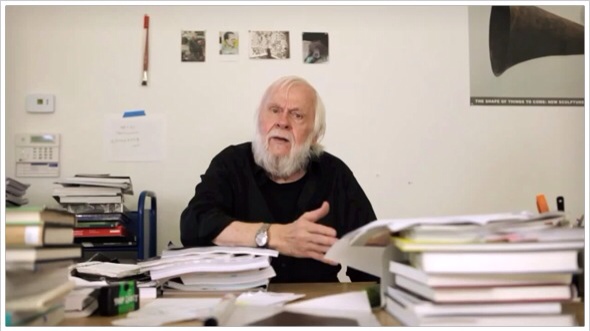
Here is a short humorous biopic about legendary Los Angeles artist John Baldessari. It was directed by Henry Joost and Ariel Schulman as a commission from the Los Angeles County Museum of Art. It’s wonderfully narrated by Mr. Tom Waits who was apparently picked by Baldessari for the job. If I have criticism of Baldessari, it would probably be that he has too much fun making art. Actually I’m not kidding. It’s a harsh criticism from where I stand. But I still like his work. I know his printer in downtown Los Angeles. He lets me stop by now and then to see what’s cooking on his great big old-fashioned printing press. In fact, I am the proud owner of an original signed Baldessari artist’s proof. It makes me smile with confusion whenever I walk past it. Despite Baldessari’s obvious enthusiasm for making conceptual art, there’s a lurking seriousness underneath all those colored dots and old time movie stills. He makes art in the margin between painting and filmmaking.


Maurice Sendak 1928-2012

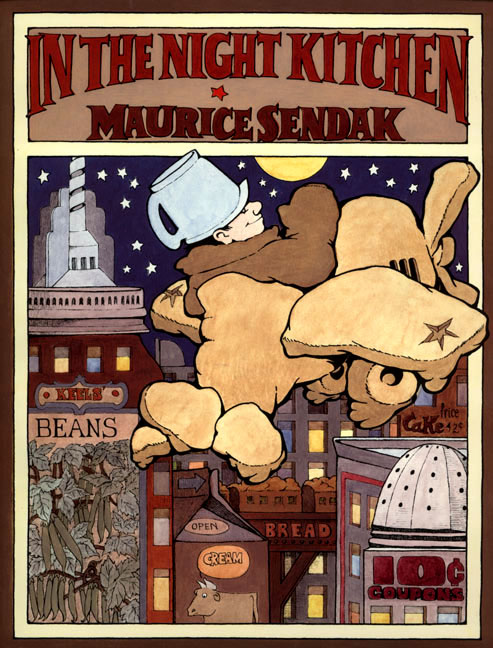
The great children’s book author Maurice Sendak has passed away.  He was 83. I always liked the way he used black edges around figures in many of his drawings. His most famous work, ‘Where the Wild Things Are,’ was always my least favorite. I never liked those particular drawings. They seem confused and fuzzy. I always took the most inspiration from his more controversial book, ‘In the Night Kitchen.’ Its drawings seemed to me to have a calm effortless quality. In fact, when I began this site years ago I often referred to Sendak’s work for simple pointers on illustration. His ‘Nutshell Library’ is the one that goes back the farthest into my own childhood memories. Its incredible simplicity and perfect match of words to pictures make it one of the great all time children’s collections.

Children’s books will suffer for the absence of Mr. Sendak and his incredible genius.

Here’s a relatively recent video with Sendak talking about his work and his admiration for poet William Blake.

Documentary: Los Angeles Meets the Megalith

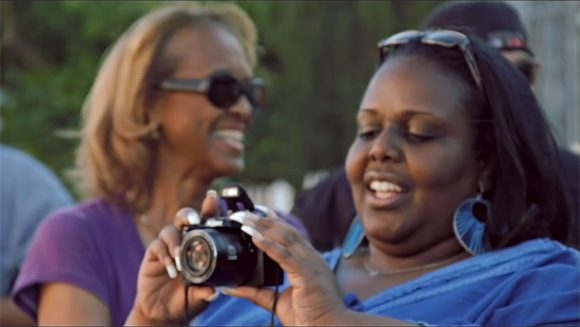
Artist Michael Heizer’s enormous new work on the grounds of the Los Angeles County Museum of Art required a 340-ton boulder as its centerpiece. The boulder had to be transported over 100 miles from its quarry. At first, I was very interested in this rock. It’s huge! But soon I became more interested in the city’s reaction to the rock. So this film documents the final few miles of the rock’s journey, but it also documents the people who came out to be a part of the great Los Angeles rock transport. The film is part documentary and part personal impression. The simple fact of the matter is that the rock’s arrival is an unusual milestone in the life of this city. You can tell that simply by looking at the faces in my film.

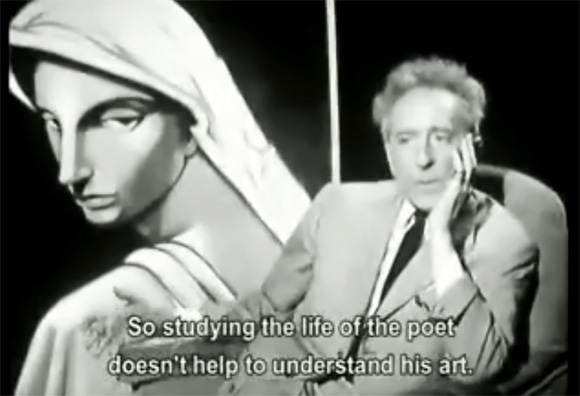
Jean Cocteau – Lies and Truths: 1996 French Documentary


This is a 1996 documentary by Noël Simsolo, featuring many interviews with Jean Cocteau himself, Jean-Luc Godard and actor Jean Marais. The great French director of films like ‘Blood of a Poet,’ ‘Orpheus,’ and ‘Beauty and the Beast,’ was also an essayist, poet, artist, and playwright. When I was a kid I read the book he wrote about filming ‘Beauty and the Beast.’ I understood little of it except that there was the general impression of someone working against constant hardship to attain a mysterious something. The book detailed his struggles with the subtleties of light, weather and performance in the pursuit of a mysterious quality that must be present in the fairytale. I knew that his efforts had worked because I had seen the film on television and understood that it was simply the most convincing fairytale I had ever seen. Another film with this totally mysterious quality is ‘Orpheus,’ which is Cocteau’s modern version of the Greek myth in which the great musician/poet descends into the underworld to bring his wife back to the world of the living. Cocteau’s telling of the tale is at once ancient and modern, always mysterious and always trying to get close to poetry. Whenever I see that film I feel that I am seeing an important picture of French artistic life in the late 1940s told through the prism of ancient Greek myth. The film sits in that fascinating period of artistic ferment and dawning of a new cinematic movement that was a reaction to the end of World War II. Possibilities in films of that period seem limitless. There is a calmness of the image, an almost casual approach to creating scenes. Things are becoming more fluid and less studio-bound. Films are beginning to lean toward poetry and art.

Even though I never really understood what was being said in the ‘Orpheus’ film, it is probably one of the most important influences on the little bits of work that I do in film and video. Various images and scenes from ‘Orpheus’ regularly pop into my head as I work.

One of the best things I think an artist can learn from looking at Jean Cocteau is to follow one’s own interests without worrying about being unqualified – pretending can eventually get you where you want to go if you do it absolutely.

Continue reading

A Colour Box: 1935 Abstract Direct Paint on Film Animation by Len Lye

Len Lye’s 1935 film, ‘A Colour Box,’ was made by painting and applying dye directly to the film surface. It is apparently the first direct paint film to gain a general public release and has been widely seen ever since. The film is an odd way to advertise for cheap parcel post and this message starts popping up near the end. The cheerfully infectious music is ‘La Belle Créole’ by Don Baretto and his Cuban Orchestra. Lye’s work must have been hugely influential for the later work of direct paint filmmaker Stan Brakhage.

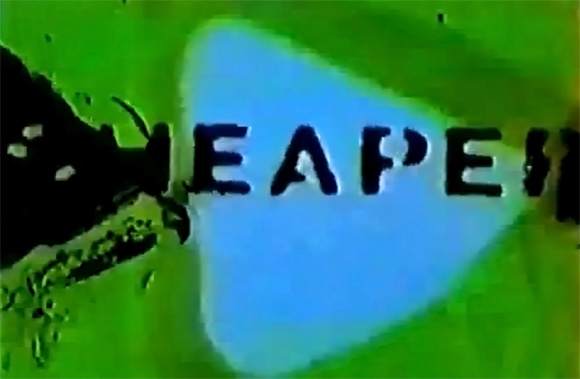
The Birth of the Robot: 1936 Experimental Advertising Film by Len Lye for Shell Oil Company


In 1936, experimental filmmaker Len Lye made this short surreal animation to advertise the benefits of Shell oil for lubricating things. The film is a hyper-saturated stop-motion extravaganza that involves a mechanical world turning on some sort of hand crank. There’s an adventurer driving around the sands of Egypt. His car winds down and konks out leaving the man dead in the desert. The angel of oil rains drops of lubricating crude down on the Egyptian landscape bringing the parched skeleton to life as the Shell Oil robot. Fascinating. It’s got that awkward, shiny, naive beauty that could only be achieved in the 30s. Parts of this thing look like they might be influenced by Salvador Dali’s work. Something about that dead skeleton and the desert looks like it could fit right into the Surrealist master’s paintings.

Lye was from New Zealand and worked not only as an experimental filmmaker but also in newsreels and advertising. He was a kinetic sculptor, poet, painter and a writer of essays on artistic theory and philosphy. He made a 1935 short film called ‘A Colour Box’ which was the first generally exhibited film made by painting directly on the film emulsion. It’s a brilliant experimental animation posing as an advertisement for cheaper parcel post.  I’m sure the great direct paint filmmaker Stan Brakhage must have been familiar with Lye’s work.

Here’s a gallery site with information and examples of his artwork.

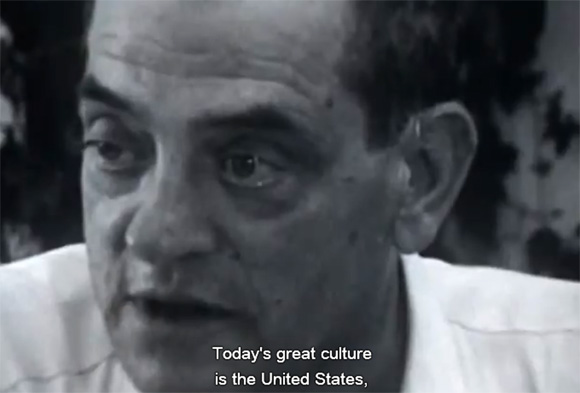
1964 Documentary on Spanish Surrealist Film Director Luis Buñuel


Luis Buñuel was the great Spanish film director who made ‘Un Chien Andalou’ and ‘L’Age d’Or,’ two of the original surrealist films. This documentary, directed by Robert Valey, was made in 1964. The director talks freely and with a certain charming guile about his influences, friends, paranoias, enjoyments and his impressions of various countries. He once smacked Salvadore Dali down on 5th Avenue in New York city!

I enjoy listening to people like him talk about their work because they talk about how they see things – how they interpret the world. Compare the way he talks in this film to what you normally see coming from people like Steven Spielberg or Martin Scorsese. Those people don’t seem real. They don’t seem to have any point of view. Notice how people in the film consistently associate Buñuel’s filmmaking with the work of painters. It is the continual grinding down of art into business that destroys real culture. One should immerse one’s self in better ideas and more subtle things if one wants to avoid the dullness that permeates most film work currently going on in the United States. I have found it to be a general rule that people with real talent who are artists answer questions in a slightly confusing manner. Clarity is another word for fake. Buñuel appears to me to fit this general principal.

Buñuel wrote a short and very beautiful autobiography called ‘My Last Sigh.’ I recommend it very highly if you want to know more about the mind behind Surrealist film.

And of course, here is the great Surrealist short film, ‘Un Chien Andalou,’ made by Buñuel in 1929.