Rabbit Ears: Experimental Film by Alessandro Cima

Rabbit-Ears-Frame-1

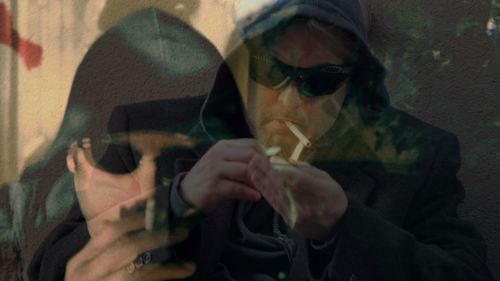
Imagine an insane alien astronaut who tunes into earth’s radiating television signals originating in the analog days of the twentieth century. The alien receives our entire TV culture in seconds, processing the sounds and images instantly, watching them all simultaneously… and the alien is crazy enough to find a message within.

This is an experimental film that is for all intents and purposes a continuation of my previous film, “The Magical Dead Sunstroke Valley,” which has been screening for the past year at the Los Angeles Center for Digital Art (LACDA).

Les Mystères du Château de Dé: 1929 Film by Man Ray

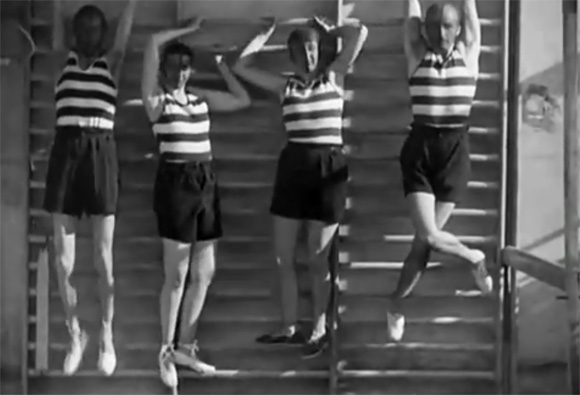
Surrealist art great, Man Ray, made this film in 1929. It follows a pair of indecisive travelers who base all their action on chance. They head out to a fabulous chateau in the hills and wander around inside and out. They run into four odd persons who enjoy swimming and running about as if the place is their private gym. But what is Man Ray doing here? Why all these shots of windows, lamps, sculptures? He is finding the abnormal in the normal. Wherever he happens to be with a camera he can make the surreal. He’s functioning as an artist, looking for odd angles, shadows, contrasts. He is also diving into the great current of his culture. The house is a castle filled with fine objects and great art. Man Ray is expressing his enthusiasm. This is an extremely childish film. I mean that as a compliment, though I really see nothing exceptional in works for children. But for an artist to function as a child for a certain amount of time is extraordinary and beneficial I think. But that kind of thinking must end and lead to its own destruction. In other words, I do not think any children’s author or illustrator should ever continue to work in that way for more than a few years. Then it is time to think about serious things and to make things that upset people. Perhaps that is my main criticism for most of the things I have seen by Man Ray. He seems a little bit too pleasant. I might be wrong about that. I have to look a little more.

Detective City Angel: A Film by Alessandro Cima


MATURE CONTENT AND LANGUAGE
First, here’s a nice review and interview about the film at Dangerous Minds. Want to follow a secret identity artist through a dangerous Los Angeles as he escapes and hits like a criminal? Hang on and watch carefully. You may need to watch it 14 times to catch the drift. But you’ve probably got that kind of time anyway. This is a Los Angeles crime film. But it’s as if several films on celluloid fused together and what you end up with is an art film that gets overwhelmed by urban documentary and then collapses into a narrative thriller. It’s filled with hints, clues, evidence and misdirection. Images, ideas and sounds bounce off each other, mirror each other. There are secrets in this film. You have to watch carefully, through layers to catch things. I’ve tried to make a film that moves like disjointed thoughts toward the preordained ending. Continue reading

Attempt: A Short Film by Jennifer Sharpe

The film seems almost out of time. It could have been filmed fifty years ago. The gently swaying palms of Los Angeles fit between buildings easily but seem to have a romantic life in this film. The music, a piece for theremin and string quartet by Herbert A. Deutsch, fits the imagery in Jennifer Sharpe’s film to perfection. This kind of filmmaking, done with a small camera and then edited and colored in a relatively simple digital editor, is very close to the simplicity of the poet working in a notepad or the artist sketching from her window. Sharpe’s films are deeply felt poetic expressions that seem to exist in the only possible form that they could have. She turns her video images into something close to painting, extending time and finding mystery in simple movements. She has a very gentle approach but with strength in her observation and emotional ability, sort of like a butterfly with steel wings.

You can find out more about Jennifer Sharpe’s digital videos and paintings at her web site.

Traumatografo: Magnificent and Mysterious 1975 Film by Paolo Gioli

I did not know this filmmaker, Paolo Gioli, existed until yesterday. And that really bothers me because I feel a very strong kinship with this filmmaker just on the basis of having seen two of his pieces. What can a filmmaker do with his own backyard? That is the question that comes to my mind as I watch his films. Can a filmmaker take his camera out back and make something astounding? Of course. In fact, that skill is central to being a creative filmmaker. It is the feeling I get from Gioli. He makes films that have a guiding concern but he is not afraid to slip a little off of the main track and let you see him experimenting. One can observe his enthusiasm for a new mechanical technique and he allows his film to wander into the territory of the new machine or splicing method for a while. And then he comes back to the main thing. He never lets this get out of control and it is a miracle to watch. One can learn how to experiment by watching a brilliant experimentalist. It’s that simple.

There are many filmmakers I wish I could meet and perhaps work with. Gioli is one of them. In fact, this brings to mind again my thought that things like YouTube are the greatest cinematic development of the past half century. The reason has nothing to do with screen format or size or image quality. It has to do with intimacy. The feeling of connection one can get by watching a filmmaker’s work on the computer is far more intimate than could be achieved in a theater. It is this quality that is the most important contribution of online film to world cinema. Intimate connection to the artist. It has a powerful effect on artists and communicates ideas and inspiration from generation to generation far more effectively than any prior cinematic display technology.

Here is a nice long article by Bart Testa about this wonderful Italian filmmaker.

Here is an article by David Bordwell on how Gioli’s hand-made cameras influence his ‘vertical cinema’ technique.
Elegìa: A Film by Fred. L’Epee and Dimitra Pouliopoulou

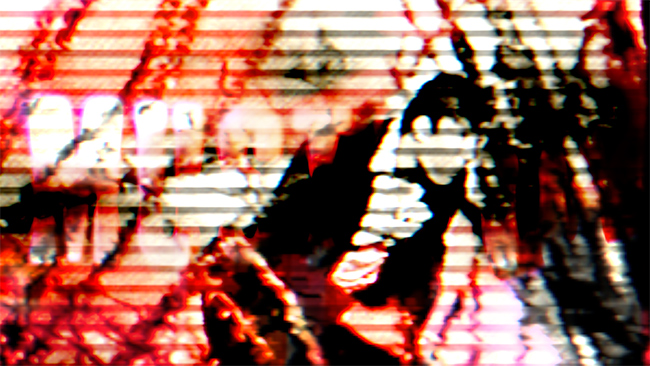
Filmmakers Fred L’Epee and Dimitra Pouliopoulou deal with the emotions of video. Their short films are visual poems in the most real sense. I like the way they flirt with the techniques of celluloid while remaining firmly anchored in video. The two things, rather than cancelling each other, work together to offer a filmmaker more tools for opening eyes and insisting that people fully observe. This kind of film dances between reality and abstraction. The ships are placed so that they traverse a line between light and dark, high and low, space and time.

Woodpecker: A Film by Rouzbeh Rashidi

Rouzbeh Rashidi is an Iranian filmmaker living in Dublin, Ireland. This film is a portrait of a day in the life of a man who works at a convenience store. Rashidi doesn’t want to show you the things you might want to see in a person’s normal day. He is interested in minute and detailed impressions. He focuses closely on things and lets them speak for themselves. The film conveys an unsettling mystery through its calm observation and beautiful black and white photography.  One of the most interesting things about this film for me is simply how happy the film’s subject looks while he is working.

The filmmaker has a website.

Monologue Under White Light! – A Film by Samira Eskandarfar

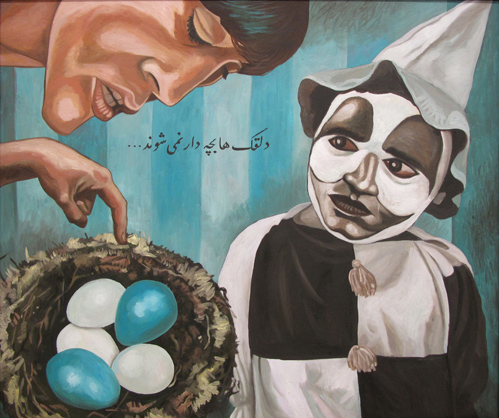
A ravishing beauty from Iran! Look at this mysterious and subtle film by director Samira Eskandarfar. Her figures drift through time and space in a stage setting that seems open-ended and universal. The underlying themes and messages are probably far more complex than I can ascertain without a proper understanding of Iranian culture. But the film stands as a mysterious and slightly harrowing glimpse into the progress of attraction, love and communication between individuals.  The characters, played by Kazem Sayahi Saharkhiz and Faranak Miri, engage in mundane conversation, offer each other drinks, smoke cigarettes, make eyes at each other, play music on a tape recorder and disappoint each other in all the little ways of a normal life.  But they seem symbolic of something greater and perhaps very much to do with the filmmaker’s Iran.  There are some amazing artists working with enormous expressive power in Iran.  Samira Eskandarfar is one of them.

By the way, the filmmaker is also a painter.

Visit the filmmaker’s web site.

Roland’s Adventures in Wonderland – A Film by Istvan Horkay

Artist Istvan Horkay made this strangely mesmerizing film that combines Alice in Wonderland, the elephant man, 19th century theater, silent film, modern computer graphics, children’s illustration and digital readouts.  There are three films going on at the same time in a beautiful triptych.

Culture Shock, Level One – A Film by Bill Mousoulis

Bad Lit: The Journal of Underground Film posted a film by Bill Mousoulis called The Experimenting Angel. I liked it. So I’ve posted another of Mousoulis’ films. It features Jennifer Levy who returns from a long absence to Australia and feels dislocated while visiting a city. She wonders why the people seem so ‘deflated’ as they wander through various public/corporate spaces like malls. The film captures something increasingly common worldwide which is that quiet, blank, but seemingly normal behavior encouraged by any structure designed and erected with a corporate idea behind it. We all know how we are expected to behave when we walk past a row of Gaps, Starbucks, Banana Republics and Wetzle’s Pretzels. We obey. We perform the routine and go about our business making sure that we are perceived as correctly normal. We are guests in someone else’s house, even in our public spaces. We behave like new guests, ingratiating ourselves to the dome camera in the ceiling.  The cell phone is the absolute symbol of complete obeisance to the corporate superstructure looming above us.  We are told to engage in meaningless chatter while we walk, drive, breathe, eat, date, watch movies, run, bike, and work.  We are told to do this until it seems like normal and seems to make perfect sense.  It is as logical as being told to drop a penny on the ground every third step for every day of your life.  Steve Jobs tells you to leave him a penny on the ground every third step of every day of your life… and you damn well do it.  You know how many times Steve Jobs uses a cell phone during an average day?  None.  Why?  Because he’s much smarter than you are.