It’s darkly surreal and somehow gently amusing.
A short animated film written, drawn and directed by David Lynch. Animation by Noriko Miyakawa. Music by Marek Zebrowski.
It’s darkly surreal and somehow gently amusing.
A short animated film written, drawn and directed by David Lynch. Animation by Noriko Miyakawa. Music by Marek Zebrowski.
Imagine an insane alien astronaut who tunes into earth’s radiating television signals originating in the analog days of the twentieth century. The alien receives our entire TV culture in seconds, processing the sounds and images instantly, watching them all simultaneously… and the alien is crazy enough to find a message within.
This is an experimental film that is for all intents and purposes a continuation of my previous film, “The Magical Dead Sunstroke Valley,” which has been screening for the past year at the Los Angeles Center for Digital Art (LACDA).
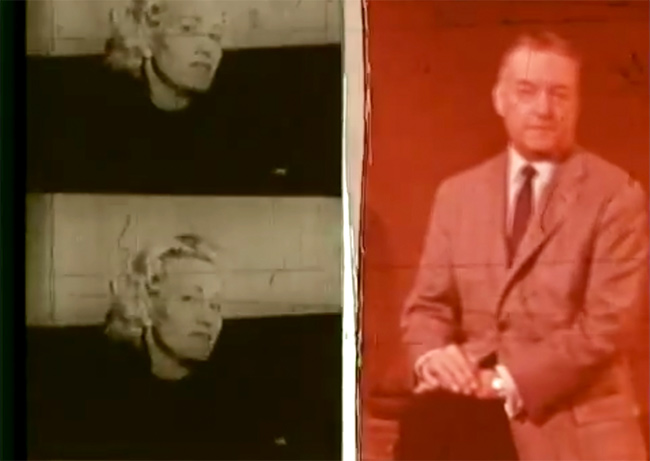
Filmmaker Michele Smith has been exploring the relationships between film and video for many years. Her work is – to say the least – brilliant and voluminous, ranging from found footage movie trailers to family beach films, commercials, street video, newspaper, View-Master slides, bits and pieces of plates and plastic. If you visit the filmmaker’s YouTube channel and decide to list everything available, you are going to be amazed. There’s so much there. It’s like digging through a museum of filmic ideas. Make no mistake, the ideas come at you in a dizzying array, too much to absorb immediately as the images pop and crackle like a slowly exploding bomb. Split seconds are all that are necessary for Smith to make a point, breaking footage into mere 2-frame segments that play against each other to form brand new images in the mind’s persistence of vision. You’ll know what I mean if you use the pause button to do a little digging into Smith’s complex constructions. I doubt she would mind. The reality of video on the web and how we use it seems to be something she is more than comfortable with.
I always enjoy filmmakers who look at cinema as it really is.
I also enjoy filmmakers who pursue the messy art of images. Sites like YouTube and Vimeo are depressingly overloaded with filmmakers who have gotten very excited about their super-glide floating camera rigs and long DSLR lenses. They make shiny, gleaming, gliding, perfect little advertisements for themselves and include tastefully typed title sequences.
Michele Smith is the filmmaker who takes their lunch money and spends it on a hamburger, not a tripod.
In this first film from 2003, ‘Like All Bad Men He Looks Attractive – They Say,’ Smith uses found 16mm footage from several films to not only intercut various images, but to construct animations out of the footage laid out in various patterns, sometimes along with other cutout images or materials which are then photographed to video. She often reanimates the celluloid by photographing frames in sequence. I consistently get the impression of two cinematic forms playing off each other. Some of this found footage was rescued from a fire and you can see the melted edge of the filmstrip.
Film captures light. Video captures ideas.
These are ideas Smith is offering. The images are most often gorgeous, sometimes jarring. They unsettle. Sometimes they irritate. She has that knack for constantly returning to something, working it under the skin.
In this film, we see things of beauty as advertised – constantly expecting a promised perfection, but always seeing through to threat and decay. In spite of its underlying darkness, the film is a celebration of art and cinema, constantly using one to build the other. Strips of perforated film are arranged to form individual artworks. Photographs are shredded and arranged alongside torn away optical sound strips. Advertisement or catalog images of statues and vases pass by, attempting to become film. One form is always vying for a place in the overall structure, always trying to be something other than itself.
Even though it was shot to video, the film is built with rapid cuts between fleeting images. The short durations and constant cutting from shot to shot create superimpositions in the mind of the viewer. Toward the end of the film, around the 1:08:00 mark, a woman appears standing on a small boat. She seems to drift through a sea of hazy, flickering decay. But she doesn’t. The images that seem so intertwined are completely separate.
Here is ‘Like All Bad Men He Looks Attractive – They Say:’
Here’s another film called ‘Things.’ This is a more recent one in which Smith points a camera at a computer monitor showing a web page with many of her films embedded. She then scrolls up and down the page, creating a film frame flicker effect. She ups the ante continually by layering the video.
The point I am making is that there is intense experimentation going on here with what constitutes the primary differences between film and video. It seems almost a casual mockery of filmmakers who go to great lengths to get old filmic effects into their videos. Hairs and scratches and jitters that have no meaning whatsoever in modern cinema. But it’s also a look at how mimicry of an old form leads to new things when used consciously.
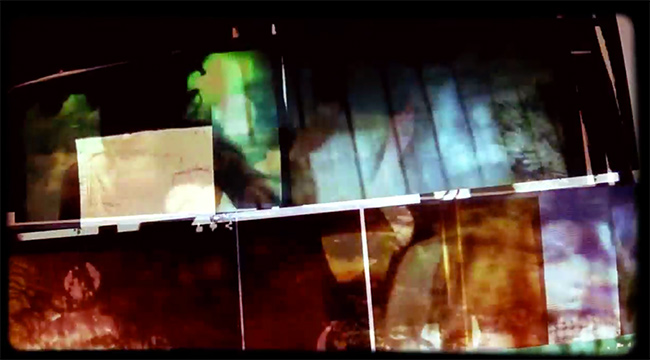
I think it was Godard who said some years ago that superimposition is the great new language made possible by video. Only video makes layering of images as simple and direct as the frame to frame cut once was with celluloid.
Smith presses into the new cinema/internet idea further in other films as she begins using internet shopping sites with long image arrays selling jewelry and watches. She scrolls through them, seeming to wonder at how we create cinema for ourselves without realizing it. We bombard ourselves with a flurry of images every day, overloading and completely enveloping ourselves in our own self-reflecting movies.
Here is ‘Things:’
The computer monitor superimposition effect is used again here in a film called Things 3.
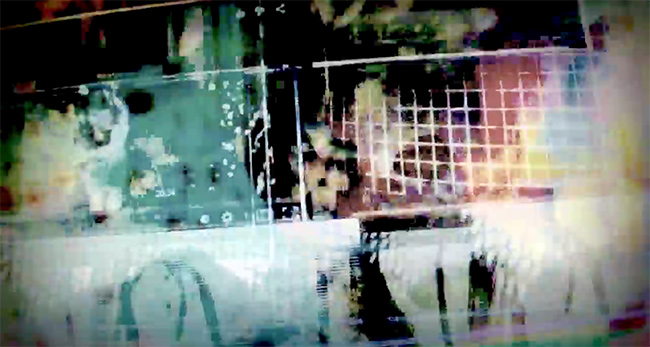
Here is ‘Things 3:’
Another film, ‘Spinning Wheel Medusa, Drama Between a Monkey and a Nude,’ uses techniques that come naturally to video. Shot with a hand held video camera inside what appears to be some kind of crafts expo or bazaar, the film layers images of a spinning wheel, decorative plates, embroideries, vases, statues and various bric a brac.
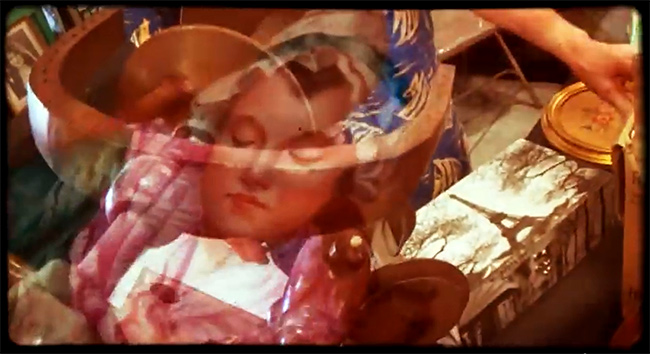
Always aware of the history of art, the film seems intent on elevating decorative objects to a realm of higher purpose. Here we see the rapid cutting of previous films losing favor to the more languid drift of layered video images. My own view is that the layering of images is much more difficult than frame to frame cutting. Layering presents the problem of making a single image from multiple images while gaining power instead of losing it.
Here is ‘Spinning Wheel Medusa, Drama Between a Monkey and a Nude:’
Michele Smith’s films have been shown at many international film festivals, including The New York Film Festival, The Times BFI London Film Festival, Chicago Onion City Film Festival, and Anthology Film Archives Screenings.
The filmmaker’s web site is Actipes Films.
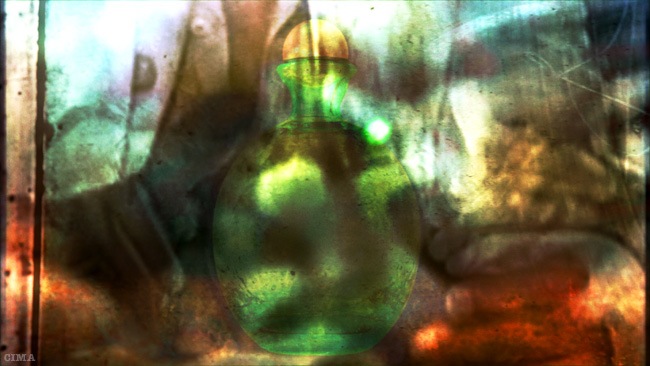
A film combining the mythology of the Hollywood/Spaghetti western, Tarot, magic, occult, Jungian psychology, and mysticism with flamboyant, multi-layered, supersaturated imagery.
Multiple narratives conflict and adhere. Meanings emerge and contradict. Music and dialog tell another layered story, sometimes agreeing with the images, sometimes trying to subvert them.
A film should be a container for the psychic unconscious energy of its creator. That is what this is.
There is also a commercial.
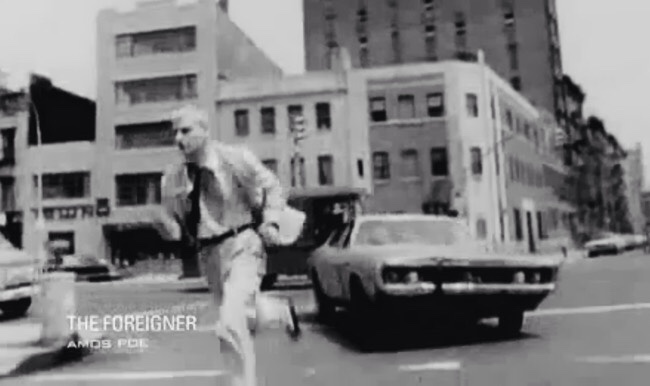
Celine Danhier's 2010 documentary covers a time in the late 1970s when New York was exploding with music and filmmaking energy. Young artists were unafraid to take to the streets without budgets. They were paying low rents and had a community to thrive within. Watching this makes one wonder what exactly New York is for today. It seems more corporate than creative. More trendy than artsy. I think the cops shoot people who don't have budgets now. That's if they aren't too lazy to strangle them to death. Where are young artists going now? Detroit? Newark? Or do they just decide to look down, keep walking and go buy a latte?
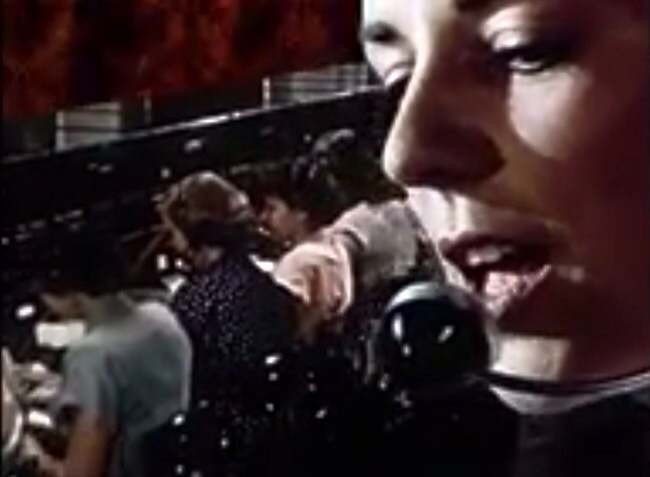
Here is a mixed media film by Los Angeles filmmaker Kelly Sears that tells an all too plausible documentary tale about secret government agencies listening in on telephone operators to learn all of our secrets. Found footage combines with animation to create a quiet disturbance. Sears' work has been screened at The Museum of Modern Art, LACMA, the Hammer Museum and many others.
Here's an interesting article with an interview about her work.
Thank you to Phil Solomon on Facebook.
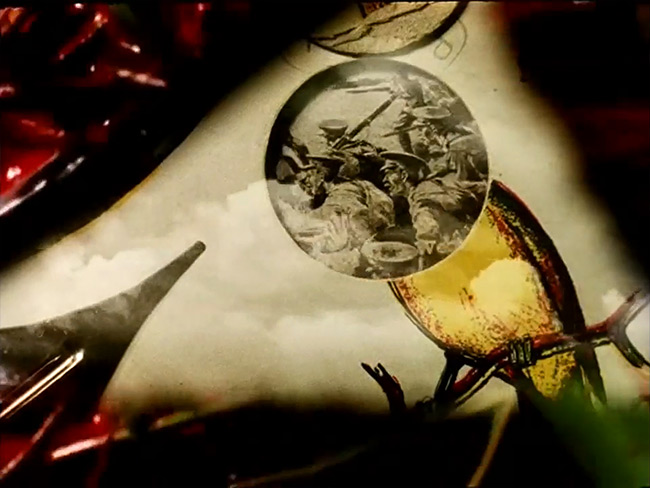
This is a brilliant animation from Janie Geiser who is a renowned theater and film artist specializing in the use of inanimate objects and toys to create unsettling and evocative films and performances. Her work has been screened worldwide, including at the Whitney, Guggenheim, Museum of Modern Art, and the Los Angeles County Museum of Art. The film investigates the origins of the word ‘algebra,’ which turn out to be somewhat interesting. Frankly, I had never once even considered the word before watching this film.
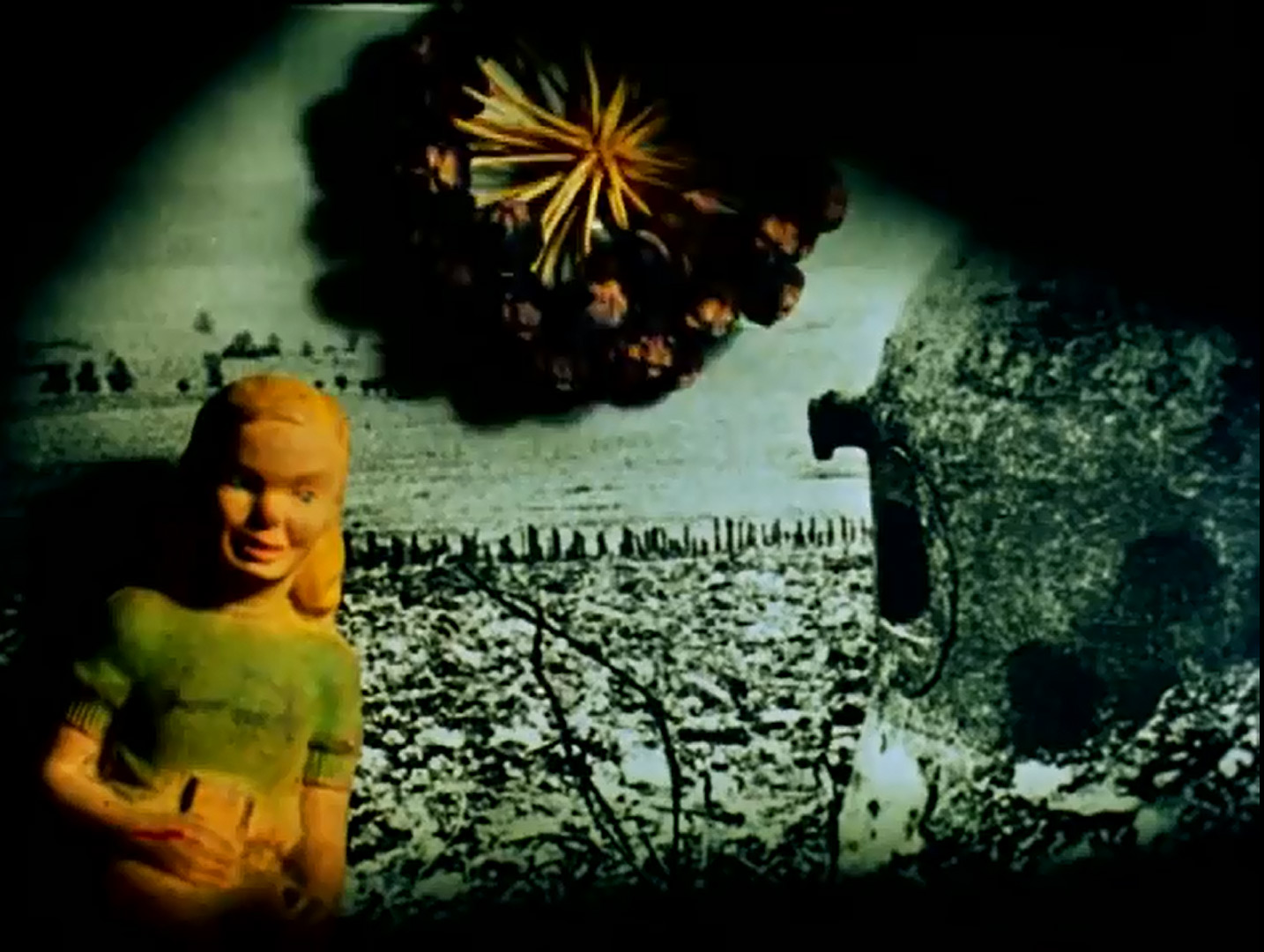
It’s a subtle film. A beautiful but difficult film. Let’s think about this experimental film, shall we? What do we see in this film? Holes. Lots of them. Holes for looking through. There’s a little plastic doll who looks very 1940s, some birds, numerals, trees, and lots of grass. Blades of grass. When I see a little plastic girl doll looking into holes I see a filmmaker looking into a camera to investigate the world, or rather the mind, or perhaps the unconscious. This doll approaches an odd stone bunker on a hill and she peers into a small opening into darkness. It looks a bit like an old Nazi gun bunker. Carl Jung would approve! All experimental films should dig into the unconscious mind, I think. People throw ‘dreamlike’ around quite often these days when talking about films. There are very few dreamlike films. What most people mean by dreamlike is simply blurry. Anyway, our plastic doll sees things in storybook fashion that suggest nature and Nazis. There’s warfare going on. The precision of battle maps. The doll’s vision puts conflicting images of tamed nature description together with extreme violence. Nothing is attached properly to anything. Ideas do not lead to logical conclusions. Instead, they lead to odd constructions, more like what is required by the creative mind.
Geiser’s ‘algebra’ theme seems to peek through at times in images of severed limbs or broken bones, teeth, spilled blood, and of course the various number machines that pop up. The word algebra apparently used to have a meaning related to restoration or reunion, sometimes applying to the setting of broken bones which was often done in medieval times by a dentist who also performed bloodlettings. Interesting. But this film is not really about mathematics. At least not the usual kind. It’s about piecing together a vision of the world. Immersion.
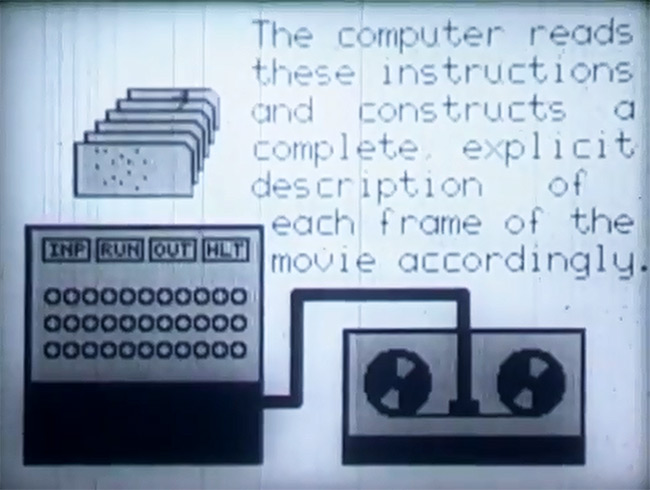
This fascinating film was produced at AT&T’s Bell Labs in 1964. It was made by Ken Knowlton to describe the use of computers to make animated films. The film itself was created entirely on a computer. This is a glimpse into the groundbreaking work that led to the computer graphics we all enjoy so frequently today. Knowlton was both an artist and a computer graphics programmer who developed several programming languages for producing bitmap animations.
Interestingly, Ken Knowlton worked closely with pioneering experimental filmmaker Stan Vanderbeek at the Bell Labs on many early computer animations. Vanderbeek is the subject of my prior post about his short film, ‘Science Friction.’
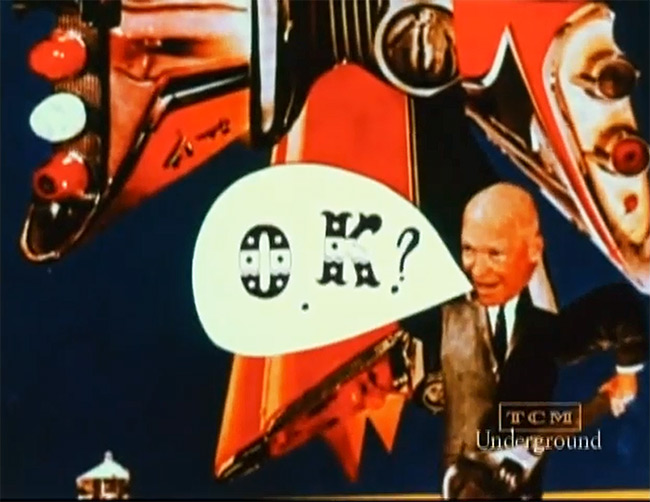
This is an amazing and beautiful film by pioneering American experimental filmmaker Stan Vanderbeek. His work encompassed collage animations, live events, and early experiments with computer graphics.
The technological explosion of this last half-century, and the implied future are overwhelming, man is running the machines of his own invention… while the machine that is man… runs the risk of running wild. Technological research, development, and involvement of the world community has almost completely out-distanced the emotional-sociological (socio-“logical”) comprehension of this technology. The “technique-power” and “culture-over-reach” that is just beginning to explode in many parts of the earth, is happening so quickly that it has put the logical fulcrum of man’s intelligence so far outside himself that he cannot judge or estimate the results of his acts before he commits them…
Stan Vanderbeek
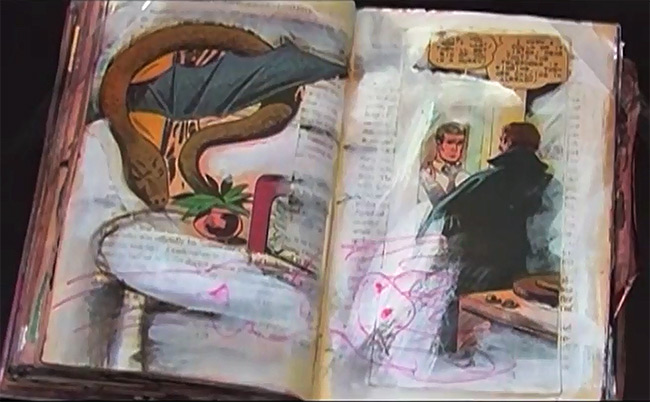
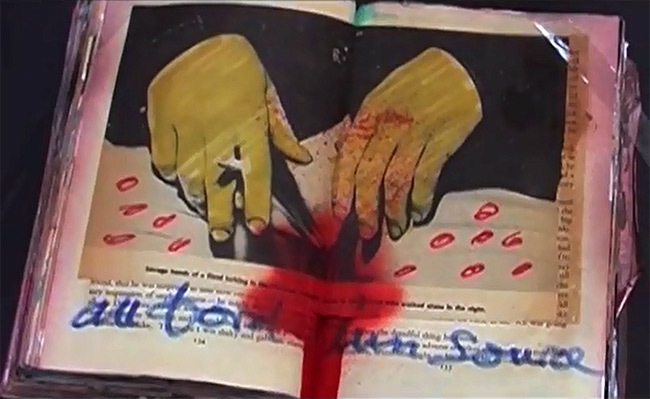
This is a short film made for a gallery showing of works by the late great British artist and filmmaker, Jeff Keen. It’s a soundless page turn through a series of brilliant and inspiring pages in a sketchbook. If you are at all familiar with his amazing film work, you will see how directly connected to that work these pages really are.
If you are unfamiliar with Keen’s incredible and very influential film work, here is a treat for you. It’s his ‘Marvo Movie’ from 1967.
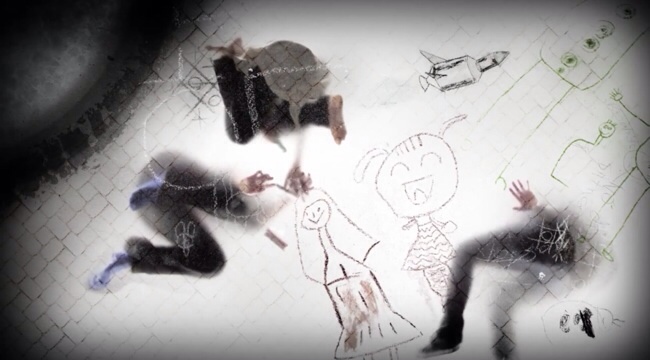
Street life interpreted as something close to dance and shot from below through glass.
Designed and directed by TU+// Varathit Uthaisri.
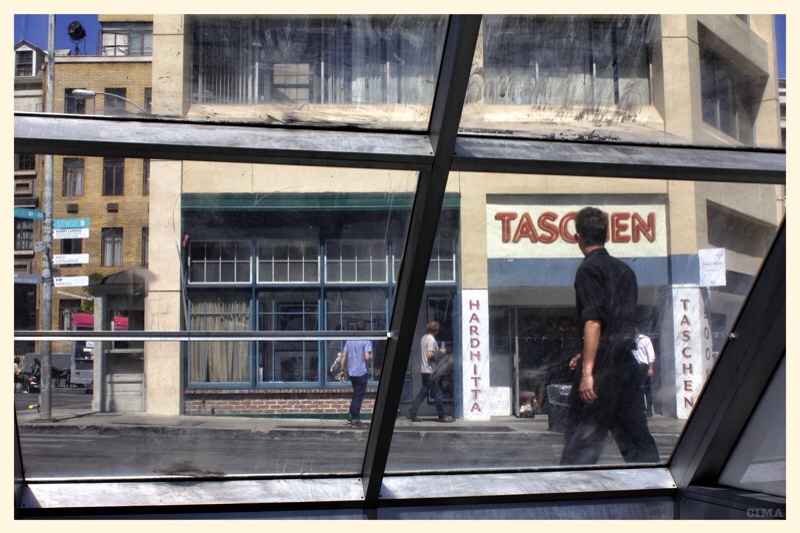
Taschen book publishers had a store on the Paramount backlot.
Recognizing Los Angeles as the world art center that it is, Paris Photo brought its world famous exposition of photography to the Paramount Studios lot for three days (April 26 – 28). The expo featured sixty international galleries and twelve book publishers, all given mini-gallery spaces that temporarily converted two giant Paramount sound stages into world class museums complete with screening rooms for the moving image portion of the expo.
I paid $40 to get a day pass and a copy of the catalog which provided information on all the presenting galleries and publishers. Each gallery had a page to offer one of its offered images. The book turned out to be a small but handsome little paperback. I wanted something bigger and better than that. A grand show like this needs a nice hardback catalog with pristine prints inside. I would certainly have been willing to pay much more for such a program book. As it was, I felt like we were given something on the slight side and it did not do justice to the depth and breadth of the exposition's still photography offerings.
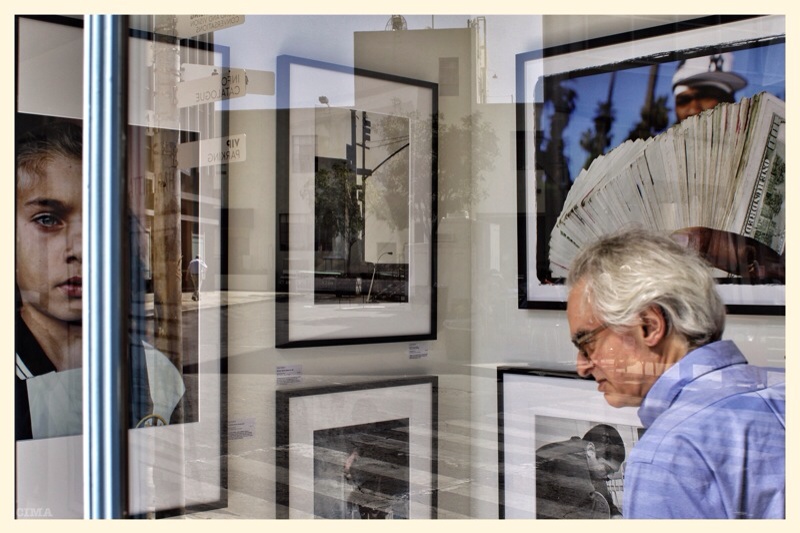
Backlot storefronts became small galleries.
There was a lot to see and to be inspired by. World famous photographers covering decades of the art were shown. I'm always struck by the boredom turned to perception beauty of William Eggleston's pictures, a few of which were there. I saw some unsettling landscapes by Hiroyuki Masuyama that looked like 19th century Italian paintings. There was a mysterious dark image from Sally Mann, 1960s images of street life by Fred Herzog, ghostly disorienting photos and videos by Marion Tampon-Lajarriette, impossible industrial/medieval structures by Filip Dujardin, experimental videos by Gabor Osz, mixed media by filmmaker Bruce Conner, and photographs by Wallace Berman, to name but a small handful of the artists on display.
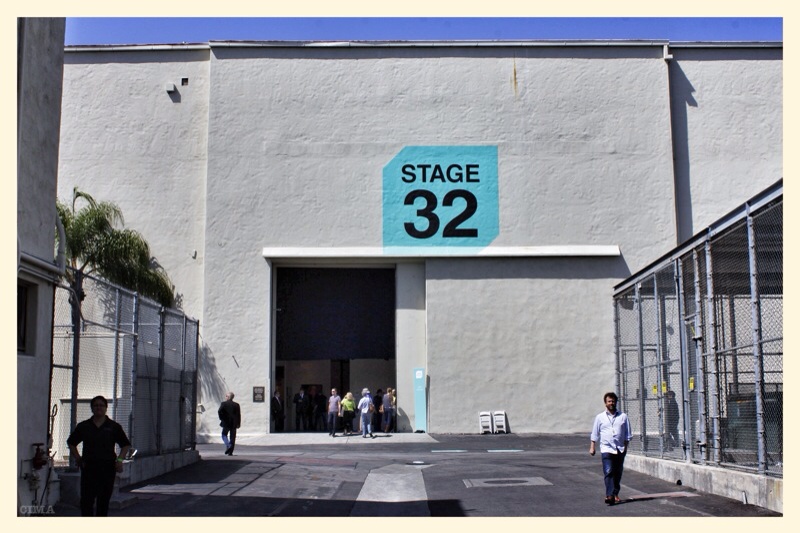
Soundstage 32 was one of two converted to galleries.
I was curious about how artists are using light boxes and videos. I am normally rather unimpressed with the lightbox format as it seems to try to artificially pump up a photograph. There were quite a few of those hanging around. However, one artist used the lightbox combined with inserted areas of high definition video to really intelligent and hilarious effect. This guy, Gregory Scott, builds up a scene by surrounding an inserted video element that meshes seamlessly with the still areas to create an intricate, well-timed commentary on both the creation and consumption of art. Imagine an image of a museum with paintings on the wall. Inside each painting we see the artist at work building the image. But his work extends to the deconstruction and reconstruction of the museum itself. These pieces were fascinating, entertaining and very expensive.
My big criticism of Paris Photo comes in the area of the moving image screenings. That segment was grossly inferior. I was able to watch precisely two films all day long at the Sound and Vision screenings. They were the classic experimental film, 'La Jetee' by Chris Marker and 'Breakaway' by Bruce Conner. They are both films from the 1960s and they are brilliant works. But I wanted films man! Lots of them. Don't try to show me how photography blends into film by throwing two films from the sixties at me! Make your case. Overwhelm me. And do it every day of the expo. What you spread out over three days is cheating. Sure, there were some other moving image offerings at mini-galleries, but this was a supposedly major element of Paris Photo and they just got stingy with it. I almost felt as if perhaps the organizers didn't want me sitting too long in a dark screening room where I would not be purchasing anything. Big weak spot here. It is significant and needs to be fixed. Really this shouldn't be hard. In a world where we can get educated on experimental film via YouTube a curator must do a hell of a lot better than this.
Paris Photo, despite its moving image shortcomings, is a welcome addition to the Los Angeles scene. It's inspiring because, unlike the studio that hosted the expo, it treats images seriously. You know, the way things are done in grown up places like New York and Paris. Everything about L.A. is sort of covert and most serious things are required to exist on the fringe. But it's not a bad thing for serious art to orbit a grotesquely commercial and vapid center. One can feed off of fantastic absurdity and consider it part of what a city has to offer (see photo below).
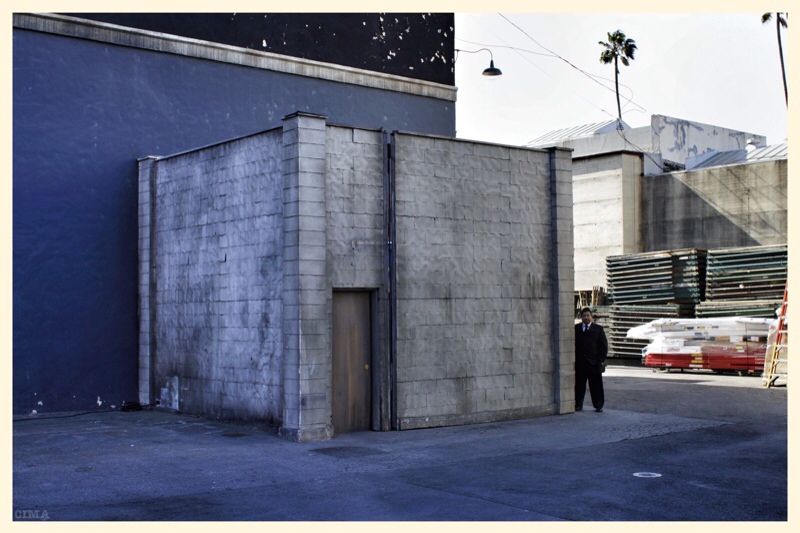
If one wandered, one encountered security.
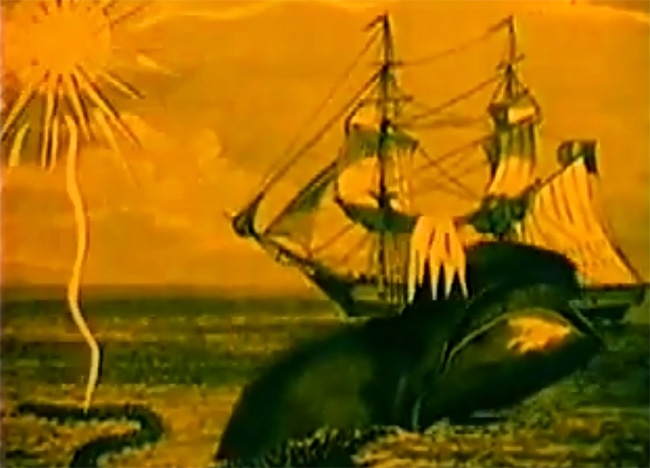
Filmmaker Lawrence Jordan calls this 'a long opium dream of the old Mariner' that marries the engravings of Gustave Dore to the poem by Samuel Taylor Coleridge. Jordan adds many of his own cutout elements to the animation, creating something totally unique. Orson Welles' performance of the poem is unforgettable, simultaneously delicate and powerful as he fully embodies the role of the old Mariner with a story to tell. There is enough mystery and otherworldliness from Jordan's hands to pair magnificently with one of the saddest and most beautiful poems ever written in English.
The film is dedicated to the great assemblage artist and filmmaker Wallace Berman who was a close friend of Jordan.

Lawrence Jordan began his filmmaking career by learning from and working with the great artist and filmmaker, Joseph Cornell. This is a 1972 film that is a mysterious trip through a subconscious world of imagery that suggests hidden communications and magic behind observable reality. His technique is mainly focused on using cutout illustration collages. I like his work because it leaves things unsaid, unexplained and it does not work too hard at being funny.
You can watch a lot of Jordan’s films at Mubi and read more about his life and work.