
Here is a 1915 silent film version of Alice in Wonderland, directed by W.W. Young and starring Viola Savoy.
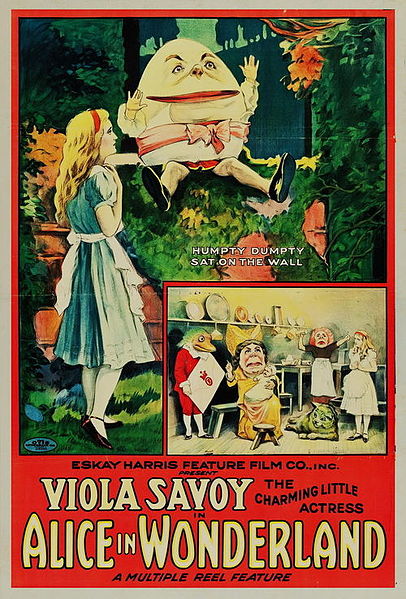
Here is a 1915 silent film version of Alice in Wonderland, directed by W.W. Young and starring Viola Savoy.
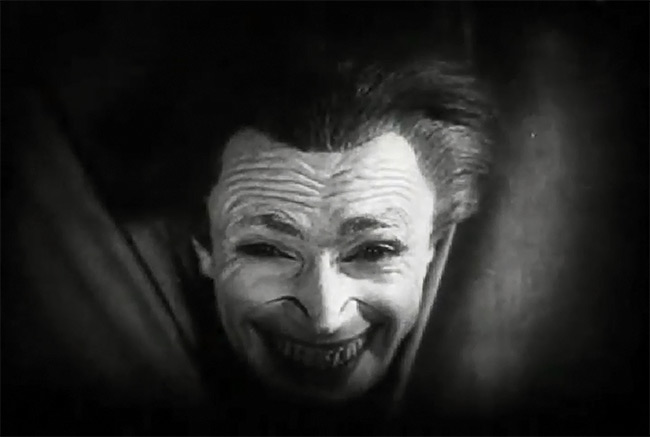
From the corrupt and nefarious cinematic mind of filmmaker Andre Perkowski comes this series of fantastic silent Batman adventures. Episodes 1 and 2 detail the caped crusader’s origin story. You know the one, but you’ve probably never seen it told this way before.
Perkowski has been featured here before for his ongoing epic adaptation of William S. Burroughs’ novel, ‘Nova Express.’
Here’s an update from the filmmaker himself! All five parts of the Bat-Man serial with a live symphony playing along!
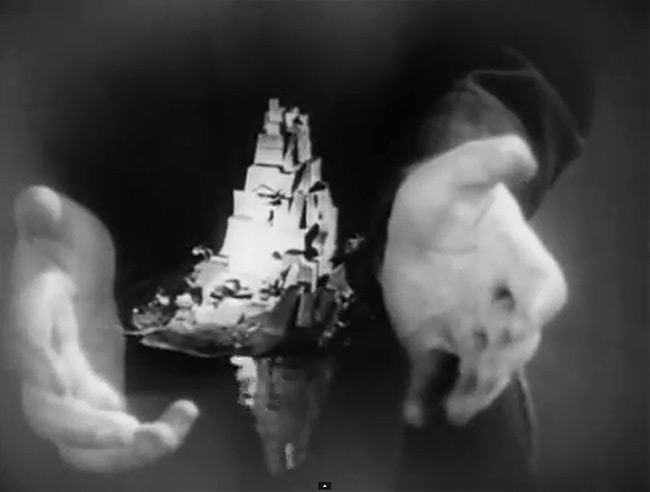
A clergyman goes insane with lust for the wife of a general in this ravishingly beautiful silent film by one of the greatest surrealist filmmakers of all time, Germaine Dulac. She captures states of mind on film like no one I’ve ever seen. If you are looking for magic in cinema, you are going to find it here. This is a film about magic, desire, obsession, male/female power, love, faith, mysticism, and reality. Her story is hypnotic and her special effects are superb.
Here’s another of her films that I wrote about on this site.
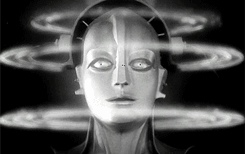
The Unhistorical blog has some nice animated GIFs from Fritz Lang's science fiction masterpiece, Metropolis.
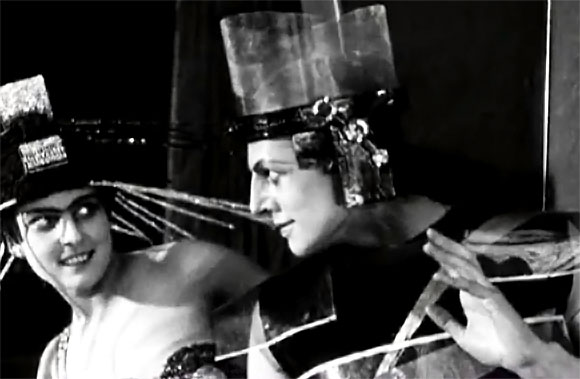
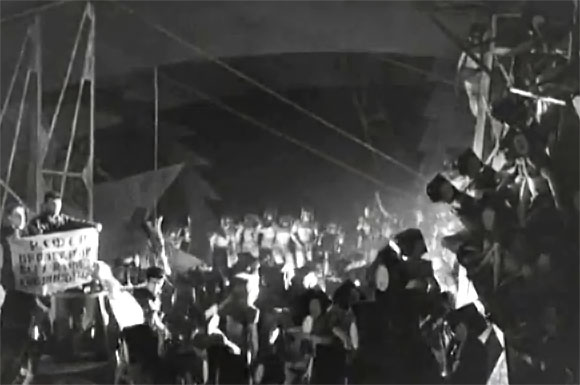
This is regarded as being the first Soviet science fiction film. Made in 1924, it’s an operatic scenario involving a mysterious radio signal sent toward earth, a scientist who builds a spaceship to get to the red planet only to find a totalitarian state, and a dictator’s daughter who wants to lead a revolution. There’s even a hammer and sickle to go along with the establishment of a socialist republic on Mars.
The film combines outlandish stage scenery representing Mars with the gritty streets and factories of Moscow. There’s some really beautiful photography and truly absurd costumes throughout.
Directed By Yakov Protozoan
Written By Aleksei Fajko and Fyodor Otsep
Based On A Play By Aleksei Tolstoy
All six parts of the film can be seen in this YouTube playlist.
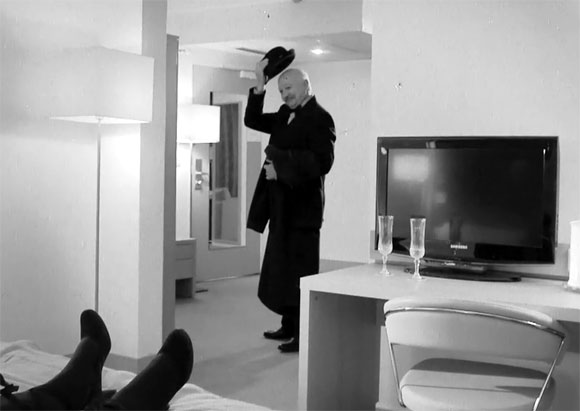
Ah yes! Oui! Bon! Merci! The urge to do away with one’s mate in favor of an improved version with more passion never leaves us, does it? But of course when French lovers murder one another it is just so full of life, wit and oh I don’t know what!
This clever and charming film is by Daniel Ablin and features an actor from the Comédie Française, Christian Blanc. The woman is played by Mireille Rivat. The film doesn’t push too hard, favoring a delicate touch with its humor, and it keeps the silent film thing just enough under control and just modern enough to avoid annoyance.
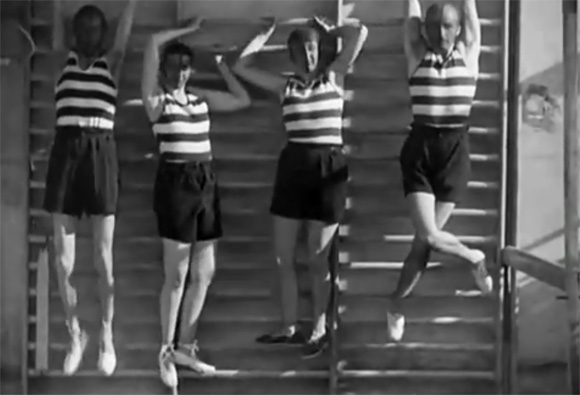
Surrealist art great, Man Ray, made this film in 1929. It follows a pair of indecisive travelers who base all their action on chance. They head out to a fabulous chateau in the hills and wander around inside and out. They run into four odd persons who enjoy swimming and running about as if the place is their private gym. But what is Man Ray doing here? Why all these shots of windows, lamps, sculptures? He is finding the abnormal in the normal. Wherever he happens to be with a camera he can make the surreal. He’s functioning as an artist, looking for odd angles, shadows, contrasts. He is also diving into the great current of his culture. The house is a castle filled with fine objects and great art. Man Ray is expressing his enthusiasm. This is an extremely childish film. I mean that as a compliment, though I really see nothing exceptional in works for children. But for an artist to function as a child for a certain amount of time is extraordinary and beneficial I think. But that kind of thinking must end and lead to its own destruction. In other words, I do not think any children’s author or illustrator should ever continue to work in that way for more than a few years. Then it is time to think about serious things and to make things that upset people. Perhaps that is my main criticism for most of the things I have seen by Man Ray. He seems a little bit too pleasant. I might be wrong about that. I have to look a little more.
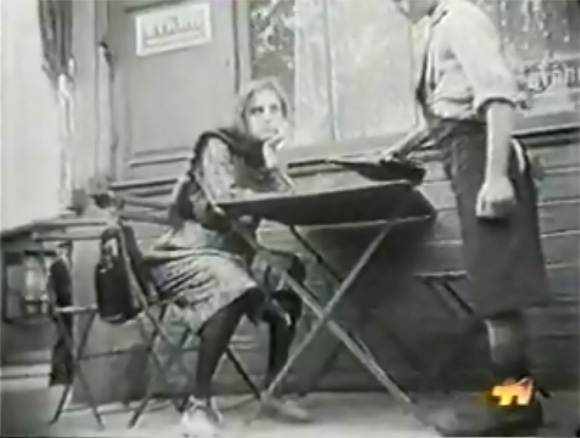
Germaine Dulac was one of the original French film ‘auteurs.’ She was also a film theorist and feminist. She had a relatively short career as an avant-garde filmmaker, making such works as ‘The Smiling Madam Beaudet (1923) and ‘The Seashell and the Clergyman’ (1928) which is often credited as being the first Surrealist film.
In this film, the title translated as ‘Those Who Make Themselves,’ we follow a destitute drunk woman who appears to yearn for the life of a prostitute or to engage in some sort of tryst. It is also possible that she is simply despondent over rejection by a lover. She appears to fail at everything she tries and eventually walks down a staircase into the Seine river. It’s a very simple film that manages to convey a deep sense of loneliness.
Dulac insisted on being credited as the author of her films, not accepting the standard partnership between a screenwriter and director.
Here’s a 1923 quote from Dulac:
I believe that cinematographic work must come out of a shock of sensibility, of a vision of one being who can only express himself in the cinema. The director must be a screenwriter or the screenwriter a director. Like all other arts, cinema comes from a sensible emotion … To be worth something and “bring” something, this emotion must come from one source only. The screenwriter that “feels” his idea must be able to stage it. From this, the technique follows.
Here’s a Senses of Cinema article on Germaine Dulac entitled ‘The Importance of Being a Film Author: Germaine Dulac and Female Authorship.’

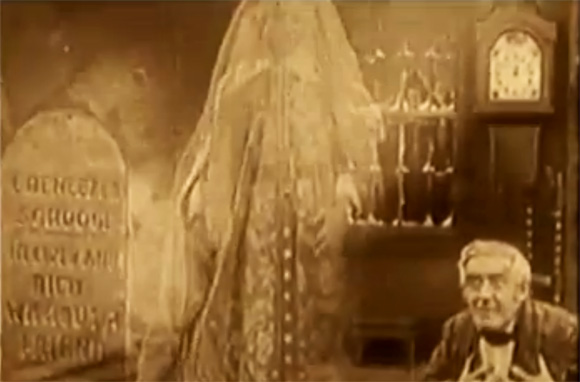
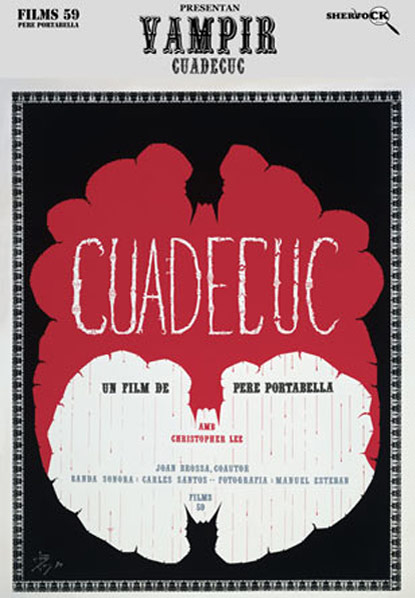 Here’s an extremely rare underground Halloween treat for anyone who loves film. Ah, but only the very fewest of you will actually watch this all the way through! Give it a try. Not only is this film underground… it’s underhanded. Pere Portabella made ‘Cuadecuc, Vampir’ in 1970 by filming on the set of a Christopher Lee film called ‘Count Dracula’ that was being directed by Jesus Franco. Portabella’s underground classic is on its surface a silent horror film. But it’s also a documentary about the making of the Dracula film. It tells its story by stealing scenes from the feature being shot around it, almost as if the film were a mashup of existing footage! The high-contrast black and white photography evokes such cinema greats as Carl Theodor Dreyer’s ‘Vampyr’ and F.W. Murnau’s ‘Nosferatu.’ We see typical horror scenes like a stagecoach racing through the wilderness, or a dusty crypt, interrupted by the arm of a prop person using a fan to blow fake spiderwebs or a cameraman shooting from behind furniture. These slippages from horror into documentary actually produce a weird terror when you realize that the film was being shot under the watchful eyes of Spain’s dictator, General Francisco Franco. What the film really is underneath all the fantastic and disturbing imagery is a vicious attack on Franco and the false media manipulation that keeps all dictators in power. The portrait it paints of Franco himself is one of a sad, disturbed and largely ineffective vampire who lives inside a mental construction based on the past. The other characters in the film seem to be wandering through this psychotic realm, trying to find a way out.
The soundtrack incorporates jet engines, muzak, electronic music, opera singing, jackhammers, stuck records and various other electronic sounds. Don’t let this throw you because the soundtrack is one of the most eerie and unsettling that you will ever hear.
And I’m thinking that Criterion needs to jump on this and make a nice blu-ray release out of it.
Pere Portabella has a web site.
Now, just for kicks, here is a scene from the actual color film of Dracula being shot while Pere Portabella stole his own film right under Christopher Lee’s nose! You decide which film seems scarier.
Oh that lucky fellow, Saint Antoine! To find myself in his shoes as he is ‘tormented’ by the temptations popping in and out of his little cave! My oh my! What a lucky guy! This is Georges Méliès experimenting with making people appear and disappear magically.
Canadian filmmaker Guy Maddin made this short film which is inspired by an 1882 illustration by Odilon Redon that was in turn inspired by the writing of Edgar Allan Poe. It has a kind of wild sinister fantasy about it that fascinates me. I like the way Maddin builds little sets that end up looking almost like illustrations. He also does a quick visual quote of a great old French film called L’Atalante by Jean Vigo. This is a frightening and beautiful dream film.
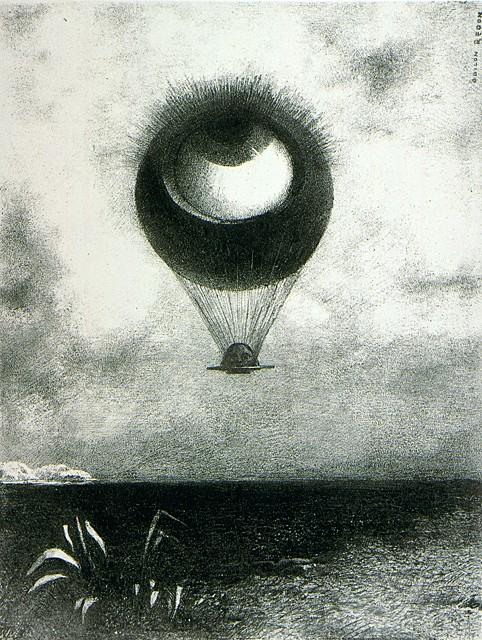
The Echo Park Film Center tipped me off to this amazing short film by Guy Maddin. He made it in 2000 for the Toronto International Film Festival. It’s got the frenetic, montage energy of Sergei Eisenstein mixed with some of the fantastic elements of George Melies. Just beautiful and wild.
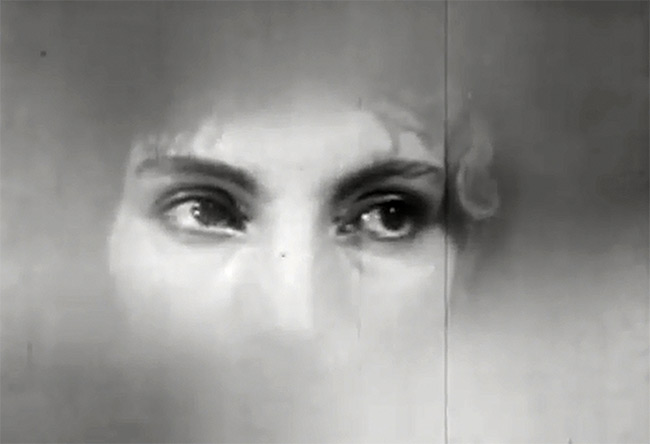
The film takes its name from a neighborhood in Paris. It was directed by Dimitri Kirsanoff and is considered to be his greatest work. It moves very quickly, using a montage technique that tells the story without a single intertitle. It’s a riveting and powerful tale of disillusionment and violence. The lead actress is wonderful and has some of the best eyes for silent film I’ve ever seen.