Tag Archives: history
Histoire(s) du cinema: According to Jean-Luc Godard
Between 1988 and 1998 filmmaker Jean-Luc Godard made a film called ‘Histoire(s) du cinéma.’ Though it purports to be a sort of cinema history, reflecting on how cinema intersects with the 20th century, I think it is more likely a vision of how cinema works in the mind of one filmmaker. The images drift in and out, overlapping and complimenting one another just as they would in the mind. Don’t look for accuracy or understanding. Just watch the film. It’s very difficult to find pieces of this lengthy work online. But these are three good chunks and they certainly stand up as a taste.
More about the film at Mubi.
Los Angeles Plays Itself: Documentary Through the Eyes of Fiction
This astounding 2003 documentary by Thom Andersen takes what I am certain is the most thorough look ever at how films, both popular and obscure, have depicted the city of Los Angeles. Through the accumulation and precise organizing of clips, Andersen actually describes the essential heart of Los Angeles better than anyone I have seen before. Unfortunately, the film has never been released due to rights issues with some of the clips in the film. I can’t imaging what those issues might be since this all looks like fair use for a documentary to me. This is quite obviously a journalistic essay and he has every right to use the clips in short portions.
The film’s narration has a sort of dry weariness that tends to fit the general tendency toward crime or noirish films and their views of the city. His description of the brutal destruction of Bunker Hill is a masterpiece of documentary filmmaking, illustrating the horror of a corporate dead zone built on top of a once vibrant and colorful community that served as inspiration to many down-at-the-heel artists like John Fante, the great Los Angeles novelist who wrote ‘Ask the Dust.’
Andersen moves through a dizzying array of films including, Point Blank, Zabriskie Point, Double Indemnity, The Outsider, The Exiles, Kiss Me Deadly, Chinatown, The Omega Man, Blade Runner, Heat, Rebel Without a Cause, and many many more. It’s a tour with attitude through Hollywood’s fascination with Los Angeles. It’s also a look at how wrong many depictions of the city have been – how twisted, altered, faked and misrepresented L.A. has been. The film is a lifelong Los Angeles resident who knows what’s missing in the superficial portraits of the city and gets mad about it. But in general, Andersen’s film gradually and unremittingly builds a detailed portrait of the city like no other portrait ever attempted. He reserves some snide comments for a director that I have always considered to be one of the best at portraying L.A., Michael Mann. Andersen’s comments about the characters of ‘Heat’ who live in the hills overlooking the flats of L.A. are accurate but somewhat literal. Here’s an article that Andersen later wrote about Mann’s film ‘Collateral’ which was apparently an improvement on the city’s portrayal.
But Andersen’s irritation with fakery and distortion are what make this film work. He insists on showing the false, exposing it for what it is, and then showing us a contradictory viewpoint. One of the kickers in this magnificent film is when Andersen makes a very obvious and clear note of Steve Martin’s racist perspective on Los Angeles in ‘L.A. Story,’ where any non-white character must work in a restaurant. Frankly, I’m so tired of hearing about how brilliant the idiotic and dull Martin is that I vote for this film on that basis alone! He has scathing remarks for writers like Joan Didion who wrote about car culture, maintaining that nobody walked in L.A., but really meant to say that no rich white people walked in L.A. Meanwhile, the city has always had a huge and fully utilized mass transit system.
A further thought that comes to me while watching this film is that over the past 100 years, racism in the U.S. has in fact been led and encouraged by Hollywood. The mass majority of its product over the decades has portrayed non-whites in demeaning fashion. The treatment of black characters throughout the Hollywood studio heyday is an embarrassment to the nation. All you need to know about Hollywood is on view in any Spencer Tracy/Katherine Hepburn romantic comedy. Just watch the way they treat their household employees. Casual and appalling.
I found this film while working on my own Los Angeles film that looks at the city through the prism of the imagination as conditioned by films. But my film looks at this distortion as actually being the real heart and living soul of the city. What makes Los Angeles the greatest American city is precisely its hidden history, its distorted images, and its ability to exist in different forms entirely within the imaginations of people who think they live there. There are vast numbers of people who live and work in Los Angeles who have never actually seen Los Angeles. When you summon the false gods and demons of L.A. they actually appear.
Part 2:
Parts 3 – 12 after the jump…
China: The Roots of Madness – 1967 Documentary
This film was written and conceived by Pulitzer Prize winning journalist Theodore H. White. It covers 175 years of Chinese history, showing the turbulent forces that led to the victory of communism. The film is rumored to have had CIA involvement with its making and it has been harshly criticized for being blatantly dismissive of its subject and casually racist. But of course the harsh attitude toward its subject makes sense when placed within the context of a U.S. government trying to resist the spread of communism in the sixties.
Los Angeles in the 1920s
This is an old silent film produced by Ford that shows Los Angeles in the twenties. You’d be amazed by how much of old LA you can still find. I’m working on a new film that’s going to be in large part about LA and the way a person perceives the city and self through images that are borrowed and may in fact have very little to do with the actual firm existing place. Finding this little film is part of my digging through material about the real and the fanciful Los Angeles.
The History of Thanksgiving
A Day of Thanksgiving – 1951 Film
In that marvelously stilted, creepy and bigoted 1950s way, this little slice of propaganda shows how a family celebrates Thanksgiving. I’m most interested in the comment about being thankful for not ‘working slave hours.’ Interesting bit of thankfulness, especially since every thankful person in the film is white.
1000 Years of Polish History Turned Into 8 Minutes of Xbox Hell
Here’s how you obfuscate 1000 years of history. You animate it into an unintelligible eight minutes for an expo in Shanghai because certainly those Chinese are interested in how the Poles won their freedom. But the real problem with this animation that seems to place Poland’s entire history squarely into an Xbox game is the ending. All that history brings us up to the overbearing and rather creepy final images of the great corporate towers ascending into the heavens, completely taking over and creating the corporate citadel of wonder that houses only cubicle workers and offers relaxing courtyards where business people can take a mandatory lunch. It’s as if the only thing the western world can figure out to do with cities anymore is to turn them into gargantuan corporate business parks unfit for any human habitation.
Documentary: Hollywood in the Beginning
The Nature of the Book
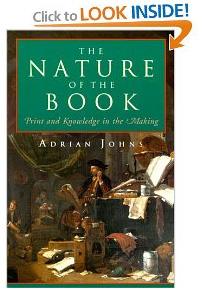
I sat down with my Kindle e-reader on Saturday morning to read the Los Angeles Times. There was an article about an L.A. used bookstore called Iliad Books. Sounded nice. So I went. What should I find but a section of books about books and publishing. There was a copy of The Nature of the Book: Print and Knowledge in the Making by Adrian Johns. The author’s main thrust is to examine how books in early modern England influenced and largely caused the development of the modern scientific method and the general acquisition and spread of knowledge. He wonders why readers assume that books are accurate and fixed. This is an interesting inquiry in light of the recent changes in publishing which involve ever-changeable electronic publishing and web postings. The history of the effort to make books fixed and true representations of their authors’ intentions and ideas is a fascinating one. It includes an analysis of widespread piracy that dogged publishers of books from the very beginnings of printed material.
Thinking about the nature of books and their history, along with the underworld of book manipulation, piracy, copyright, and the conveying of knowledge is essential as publishing undergoes its greatest changes since the beginnings of the printed page.
Where Do Fairy Tales Come From?
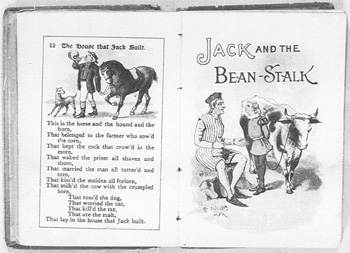
The traditional notion of where fairy tales come from suggests that people like the Brothers Grimm listened to oral folktales handed down through the generations and wrote them down with little embellishments. But now, in a book called Fairy Tales: A New History, Ruth B. Bottigheimer argues that fairy tales have a much more literary genesis than has been commonly thought. The Chronical Review has an interesting article about the different theories on the origin of some of the world’s most retold stories. The article points out how confusing and complex the history of fairy tales becomes when you consider that many of the most familiar tales are shared across different cultures. Jack Zipes, a leading translator and adapter of fairy tales says that “It’s absurd to create a dichotomy. The literary and the oral thrive off one another.”
Purchase Fairy Tales: A New History (Excelsior Editions)

Poetry Through the Ages
Poetry Through the Ages is an excellent site that offers clear and concise explanations of different poetic forms, a general history of poetry and a simple guide to reading and appreciating difficult poems.
“When a poem arises, it feels like the bosom of the poet lifts up and births the spoken or written moment. The point of origin lies at the furthest depths of the poet, often calling into play ancestral memories, divine or universal inspiration, and insights or truths that “magically” resonate with the reader.”
Podcast Discussion of Thoreau’s Walden
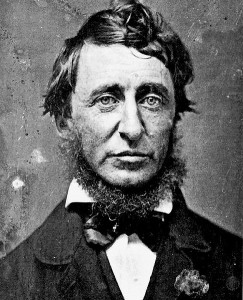
I was very interested in a post about Henry David Thoreau at BoingBoing this weekend. I got into one of those wonderfully dignified arguments in the comments with other Thoreau lovers and haters. But one of the commenters posted a link to this fascinating podcast episode in which a Thomas Jefferson fan and expert named Clay Jenkinson discusses Thoreau’s masterwork and its connection to the thinking of Jefferson. It’s a great listen and has me all excited about Walden again. In fact, I think I’m going to do a full reading the book right here. Perhaps I’ll start it this week. We’ll see. But I certainly think it needs to be read with all the punkish attitude and brilliant observation that I see in the book. If you want to read Walden, you sort of have to become Henry David Thoreau for a while. Not an easy task.
Meanwhile, you really should listen to this marvelous show about Walden.