Why Ayn Rand is Wrong (and Why It Matters): Kindle Book by Levi Asher

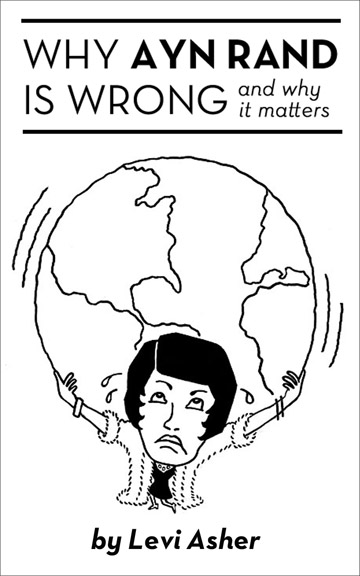
Levi Asher, the writer behind the long-running Literary Kicks site, has decided to move into the world of Kindle ebook publishing.  He’s starting the series off with a philosophical essay on the Objectivism of Ayn Rand.  Why Ayn Rand is Wrong (and Why It Matters) expands upon several posts Asher has made recently in his ongoing Philosophy Weekend discussions.  The focus on philosophy and its requirements for logical thinking and argument is especially needed right now in a political and ideological world of harsh opinion and attack masquerading as argument.  I often do this kind of attack-dog arguing myself.  It’s fun and it clears the sinuses effectively.  But it does not really serve much purpose.  Rational philosophical debate does serve a purpose and tends to foster respect between opposing parties.

Ayn Rand, for me, is simply the author of a very readable but rather simplistic novel, The Fountainhead.  I tried to read Atlas Shrugged, but gave up after two hundred pages, finding it so belabored and filled with lunkheaded ideas that I simply couldn’t put up with another speech from one of its cutout characters.   However, Rand also has a body of philosophical writing that seems to have been very influential and is having some kind of a resurgence lately among mostly conservative-minded people.

I have always thought that Rand was basically reacting violently to the mass-mindedness she saw everywhere in the first half of the twentieth century.  That mass-mind quality led millions to death via the trenches of World War I or the concentrations camps and genocide of Hitler and Stalin.  In the face of such horror, I think I too would have found solace in elevating the individual above all else.

I have purchased my copy of the Kindle book but I have not read it yet.  When I do finish the book and if I feel competent to do so I will try to write a little review.  But since I know Levi Asher’s writing very well from his fascinating blog I can certainly recommend that you head over to Amazon and buy a copy of a book that is for thinking.
Get Why Ayn Rand is Wrong (and Why It Matters) on Amazon

Google Opens Huge Online Ebook Store

Creating some good healthy competition for the likes of Amazon and iBookstore, Google has opened its online ebook store.  Ebooks are available for Android, iPhone, iPad, iPod and Web reading.  You can keep your ebooks in your Google library for access from different devices and readers, always maintaining sync with where you left off.  Downloads are offered in Adobe PDF or EPUB formats.  Google keeps insisting that its books are not compatible with the Kindle, even though they offer PDFs which are easily supported by later model Kindles.  I’m not sure what this double-speak is about.  You can also convert Google’s EPUB format to Kindle-friendly MOBI format by going over to download a free copy of the Calibre ebook management software that enables simple conversion and transfer.   I downloaded a free Google ebook of Sherlock Holmes stories and converted it for my Kindle in seconds.  The result looks just like a book purchased from Amazon for my Kindle.  In fact, some of the books I’ve purchased directly from Amazon have shown such grotesque typos and formatting errors that I wonder if anyone is doing any proofreading at all anymore.  That’s mainly the fault of the ebook publishers, but Amazon could certainly crack down on what amounts to seriously broken merchandise.  Competition from the Google juggernaut is a welcome bit of relief.

Google is capitalizing on their enormous library of scanned books for some of their offerings, especially in the free download area.  Most importantly however, Google is allowing independent bookstores to sell Google ebooks through their own retail sites.  The revenue from such sales is shared with the bookstore owners.  I also understand that the revenue split with publishers is very fair, with the publishers getting 70% and 30% going to Google.

Do Books Work as Memory Theater?

Open Letters Monthly has an article called In Defense of the Memory Theater, by Nathan Schneider in which he argues that books on shelves perform the function of reflecting memories back at us.  They are a constant reminder of the various events, stages, and emotional states of our lives.  We look at our shelves and can instantly catapult ourselves back in time to events surrounding our reading of various volumes.

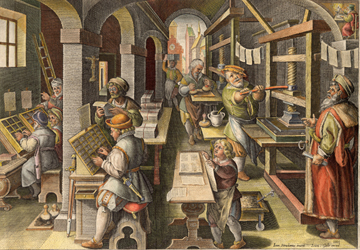
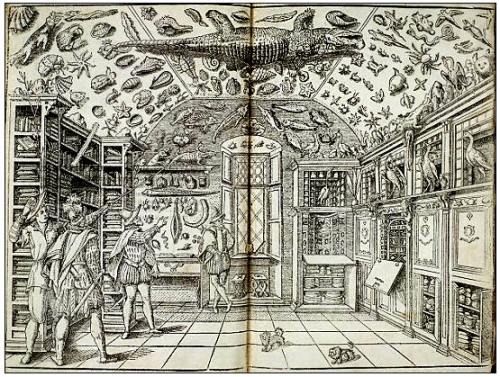
Schneider mentions a 16th-century memory theater that used images and symbols of the cosmos to inspire observers and enhance their intellectual powers.  Books, for Schneider, do something similar when they are visible on our shelves.  I agree up to a point.  I am often taken back in time by my own books upon their shelves.  But so am I transported by nearly every object in my home.  Objects all have this power.  Books are not exceptional in this regard.

Continue reading

Kindles and Little Bookstores

I don’t understand much about the book business.  But I do know what makes a person want to go and be somewhere.  I read a good blog post at The Devil’s Accountant about the troubles small bookstores have with the existing book business and the emerging business of ebook publishing.  Small bookstores have to purchase books at wholesale for too much money and can’t make enough profit when they sell at retail.  That’s true.  But most movie theaters can’t make much money selling tickets either.  They sell candy and sodas at big markups to make good money.  In fact, there’s no such thing as the ‘movie business.’  There’s only a candy selling business that uses movies to bring you up to the candy counter.

An important point I’d also like to make about independent and small bookstores is that most of them really suck.  Seriously.  Most small bookstores are just a modest room full of books on poorly built shelves.  Dead boring.  Nothing puts me to sleep faster than a crappy independent bookstore.  Good riddance to them.  Most independent bookstores can’t hold a candle to any Barnes & Noble or a Borders.  Don’t open a bookstore if all you want to do is sell books.  You’re an idiot if you do.  And I won’t give you my money.  I’ll give it to Amazon.  They are not boring.  They are smart and interesting.  I enjoy watching them slaughter dull little bookshop owners every single day.  It’s a fascinating and wonderful bloodbath.  These booksellers are being eaten by lions and their screams are rare amusement.

Continue reading

Reading On a Kindle Is a Pleasure

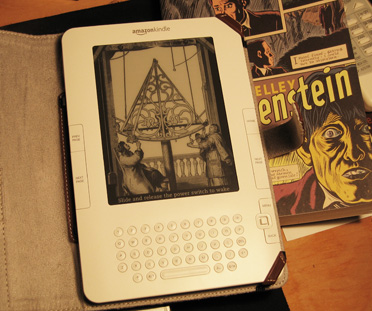
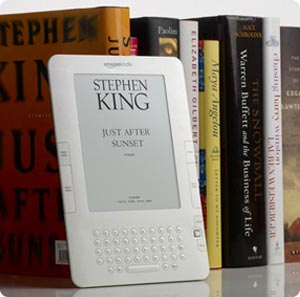
After two years of reading reviews, watching products come out and compete, listening to people gripe about DRM and ebook pricing, I jumped directly into the fray and opted for the Kindle from Amazon. I am completely and utterly smitten with the thing.  It feels like a magic book.  No – more like a printing press.  It’s got ink inside and the computer arranges the ink on the screen and it feels a little bit like you’re printing each page as you look at it.  It’s wonderful.  I don’t think I’ve ever read so much in a two-day stretch before.  I’ve subscribed to the New York Times and Asimov’s Science Fiction magazine.  I’ve purchased a single Amazon ebook for $9.99 and I’ve downloaded some free books from Project Gutenberg.  It all works beautifully and makes for the single best addition to my library since I acquired a two-hundred-year-old copy of Don Quixote.
Continue reading

Amazon and Macmillan Raise eBook Prices

There’s been a huge battle of the ebooks going on between Amazon.com and publisher Macmillan.  Last week, Macmillan, in response to rotten Apple’s announcement of $14 and $15 ebooks on its new iPad, insisted that Amazon give Macmillan the right to choose its own higher ebook pricing for the Kindle ereader device.  Amazon got peevish about the deal and simply de-listed all of Macmillan’s books.  I thought that was a nice nasty smack in the kisser for a doomed publisher at the time.  I was feeling so good about Amazon and its Kindle and so snitty about Apple’s iPad that I was within 60 minutes of plunking my digital money down on a brand new shiny Kindle.  But wait!  Amazon caved!  They rolled over and gave Macmillan what it wanted.
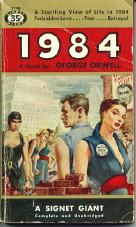
So now, dear reader, your Kindle ebooks from Macmillan will cost more.  Frankly, I was always kind of miffed by the whole $9.99 price tag on Kindle ebooks.  Too high.  Ebooks are invisible.  You can’t stack them and put boards across to make a coffee table.  Ebooks don’t have nice covers or fancy paper that you can bend and spill coffee on.  I don’t know about anyone else reading this blog out there, but when I walk into a book store I’m just a customer.  I don’t frankly give a damn about how the publisher is doing or how Amazon is getting along, or care a whit for Steve Jobs’ health, or the status of your average mid-list author and how he or she’s going to pay their mortgage.  I don’t give one syllable of a damn. Continue reading

Amazon Shows Us Why DRM Must Go

1984Last week, Amazon.com unwittingly dealt an enormous body blow to the concept of Digital Rights Management (DRM) by remotely deleting legally purchased copies of George Orwell’s Nineteen Eighty-Four from all Kindle ebook devices.  The excellent TeleRead site devoted to all things e-book and e-reader has a very well-considered post about the dangers of DRM and how we must protect ourselves against a world where customers don’t really end up owning digital copies of things they buy online.
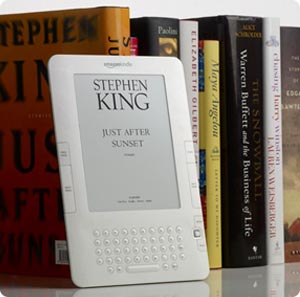
When Amazon can connect to your Kindle device and blow away the book you bought, it means that you never really owned it at all.  You’re a renter.  Get used to it.  Almost any online service you can think of that sells you a book or a piece of music can come into your device and zap your stuff.  They consider it their right to do so.  We need laws that make our digital purchases our very own property and forbid anyone from modifying or deleting them for any reason.

The TeleRead article draws the connection between the ability of a company like Amazon to zap books and government censorship.  Since the technology can zap books, it will zap books because governments will consider it an effective means of censorship.

Amazon Deletes Purchased Copies of ‘1984’ and ‘Animal Farm’ From Kindles

KindleWe have totally had enough of Amazon.com at Candlelight Stories and have completely removed them from advertising space on this site and permanently severed our ‘associate’ relationship with the company.  The reason is simple.  Over the weekend, Amazon went into customers’ Kindle ebook devices and deleted purchased copies of George Orwell’s classic novels, Nineteen Eighty-Four and Animal Farm.  Apparently, the U.S. owner of the novels’ copyrights either decided to change its mind about offering an ebook of the novels or complained about illegal electronic copies on Amazon.  So Amazon removed them from the site and then reached out into Kindle devices that are legally owned and whose owners had legally purchased Nineteen Eighty-Four and Animal Farm from Amazon’s own site and completely removed all traces of the novels from those devises.  I call it an eBurn.

What this means is that when you buy a Kindle ebook device you don’t actually own the device or anything on it.  Amazon does.  They can simply reach into your device and destroy any file they want to at any time, without your knowledge or permission.  I call that vandalism.  I think any company behaving that way should face a class action lawsuit and be investigated for violations of law.  I will not allow Candlelight Stories to engage in any further business with such a company and cannot recommend that anyone purchase a Kindle or any electronic file from Amazon.com whatsoever.  What Amazon did was basically like this:  imagine you go to buy a book for $14.95 at a Barnes & Nobel store.  Then Barnes & Nobel decides for whatever reason that they actually didn’t really want to sell you that book.  So they send an employee into your home while you’re out to remove the book from your bookshelf and leave $14.95 under your pillow.  That’s exactly what Amazon thinks it can do to you.  Appalling.  George Orwell must at this moment be laughing in his grave.  And the joke’s on Amazon.

Amazon has gotten into the habit recently of engaging in digital censorship and then apologizing once they get wind of a public outcry.  They then try to spin their bad behavior as a technical glitch that won’t happen again.  They have replied to this latest debacle by saying that it happens ‘rarely’ and that it will not happen again.  We do not believe them.  What this episode proves beyond any shadow of doubt is that the company can press a button and blow away any book you may have purchased.  Refunding the purchases simply does not make up for this grotesque behavior.  So, when you buy a Kindle, you really don’t own anything.  You are simply renting a little portable Amazon cash register that Amazon retains full rights to.  Companies like Amazon are building distribution systems that make censorship as easy as the press of a button.  How far are we willing to go in allowing just a few companies to control the distribution of most of our literature and reference material.  If that handful of companies decides it doesn’t like the politics of a certain kind of literature, it can blow it away completely by pressing a button or entering a simple code.  Book burnings have never been able to eradicate ideas so efficiently.  We now have something new: the eBurn.  No company that cared in the slightest for literature or for books would ever behave this way for any reason.  I am disgusted and horrified by Amazon.  I actually bought a television through Amazon.  Now I’m wondering if they can get inside it and delete my favorite TV shows.  My digital camera.  Can they blow away my vacation photos?

We have an excellent open-source web browser called Firefox, we now desperately need an open-source ebook device that allows us to purchase from any bookseller in any format available.  Hey, Mozilla, are you listening?

Oh, and by the way, here’s a technology writer to stay away from.  He actually says he thinks it’s a good idea for Amazon to sneak into Kindles and destroy books: Read his dimwitted comments on nothing other than C-Net.com.

But here’s a writer who understands the problem.

Here’s a New York Times article about the eBurn.

Is Amazon Run by a Simpleton?

Tim O’Reilly has posted quotes from an interview with Amazon’s Jeff Bezos.

“We’ve co-evolved with our tools for thousands of years,” he says, explaining how ease of Kindle buying changes behavior.

“Reading is an important enough activity that it deserves a purpose-built device….It’s a myth that multi-purpose devices are always better…. I like my phone… I like my swiss army knife too, but I’m also happy to have a set of steak knives.”

“I get grumpy now when I have to read a physical book….The physical book has had a great 500 year run, but it’s time to change.”

Hmmm.  First of all, anyone who uses the expression ‘swiss army knife’ in a conversation is skating on very thin ice because if he actually owns one he understands perfectly well that those things are not ‘multi-purpose’ at all.  And no army in the world carries them.  Secondly, if Mr. Bezos is grumpy when he has to read a physical book, he should get out of the bloody book selling business.  What a simpleton.  During Amazon’s entire history of steady growth as the Wal-Mart of the internet, I have never heard Mr. Bezos utter a single intelligent or captivating remark.

Thirdly, I think it is very clear that Mr. Bezos gets grumpy whenever he has to read anything at all.

Booking the Future: An Article About Where Publishing is Headed

Here’s a reprint of a fascinating and well thought out CC-licensed article by Ransom Stephens on the openDemocracy Network about the future of books and publishers.  The main thrust of the article is that books will survive mainly in hardback versions, electronic on-demand publishers will take over the bulk of book publishing, this takeover will begin the day Stephen King releases a major novel through an online self-publishing outlet, major publishers will whither and eventually be outmoded, and bookstores will thrive in a healthy relationship with electronic publishing.

Booking the Future
Ransom Stephens (openDemocracy Network)

Though the role of publishing has not changed – connect readers to writers – the revolution will not be led by an established publisher. To date, no established player has prospered through, much less led, the transition to the digitally-based economy. What’s left of the recording industry is still pursuing the fascinating how-to-best-prosecute-our-customers business model. No one was better positioned to profit from the web-based economy than Sears, with its legendary catalog, but Amazon all but killed it. Even IBM barely survived the computer revolution.

For some reason, even when entrenched companies can see the iceberg they can’t turn the ship. In 2000, at the height of the “Napster Crisis,” Time-Warner/AOL’s CEO, Richard Parsons said, “It’s an assault on everything that constitutes cultural expression of our society… And the corporations won’t be the only ones hurt. Artists will have no incentive to create. Worst-case scenario: the country will end up in a sort of Cultural Dark Age.”

Have YouTube, Facebook, iTunes, Blogspot, et al reduced cultural expression? Here’s a better example. In 1977, Ken Olson, President of Digital Equipment Corporation (DEC) which, at the time, built the best computing hardware, said, “There is no need for any individual to have a computer in their home.” Time-Warner/AOL, Sears and IBM survived, but are swimming in the wake of Dell, Google, Amazon, etc. 

Continue reading

Is Apple Ready to Burn Amazon’s Kindle?

apple_media_pad_mockupThis image is floating around the internet along with rumors that Apple is ready to unveil a much larger version of its iPod Touch that might be called MediaPad.  Apparently, it has a 6-inch HD touchscreen and will have cellular wireless connectivity.  So people are writing about this thing as a Kindle-killer.  Apple is also rumored to be preparing an ebook reader application that will allow book purchases through the iTunes store.

I think this has been coming for a while and I am almost certain that Steve Jobs will implement the first serious major competition for Amazon.