It’s darkly surreal and somehow gently amusing.
A short animated film written, drawn and directed by David Lynch. Animation by Noriko Miyakawa. Music by Marek Zebrowski.
It’s darkly surreal and somehow gently amusing.
A short animated film written, drawn and directed by David Lynch. Animation by Noriko Miyakawa. Music by Marek Zebrowski.
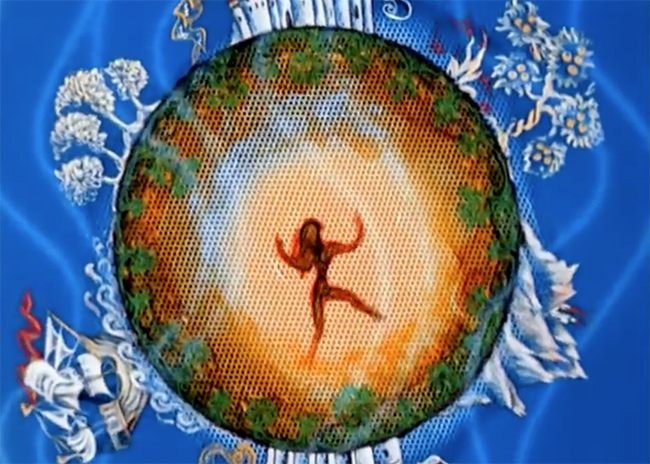
This is a beautiful 1968 Soviet adaptation of ‘The Little Mermaid,’ by Hans Christian Andersen. It was produced by the great Soyuzmultfilm studio. There are no subtitles. Just enjoy it as a brilliantly animated musical approach to a great tale.
The film begins with a busload of tourists sightseeing in Copenhagen. Then it moves to sea and our story begins…
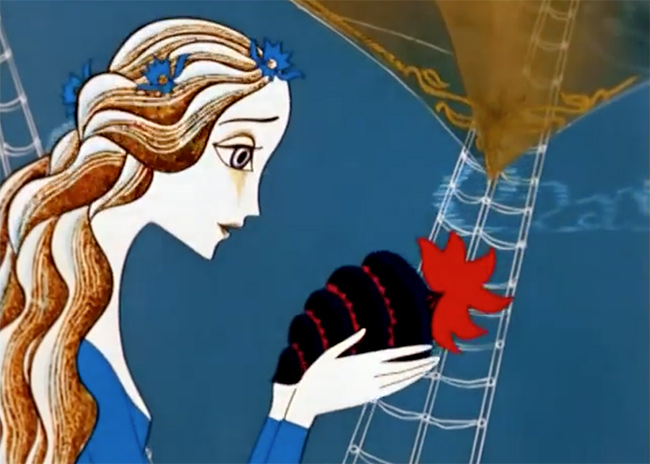
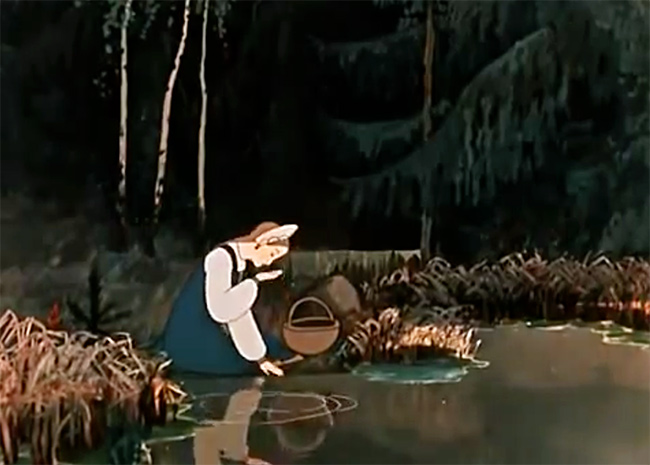
This is a 1951 Russian animation of an 1833 fairytale poem written by Alexander Pushkin that is based upon the classic Grimms tale, Snow White and the Seven Dwarfs. It was directed by Ivan Pyetrovich Ivanov-Vano, known as the ‘patriarch of Soviet animation.’
You can read Pushkin’s The Tale of the Dead Princess and the Seven Knights
The film is in Russian so you can use the YouTube settings to turn on English subtitles.
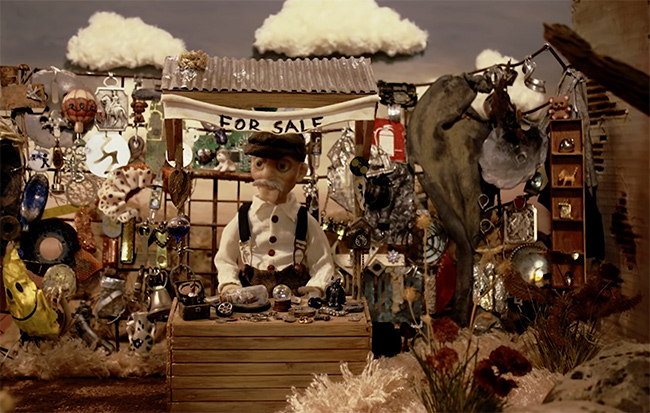
I recently went into the Hive Gallery in downtown Los Angeles. Making my way toward the back of the long row of artists’ stalls – for all intents and purposes an artists’ neighborhood – I encountered an animated film playing on an iPad that was hung on the wall of the display area for artist Meirav Haber. It caught my attention because of the gorgeous and finely detailed handmade dolls she uses for her animation. This kind of filmmaking has become something of a rarity in our CG world. So now the eye seeks out the human touch. Finding it is a pleasure.
Haber has an unusually quiet and calm approach to telling her story. We are encouraged to watch the character and look for the details in his surroundings. The details are incredible. Watch the film through, then go back and pause it to have a look around. Enjoy the work of a master at her craft.
This kind of animation is done in a small studio on tabletop sets built by the artist. It’s all about imagination connected to the hand.
Stan is a simply told tale about a man who was born with an unfortunate resemblance to the Devil. His efforts to gain acceptance and companionship essentially turn him toward an appreciation for odd objects that closely resembles the artistic impulse. Haber’s beautiful film is made entirely with the magnificent hand-crafted artworks of an amazing artist.
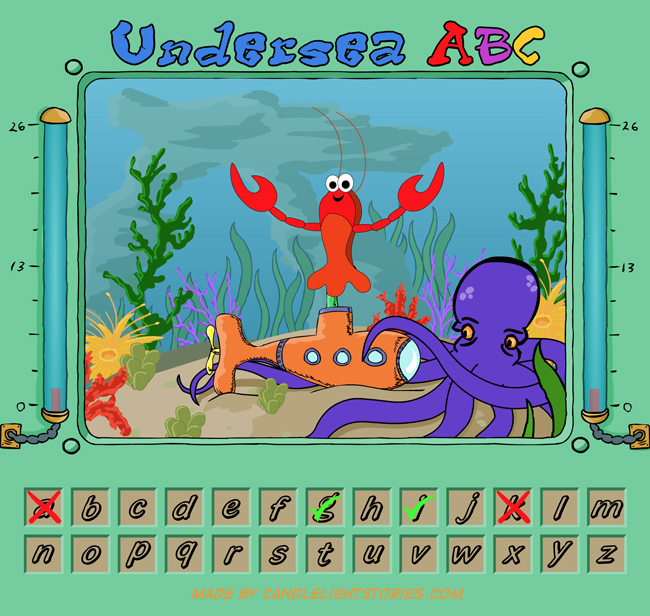
This is a learning game I programmed quite a few years ago. I’ve rewritten the code so that it should play more smoothly and perhaps be a little easier to read in the test results area.
The game is very simple: Larry Lobster tells you what to do. You just click on the letter bubbles to pick the right ones. A perfect score frees the trapped submarine from the bottom of the ocean.
Next up – an iPad version!
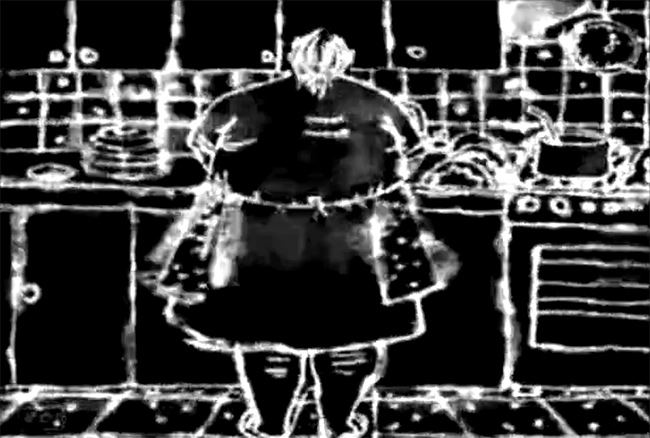
Bahare Tabatabaei Masouleh is a filmmaker in Tehran, Iran. This piece about a woman who remembers her dreams of childhood is entirely hand animated.
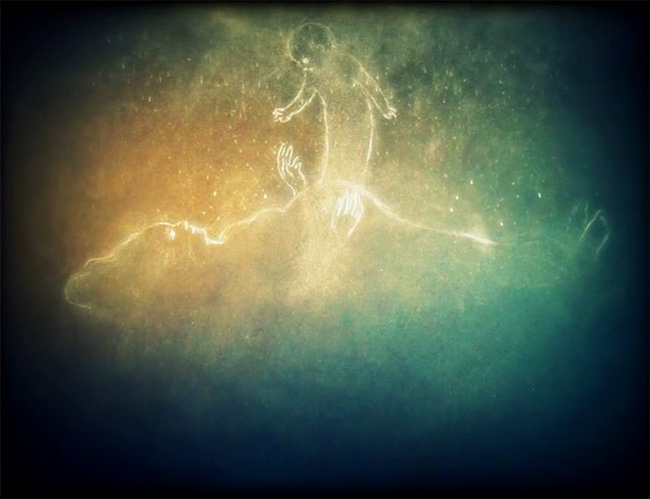
Filmmaker Myrrha Jamil is working on a new film about the iboga, the sacred visionary plant of West Africa. Looks and sounds great so far.

The students at the French computer graphics and animation school, Supinfocom made this amusing little animated film.
It was directed by Corentin Charron, Lise Corriol, Olivier Lafay, and Nicolas Mrikhi.
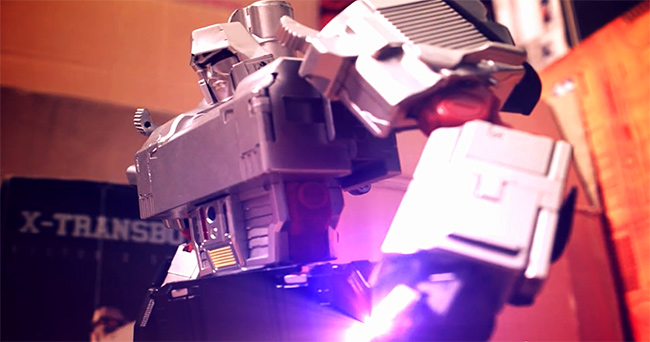
Filmmaker Harris Loureiro went to the store and bought himself a bunch of robot toys. Then he made a Transformers movie. It’s a wild, action-packed thrill ride of a stop-motion extravaganza, complete with voice overs and a fittingly super-dramatic score. Have fun!

Student Academy Award® finalist Carlos Andre Stevens made this beautiful short animated film about a man who invents a machine powered by his own memories.
It’s narrated by the magnificent British actor, John Hurt.
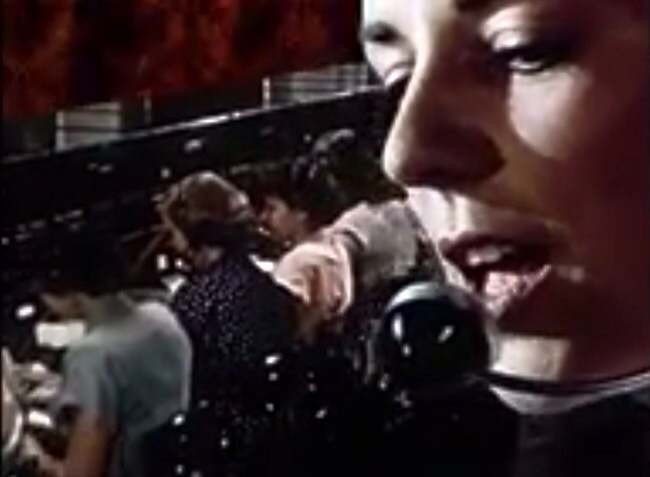
Here is a mixed media film by Los Angeles filmmaker Kelly Sears that tells an all too plausible documentary tale about secret government agencies listening in on telephone operators to learn all of our secrets. Found footage combines with animation to create a quiet disturbance. Sears' work has been screened at The Museum of Modern Art, LACMA, the Hammer Museum and many others.
Here's an interesting article with an interview about her work.
Thank you to Phil Solomon on Facebook.
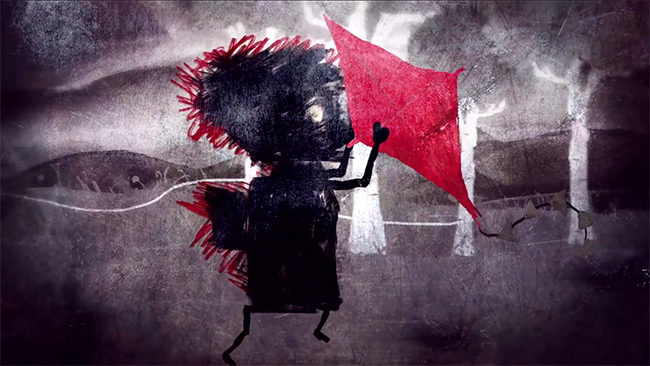
A crimson kite caught in the branches of an ash tree catches the attention of two boys who may not know that the roots of an ash tree grow all the way down to Hell.
Playdead, a motion graphics and animation company in Glasgow made this arresting and mysterious film.
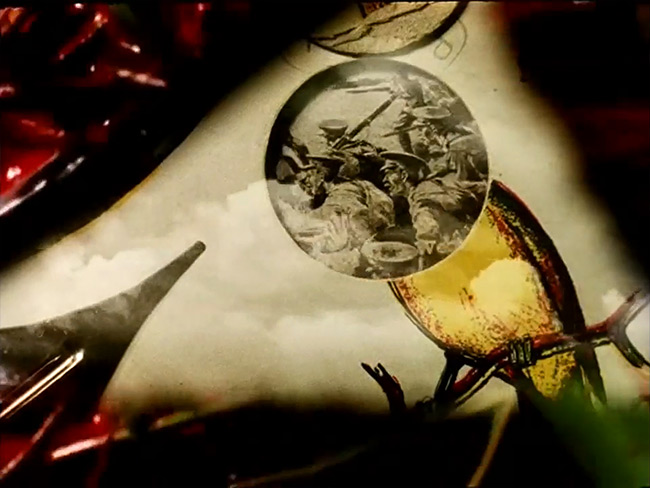
This is a brilliant animation from Janie Geiser who is a renowned theater and film artist specializing in the use of inanimate objects and toys to create unsettling and evocative films and performances. Her work has been screened worldwide, including at the Whitney, Guggenheim, Museum of Modern Art, and the Los Angeles County Museum of Art. The film investigates the origins of the word ‘algebra,’ which turn out to be somewhat interesting. Frankly, I had never once even considered the word before watching this film.
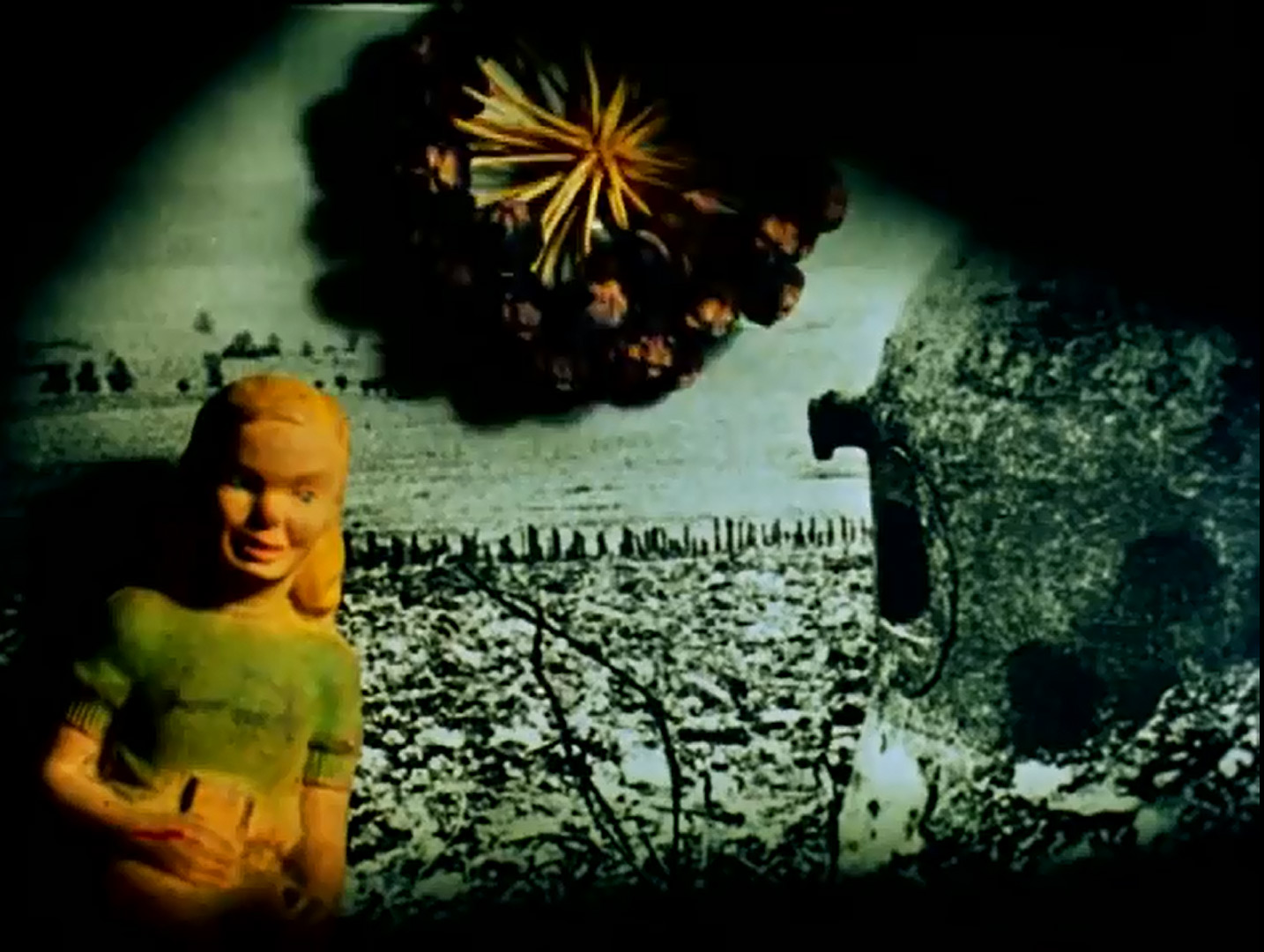
It’s a subtle film. A beautiful but difficult film. Let’s think about this experimental film, shall we? What do we see in this film? Holes. Lots of them. Holes for looking through. There’s a little plastic doll who looks very 1940s, some birds, numerals, trees, and lots of grass. Blades of grass. When I see a little plastic girl doll looking into holes I see a filmmaker looking into a camera to investigate the world, or rather the mind, or perhaps the unconscious. This doll approaches an odd stone bunker on a hill and she peers into a small opening into darkness. It looks a bit like an old Nazi gun bunker. Carl Jung would approve! All experimental films should dig into the unconscious mind, I think. People throw ‘dreamlike’ around quite often these days when talking about films. There are very few dreamlike films. What most people mean by dreamlike is simply blurry. Anyway, our plastic doll sees things in storybook fashion that suggest nature and Nazis. There’s warfare going on. The precision of battle maps. The doll’s vision puts conflicting images of tamed nature description together with extreme violence. Nothing is attached properly to anything. Ideas do not lead to logical conclusions. Instead, they lead to odd constructions, more like what is required by the creative mind.
Geiser’s ‘algebra’ theme seems to peek through at times in images of severed limbs or broken bones, teeth, spilled blood, and of course the various number machines that pop up. The word algebra apparently used to have a meaning related to restoration or reunion, sometimes applying to the setting of broken bones which was often done in medieval times by a dentist who also performed bloodlettings. Interesting. But this film is not really about mathematics. At least not the usual kind. It’s about piecing together a vision of the world. Immersion.
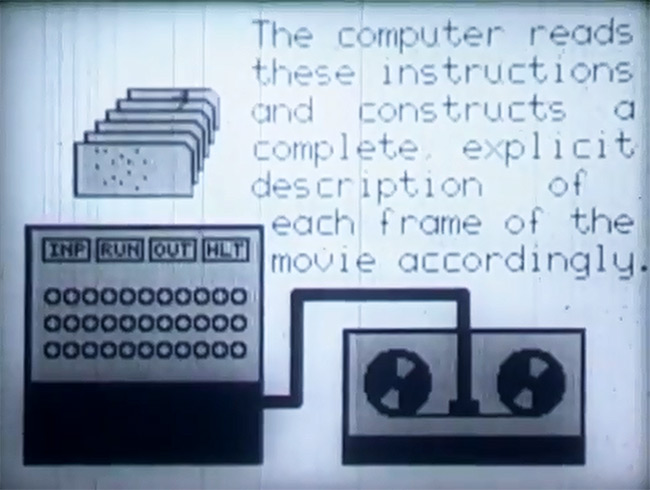
This fascinating film was produced at AT&T’s Bell Labs in 1964. It was made by Ken Knowlton to describe the use of computers to make animated films. The film itself was created entirely on a computer. This is a glimpse into the groundbreaking work that led to the computer graphics we all enjoy so frequently today. Knowlton was both an artist and a computer graphics programmer who developed several programming languages for producing bitmap animations.
Interestingly, Ken Knowlton worked closely with pioneering experimental filmmaker Stan Vanderbeek at the Bell Labs on many early computer animations. Vanderbeek is the subject of my prior post about his short film, ‘Science Friction.’
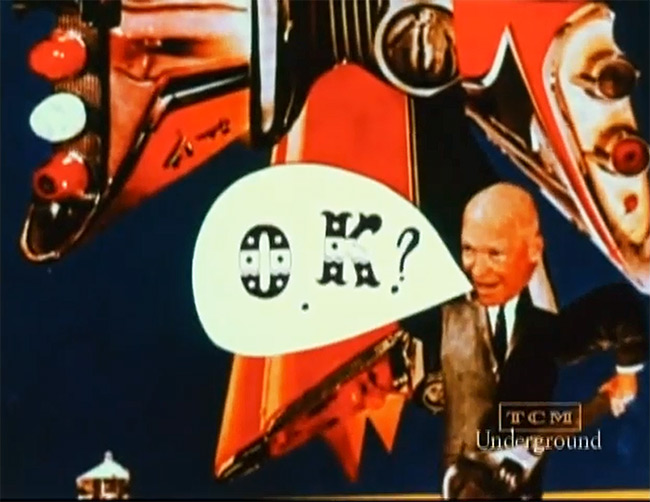
This is an amazing and beautiful film by pioneering American experimental filmmaker Stan Vanderbeek. His work encompassed collage animations, live events, and early experiments with computer graphics.
The technological explosion of this last half-century, and the implied future are overwhelming, man is running the machines of his own invention… while the machine that is man… runs the risk of running wild. Technological research, development, and involvement of the world community has almost completely out-distanced the emotional-sociological (socio-“logical”) comprehension of this technology. The “technique-power” and “culture-over-reach” that is just beginning to explode in many parts of the earth, is happening so quickly that it has put the logical fulcrum of man’s intelligence so far outside himself that he cannot judge or estimate the results of his acts before he commits them…
Stan Vanderbeek