Google Opens Huge Online Ebook Store

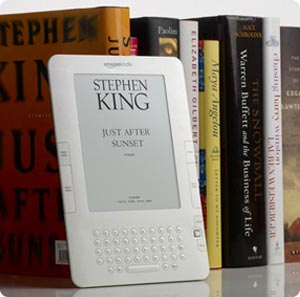
Creating some good healthy competition for the likes of Amazon and iBookstore, Google has opened its online ebook store.  Ebooks are available for Android, iPhone, iPad, iPod and Web reading.  You can keep your ebooks in your Google library for access from different devices and readers, always maintaining sync with where you left off.  Downloads are offered in Adobe PDF or EPUB formats.  Google keeps insisting that its books are not compatible with the Kindle, even though they offer PDFs which are easily supported by later model Kindles.  I’m not sure what this double-speak is about.  You can also convert Google’s EPUB format to Kindle-friendly MOBI format by going over to download a free copy of the Calibre ebook management software that enables simple conversion and transfer.   I downloaded a free Google ebook of Sherlock Holmes stories and converted it for my Kindle in seconds.  The result looks just like a book purchased from Amazon for my Kindle.  In fact, some of the books I’ve purchased directly from Amazon have shown such grotesque typos and formatting errors that I wonder if anyone is doing any proofreading at all anymore.  That’s mainly the fault of the ebook publishers, but Amazon could certainly crack down on what amounts to seriously broken merchandise.  Competition from the Google juggernaut is a welcome bit of relief.

Google is capitalizing on their enormous library of scanned books for some of their offerings, especially in the free download area.  Most importantly however, Google is allowing independent bookstores to sell Google ebooks through their own retail sites.  The revenue from such sales is shared with the bookstore owners.  I also understand that the revenue split with publishers is very fair, with the publishers getting 70% and 30% going to Google.

Do Books Work as Memory Theater?

Open Letters Monthly has an article called In Defense of the Memory Theater, by Nathan Schneider in which he argues that books on shelves perform the function of reflecting memories back at us.  They are a constant reminder of the various events, stages, and emotional states of our lives.  We look at our shelves and can instantly catapult ourselves back in time to events surrounding our reading of various volumes.

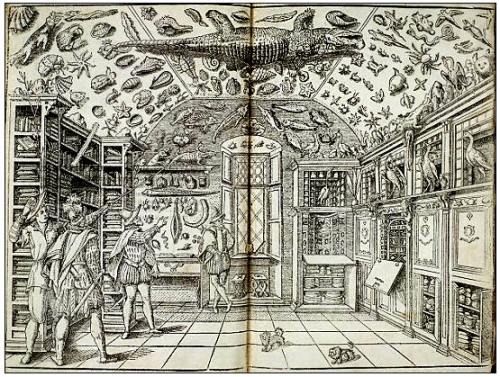
Schneider mentions a 16th-century memory theater that used images and symbols of the cosmos to inspire observers and enhance their intellectual powers.  Books, for Schneider, do something similar when they are visible on our shelves.  I agree up to a point.  I am often taken back in time by my own books upon their shelves.  But so am I transported by nearly every object in my home.  Objects all have this power.  Books are not exceptional in this regard.

Continue reading

Is Stealing eBooks Ethical?

Is it ethical to steal an eBook if you’ve purchased the hardback version?  Sure.  Stealing the hardbacks themselves is much more fun though.  Is it ethical for a publisher to charge what they charge for hardbacks?  No way at all.  Sorry publishers, your pricing sucks and you know it.  So, certainly it’s ethical to steal an eBook if I’ve been robbed by the hardback price already.

Now of course all the minimum wage proof readers in New York City will pounce on me and call me terrible names because they dread being turned into temp workers.

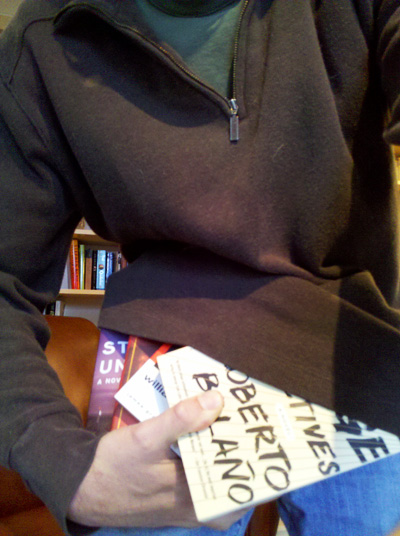
But stealing books is a real talent.  You need a big army jacket that has lots of giant pockets inside and out.  It’s best to steal them from large grocery and discount stores.  eBooks are too easy to steal and you never really know what’s waiting for you on the other end of a download link anyway.  The photo is of me demonstrating my own book-stealing technique.  I have amassed quite the respectable library this way.  But I never lend books out because they seldom make their way back home.

Here is an effort by a New York Times writer to answer the question of whether stealing ebooks is ethical or not if you’ve already bought the hardback.

But here’s a better piece at The Millions about an eBook pirate who’s pretty clear about what he likes.

Also, if you want to see how stealing books actually improves the world and culture, read The Savage Detectives by Roberto Bolaño.

Kindles and Little Bookstores

I don’t understand much about the book business.  But I do know what makes a person want to go and be somewhere.  I read a good blog post at The Devil’s Accountant about the troubles small bookstores have with the existing book business and the emerging business of ebook publishing.  Small bookstores have to purchase books at wholesale for too much money and can’t make enough profit when they sell at retail.  That’s true.  But most movie theaters can’t make much money selling tickets either.  They sell candy and sodas at big markups to make good money.  In fact, there’s no such thing as the ‘movie business.’  There’s only a candy selling business that uses movies to bring you up to the candy counter.

An important point I’d also like to make about independent and small bookstores is that most of them really suck.  Seriously.  Most small bookstores are just a modest room full of books on poorly built shelves.  Dead boring.  Nothing puts me to sleep faster than a crappy independent bookstore.  Good riddance to them.  Most independent bookstores can’t hold a candle to any Barnes & Noble or a Borders.  Don’t open a bookstore if all you want to do is sell books.  You’re an idiot if you do.  And I won’t give you my money.  I’ll give it to Amazon.  They are not boring.  They are smart and interesting.  I enjoy watching them slaughter dull little bookshop owners every single day.  It’s a fascinating and wonderful bloodbath.  These booksellers are being eaten by lions and their screams are rare amusement.

Continue reading

Amazon and Macmillan Raise eBook Prices

There’s been a huge battle of the ebooks going on between Amazon.com and publisher Macmillan.  Last week, Macmillan, in response to rotten Apple’s announcement of $14 and $15 ebooks on its new iPad, insisted that Amazon give Macmillan the right to choose its own higher ebook pricing for the Kindle ereader device.  Amazon got peevish about the deal and simply de-listed all of Macmillan’s books.  I thought that was a nice nasty smack in the kisser for a doomed publisher at the time.  I was feeling so good about Amazon and its Kindle and so snitty about Apple’s iPad that I was within 60 minutes of plunking my digital money down on a brand new shiny Kindle.  But wait!  Amazon caved!  They rolled over and gave Macmillan what it wanted.

So now, dear reader, your Kindle ebooks from Macmillan will cost more.  Frankly, I was always kind of miffed by the whole $9.99 price tag on Kindle ebooks.  Too high.  Ebooks are invisible.  You can’t stack them and put boards across to make a coffee table.  Ebooks don’t have nice covers or fancy paper that you can bend and spill coffee on.  I don’t know about anyone else reading this blog out there, but when I walk into a book store I’m just a customer.  I don’t frankly give a damn about how the publisher is doing or how Amazon is getting along, or care a whit for Steve Jobs’ health, or the status of your average mid-list author and how he or she’s going to pay their mortgage.  I don’t give one syllable of a damn. Continue reading

A Cartoonist Wonders About the Fuss Over Digital Books

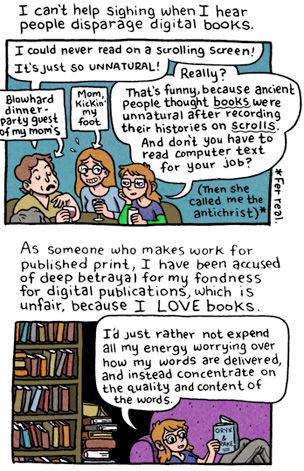
OptimismCartoonist Lucy Knisley has a comic online called ‘Downloading Optimism: Pessimism Virus Detected.’ It’s a funny but very direct assault on the tendency in some quarters to fret and worry about the emergence of digital books and online reading as the driving force behind the new world of publishing.  She doesn’t understand why some of our most creative writers and artists are feeling so gloomy about their prospects in a digital publishing world.

She’s been reading enormous amounts of online text since she was a little girl.  Her point of view is dead on the money.  One little thing I know is that I began publishing for kids online back in 1995.  The kids came and were reading lots of stories.  Let’s say a bunch of them were only 5.  Well, they’re 20 now, and they are making it plain that they want their books on screens just as often as they might want them on paper.  You ignore them at your peril.

I found this comic via Boing Boing

Remember the Book?

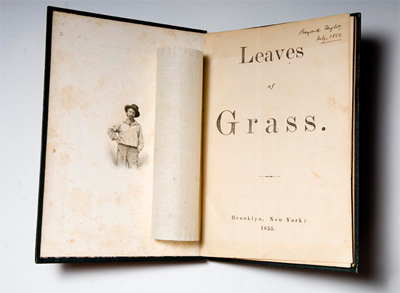
LeavesOfGrassBookRemember the book?  Of course you do, because you have plenty of them in shelves, half-read, dusty, bent, torn, coffee-stained, wine-colored, smudged, smelly, misprinted, broken and cherished. They catch your glance as you walk from one room to another, reminding you of a year or a moment when you were doing something else but had that book in your bag or backseat and meant to finish it or did in fact, and put it away and moved it several times in a box, cursing its weight and trying not to bend it.  So there it sits now, quite possibly closed until the day you die.  But you know it’s there and it’s a marker in your life.  Remember this thing with books?

And LPs of vinyl?  Mine used to function like books in my shelf.  But I put them into a closet years ago because of CDs.  Now I can’t stand searching a shelf of CDs, so I mainly use MP3 files.  My albums no longer work as markers of life and time.  The same thing is happening to books.  All of mine are still on the shelves.  But the world is changing and books are beginning to look a lot like information that wants to weigh less. It doesn’t matter how one feels about this, whether it makes us sad or not.  It’s a creeping fact.  Our books are turning into wonderful collector’s items. I can tell this is happening partly from all the excitement and business surrounding these e-reader devices.  Books will continue to play an important role in literature but they will gradually be eclipsed by some other technology.  The current e-readers are not necessarily it, but they are the harbingers of things to come.  We are lightening our load because we can’t carry it around forever.  We’ll have to travel light.  Walt Whitman wouldn’t mind though, because he’d want to travel with us.

But this fellow, Raymond Danowski, has amassed the largest collection of 20th Century English poetry books in the world.  He collected over 70,000 books, periodicals, and artifacts.  The collection includes a first edition of Whitman’s Leaves of Grass, printed by the poet himself.  It also has a first edition of T.S. Eliot’s Prufrock and Other Observations.  There are so many books that when he donated the entire collection to Emory University in Atlanta, it took volunteers over a year just to unbox all the volumes.  The university is now the major center for researching 20th Century English poetry books.

I’d like to see that collection.  It must be fascinating.  And anything is worth touching that Walt Whitman touched.  Seeing books is the thing.  They have a presence in a room, lining its walls and giving it enormous depth.  But we are engaged in a process of making our books invisible.  What will we put in their place?  I’m not really too worried about that because when you turn all those words into digital form you present yourself with infinite possibility.  When words float around in the air you are in the realm of magic beyond anything any book could have ever accomplished.  Then again, sometimes just touching a book is enough to send your mind wandering down an unexpected path.  Can touching a virtual keyboard have the same effect?  Does it have to have the same effect?  Maybe not.  I’m sure banging a chisel into a clay tablet did things to a mind that ancient peoples were loath to part with.

Does the emergence of a world without books frighten or worry you?  Do you see something wrong with a world in which literature is simply information that travels wirelessly?  Do you think that ink is inherently superior to bits?

Eventually, we will read War and Peace by passing someone on the street and glancing into their eyes for a brief moment.  That person will give us the book as nothing more than a polite ‘How do you do?’  At that point, we will remember books the way we remember the clay tablet.
Apple is a Nightmare of Censorship

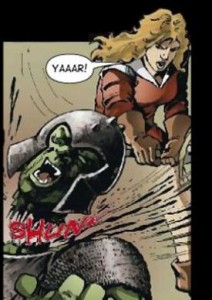
andasgamecensorLook at the image to the left.  If that image disturbs you to the point of banning the comic book, you are unintelligent.  No doubt about it.  It disturbs Apple so much that they’ve removed the comic book from their App Store.  Clear censorship.  The comic book is by author Cory Doctorow who has written many fiction and non-fiction books.  Most of his work supports open source creativity and remix culture.  I suspect that there’s more to Apple’s censorship of this work than meets the eye.  Apple hates open source stuff.  They lock down their products like nobody’s business.  They even think it’s illegal for you to make your own applications to load onto your own iPhone or iPod Touch.

Recent events at Apple and Amazon paint a disturbing picture of what is going on with these technology-based companies as they try to handle creative content.  It seems that the more efficiently a company designs and builds technology, the more interested they become in controlling and censoring content.  This is the fundamental core of fascism.  It is a very dangerous idea to give control of publishing and content to these companies.  It must not be allowed to happen.  They do not care one whit about freedom of expression.

What has become very obvious over the past year to any discerning observer is that Apple is a far right-wing conservative organization with truly frightening ideas of what content should be made available on a publishing platform.  Censoring the image of the Ork getting his head chopped off in a comic book is just what I would expect from an Islamic fundamentalist group or a right-wing Christian organization.  If the Taliban opened their own app store, I doubt they would publish an application that features a bikini-clad female chopping Muhammad’s head off.

So here it is –  for all intents and purposes as far as creative expression is concerned: Apple = Taliban.

I think Apple has some very smart engineers and designers working for it, but is burdened with a high-functioning nitwit at its helm: Steve Jobs.  We hear a lot about how smart this fellow is, but he appears to be about as clever as your average car salesman.  Apple needs to dump this guy quickly and figure out how to run itself as a content distributor because Mr. Jobs is not up to the job.

In the 21st Century you don’t run around censoring creative work in the United States of America.  You do that in China, North Korea, Cuba, Syria, Libya, Saudi Arabia, Pakistan, Egypt, Singapore, Burma, etc.

I would suggest Mr. Jobs apply for a job in one of these places.  They would simply love to have him.

Espresso Book Machine 2.0

Well… it better not jam. That’s my two cents. But really this is a neat idea. A book printer. It lets a user download, print, and bind a real book in just a few minutes. The New York Public Library has one. I’m not sure if one is expected to return the books it prints, but if they think it’s a good machine, it probably is. The Bibliotheca Alexandrina in Egypt has one. This is the kind of machine that makes online book printing services like Lulu.com really start making sense. Of course, the shops and libraries must keep themselves supplied with the right paper and cover materials. But it is quite obvious that the days of publishers shipping cartons of books to bookstores all over the world in such bulk are very numbered. Pretty soon there will be a book printer in many homes. That’s assuming that everyone doesn’t switch to ebooks. But with companies like Amazon building portable cash registers instead of real ebook devices, that will not happen for a long time.