Star Odyssey: Ludicrous 1978 Italian Star Wars Rip-Off

StarOdyssey

Hopefully, you have never seen ‘Star Odyssey,’ also known as ‘the Italian Star Wars.’

Now is your chance! It’s a full immersion into cinema of the ludicrous. For your convenience, it’s dubbed into English. Beware though, you will never look at science fiction the same way again after subjecting yourself to this assault.

StarOdysseyPoster

One can only hope that at least the actors might have had some fun making this, but unfortunately most of them appear to be thinking about the food truck instead of their lines.

Its awful history goes back to 1978, barely a year after the real Star Wars was released. Its unforgivable direction is credited to one Alfonso Brescia, heaven rest his soul.

The primary achievements of this interstellar fiasco appear to be robots constructed from trash cans and light sabers fashioned out of painted plywood.

Enjoy this Italian treat in the comfort of a nice quiet insane asylum.
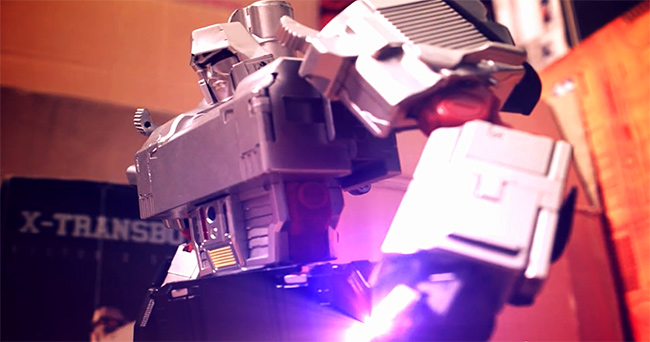
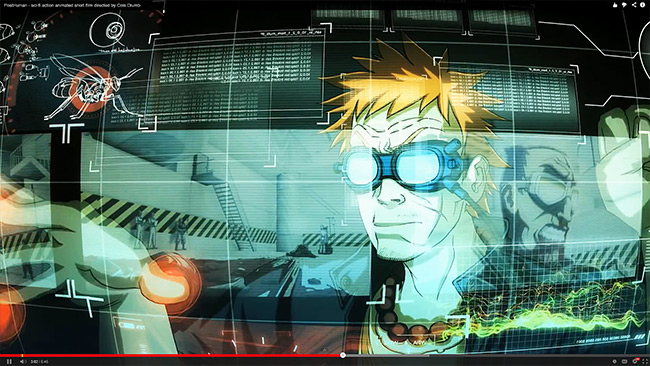
Transformers Generation: Wild Robot Action Fan Film by Harris Loureiro

Transformers

Filmmaker Harris Loureiro went to the store and bought himself a bunch of robot toys. Then he made a Transformers movie. It’s a wild, action-packed thrill ride of a stop-motion extravaganza, complete with voice overs and a fittingly super-dramatic score. Have fun!

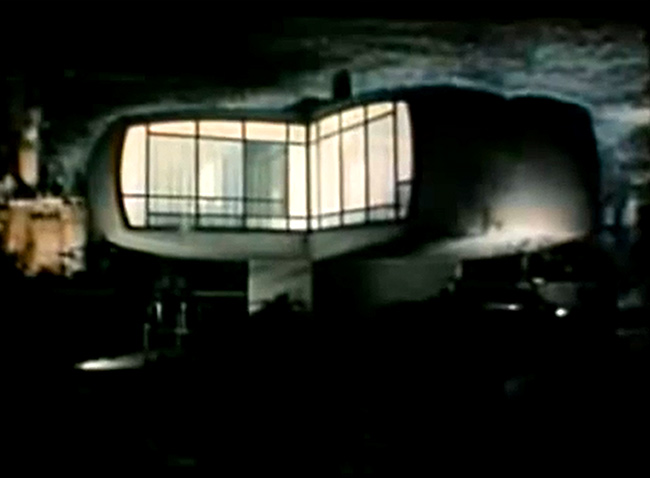
Monsanto House of the Future in 1957 Tomorrowland

MonsantoHouse2

This is more interesting than it looks. Monsanto – yes, that evil company that takes dirt and turns it into a lawyer – worked with Disney to build a house of the future in Disneyland. It was intended to show how plastics would revolutionize home building. Apparently, the house was so strong that when Disney tore it down at the end of the sixties they could not break the outer shell with wrecking balls.

My primary interest in the film, aside from the mentally challenged smiling morons that inhabit Monsanto’s future vision, is the fascinatingly awkward focus on comfort as the primary aspect of life in the future. I think a great new science fiction film could be made by some nutty director who would look at the future of industrial films like this one for inspiration. It could be the antidote to the completely bleak, dystopian, post-apocalyptic dumb soup being offered by witless filmmakers like Neill Blompkamp. The thudding incomprehensibility of such work must eventually be counteracted by a house of the future and people who think they are happy!


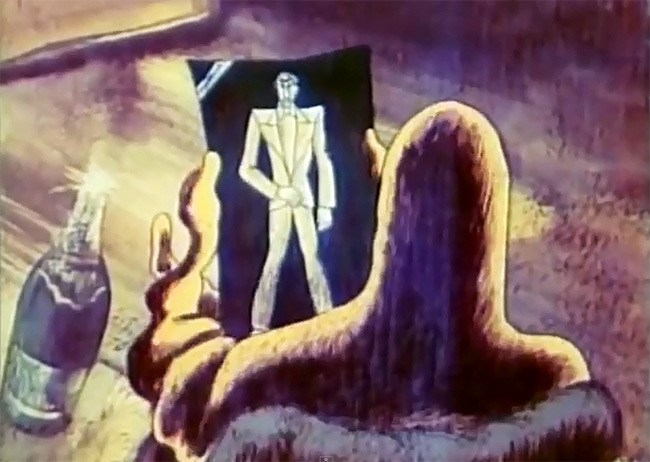
The Meeting: 1984 Science Fiction Animation from Ukraine

TheMeeting

This is an extraordinary 1984 science fiction animation from the Soviet era Ukrainian film studio known as Kievnauchfilm. Aliens visit the earth to investigate whether humans have any knowledge of the reality behind UFOs.

Here’s a link to another animation from this studio. Stephen King’s ‘Battleground’ short story.


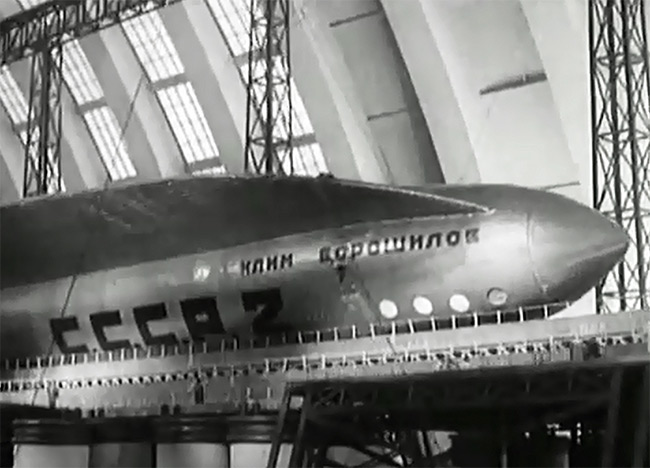
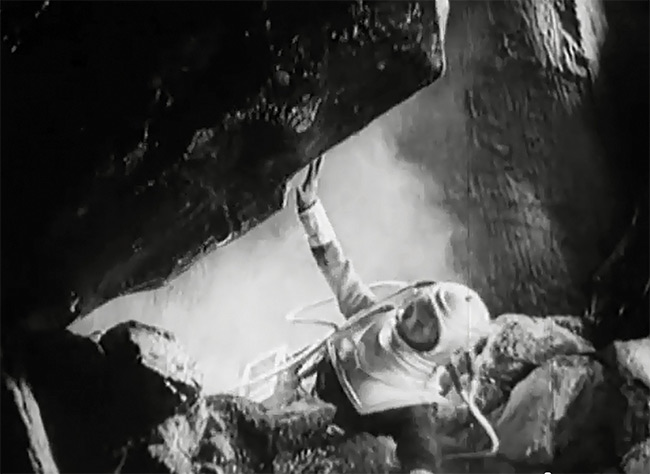
Cosmic Voyage: 1936 Soviet Science Fiction Film About a Moon Landing

SovietSpaceFlight2

This is an absolutely fascinating and rather beautiful 1936 Soviet science fiction film that foretold how a future 1946 moon mission would work. It’s got incredible zero gravity effects, miniature models of a fantastic space ship on a launch ramp, and very cool technical details like filling the cockpit with fluid to buffer the cosmonauts from launch forces. Then there’s a marvelous sequence on the surface of the moon with excellent stop motion animation inter-cut with live actors. Apparently, the Soviet censors banned the film after a short but successful first run because they felt the cosmonauts were having too much fun on the moon. They were right. These characters go hopping and bounding about with so much joy it’s almost an embarrassment. Citizens of the Soviet Union were not supposed to be happy.

Don’t worry about understanding Russian. The film was shot as a silent and is more or less a completely visual experience.

It was directed by Vasili Zhuravlov, but what’s really most interesting about the production history is that Constantin Tsiolkovski, a Soviet scientist and professor, became enthusiastic about putting some of his theories on space travel into a film. He consulted with the filmmakers in an attempt to lend verisimilitude to the moon voyage. Many years later, Werner von Braun credited Tsiolkovski’s calculations as having been correct.

So here is a old Soviet film that went to great lengths to get many of its details right.


Here is an interesting article about the film.

SovietSpaceFlight3

There Will Come Soft Rains: Ray Bradbury Machinima Film

Ray Diaz made this machinima version of Ray Bradbury's 1952 short story about an automated house continuing on with its comfort duties for a nuclear family even after war has stripped the earth of all life. It's a simple and eerie little film. The soundtrack is provided by an NBC radio broadcast dramatization of the story.


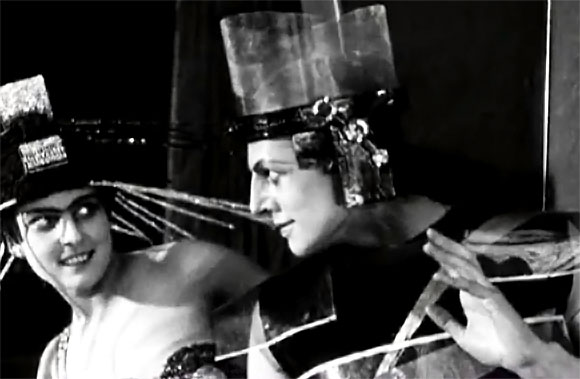
Aelita Queen of Mars: First Russian Science Fiction Film 1924

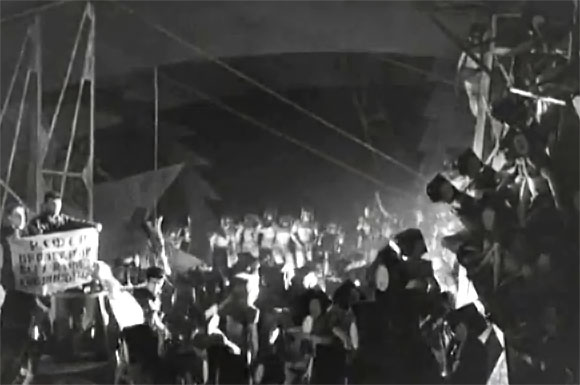
This is regarded as being the first Soviet science fiction film. Made in 1924, it’s an operatic scenario involving a mysterious radio signal sent toward earth, a scientist who builds a spaceship to get to the red planet only to find a totalitarian state, and a dictator’s daughter who wants to lead a revolution. There’s even a hammer and sickle to go along with the establishment of a socialist republic on Mars.

The film combines outlandish stage scenery representing Mars with the gritty streets and factories of Moscow. There’s some really beautiful photography and truly absurd costumes throughout.

Directed By Yakov Protozoan
Written By Aleksei Fajko and Fyodor Otsep
Based On A Play By Aleksei Tolstoy

All six parts of the film can be seen in this YouTube playlist.

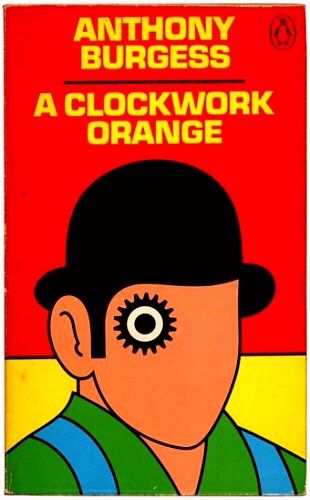
A Clockwork Orange: BBC Radio Drama of the Novel by Anthony Burgess

This is a BBC radio dramatization of A Clockwork Orange by Anthony Burgess. The book is still a shocking satire of Western culture gone to the youthful dogs of violence and mayhem. Burgess played with language by inventing a detailed and comically expressive slang for his criminal hero and the gang he leads.
 
The best info I can find about this recording dates it somewhere around 1997. It stars Jason Hughes as the murderous 'droog,' Alex.


Ray Bradbury Has Died at 91

It’s a sad day for writing and for science fiction. Legendary and iconic author Ray Bradbury has died at the age of 91. We should count ourselves fortunate that we had him for so many years, firing the imaginations of children and adults worldwide. I will never forget reading his ‘Martian Chronicles,’ ‘Fahrenheit 451,’ and ‘The Illustrated Man.’ I recently re-read 451 after many decades and thoroughly enjoyed it to the same extent that I had as a teenager. He was one of those writers more interested in the life of the imagination than in hard-core science fiction. He wrote not about the spaceship, but more about how one thought about a spaceship.
 
He provided much material for the movies, including the peculiar and not entirely successful Francois Truffaut adaptation of ‘Fahrenheit 451.’ He will be sorely missed and probably never equaled.
 
Here is a 1963 television documentary about Bradbury produced by David L. Wolper. It contains a film version of one of his short stories called ‘Dial Double Zero.’
 
Video found via Paul Gallagher at Dangerous Minds.


Capsule: A Short Film by Tony Altamirano

Tony Altamirano’s film as been an official selection at the New York City International Film Festival 2011, Beverly Hills Shorts Fest 2011, Capital City Film Fest 2011, and the San Francisco Frozen Film Fest 2011. It’s a neat little science fiction surprise with a twist. I like its point of view on the imagination’s ability to transform reality even while putting one in mortal danger.

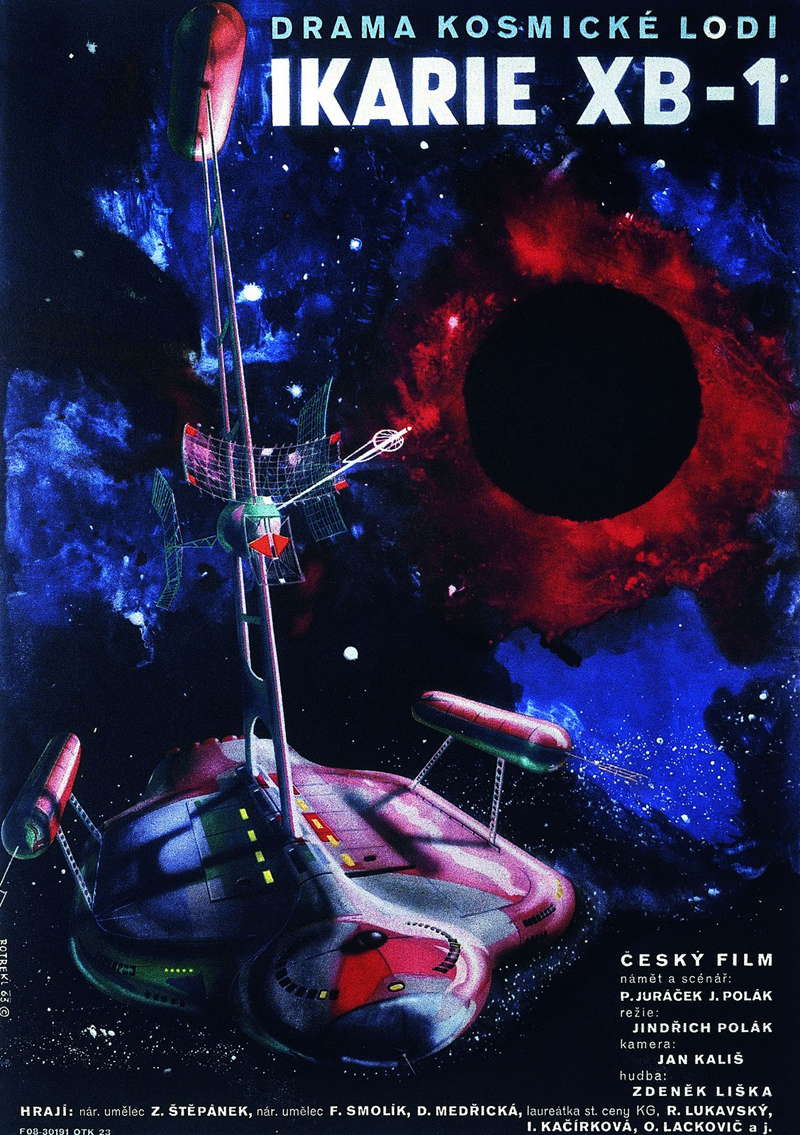
Ikarie XB-1: 1963 Czechoslovak Science Fiction Film of a Stanislaw Lem Novel

This 1963 Czechoslovak science fiction film directed by Jindrich Polák is an adaptation of a Stanislaw Lem novel called ‘The Magellanic Cloud.’ Reflexively, one tries to find similarities between this film and Kubrick’s ‘2001: A Space Odyssey.’ But I think the better place to look for influence is in Andrei Tarkovsky’s 1972 film, ‘Solaris,’ which was also a Lem adaptation. ‘Ikarie XB-1‘ follows the crew of a ship sent to investigate a planet orbiting Earth’s nearest star, Alpha Centauri. On the way, they encounter a derelict space ship from 1987 Earth which appears to originate from the United States and carries a load of deadly poison and nuclear weapons. Crew members begin to inexplicably fall asleep. The ship also finds a giant dark star that emits an unknown type of radiation from which the humans are mysteriously rescued. The end of the film is a stunning sequence of mental breakdown leading to fantastic and life-affirming discovery.

But the various events do not matter as much as the way the film dwells on the people within their technological surroundings. It’s the focus on the mental status of the crew as opposed to exciting episodes that makes for the strength of this film and its influence on ‘Solaris.’ The film has a calm and quiet approach, simply trying to let us feel the vast distances traveled by the crew. The sets and visual effects hover between beautiful and unconvincing. But they work and are often effective. It’s really a pretentious art film in space. If you like Eastern Bloc science fiction and Stanislaw Lem’s peculiar writing, this is a must see.