The Tale of the Dead Princess and the Seven Knights: Russian Fairytale Animation

RussianSnowWhite

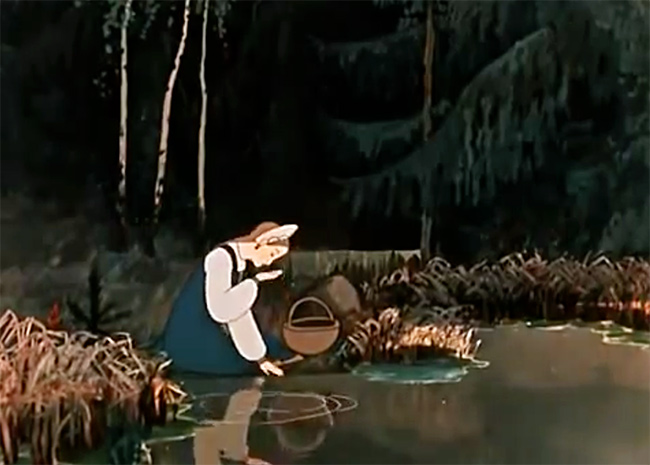
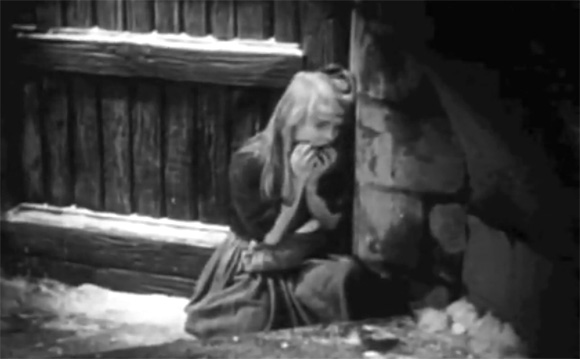
This is a 1951 Russian animation of an 1833 fairytale poem written by Alexander Pushkin that is based upon the classic Grimms tale, Snow White and the Seven Dwarfs. It was directed by Ivan Pyetrovich Ivanov-Vano, known as the ‘patriarch of Soviet animation.’

You can read Pushkin’s The Tale of the Dead Princess and the Seven Knights.

The film is in Russian so you can use the YouTube settings to turn on English subtitles.

Monsanto House of the Future in 1957 Tomorrowland

MonsantoHouse2

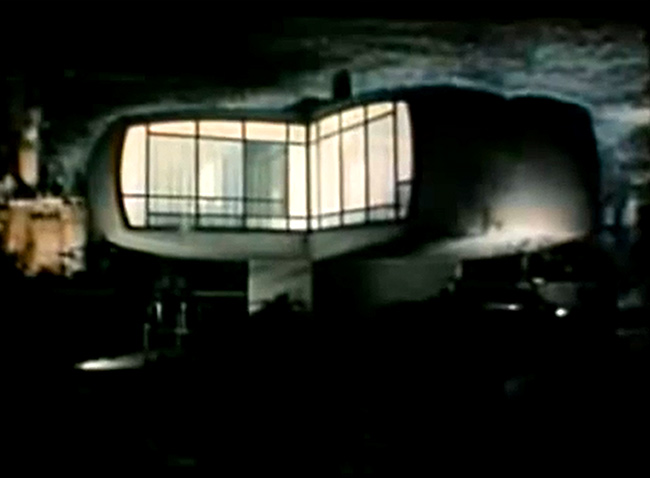
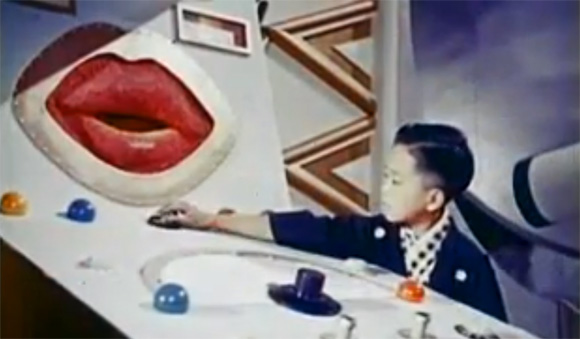
This is more interesting than it looks. Monsanto – yes, that evil company that takes dirt and turns it into a lawyer – worked with Disney to build a house of the future in Disneyland. It was intended to show how plastics would revolutionize home building. Apparently, the house was so strong that when Disney tore it down at the end of the sixties they could not break the outer shell with wrecking balls.

My primary interest in the film, aside from the mentally challenged smiling morons that inhabit Monsanto’s future vision, is the fascinatingly awkward focus on comfort as the primary aspect of life in the future. I think a great new science fiction film could be made by some nutty director who would look at the future of industrial films like this one for inspiration. It could be the antidote to the completely bleak, dystopian, post-apocalyptic dumb soup being offered by witless filmmakers like Neill Blompkamp. The thudding incomprehensibility of such work must eventually be counteracted by a house of the future and people who think they are happy!


Science Friction: 1959 Experimental Film by Stan Vanderbeek

Vanderbeek

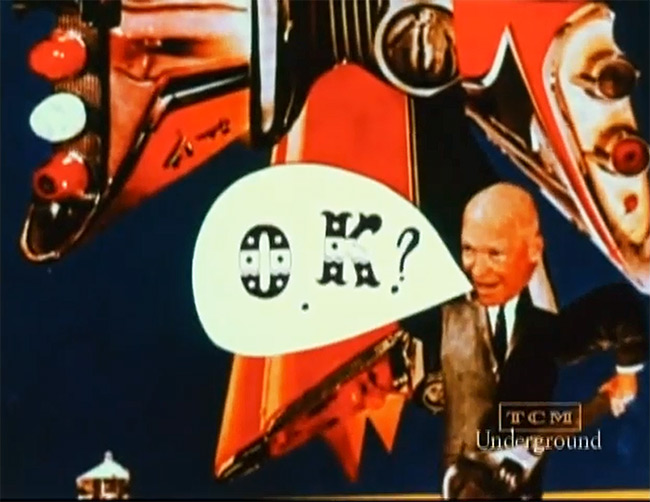
This is an amazing and beautiful film by pioneering American experimental filmmaker Stan Vanderbeek. His work encompassed collage animations, live events, and early experiments with computer graphics.

The technological explosion of this last half-century, and the implied future are overwhelming, man is running the machines of his own invention… while the machine that is man… runs the risk of running wild. Technological research, development, and involvement of the world community has almost completely out-distanced the emotional-sociological (socio-“logical”) comprehension of this technology. The “technique-power” and “culture-over-reach” that is just beginning to explode in many parts of the earth, is happening so quickly that it has put the logical fulcrum of man’s intelligence so far outside himself that he cannot judge or estimate the results of his acts before he commits them…

Stan Vanderbeek


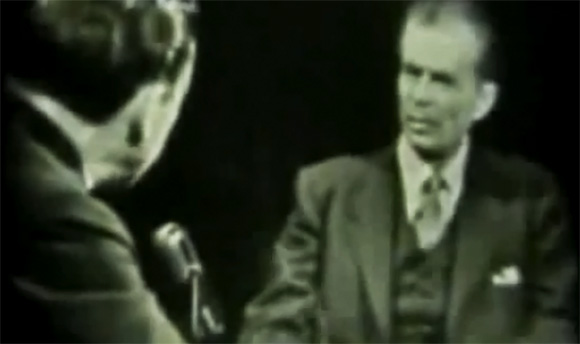
1958 Mike Wallace Interview with Brave New World Author Aldous Huxley


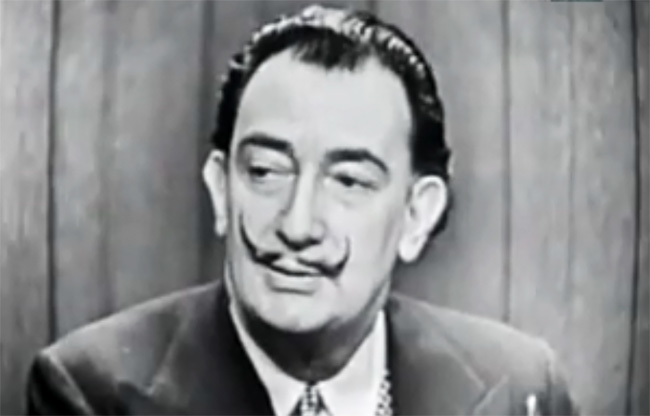
Mike Wallace talks to ‘Brave New World‘ author Aldous Huxley, focusing on the danger of slipping into totalitarian government as a result of overpopulation, increasing hierarchical organization of people in corporate structures, and improper use of television and subliminal advertising. He continually refers to the similarity between the methods of advertising agencies and those of political dictators.

Wallace: …and we’ll be persuaded to vote for someone that we do not know we are being persuaded to vote for?

Huxley: Exactly, I mean this is the rather alarming feature… that you are being persuaded below the level of choice and reason.

Perhaps that explains the election of George W. Bush, a raging drunk without the slightest education – a psychopathic false cowboy with delusions of a holy mission to invade the Middle East. It was national suicide. The election of Bush was the worst thing to happen to the United States since the Civil War and it cannot be explained by logic. The world is only at the beginning of decades spent recovering from the criminality and death unleashed by Bush. I think Huxley might have said that Bush was the easily predictable outcome of uncontrolled corporatization. Every corporation likes to push dull-witted and unimportant people into middle management positions where they can function as the tiered facade standing between the board members and the Chinese slave camps.

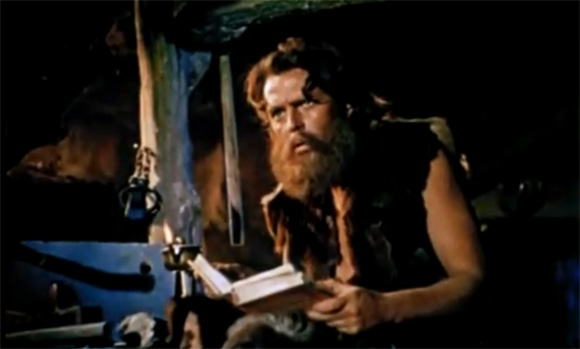
Robinson Crusoe: 1954 Feature Film Directed by Luis Buñuel

Spanish film director and original member of the Surrealist movement, Luis Buñuel, directed this version of Daniel Defoe’s ‘Robinson Crusoe‘ in 1954. It’s a very good and straightforward telling of the story with a totally convincing island locale. The Defoe novel is now more important reading than it’s ever been. That’s because it is the greatest story ever told about being alone with one’s self. All you have to do is live in Los Angeles for a while with your eyes open to understand how few people want to ever be alone with themselves. You see this problem with people very clearly when they break up with significant others and immediately slide into whatever relationship presents itself. It signifies a profound weakness of mind and character. Defoe wrote about the intricate workings of a mind alone with itself and the unexpected joys and truths one discovers in one’s self. So, read the book. It’s a tough book, full of very fine sentences and very subtle thought. Give it a try.

If you are so inclined, you can listen to the entire book right here because I sat down and read the whole thing into a microphone several years ago. But I suggest you listen now and then while making your way through the book on your own.

Here’s an article on Luis Buñuel at the Senses of Cinema site.

The Life of an Agent: Hungarian Secret Police Training Films From 1958 – 1988


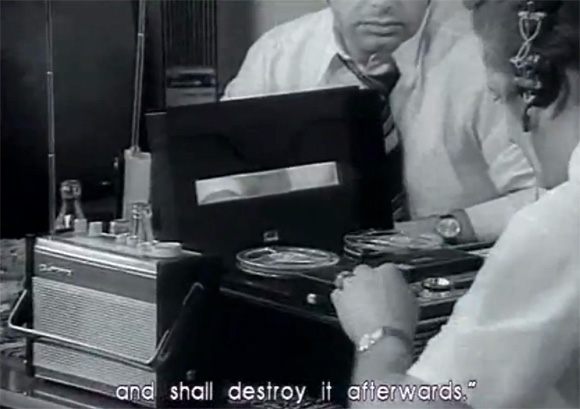
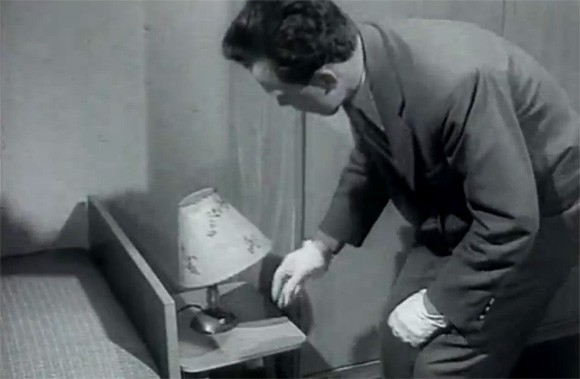
This is a 2004 film compilation by Gábor Zsigmond Papp that presents a ‘best of’ series of clips from thirty years of Hungarian secret police training films geared toward protecting the socialist regime. Subjects covered include: how to place a bug, how to film people from handbag cameras, how to follow someone, how to secretly search a home, how to recruit agents, and how to effectively network for information gathering. These are all marvelous skills for finding a job in today’s high-tech world of modern American surveillance. But I view the film from an artistic perspective and find it fascinating in its easy ability to create mood and tension with the bare minimum of cinematic effort.

For the Beats Killing Women Was Not a Problem


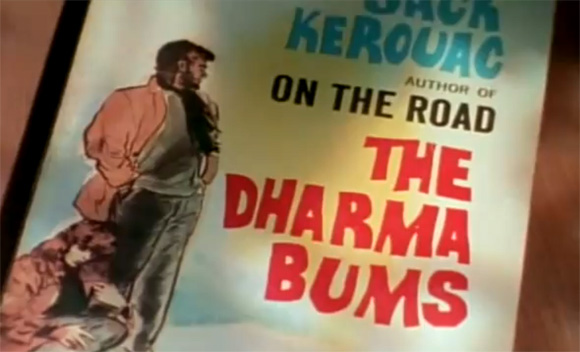
I have very mixed feelings about the core group of writers known as ‘The Beats.’ They were Jack Kerouac, William S. Burroughs, and Allen Ginsberg. Kerouac’s ‘On the Road’ is one of the milestones (or millstones, depending on point of view) of American literature. Ginsberg’s ‘Howl’ is one of the great twentieth century poems, and Burroughs wrote the distorted fever dream of homo-erotica known as ‘Naked Lunch.’ There’s lots of intensity in Beat literature and poetry. There’s a willingness to seek out the world and experience. There’s a seeming openness of mind. But every time I delve into the Beats and their work, I become listless, bored, irritable and worried. I find the general direction of their writing to be toward a distinct and virulent hatred of women. The glassy-eyed hero worship of these writers seems odd to me. Wouldn’t it be better to try rejecting their premises? Why do they still have such a hold over the popular imagination? Why hasn’t poetry been able to dispense with these people yet?

What I like about this documentary is that it does in fact touch upon this subject. What I don’t like about it is Johnny Depp prancing around with an unsmoked cigarette trying to convince us of his Beat/hipster/baggy jacket coolness.

The Beat hatred of all things female manifests itself most obviously in the fact that Burroughs stood his wife, Joan Vollmer, up against a wall in Mexico and blew her brains out with a gun. There’s great mystery surrounding his escape from the authorities in Mexico who quite naturally wanted to investigate and prosecute the man for murder. I would have prosecuted him too. He told various stories about playing a game of ‘William Tell,’ or inebriation or drug use to explain how it happened. But in order to fire a bullet through his wife’s forehead he had to lift the gun and point it at her. It sort of goes without saying. Would you be able to point a gun at your spouse? Hopefully not. I wouldn’t be able to even lift a gun in my wife’s general direction. So why was a man who blasted his wife’s head open welcomed back into his little group of Beat friends? Why would such a man become the life of the party in literary circles? Why would such a man love guns and fire them at tin cans in his backyard for the rest of his life? Good questions. Easily answered. Nobody gave a shit about the man’s dead, blown-open wife. She was just a lady in Mexico married to a bisexual genius. That’s the problem with the Beats. That’s the rock bottom attitude of the most important literary movement in America during the twentieth century.

Here’s what Burroughs had to say about killing his wife:

I am forced to the appalling conclusion that I would never have become a writer but for Joan’s death, and to a realization of the extent to which this event has motivated and formulated my writing. I live with the constant threat of possession, and a constant need to escape from possession, from control. So the death of Joan brought me in contact with the invader, the Ugly Spirit, and maneuvered me into a life long struggle, in which I have had no choice except to write my way out.

Let me translate that for you: “I killed my wife and was so inspired by the act of killing a female that I became a great writer. And I want to kill again. I have to constantly struggle with the urge. My writing helps with that.”

Get the idea? Murder inspires good writing… according to one-third of the Beat literary movement. The other two-thirds were just fine with that.

You may think I’ve gone too far or have some literary ax to grind. But I would suggest that reading the Beats without keeping these ideas in mind is self-deception. It’s all right there on the page if you actually read the stuff. These guys weren’t gentle spirits with open hearts and minds. They were brutal little elitists from Columbia University who were willing to kill and dump dead bodies into rivers in order to protect their group. Kerouac helped a friend dispose of a murder weapon, then took the murderer out to a movie. That murder, which was in fact the brutal slaughter of a gay man who was making advances, led to inspiration for Kerouac, Burroughs and Ginsberg who all attempted and partially succeeded at novels based on the incident.  Again, murder inspires Beat writings. If one really wants to get down in it, one would go so far as to say that the prime mover behind the Beat movement – its basic inspiration – was a gay-bashing murder in Riverside Park. People may say whatever they like about writers trying to work out the demons, but I see something much darker than that.

Kerouac later based the main character of ‘On the Road’ on Neal Cassady, a man who appears on film to be a psychopath. I’d be looking for dead bodies buried under any house that guy ever lived in.

I think the Beat movement should be done over for the twenty-first century. This time, try not to blast anyone’s brains out across a wall.

Continue reading

Short Documentary About Saint Nicholas, Turkey and Santa Claus


This short documentary seems to be from the late 1940s or early 50s. It was produced by the Turkish Broadcasting and Tourism Department to explain the connection between Saint Nicholas of Myra, which is in present-day Turkey, and the modern conception of the gift-giving Santa Claus who lives at the North Pole.

Marilyn Monroe – The Last Interview


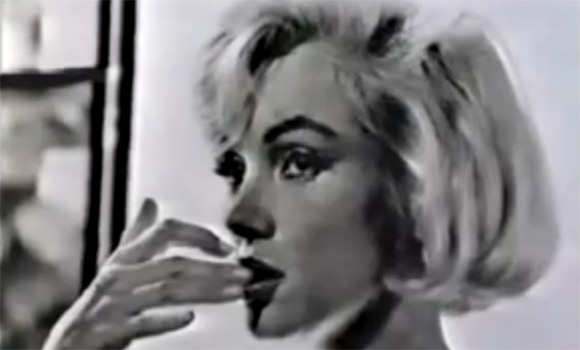
This is the last interview Marilyn Monroe ever gave. It was for Life Magazine in 1962. The interviewer is editor Richard Meryman. The film includes various pieces of Monroe documentary and news footage. As she speaks, she seems delicate and somewhat forced in her cheerful girlishness. I’ve never given much a damn about Monroe. I view her as one of those totally false put-ons of sexuality that worked for a while because of the grotesque and revolting American male of the 1950s. Men were so totally warped about their own bodies and what they thought women should be that they were willing to worship one who walked out and turned them all into jokes. That’s Monroe – a vicious mockery of American sexuality in the 50s. She knew it and she couldn’t find a way out of the role she had chosen.

Santa Claus: 1959 Christmas Movie From Mexico


Here’s a Mexican take on the story of Santa Claus. It was released in 1959 and then dubbed into English for a 1960 release. It was directed by René Cardona. The story has Santa working in space and relying on his assistant, Merlin the Wizard, to battle with the Devil’s minion who is sent to ruin Christmas. Even though it won several awards and was featured on television stations during the 60s and 70s, it is widely considered to be one of the worst movies ever made! But I enjoy the Mexican flavor that permeates all the typical North Pole settings.

Aleph: California Beat Artist Wallace Berman’s Only Film

While I was running through the Getty Center’s flagship portion of the massive citywide ‘Pacific Standard Time‘ art exhibit, I was struck by just how great this Wallace Berman fellow really was. Known primarily as the ‘father’ of assemblage art, he was also a member of the Beat Movement. He made a single film which occupied much of his time through the 1960s and 70s. It’s less than eight minutes long and it’s a drop dead gorgeous thing to see. He’s one of those film artists interested in what I like to call the messy image. The film seems to have been dragged through ink and dirt. It’s been scratched, wrinkled, folded, cut, slashed and stained. Letters flash by like subliminal messages. Pop culture crashes into modern art. He films magazines, papers, radios, faces, hands, rock stars, body parts, buildings, streets and apparently just about everything he had lying around in his studio. This film is a quiet little reminder that crystal clear HD and super sharp focus are not anywhere near the concerns of some artists.

And here is California assemblage artist George Herms talking about Berman recently as part of the Pacific Standard Time series of exhibits:

Crosscurrents: Film About Pacific Standard Time Art Exhibits Focused on Los Angeles Art From 1945 – 1980

Pacific Standard Time is a massive overview of Los Angeles art from 1945 to 1980. At least sixty galleries and museums are taking part over the next few months. I have already been to the largest exhibits at the Museum of Contemporary Art, Los Angeles County Museum of Art, and the Getty Center. The whole thing is a lot of fun and I have discovered artists I never knew about before. There are magnificent things on display and the curators have also published big books to go along with each exhibit. I seriously recommend that you always get the books because they have far more information in them than the exhibits themselves. I view it as my own effort to compile a record of this unique regional art show.

You can find almost everything you need at the Pacific Standard Time web site.

This film was put together for the Getty Center’s flagship exhibit, Crosscurrents, which covers 1950 to 1970. It’s a very nice little documentary about some of the major art developments in Los Angeles.

The Rebel Set: 1959 Beatnik Film Noir

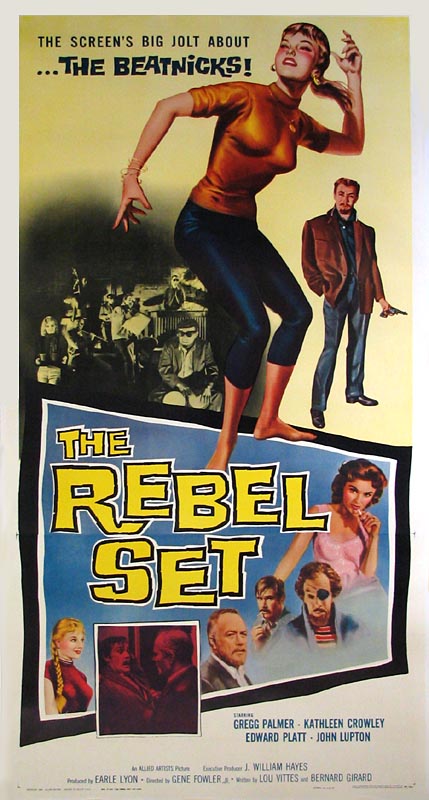
Gene Fowler, Jr. directed this peculiar Beatnik crime noir in 1959. It starts right off with a Beat jazz club and then just gradually slides into trying to be a crime thriller. It’s about an out of work actor, an unpublished novelist and a movie-star’s son who are teamed up by the club owner to pull off an armored car robbery. The Beat scenes start off in Los Angeles and then the action moves by train toward New York, with a four-hour layover in Chicago where the crime is to occur. I love all the jazzy xylophone music, the black-clad dancing girl, the paintings on the walls, the bohemian sleeping quarters and the silly little beards. I think we really need to bring back the whole idea of the Beat jazz club. I’d go for sure.

The movie has some great touches. Like the hard luck actor reciting Shakespeare’s ‘Taming of the Shrew’ along with an LP. There’s my favorite line, delivered by the club owner: ‘When in Rome, Sydney, do the Romans.’ The poet giving a performance with musical backing says, ‘The passengers on this sad train are the five senses.’