Trauma: A Video Poem Triptych by Swoon

Swoon is a Belgian poet filmmaker who makes films that try to blur the boundary between written poem and moving image. He mixes his own footage with found footage and sometimes mixes his own words with others. I like the quiet easy tone of his work. I like his manipulation of imagery. His work is a very difficult kind of work because it tries to make something new from two different things. Poetry is a perfect form all by itself. But film is never satisfied. It’s always looking for something to include within it. So it’s natural for film to go looking for poetry and try to bring it in. But poetry resists all alliances. Poetry seems content and willing to wait for centuries. It requires nothing. It doesn’t care what film wants. It will sit on a dry page in some crowded shelf somewhere waiting six hundred years for just a single pair of eyes to come along in boredom, open to the page, glance in, read half-way down and then slap the book shut for another six hundred years until someone decides to finish reading the goddamn thing. That’s patience. Film doesn’t have that. Film must be seen now or it withers. It begins to rot. Even if it’s digital. Digital films become confused and get lost in the forest of other digits. They may never find their way out again. So working with the two things and trying to get them together is very difficult but may actually make perfect sense.

This is a film poem triptych that is Swoon’s first work to include his own words. There’s a site for the film with more information.
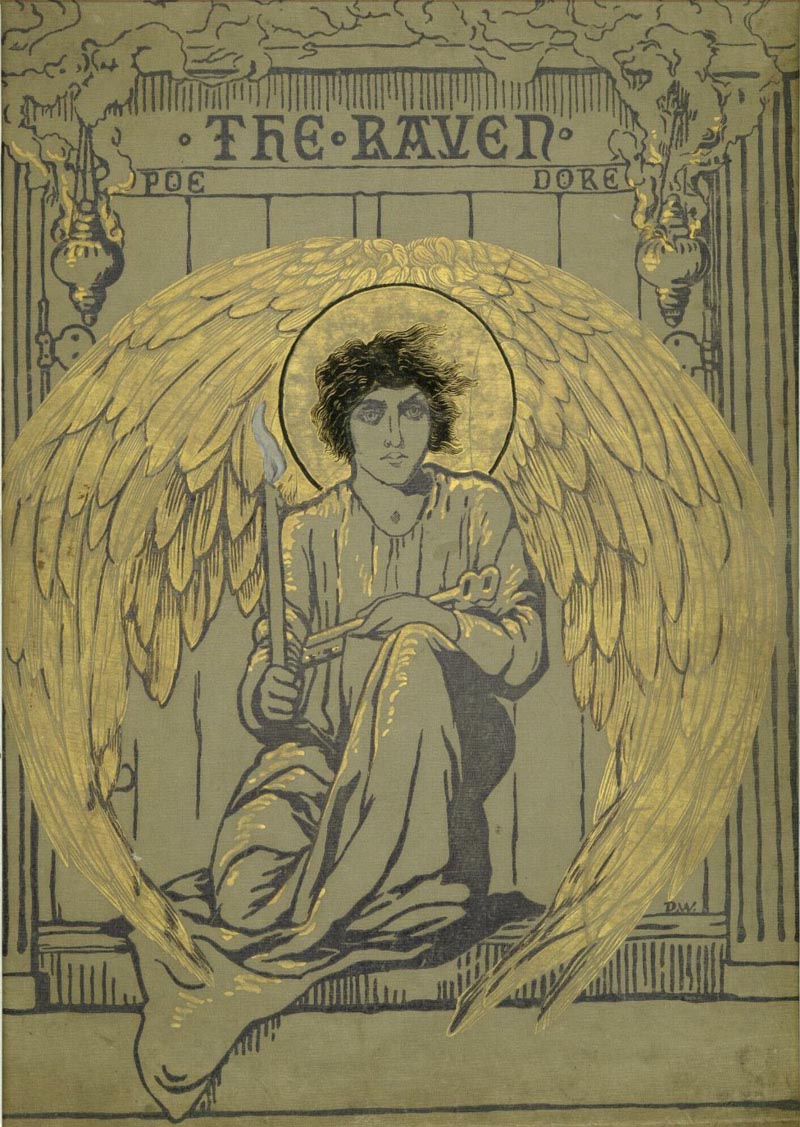
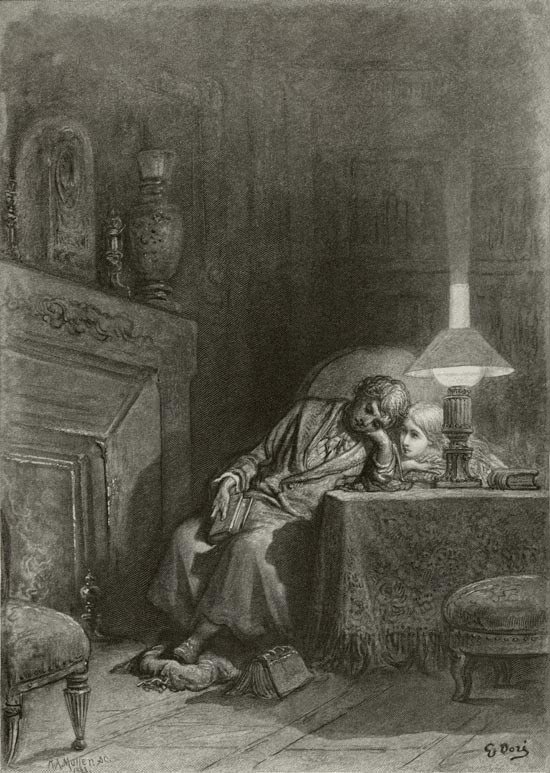
Edgar Allan Poe’s ‘The Raven’ Illustrated by Paul Gustave Doré

This incredibly beautiful edition of Edgar Allan Poe’s ‘The Raven’ was published in 1884 with illustrations by Paul Gustave Doré. Click on the images to see full sizes.

Once upon a midnight dreary, while I pondered, weak and weary,
Over many a quaint and curious volume of forgotten lore–
While I nodded, nearly napping, suddenly there came a tapping,
As of some one gently rapping, rapping at my chamber door.
“‘Tis some visiter,” I muttered, “tapping at my chamber door–
Only this and nothing more.”

Continue reading

Goethe’s Derl Erlkönig: A Film by Raymond Salvatore Harmon

Really frightening film adaptation of Goethe’s Der Erlkönig. Raymond Salvatore Harmon made this film that revels in the dark terror of fairy tales. It’s a densely layered film that conveys the sense of riding through the forest beautifully.  Those trees keep going by and the dolls bounce along on their horse.  Amazing! I love terrifying fairy tales!  A child, held tight in his father’s arms, senses a supernatural being of some sort approaching.  You’ve got to pay attention to this one right up to the end!

Children’s Verse: Brooke and the Ramshackle Ship

By Steve Bynghall

Steve Bynghall lives in London, England. Other poems about Brooke and her useless Dad appear on Smories.com.  Visit http://www.smories.com/author/steve-bynghall/ for more details.  If you want to be notified when a new Brooke story will be appearing please email [email protected].

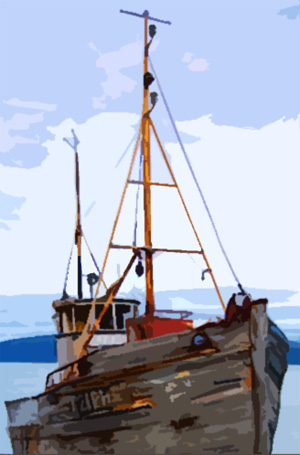
Brooke and the Ramshackle Ship

Brooke’s Dad was the captain
Of the world’s most hopeless boat
It was ramshackle and rotten
It could hardly stay afloat!

Continue reading

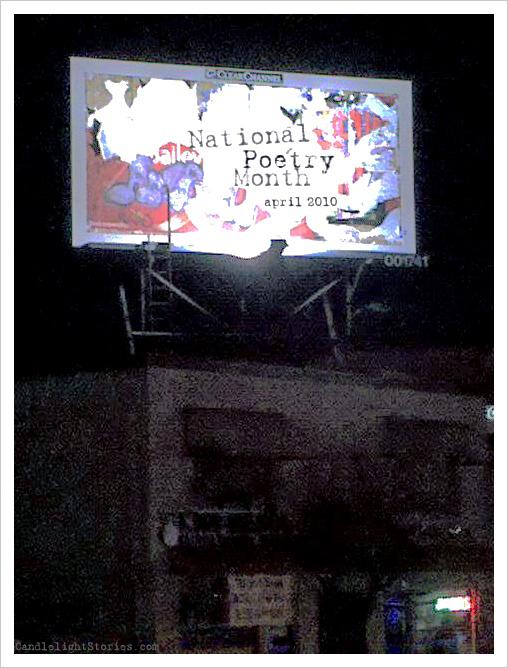
National Poetry Month – April 2010

It’s almost here.  April will be National Poetry Month, during which we celebrate the placement of words into various shapes, patterns and meanings that only a select few can decipher.  Don’t worry, if you saw the poetry reading at the most recent Presidential Inauguration, she was only placed at the podium to intercept bullets.  That has nothing to do with poetry.

For those of us fortunate and intelligent enough to avoid the study of poetry in a university, the month of April can be a strangely rewarding treat.  It’s an awkward and sort of a lame month of celebration, but it works.  Don’t ask me why.  Just think of yourself as being in the National Poetry Month and walk into a good bookstore and go to the poetry shelf to see what happens.  If you’re a total dumbass, nothing will happen of course.  But if you can read, you might start wondering why words make you want to have a coffee, or a piece of bread, or some wine, or cheese, or wear a hat, or some old boots.

I think I am going to celebrate Poetry Month by posting parts of my unfinished new video.  It mixes images, music, and words to make something that can really only be explained in terms of poetry anyway.  So I claim the right, during National Poetry Month, to be somewhat mysterious, cryptic, unfinished, insulting, fuzzy, indulgent, and unintelligible.

Animation: Khabrahol (From Russia’s Toonbox Studio)

From Russian animation studio Toonbox comes this marvelous animation based on a poem by Sasha Svirsky. I don’t understand a word of it but I love the sound of it. I really must find the woman who does the voice-over.  She is just magnificent and totally fearless.  The drawings are fascinating.  The rhythm is catchy.  Toonbox does so many of the best animations that I see.  They seem to balance their commercial projects with artistic ones very well.

Via Cold Hard Flash

Planisphere: New Book of Poems by John Ashbery

PlanispherePoet John Ashbery has published a new book of poems called Planisphere.  Boy, I hated this guy’s poems a few years ago.  But I kept reading them because of some instinct for self-inflicted mental damage.  And I kept reading him.  Not understanding him at all.  But I liked the words as they passed me by.  They sort of slide on by you.  Smooth, but switching and becoming something totally unexpected, unrelated to what just happened before.  His poems sort of shimmer and seem a bit brittle, like glass.  When you read this guy you certainly know that you are not reading someone else.  He’s in his eighties, but his work seems like a young man’s.  He has a gently rebellious foolishness that I greatly admire.

His publisher, Harper Collins, has a preview of his new book that offers quite a few of the poems.

So does this sound like the writing of an eighty-year-old?

I dream of married couples having sex, shopping, everything,
and often get the giggles, staying here,
expecting something new to come along every five seconds.
That’s new to me, I expect others will have heard about it.

B—’s Mysterious Greeting

And here’s the guy:

Poem: Each Night I Go to Bed

by Lethe Bashar
The poet is the editor of Escape into Life, arts/culture web-zine and fine art auction. He is also working with an illustrator from Argentina on a graphic novel. Besides that he keeps up an essay-blog, The Blog of Innocence, that covers topics in the arts, social technology, and a general philosophy of life.

This poem was originally posted on Twitter as an experimental project in spontaneous poetry via Twitter with @paulokoba

Each Night I Go to Bed

each night I go to bed
a little bit later
I wake up in the morning
forgetting the past

days add up like coins in my pocket
I’m rich with hours
another little bit has passed

I find another hobby
swear to myself I’ll get healthy
another little bit has passed

I think about the news
write about my views
another little bit has passed

when will this world come to an end?
it seems so eternal right now

Poem: The Moth Approached Me Like a Blinking Eye

by Lethe Bashar
The poet is the editor of Escape into Life, arts/culture web-zine and fine art auction. He is also working with an illustrator from Argentina on a graphic novel. Besides that he keeps up an essay-blog, The Blog of Innocence, that covers topics in the arts, social technology, and a general philosophy of life.

The Moth Approached Me Like a Blinking Eye

The moth approached me like a blinking eye,
I was having a cigarette in the garage.
The birds squeaked in the far off darkness,
a menacing sound disrupting the night.

I pressed the moth to give me her reasons
for staying up as late as she did–
She continued to blink, and I awaited her answer,
but nothing came.

The birds heckled the darkness and the darkness
heckled back–the chaos persisted but
remained subdued and the neighbors
stayed in bed.

The children, in their warm beds,
were dreaming of magical places,
and I bemoaned my condition
while having my cigarette in the garage.

I thought of summer, which was expected
to come, maybe tomorrow or never,
I figured I’d be sleeping when it did.
I thought of the hours I’d missed.

The moth returned after awhile,
she blinked her wings again and again,
She seemed to know I had a mild fever,
she seemed to know my memories too.

Let me go, I said. Be off. I want to sleep.

Audio Poem by Walt Whitman: I Sing the Body Electric

471px-whitmaneakinsI Sing the Body Electric is a poem that celebrates the life of the body and its equal status with the soul.  Walt Whitman is probably the greatest poet in the English language since William Shakespeare.  Some might argue with this but there is no other poet who so muscularly tore the page to shreds with his wild, raging, soaring, lunatic language.  I think Shakespeare would have liked and admired this man because it is only he who is a match for Shakespeare’s fearless destruction and rebuilding of language.  I think that great poets always destroy before they create.  To read Whitman’s massive lifelong work, Leaves of Grass, is to wake up and realize that poetry is like blood exploding through your body and spraying its meanings and music out all over the city.  You cannot read Whitman and be the same as you were before reading him.  He is a shock to the system.
He lived from 1819 to 1892 and is often called the father of free verse.  His discovery of the loose free form of poetry is an astounding development that is still being worked out.  The problem for today is that Whitman still has the hardest punch and could do terrible damage to most poets alive and writing today.  It would not be a fair fight.

Here is the great I Sing the Body Electric, from Whitman’s Leaves of Grass book.

Download the MP3

Remember to enter a poem in our Little Poetry Contest.

A Little Poetry Contest

Write a poem for National Poetry Month!  Just let your mind wander and write a poem of any kind in the comments area for this post.

Get your poem done by 12:00 am PST Friday April 24, 2009.

Your poem can be any length.  It can rhyme or not.  Just make a poem and let me read it.

I’ll pick my 3 favorites and do audio versions of them to post right here in the blog.

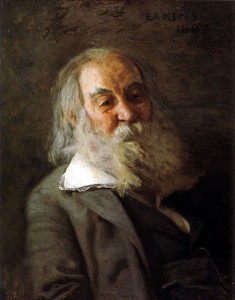
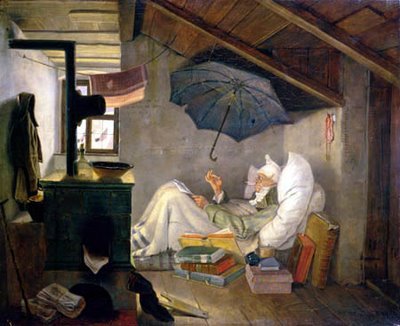
This painting is of a poor old poet trying to come up with his next poem.  Be exactly like him.

National Poetry Month has Begun

It’s National Poetry Month!  That means that bookstores, publishers and bloggers all over the U.S. and elsewhere are celebrating poetry in all its forms.  There’s a poem-a-day series that will email you one poem each day for the entire month.  Poets.org has instructions for teachers trying to motivate students to enjoy poetry in the classroom and tips for bookstores trying to sell poetry.

The video is from W. W. Norton publishers who decided to ask eleven of their published poets what poetry is for.  Their answers are incredibly bad, but it’s a good try.  It should be abundantly clear from these poets’ answers that there is very little actual thought going on about what poetry is for.

Here’s my answer:  Poetry is for bread.

But here’s a guy named Charles Bernstein who says that National Poetry Month is a bad thing.  He says it encourages the most bland of easy-reading poetry available to make people think poetry is safe to read.  He’s right.  And so what?  So people read some bland crappy poems.  That is what most poetry is.  That’s realistic.  Perhaps a few of those people will have the energy to go out and find the real, hard, evolving, beautiful and terrifying poetry that would never even stoop to asking, ‘What is poetry for?’