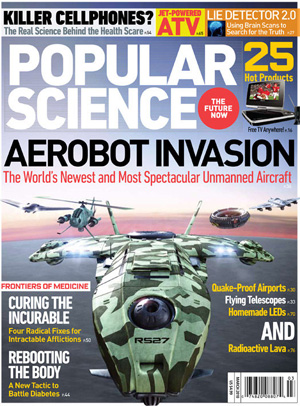
 Popular Science magazine has put its entire 137-year history of issues online for free. In partnership with Google, the magazine is offering a search tool that will allow you to read anything it ever published. Here’s an example of a publisher who actually knows what it is doing in the 21st century. There are very few magazines staffed by people who understand which century they are playing in. Popular Science is apparently staffed by people who can read, write and tell time.
Category Archives: Technology
School Guy Brags About Watching Kids with Laptop Cameras
The show is called Digital Nation. This segment is called How Google Saved a School. Well, really? How did it? Come on now, Frontline. Let’s get real. There’s an assistant principal bragging on video about how he watches the students through their laptop cameras and finds out if they are using their computers inappropriately. Would it be inappropriate to stick one of his laptops straight up his smug geekster rear end? Because if I were one of these kids trying to learn in this nightmare of a prison school, that’s what I’d do and I’d just take the consequences as they came (that’s an insult, not an actual suggestion). But for now I’d recommend having a quick look at his hard drives to see exactly where he’s watching these kids. I’d certainly be curious. After all, he says the kids ‘use their laptops as a mirror,’ and that he watches them. Hmmm. Interesting, bud. How much time do you spend watching? There’s a school in Pennsylvania right now in all kinds of trouble with parents and the FBI because they are alleged to have been filming kids through laptop cameras in their own homes! That’s jail time, Ms. Principal lady. You spy on naked kids for any reason whatsoever and you get a free pass to the big house. No kidding.
These ‘educators’ are losing it in a bad way. If you’re watching a kid through a camera at school or in their home, you are one diseased nut-job and have no business being anywhere near children. Parents should not tolerate this sort of activity from a school or a school employee. They should call police in and create a very public stink. It is the job of a parent to very forcefully defend a child from this kind of surveillance.
Reading On a Kindle Is a Pleasure
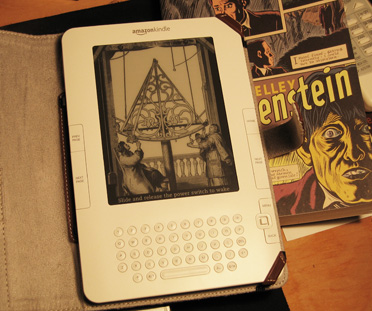 After two years of reading reviews, watching products come out and compete, listening to people gripe about DRM and ebook pricing, I jumped directly into the fray and opted for the Kindle from Amazon.
Barnes & Noble Nook is a Dreadful Failure
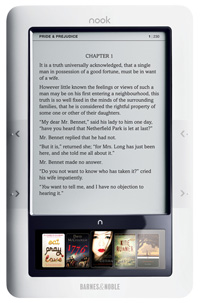 I’ve been so waiting with my bated breath and all for this magical Nook machine from Barnes & Noble. I was in a right dither tonight about an hour and a half ago as I shoved my reading glasses into my pocket, put my regular glasses on my face and piled into my car for the short ride to my nearest Barnes & Noble bookseller. But I stopped first at the Lenscrafters to run in and have them adjust my frames because my glasses are so new and have been drifting over lopsided all week. So the woman there fixed them up nicely and shined them good. Then I drove on toward my Nook encounter.
The store had a lone unit attached to an anti-theft device that scared the hell out of me because I tend to demonstrate new devices to myself until nearby customers think I’m a lunatic and I certainly didn’t want to raise any alarms. The Nook said, ‘Press the Power Button to Wake Up.’ I spun the device around several times until I located said button embedded in the upper edge of the Nook. I pressed it.
I waited.
Then I pressed it perhaps fourteen or fifteen times to try and make something wake up. Then the screen went through a series of blinks, flashes and some rather frightening symbols appeared and then disappeared. And then the machine said, ‘Press the Power Button to Wake Up.’
Film About Blue Brain: Attempt to Build a Working Brain Model
Using IBM computers, Dr. Henry Markram is building a model of the human brain that he hopes will take about 10 years to complete. Filmmaker Noah Hutton is chronicling the endeavor in an ongoing documentary that will be finished once the brain model exists. This is one of the most fascinating and important efforts I have ever heard about in modern science. The brain project is called Blue Brain and is located at École Polytechnique Fédérale de Lausanne. The idea to build a model based on minute and precise observations of how the brain synapses and cells actually work is a good one. Dr. Markram emphasizes that once you understand certain principles you can start to build models that increase in complexity and accuracy until you have have an understanding of how things work. Careful observation and exact mimicry will lead to a functioning model. Markram goes further to say that eventually you will be able to teach the model languages and watch it learn. He’s talking about artificial intelligence. He’s talking about making a machine think.
This is the modern world’s alchemy. The simplistic understanding of Medieval alchemy is that it was the attempt to turn base metals into gold. We are now trying to turn base metals into thinking beings. It is a logical thing to do. Think about it. Every household and every pocket in almost every developed nation on earth has a small thinking machine in it. What does that really tell you? It tells me that our main effort on a planetary scale – a human species level – is to make machines think. We aren’t going to the moon. Or going to Mars. Or trying to travel to the stars. What we’re actually doing is trying to make metal and electricity think. To live.
A working model of a brain is going to take us places we never thought we could go.
Amazon and Macmillan Raise eBook Prices
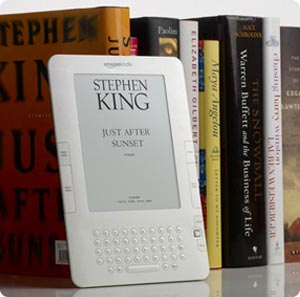 There’s been a huge battle of the ebooks going on between Amazon.com and publisher Macmillan. Last week, Macmillan, in response to rotten Apple’s announcement of $14 and $15 ebooks on its new iPad, insisted that Amazon give Macmillan the right to choose its own higher ebook pricing for the Kindle ereader device. Amazon got peevish about the deal and simply de-listed all of Macmillan’s books. I thought that was a nice nasty smack in the kisser for a doomed publisher at the time. I was feeling so good about Amazon and its Kindle and so snitty about Apple’s iPad that I was within 60 minutes of plunking my digital money down on a brand new shiny Kindle. But wait! Amazon caved! They rolled over and gave Macmillan what it wanted.
So now, dear reader, your Kindle ebooks from Macmillan will cost more. Frankly, I was always kind of miffed by the whole $9.99 price tag on Kindle ebooks. Too high. Ebooks are invisible. You can’t stack them and put boards across to make a coffee table. Ebooks don’t have nice covers or fancy paper that you can bend and spill coffee on. I don’t know about anyone else reading this blog out there, but when I walk into a book store I’m just a customer. I don’t frankly give a damn about how the publisher is doing or how Amazon is getting along, or care a whit for Steve Jobs’ health, or the status of your average mid-list author and how he or she’s going to pay their mortgage. I don’t give one syllable of a damn. Continue reading
Apple Declares War on Free Web Content
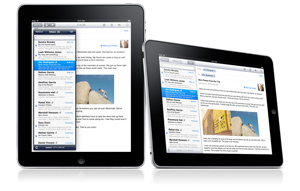 It’s hit me what I really can’t stand about the new Apple iPad. It’s been mentioned by most of the reviews of this new tablet device, but I don’t think people are really getting the scope of what Apple is up to. The iPad, like the iPhone and iPod Touch before it, does not support Flash. You know, Flash, perhaps the single greatest technical innovation on the Web since the invention of the Web itself. Flash is what brought us nearly universal moving images on the Internet. Flash brought us YouTube. Flash has created almost every single good game you have ever played in your browser. Flash is responsible for the greatest explosion of animation talent in the history of the art form. There is not another single piece of browser software that has brought so much to the web browsing experience as the little Flash player that’s installed on nearly every computer on the planet. Here’s a blog entry by one of the Adobe Photoshop developers that explains why Flash is so great.
But Apple does not allow Flash on its iPad, iPod Touch, or iPhone. Won’t allow it to run. That’s why you get a broken plugin icon whenever you encounter a web page with Flash in it. The company says silly things about Flash being too slow, or Flash hogging CPU cycles. Complete horse radish. Apple doesn’t want you to have Flash because Apple wants you to buy apps in its App Store instead. That’s what this is all about.
So, essentially, Apple is fighting for a closed and walled-up Internet where all your cool moving images and games come straight out of their App Store and nowhere else. When you behave this way with a small-screened device like an iPhone or iPod Touch it’s one thing. But when you blow the whole thing up onto a big fat glorious iPad screen it’s another thing entirely. Now it really shows up as a flagrant attempt to disable every creative piece of Web work that any artist, animator, filmmaker or game designer has ever done and force people to accept your little library of 140,000 little applications, most of which cost good money.
Try visiting this web site on an iPhone, iPad or iPod Touch. See all our games and movies in the drop-down menus? Not a single one will work. Not one. Because of dear old super-genius Steve Jobs. Mr. Dingbat gets up in front of reporters at the public iPad unveiling and says idiotic things about having ‘the Web in your hands.’ He presents his new iPad device as a Web browser. It can’t be a Web browser if it disables half the Web. It simply defies logic.
This is really all anyone should need to know about Apple and its devices. They are building little cash registers that limit your view of the Web and lead you to one final destination: the App Store. They are trying to make you pay for the World Wide Web. Great technology. Very dark plan. I’m on Flash’s side. Go Flash! Apple, you suck.
I Take it Back: Apple Tablet is Dopey
 So after all the hoopla the Apple company has decided that it’s a good idea to sell an iPod Touch that you can’t carry.
The just-announced iPad is big, with a fullscreen display instead of widescreen, has no camera, and cannot multi-task. So only one application at a time will run. The fullscreen thing may make sense when you consider that people will need to be typing on a virtual keyboard, but I’m not sure that it will fly. I see it as going out to buy a fullscreen monitor somehow.
I think I’m finally ready to go get myself a Kindle from Amazon!
I’ve been yawning all morning and I’m still yawning.
Apple About to Announce Extraordinary New Tablet Device
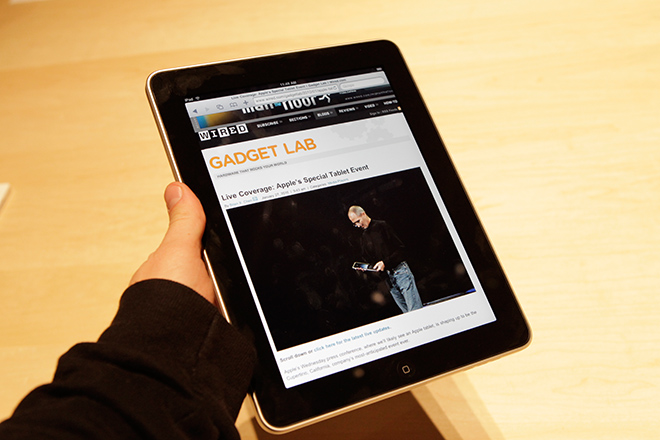
 Apple really could be preparing to announce something pretty extraordinary for content publishing, creation and consumption today. Its widely rumored tablet device will very likely put most other ebook reader devices out of business simply because the Apple product will be a real computer, useful for reading and for creating. It will most likely build a seamless content-creation universe that ties directly to online sales platforms. It will be a ‘publishing’ tablet really. Not just an e-book device.
Wired is covering the Apple press conference event all day with blog entries.
I have not purchased any kind of an e-reader device, in spite of the hysteria surrounding them, specifically because of Apple’s plans. There is no way under the sun that anyone else is going to compare favorably to what Apple is about to drop on us today.
Polaroid Gets Smart – Brings Back Classic Instant Film Camera
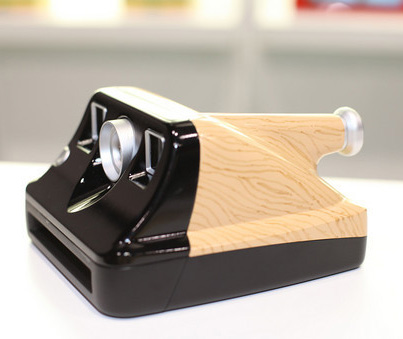 Polaroid has used the Consumer Electronics Show (CES) in Las Vegas to announce a new line of classic instant film cameras! Called the Polaroid PIC-1000, the camera will work with 10-packs of instant film just like the great old Polaroid cameras of the past. This is a very smart move by a company that looked supremely dumb a few years ago when it canceled the best product it had ever created. It was almost as dumb as Volkswagen canceling the Bug.
But no worries, we will have our instant pictures back. Not even digital cameras are instant. Not really. You have to plug them into your computer or printer or something and get your files sorted out and then you may need to do a some digital color correction on them. But with a Polaroid, you point click and enjoy the little whirring sound for a few seconds. Then you hold your picture and watch it come to life! There’s absolutely no good reason why digital should not coexist with analog technologies. The main difference between working with film and working with digital, as I see it, is this – with digital you know pretty much exactly what you are going to get when you take a picture. With analog film you never know what you are going to get. There’s a wonderful fuzzy zone filled with error and chance that Polaroids allow you to enjoy. Each picture is a little surprise.
Remember the Book?
 Remember the book? Of course you do, because you have plenty of them in shelves, half-read, dusty, bent, torn, coffee-stained, wine-colored, smudged, smelly, misprinted, broken and cherished. They catch your glance as you walk from one room to another, reminding you of a year or a moment when you were doing something else but had that book in your bag or backseat and meant to finish it or did in fact, and put it away and moved it several times in a box, cursing its weight and trying not to bend it. So there it sits now, quite possibly closed until the day you die. But you know it’s there and it’s a marker in your life. Remember this thing with books?
And LPs of vinyl? Mine used to function like books in my shelf. But I put them into a closet years ago because of CDs. Now I can’t stand searching a shelf of CDs, so I mainly use MP3 files. My albums no longer work as markers of life and time. The same thing is happening to books. All of mine are still on the shelves. But the world is changing and books are beginning to look a lot like information that wants to weigh less. It doesn’t matter how one feels about this, whether it makes us sad or not. It’s a creeping fact. Our books are turning into wonderful collector’s items. I can tell this is happening partly from all the excitement and business surrounding these e-reader devices. Books will continue to play an important role in literature but they will gradually be eclipsed by some other technology. The current e-readers are not necessarily it, but they are the harbingers of things to come. We are lightening our load because we can’t carry it around forever. We’ll have to travel light. Walt Whitman wouldn’t mind though, because he’d want to travel with us.
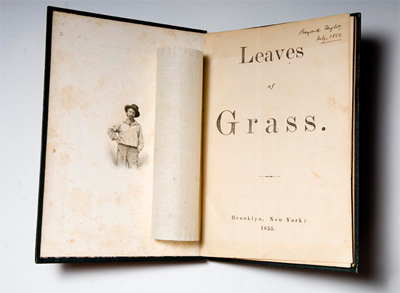
But this fellow, Raymond Danowski, has amassed the largest collection of 20th Century English poetry books in the world. He collected over 70,000 books, periodicals, and artifacts. The collection includes a first edition of Whitman’s Leaves of Grass, printed by the poet himself. It also has a first edition of T.S. Eliot’s Prufrock and Other Observations. There are so many books that when he donated the entire collection to Emory University in Atlanta, it took volunteers over a year just to unbox all the volumes. The university is now the major center for researching 20th Century English poetry books.
I’d like to see that collection. It must be fascinating. And anything is worth touching that Walt Whitman touched. Seeing books is the thing. They have a presence in a room, lining its walls and giving it enormous depth. But we are engaged in a process of making our books invisible. What will we put in their place? I’m not really too worried about that because when you turn all those words into digital form you present yourself with infinite possibility. When words float around in the air you are in the realm of magic beyond anything any book could have ever accomplished. Then again, sometimes just touching a book is enough to send your mind wandering down an unexpected path. Can touching a virtual keyboard have the same effect? Does it have to have the same effect? Maybe not. I’m sure banging a chisel into a clay tablet did things to a mind that ancient peoples were loath to part with.
Does the emergence of a world without books frighten or worry you? Do you see something wrong with a world in which literature is simply information that travels wirelessly? Do you think that ink is inherently superior to bits?
Eventually, we will read War and Peace by passing someone on the street and glancing into their eyes for a brief moment. That person will give us the book as nothing more than a polite ‘How do you do?’ At that point, we will remember books the way we remember the clay tablet.
Problem With Nook eBook Reader?
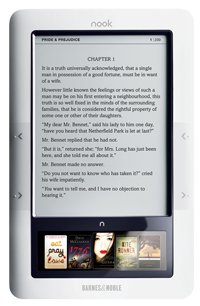 I’m looking at this new e-reader from Barnes & Noble called the nook and I’m a little worried. It’s that split screen. The top is an e-Ink display for reading your books. But the bottom is a color LCD. Look at that picture. I don’t know about most readers, but I certainly don’t want that row of book covers staring me in the face as I read. Can one totally black that screen out while reading? What else shows up in there? Ads? Does anything move around to distract the reader?
I don’t know about this nook thing. I’ve got doubts.
Cellphones are Destroying People
 Look at that cover. Look at exactly what’s going on there. Makes you almost cry, doesn’t it? It better. Because if it doesn’t, then baby you’ve got it coming. Chris Ware, one of our finest cartoonists did this cover for the New Yorker and made a comic strip for the issue.
I see people crossing streets while typing on their ‘devices.’ I see them driving and sitting in fine restaurants with their dates and they’re answering email and texting. Makes you want to walk over and plant a big kiss on some guy’s date right in front of him while he texts his mother. Would serve him right. People are not even remotely aware of other people anymore. They drive right through stop signs while texting or chatting on a cell phone. They wipe out entire families on freeways because they were trying to type, ‘OMG Heeee’s sooooo hot!!!!’
These people are simple dark abominations. They are fools who understand only how to be dead, dried husks that resemble human beings. They think they are part of the information overload and that they are multitasking through life. They’re just obliterating themselves.
Let me put it this way: if somebody sees you using your device, you’re not using it properly.
Sometimes I see a woman in the grocery store answer her cell phone and say something like, ‘Yes, honey, I’m in the grocery store. I’m looking for those little pepper things now.’
Do you know why the guy calls her there? I do. It’s because he thinks she’s cheating on him because he knows she wants to because he’s a total flaccid drip. That is why 99.9% of all cell phone calls on the planet are placed. That is why the cell phone economy works. It’s nervous people checking up on their significant others to make sure they’re still around.
You know I’m right. You’ve done it too. Haven’t you?
But look at this cover illustration and think about trying not to do such an awful thing to your kid this Halloween. Try hard, because that kid will never forget that little screen in your face.
NASA Makes a Free iPhone App
 NASA has released a free app for the iPhone that offers dynamically updated information, images, and video from many of its ongoing missions. NASA seems to be suffering through a confused decade in which it wonders what vehicle should replace its aging shuttle fleet, whether to dump the International Space Station into the ocean to save money, whether to go back to the moon, or whether Mars might be a suitable destination for a manned visit.
I think it’s probably safe to say that NASA is learning an enormous amount through its telescopes, satellites and rovers. I suspect that very little is really learned from sending three or four humans to the moon other than how to keep three or four humans alive on the moon for a few weeks. Perhaps NASA should just relax a little and stop worrying about making people interested in what it’s doing. Perhaps they should just worry about collecting information.
Barnes & Noble eReader Device Might Blow the Kindle Out
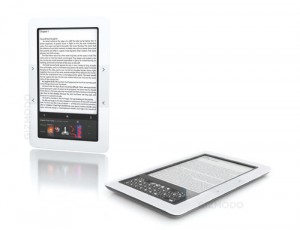 Amazon’s Kindle could be headed for the woodpile. The new Barnes & Nobel ereader device is coming at the end of November.
The new device is called the nook. Like book nook, I guess. But this thing has a color touch screen virtual keypad like an iPhone and it displays book pages on an eye-friendly E ink display. It appears to be sleek and well-designed. It will also allow ebook owners to lend their ebooks to other people who own Nook devices for up to 14 days. That’s a big deal.
Another thing it has going for it is support for formats like ePub, eReader, PDF, MP3, JPG, PNG and BMP files. One article compared this device to Amazon’s by saying it was like the internet compared to Amazon’s AOL. It has free 3G and Wi-Fi connectivity.
After the ongoing grotesque behavior by Amazon and its apparent lack of concern for owners’ rights it won’t take much for Barnes & Noble to turn Amazon’s ugly duckling of a closed-system ereader into a bad joke.
I never took the plunge to buy a Kindle from Amazon because I don’t trust their intentions. I have no hesitation to run out and buy the Barnes & Noble device as soon as it comes out in November.