Photography Breakthrough Allows Image Focusing Outside of Camera

The soon-to-be-available Lytro camera allows picture taking without focusing. The photos can be focused later by simply clicking on any part of the image to bring that area into primary focus. It’s a pretty historic achievement in photography. I don’t think anyone has done it before.

The camera uses something called a light field sensor. It captures the color, intensity and vector direction of the rays of light. This directional information is completely lost with traditional camera sensors, which simply add up all the light rays and record them as a single amount of light. So you can snap a picture without focusing at all and then later focus the image the way you want to.

Try clicking around on these images:

Christopher Doyle on Cinematography

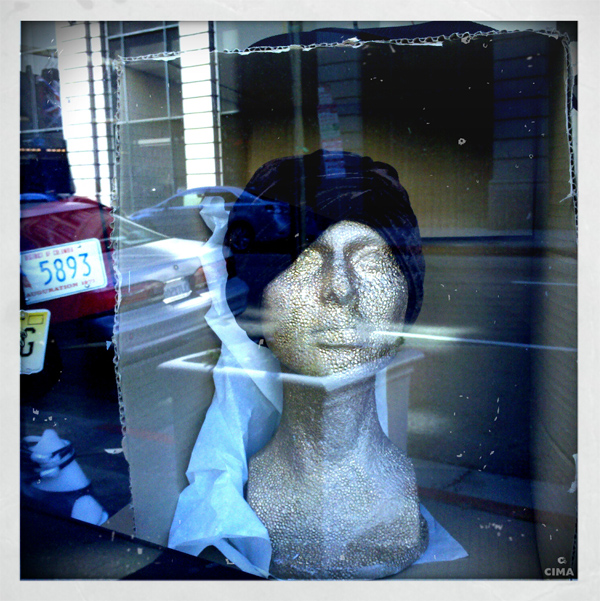
He reminds me a little of Keith Richards. He’s made some of the most beautiful films you may ever see with director Wong Kar Wai in Hong Kong. He seems to like wandering the colorful streets. Always talking about the light and color. Last night I took my new camera out along Ventura Boulevard very late. I was making a film by moving very slowly from window to window, shooting in an odd off-kilter way with closeups through glass and lights moving in and out of focus. It took me several hours to move three blocks up the boulevard. I haven’t seen the footage yet but the night was loaded with possibilities. Do you have any idea how many things you can come up with when you look inside a store’s display window? You can break it down almost infinitely and create images that have very little to do with the store. I find it a natural and obvious way to make a film. The sets are all there waiting for me to show up with my camera. It doesn’t matter that I don’t know what the film will be. It exists already and will make itself apparent when I start staring at my footage.

1948 Instruction Film For Amateur Filmmakers

This is 1948 film rescued from the trash behind a library. It tells you how you are supposed to make effective home movies. Watch it and then ignore everything it tells you! The best lesson I have learned in the hardest way is that if you respect your teacher you are lost forever. If you despise your teacher you will reach the stars.

School Guy Brags About Watching Kids with Laptop Cameras

The show is called Digital Nation. This segment is called How Google Saved a School. Well, really? How did it? Come on now, Frontline. Let’s get real. There’s an assistant principal bragging on video about how he watches the students through their laptop cameras and finds out if they are using their computers inappropriately. Would it be inappropriate to stick one of his laptops straight up his smug geekster rear end? Because if I were one of these kids trying to learn in this nightmare of a prison school, that’s what I’d do and I’d just take the consequences as they came (that’s an insult, not an actual suggestion). But for now I’d recommend having a quick look at his hard drives to see exactly where he’s watching these kids. I’d certainly be curious. After all, he says the kids ‘use their laptops as a mirror,’ and that he watches them. Hmmm. Interesting, bud. How much time do you spend watching? There’s a school in Pennsylvania right now in all kinds of trouble with parents and the FBI because they are alleged to have been filming kids through laptop cameras in their own homes! That’s jail time, Ms. Principal lady. You spy on naked kids for any reason whatsoever and you get a free pass to the big house. No kidding.

These ‘educators’ are losing it in a bad way. If you’re watching a kid through a camera at school or in their home, you are one diseased nut-job and have no business being anywhere near children. Parents should not tolerate this sort of activity from a school or a school employee. They should call police in and create a very public stink. It is the job of a parent to very forcefully defend a child from this kind of surveillance.

Polaroid Gets Smart – Brings Back Classic Instant Film Camera

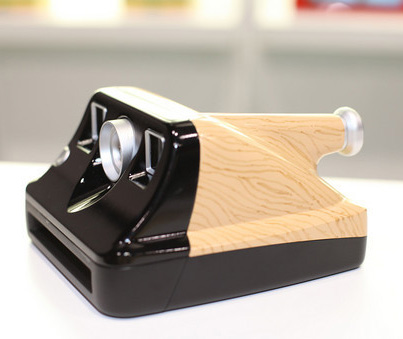
Polaroid has used the Consumer Electronics Show (CES) in Las Vegas to announce a new line of classic instant film cameras!  Called the Polaroid PIC-1000, the camera will work with 10-packs of instant film just like the great old Polaroid cameras of the past.  This is a very smart move by a company that looked supremely dumb a few years ago when it canceled the best product it had ever created.  It was almost as dumb as Volkswagen canceling the Bug.

But no worries, we will have our instant pictures back.  Not even digital cameras are instant.  Not really.  You have to plug them into your computer or printer or something and get your files sorted out and then you may need to do a some digital color correction on them.  But with a Polaroid, you point click and enjoy the little whirring sound for a few seconds.  Then you hold your picture and watch it come to life!  There’s absolutely no good reason why digital should not coexist with analog technologies.  The main difference between working with film and working with digital, as I see it, is this –  with digital you know pretty much exactly what you are going to get when you take a picture.  With analog film you never know what you are going to get.  There’s a wonderful fuzzy zone filled with error and chance that Polaroids allow you to enjoy.  Each picture is a little surprise.

Film: Rain On My Flower

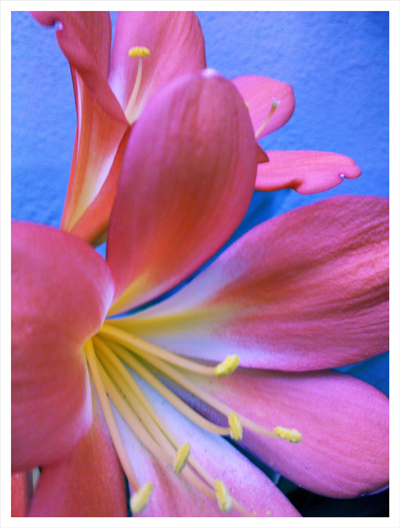
My new film is a silent one about wet, foggy colors. It was raining in December and the roses looked droopy under the weight of the water droplets. Then the camera started going in and out of focus and I thought it made a good color show so I started to learn how to make it happen more and how to make the focus flutter. So I think that what is out of focus in the film is more important than what’s in focus.

Paris Filmmaker in 1929 Shows Us What a Camera is For

This is an odd post and I’m not entirely sure I can pull it off. The film above is called Montparnasse. It was made in 1929 by Eugene Deslaw.  I watched the film and want to write about it cold, without looking up Mr. Deslaw on Google.  I’ll check up on him after I’ve posted this and see if I’m even in the ballpark.

Watch the film all the way through.  If you think it’s just a collection of boring tourist shots in Paris with nothing happening, then stop reading and leave now because this post is for the four out of one hundred who catch the drift of the camera work.  Deslaw was shooting in the Paris of Pablo Picasso and Matisse.  He appears to have had a close connection to art and the cafe life of the city.  His film is full of odd angles and closeups.  He runs up onto a balcony in order to shoot straight down at some tabletops.  He catches a woman applying makeup at about the 13-minute mark and makes a shot that is worth paying for.  He films traffic and buildings, windows, curbs, chairs, newspapers, smokers, drinkers, snake-handlers, paintings, and water.  He’s fascinated by his city and by his camera.  He’s making art.  He set out one morning with his camera and went around making art.  Everyone was happy to be alive there in Paris in 1929 and he was playing his part in it.  Films made at that time tend to have this cheerful experimental quality.  Deslaw is nearly drawing with his camera.  It’s an immediate act of finding visual meaning.  He was walking and was struck by something and filmed it in an excited state.  He was consciously being an artist.

The film he made is beautiful.  It’s very hard to make a film with its kind of beauty today.  Think about it a little.  What would you do?  Go to a Best Buy and look around for a brand new digital camera.  You know, one of those shiny silver things with the HD viewfinder and all the buttons.  One of those?  Then what?  You’d march out into the neighborhood with this gleaming tourist gizmo and look like a ninny bending over to film trash as it floated down into a storm drain?  You’d walk up to a guy behind a news stand and ask to film him?  Really?

Yes.  That’s what you’d do.  You’d get a little camera and do just that.  And here’s your assignment: you must do this with the total conviction that you are about to make the greatest film ever made about your subject matter.  Set out for a particular street corner and make a magnificent short film or a long one about that corner and everything on it.  Spend an entire day doing only that.  Skip lunch.  Just stay there and make your film without ever entertaining even the slightest doubt that you are working on something of incredible importance and value.  It’s going to be very hard to do.  Some people will walk by and giggle.  Some will become belligerent and tell you to stop.  Film those people.  Run away if they chase you.  Then come back and continue your work.  Remember that you are an artist on a mission to make something and absolutely nothing will stop you.  Then come back home and figure out how to edit it and then put it online.  Tell me about it even and I’ll watch it.

In 1929 it would have been recognized by the maker of this film that a camera is a camera and it will make your film if you want it to.  Ever wonder why you don’t ever see Steven Spielberg out and about with his little camera making a movie for himself?  It’s strange isn’t it?  Could you imagine Pablo Picasso or David Hockney never carrying a sketchbook to make some quick pictures while having coffee or dinner?  I couldn’t imagine such a thing?  So when was the last time you ever heard of a Spielberg or Scorsese out with a camera making little films for their web site?

You could almost think of all the decades of massive budget film production and the studio structures built to support the film industry and film schools as an organized effort to confuse the issue and make people forget what a film actually is.  We think of screenwriters and producers and agents and superstars and all the talk shows.  But it’s very hard for the artist to walk out with the camera and go make a film the way a painter would work alone on a canvas.  The Montparnasse film should help to illuminate the proper use of the camera for anyone who’s interested.

The film comes from UBUWeb