Today, for the first time since the retirement of the Space Shuttle program in 2011, US astronauts launch into space on a SpaceX Falcon rocket. Watch the live NASA TV feed.
Tag Archives: NASA
Further Up Yonder: Timelapse Shot From Space Station
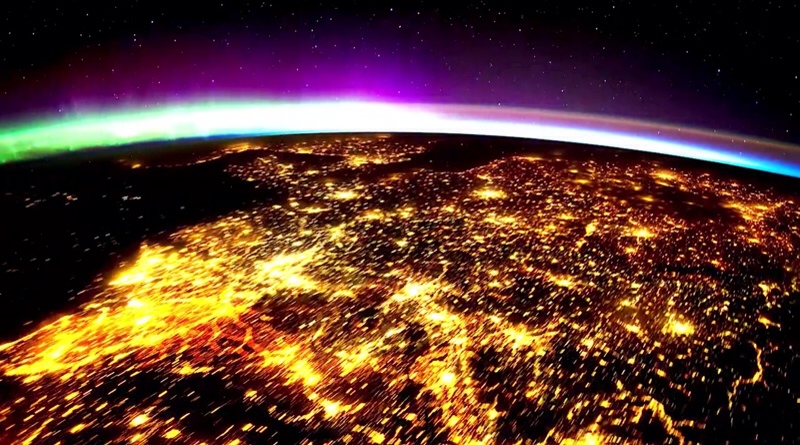
A Happy New Year timelapse video shot by astronauts aboard the International Space Station. It was made by Giacomo Sardelli who downloaded NASA images which he then edited into a timelapse film of extraordinary beauty.
Timelapse Film of Space Shuttle Moving Through Los Angeles
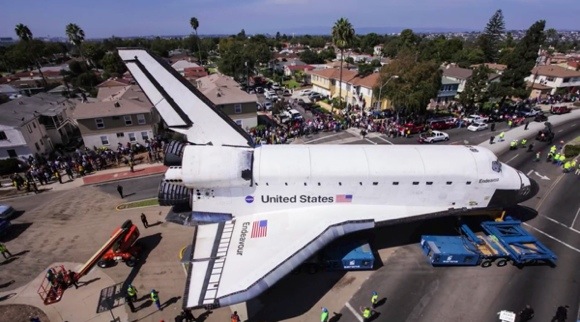
Timelapse film of space shuttle Endeavour making its way through Los Angeles to its final resting place at the California Science Center museum.
NASA Captures Images of Apollo Astronaut Moon Tracks
NASA’s Lunar Reconnaissance Orbiter has captured images of astronaut tracks, lunar landers, and left behind equipment from the Apollo 12, 14 and 17 moon missions. These are the sharpest images ever taken of the moon and should give fake moon landing conspiracy nuts a whole new bag of clues to play with. We can’t rebuild what we once understood and get ourselves back to the moon, but we can take pictures of our past glory.
NASA Begins its End
The final landing of a NASA space shuttle yesterday, though hailed as the final act of a great technical achievement over the past 30 years, actually represents a complete failure on the part of the United States to build upon the work of scientists and technicians from the 1960s and 70s. It should shock most of the world that the leading superpower, with the world’s most advanced space exploration systems, could not figure out a way to even build a second version of the space shuttle. I’ve never seen a product of technology that stays with version 1.0 for thirty years. There is no viable plan in existence for launching human beings off the earth by the United States. There’s a lot of vaporware and talk. There are models of crew capsules that will maybe one day launch people toward an asteroid or even to Mars. Maybe. None of it works. None of it even has a working toilet. There are no rockets being designed that could even launch the miraculous capsule into orbit. And that crew capsule? If you’ve seen it you then realize that NASA is simply building the Apollo system all over again with extra bunks for three more astronauts. But they can’t build the thing. It doesn’t exist.
There are no longer any means available to the United States for getting people to the International Space Station. There are no means available for getting any equipment up there. The U.S. must rely on rides hitched aboard Russian spacecraft for an indefinite period of time that many NASA experts are now saying could extend to 10 years.
Russia has a more advanced and reliable space exploration system than the United States.
In the mid 1990s I went to a boring Hollywood party and wandered around with a drink in my hand for about half an hour before running into an older couple sitting alone. They seemed uncomfortable and out of place. So I said hello and sat down next to them. The man turned out to be a retired engineer who worked on the design for the Lunar Landing Module during the Apollo years. I asked him why NASA had been unable to return to the moon. His answer was: ‘Because they can’t.’
He explained that NASA had been been decimated by enormous loss of technical knowledge due to retirement. He said that the agency had not properly stored its accumulation of knowledge. He said that if engineers wanted to build a rocket, command module and lander to get back to the moon, they would be completely unable to do so and would be forced to relearn almost everything that had been learned during Apollo. He then said that this would become very clear to the nation sometime within the next 15 to 20 years as existing technology wore out and could not be replaced. I told him that he seemed very depressed about it. He nodded and said the situation was much worse than he could explain. He said that technical notes from engineers hadn’t even been saved. The knowledge was just totally lost.
I think that guy was right. I don’t think NASA could build a new shuttle even if it tried.
NASA’s insistence on transferring launch responsibilities over to private space companies would perhaps make some sense if we had seen it being phased in alongside the existing shuttle technology. But to shut down our only means of space transport and hope for the best with future private launches is simply begging for disaster. How tested will this new private space launch technology be? Why would an astronaut climb into a rocket built by some company run by PayPal’s founder? It’s insane and stupid. What if the first private launch vehicle with astronauts explodes on liftoff? What happens then? Is there even a backup plan?
U.S. Effectively Abandons Human Space Flight
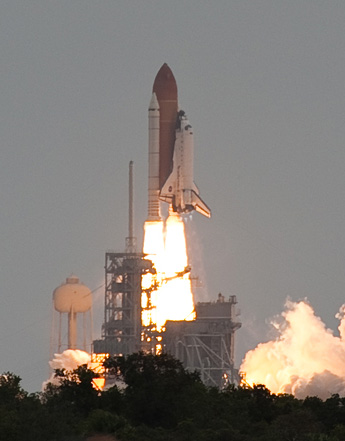 So the United States today launched its last space shuttle mission ever, leaving the task of supporting the International Space Station to Russia, a country ruled for all intents and purposes by a dictator.
NASA, along with its international partners, apparently thought it would be a good idea to build a space station and then retire its fleet of transport vehicles without any replacement in existence.
In about a week, after the final shuttle flight lands, the United States will no longer have the technical ability to put a single human being into earth orbit.
How’s that for leadership in technology and science? That’s your current president at work who was supposed to possess some magical form of science awareness.
Onward presses NASA with its plan to privatize space station supply launches… sometime… perhaps… in the next five years.
The shuttle was expensive to operate and sometimes dangerous, but it was a successful machine. No such thing exists now. Typically, when I’m ready to replace my automobile I go buy the new one first. Then I bring it home, park it in the driveway and think about how best to dispose of the old clunker. That’s how it works with me. I’m just sayin’…
NASA Discovers Entirely New Life Form
 NASA is preparing to announce today that it has discovered an entirely new form of life that is built on a different basis from any life form every known.
In other words, life does not have to be made up of carbon, hydrogen, nitrogen, oxygen, phosphorus and sulfur. The new life form discovered by the space agency is built upon arsenic.
Essentially, NASA has discovered an alien life form.
This changes the entire basis of the search for life on other planets. It changes the whole story. Life can apparently build itself out of things we thought made life impossible.
There’s a 2:00 pm EST news conference scheduled at NASA to formally announce the world-changing discovery.
Here’s NASA’s announcement of the finding.
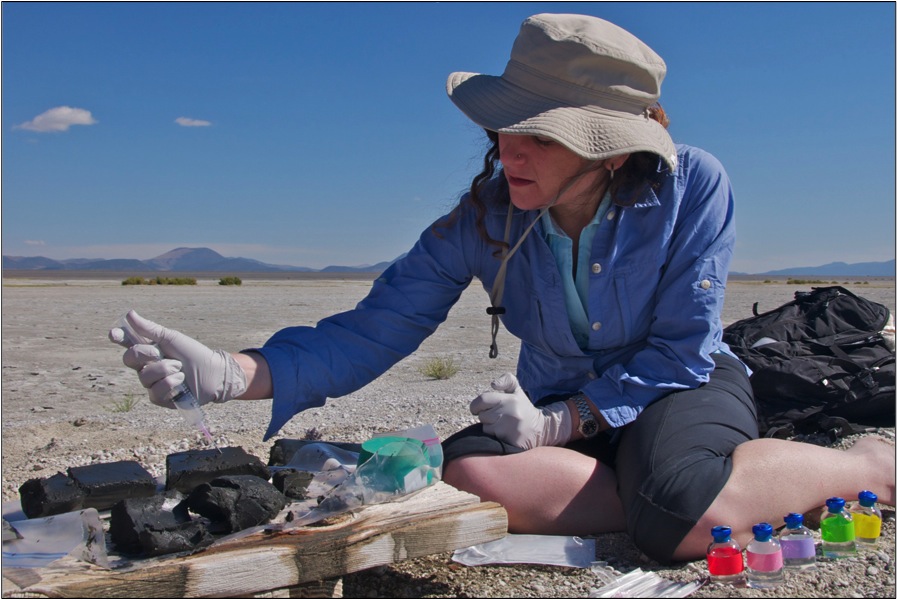
This is NASA scientist Felisa Wolfe Simon who leads the team that made this discovery.
Have a Drink on the Moon
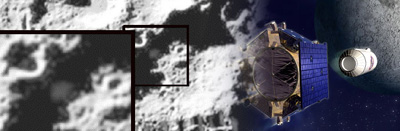 If you’re planning on heading to the moon any time soon, you’ll at least be able to get a drink. NASA announced today that the Lunar CRater Observation and Sensing Satellite has discovered water on the moon. The mission intentionally crashed a rocket stage onto the moon’s surface, creating an enormous plume of ejecta. When the plume was analyzed by spectrometers on board the satellite, the evidence of water became clear. In the photograph, you can see the debris plume showing up as the little gray fuzzy area inside the black boxes.
There are many ways the water could have gotten there. It could have come via solar winds, comets, giant molecular clouds or some kind of internal activity. Scientists say that it could even have come from Earth.
NASA Makes a Free iPhone App
 NASA has released a free app for the iPhone that offers dynamically updated information, images, and video from many of its ongoing missions. NASA seems to be suffering through a confused decade in which it wonders what vehicle should replace its aging shuttle fleet, whether to dump the International Space Station into the ocean to save money, whether to go back to the moon, or whether Mars might be a suitable destination for a manned visit.
I think it’s probably safe to say that NASA is learning an enormous amount through its telescopes, satellites and rovers. I suspect that very little is really learned from sending three or four humans to the moon other than how to keep three or four humans alive on the moon for a few weeks. Perhaps NASA should just relax a little and stop worrying about making people interested in what it’s doing. Perhaps they should just worry about collecting information.
International Space Station May Be Dumped Into the Ocean by U.S. Congress
The International Space Station which has taken 11 years and $44 billion to finally bring to a state of completion may be scuttled when its funding runs out in 2015. How about that? One of the greatest achievements in human history – greater than the building of the pyramids – may be dumped into the ocean before it can perform its intended mission which is scientific research and experimentation outside of the Earth’s gravity.
So we elect a man to the presidency twice over who is on the intellectual level of a monkey and give him $80 billion every few months so that he can arbitrarily slaughter the boys and girls of the people who elected him by sending them into a needless Iraqi hell on earth without adequate protection. But we can’t keep the greatest machine ever built by a human hand orbiting the planet? Someone simply must be kidding. I refuse to accept this as a possibility. There’s death money and there’s life money. Iraq war money is death money and sets human civilization back. The space station money is life money and it moves civilization forward. This is a simple equation that almost anyone can figure out. Except of course the drooling moron retired in Texas.
40-Year Anniversary of Apollo 11 Moon Landing
Forty years ago today, on July 20, 1969, Apollo 11 landed humans on the moon. Amazing. We should really go back… if we still know how.
Interactive Moon Mission Underway
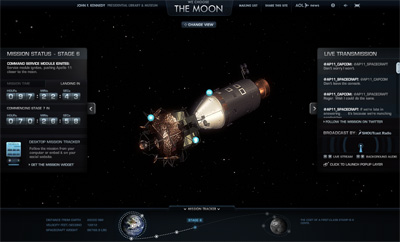
Yesterday I posted about the JFK Presidential Library’s interactive recreation of the 1969 Apollo 11 moon landing mission. The mission has now reached stage 6 with the command module at a distance of 22,000 nautical miles from earth. The site is doing an absolutely marvelous job of making you feel as if you are riding along with the historic Apollo 11 mission. They have all the real-time radio communications between the astronauts and Mission Control. So you can listen to exactly what was happening through every second of the entire mission! They also have video clips that fit the current point you are watching in the mission.
This was an excellent web idea and it is extremely well executed. I can’t wait until they reach the part with the Lunar LEM trying to find its landing spot on the moon! Go see the We Choose the Moon site right away!
Real-Time Interactive Recreation of 1969 Trip to Moon

At 8:02 am Pacific Time, Thursday July 16, the John F. Kennedy Presidential Library’s We Choose the Moon project recreates the launch of the Apollo 11 moon rocket. The interactive site will recreate the entire mission to the moon down to the minute, complete with status reports, images, 3D animations and even Twitter updates. The site is very slick and recreates the anticipation before a launch at the space center quite well. You even hear the seagulls flying around the launchpad as you watch the rocket on waiting for liftoff.
This is about as close to the moon as we’re likely to get for quite some time since the national ‘let’s go to the moon again’ quagmire persists in spite of the fact that Nasa has no more spaceships to fly once the shuttle heads for the junkyard. The International Space Station is quite possibly going to be dumped into the ocean in 2016 due to lack of interest. But a space agency that can run radio-controlled cars on the surface of Mars is at least doing something with its money.
Amazing Pictures of Space Mission to Hubble
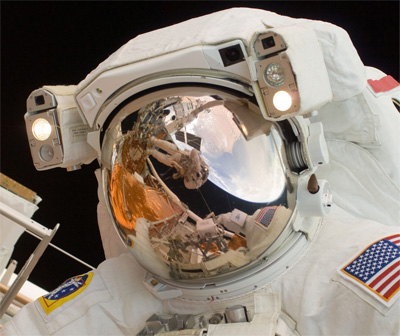 These are incredible, huge, and crystal clear photographs of the May 2009 shuttle mission to repair the Hubble Space Telescope. The telescope is the greatest astronomical instrument ever devised and this is its last repair. The mission was very dangerous because the Hubble orbits in an area with a high density of space junk. A rescue mission was actually waiting on the ground with another shuttle in case the main mission ran into trouble. These pictures are fantastic.
International Space Station Fly Around
Here’s a video taken from Space Shuttle mission 119 as it flew around the International Space Station. The video has been sped up. It’s an incredible view of the earth turning below the space station which can be seen in great detail.
