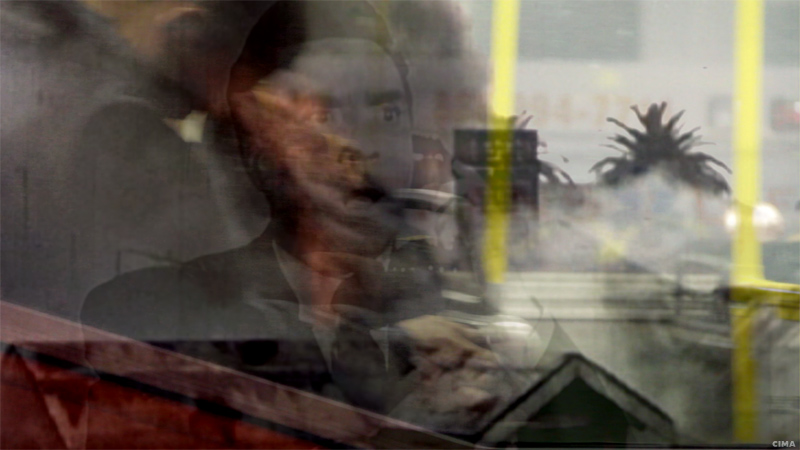
Traumatografo: Magnificent and Mysterious 1975 Film by Paolo Gioli

I did not know this filmmaker, Paolo Gioli, existed until yesterday. And that really bothers me because I feel a very strong kinship with this filmmaker just on the basis of having seen two of his pieces. What can a filmmaker do with his own backyard? That is the question that comes to my mind as I watch his films. Can a filmmaker take his camera out back and make something astounding? Of course. In fact, that skill is central to being a creative filmmaker. It is the feeling I get from Gioli. He makes films that have a guiding concern but he is not afraid to slip a little off of the main track and let you see him experimenting. One can observe his enthusiasm for a new mechanical technique and he allows his film to wander into the territory of the new machine or splicing method for a while. And then he comes back to the main thing. He never lets this get out of control and it is a miracle to watch. One can learn how to experiment by watching a brilliant experimentalist. It’s that simple.

There are many filmmakers I wish I could meet and perhaps work with. Gioli is one of them. In fact, this brings to mind again my thought that things like YouTube are the greatest cinematic development of the past half century. The reason has nothing to do with screen format or size or image quality. It has to do with intimacy. The feeling of connection one can get by watching a filmmaker’s work on the computer is far more intimate than could be achieved in a theater. It is this quality that is the most important contribution of online film to world cinema. Intimate connection to the artist. It has a powerful effect on artists and communicates ideas and inspiration from generation to generation far more effectively than any prior cinematic display technology.

Here is a nice long article by Bart Testa about this wonderful Italian filmmaker.

Here is an article by David Bordwell on how Gioli’s hand-made cameras influence his ‘vertical cinema’ technique.
Robert Frank Film of The Rolling Stones

It’s all very confused and mysterious. In 1972, the Rolling Stones hired photographer and filmmaker Robert Frank to make a film about their American tour. He made something wonderful called ‘Cocksucker Blues,’ which immediately angered the Stones because it actually showed them to be the ultra coolest and baddest band in the world. They sued him to keep the film out of circulation. Go figure. Why would you sue a guy for making the one absolute piece of evidence that you are what you say you are: ‘The greatest rock & roll band in the world?’ Well I don’t know the answer. Drugs and addled minds perhaps. This short film is actual footage taken by Frank on Super 8 cameras. It’s been edited by someone called Videodrumz on YouTube and put together with ‘Rocks Off’ from the ‘Exile on Main Street’ album. It’s good. It works. The footage is absolutely recognizable as Frank’s.

Cuadecuc, Vampir: 1970 Spanish Underground Dracula Film Shot as Attack on General Franco

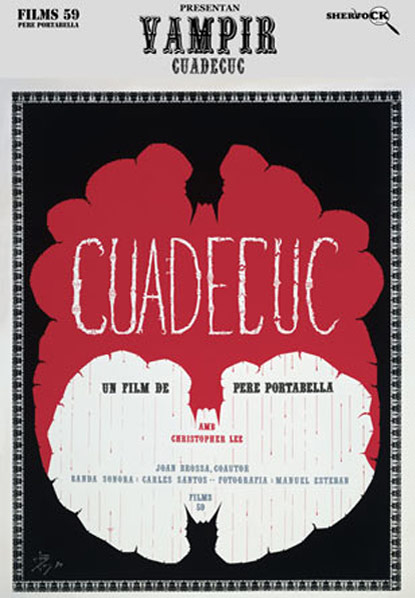
Here’s an extremely rare underground Halloween treat for anyone who loves film.  Ah, but only the very fewest of you will actually watch this all the way through! Give it a try. Not only is this film underground… it’s underhanded. Pere Portabella made ‘Cuadecuc, Vampir’ in 1970 by filming on the set of a Christopher Lee film called ‘Count Dracula’ that was being directed by Jesus Franco.  Portabella’s underground classic is on its surface a silent horror film. But it’s also a documentary about the making of the Dracula film.  It tells its story by stealing scenes from the feature being shot around it, almost as if the film were a mashup of existing footage! The high-contrast black and white photography evokes such cinema greats as Carl Theodor Dreyer’s ‘Vampyr’ and F.W. Murnau’s ‘Nosferatu.’ We see typical horror scenes like a stagecoach racing through the wilderness, or a dusty crypt, interrupted by the arm of a prop person using a fan to blow fake spiderwebs or a cameraman shooting from behind furniture. These slippages from horror into documentary actually produce a weird terror when you realize that the film was being shot under the watchful eyes of Spain’s dictator, General Francisco Franco.  What the film really is underneath all the fantastic and disturbing imagery is a vicious attack on Franco and the false media manipulation that keeps all dictators in power.  The portrait it paints of Franco himself is one of a sad, disturbed and largely ineffective vampire who lives inside a mental construction based on the past.  The other characters in the film seem to be wandering through this psychotic realm, trying to find a way out.

The soundtrack incorporates jet engines, muzak, electronic music, opera singing, jackhammers, stuck records and various other electronic sounds. Don’t let this throw you because the soundtrack is one of the most eerie and unsettling that you will ever hear.

And I’m thinking that Criterion needs to jump on this and make a nice blu-ray release out of it.

Pere Portabella has a web site.

Now, just for kicks, here is a scene from the actual color film of Dracula being shot while Pere Portabella stole his own film right under Christopher Lee’s nose! You decide which film seems scarier.

Nova Express: Epic Online Film Adaptation of the William S. Burroughs Novel by Andre Perkowski

Filmmaker Andre Perkowski is working on a huge 3 hour plus adaptation of the novel ‘Nova Express‘ by William S. Burroughs. It’s a wild, ragged, disjointed, warped, damaged, serious and funny mashup of found footage, original film and Burroughs’ reading voice along with others. It’s got those incoherently combined sci-fi and thriller elements that Burroughs so easily manipulated as if in a delirium. The film is itself a kind of cutup, mirroring the technique Burroughs used that involved gathering unrelated bits and pieces of other books and newspaper articles to formulate sentences that somehow ramble on without necessarily leading anywhere specific. The novel is about exposing the secrets of those who attempt to control all thought and life with virus-like ideas, machines and drugs.

Perkowski is a filmic oddball who delights in making things that are messy. He draws and collages to create new images, purposely ruining his images to create the unexpected. I think his mental immersion into Burroughs is leading him through his wonderful film with great assurance. Apparently, Perkowski is constantly adding to the film and changing it. He has at least six different ‘drafts’ of the film. As he goes, he posts chunks of the film on his YouTube channel which I happen to think is a fantastic idea. There are similarities between the way he works and the way I work on films like my ‘Yellow Plastic Raygun.’ I have often told people that I suspect the video scrubber button in non-linear video editors that allows a filmmaker to fly through a full length feature film in seconds is perhaps the single most important cinematic tool of the last thirty years. It is this little tool that allows for the searching and matching of cinematic elements that could never have been found in a human lifetime before the non-linear editor. So it leads to entirely new form of cinema. That’s what you are watching here with Perkowski’s film. It is a powerful work of new cinema and may well be the best adaptation of a Burroughs work that I have ever seen.

Here’s a great interview with the filmmaker that focuses on this film.

Part 2

 
Parts 3 – 10 after the jump…
Continue reading

La Tentation de Saint Antoine: 1898 Special Effects Film by Georges Méliès

Oh that lucky fellow, Saint Antoine! To find myself in his shoes as he is ‘tormented’ by the temptations popping in and out of his little cave! My oh my! What a lucky guy! This is Georges Méliès experimenting with making people appear and disappear magically.


First Video Images Ever Reconstructed From the Human Brain

UC Berkeley scientists have recorded the first images ever generated by a human brain. Amazing. They exposed subjects to video images while recording visual activity in their brains. When they played the recorded data back they got images corresponding closely to what the subjects had just seen. What I notice about the images in the video is that faces seem to work the best. That is interesting on many levels. Perhaps facial recognition is so hard-wired into humans that we are able to generate those images more clearly than all others.  This work opens the door to the ability to reconstruct imagery from dreams and memories. It’s a staggering achievement.  Magnificent.  I simply cannot wait to try this sometime.

Thank you to Rob Smart on Facebook.


Send Me to the ‘Lectric Chair: Short Film by Guy Maddin

Canadian filmmaker Guy Maddin made this short in 2009 with Isabella Rossellini in the lead role of a woman who finds ecstasy in an electric chair. The film moves beautifully with its music and entertains with its silent film mystery and accelerated movement. However, I will say that Maddin’s films seem to me overly concerned with silent film technique. This tends to turn the films into curiosities rather than genuine works of art. That’s a tricky area because the films put so much virtuosity on display. But you can hide enormous failures behind that ‘old film look.’ I’m not sure that’s what Maddin is doing, but my suspicions are growing. Maddin might be interested at some point in working with less budget.

Thank you to filmmaker Fred. L’Epée.


Histoire(s) du cinema: According to Jean-Luc Godard

Between 1988 and 1998 filmmaker Jean-Luc Godard made a film called ‘Histoire(s) du cinéma.’ Though it purports to be a sort of cinema history, reflecting on how cinema intersects with the 20th century, I think it is more likely a vision of how cinema works in the mind of one filmmaker. The images drift in and out, overlapping and complimenting one another just as they would in the mind. Don’t look for accuracy or understanding. Just watch the film. It’s very difficult to find pieces of this lengthy work online. But these are three good chunks and they certainly stand up as a taste.

More about the film at Mubi.

Seizure: A Magnificent Cry for Art by David Vaipan

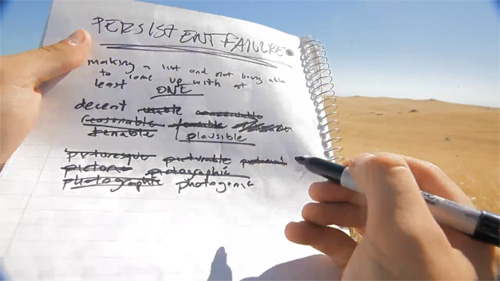
At the start, I’ll say that this is one of the most magnificent films I have seen in years. David Vaipan has made this relentless and fully-committed scream of artistic intent, desire, confusion, effort and love. This is a film about being an artist. It is a film about fear and confidence. About effort, will and failure. Vaipan simply takes the entire history of art and all that it has given him and dumps it out on his desk and turns it all into his own material. All of art, music, film, literature and poetry become Vaipan’s crayons and he uses them to tell his own personal story.

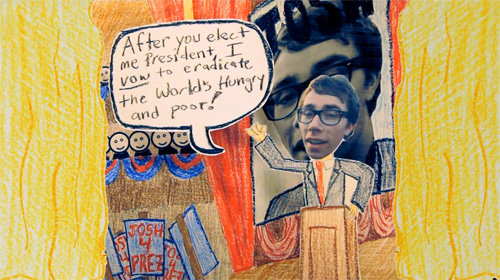
The film bombards with imagery. Just gaze in wonder at the crayon animated memoir that’s presented like a little puppet theater show. It moves from birth to boarding schools to Wall Street and beyond with effortless skill. The drawings are amazing and funny. Just when you think you’ve seen plenty Vaipan moves into a stick figure run through the history of art and it just keeps coming at you. He cuts and chops and mixes and slides and just keeps streaming the grandeur of art at us like a force of nature. He’s completely lost inside the world of inspiration. He sees the fear of getting lost in the pile – the fear of being ignored – and he literally revels in the fear itself. He makes the fear seem like something to seek. This is a grand and important statement from someone who I think is a young artist. The tools of his trade are digital and he uses them freely with a wild eagerness to explore that is extremely difficult to maintain. The unabashed use of video effects and computer equipment as if they are the oil paints and charcoals inside a painter’s box is one of the hallmarks of the emerging American video art movement. I can see the influence of Ryan Trecartin’s work in this. There’s a familiarity with digital layers that is of primary significance in this recent art. There’s a hard-edged willingness to allow the digital processes to show through. It’s sort of a freedom with the computer and video that means one doesn’t have to make anything necessarily look the right way or look like something it isn’t.

You have to really watch this film very closely and try to catch the pieces of the roaring mass of art thrown at you. Even the ending credits are a complete statement in themselves with the director drunkenly singing the Rolling Stones’ ‘Sympathy For the Devil’ in the background.

So many people are part of this film. Kenneth Anger, Stan Brakhage, Jean Luc Godard, Maya Deren, Luis Bunuel, Stanley Kubrick, David Foster Wallace, Michael Snow, Agnes Varda, to name but a few.

I know that the intertitles and other things flash by too quickly to grasp and maybe that intimates something about the info-age and attention spans, it’s why your lord Hiesos Kristos, magician of the beautiful, invented the pause button and that’s also why the real Creator (one D. Vaipan) put this on the internet rather than wherever, because you have control.

See? That’s one of the little treasure waiting for you in the end credits of this gigantic and raving epileptic fit of a film that should ultimately bring you close to tears and make you want to explode in all directions and actually truly and finally… make something!

Here is the artist’s web site.

Ready (Re’Search Wait’S), 2009-2010: A Film by Ryan Trecartin

Do you know who Ryan Trecartin is? You better. He’s making the wildest and best videos to be found online or in a gallery anywhere. This piece is about to open with six others to form an epic at the Museum of Modern Art P.S.1 in New York. It’s a warped and wicked view of corporate career life and behavior as practiced by characters whom I suspect would not even want to be considered normal. They spout company lingo and get it all twisted back inside of itself until it starts to sound like perfect sense and is just as valid as what you hear daily in the offices of any company. Trecartin is onto the fact that our economy has failed and millions of people are out of work because their jobs were bullshit to begin with. At minimum, 75% of jobs in corporate America are completely unnecessary. They are a busy-work scam based on particular rhythms and mannerisms and they produce nothing at all. The characters in this video revel in their uselessness. They gloat, the whine, they insult, they mock. They are amped up to be as irritating as possible. Their voices grate like demented cartoon characters. These videos are like the visions of a child computer in orbit that scans human beings and then tries to reproduce them but gets it wrong. These are digital creatures more than they are actual human characters.

Not to mention the fact that Trecartin’s intentionally clumsy and cheeseball imagery is simply gorgeous. The videos are extremely deceptive. They are so freely expressive as to be nearly psychotic. But always just enough under control to imply meanings with great subtlety. Right now these films of Ryan Trecartin represent the avant-garde’s leading edge.

Warhol and Maciunas: A Film by Jonas Mekas

This is a film by Jonas Mekas that features Andy Warhol, Yoko Ono, John Lennon, and George Maciunas who founded the New York art movement known as Fluxus. The film shows a Whitney Museum art opening in 1971 and an artists’ party in New York. Home movies become an artform in Mekas’ hands.

Luna Park: A Film by Luciana Botelho

Paris filmmaker Luciana Botelho travels and films her love of light and color. In this one, filmed in Lausanne, Switzerland, she turns carnival rides into a celebration of exploding light and pattern that seem to exist in their own realm apart from reality. Her interests seem to lie in the unnoticed beauty of everyday environments. Her camera observes with that sly calm that I admire in any artist. She steals moments of beauty from the unaware because they do not own the moments – she does.