Tag Archives: Paris
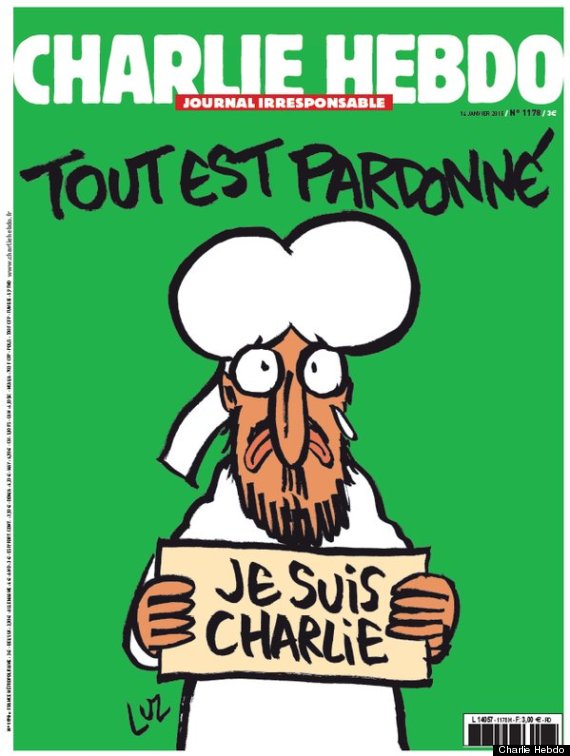
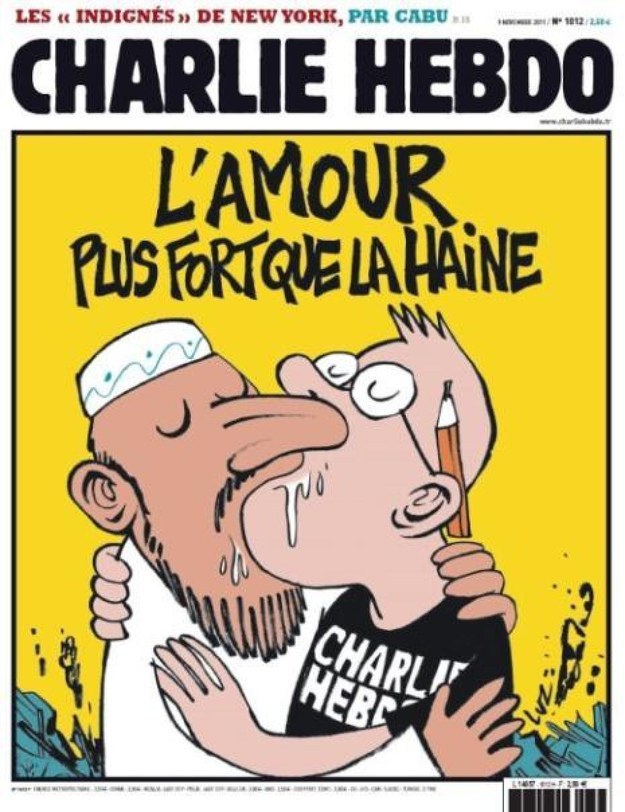
Je Suis Charlie
Luna Park: A Film by Luciana Botelho
Paris filmmaker Luciana Botelho travels and films her love of light and color. In this one, filmed in Lausanne, Switzerland, she turns carnival rides into a celebration of exploding light and pattern that seem to exist in their own realm apart from reality. Her interests seem to lie in the unnoticed beauty of everyday environments. Her camera observes with that sly calm that I admire in any artist. She steals moments of beauty from the unaware because they do not own the moments – she does.
Ménilmontant – 1926 French Film by Dimitri Kirsanoff
The film takes its name from a neighborhood in Paris. It was directed by Dimitri Kirsanoff and is considered to be his greatest work. It moves very quickly, using a montage technique that tells the story without a single intertitle. It’s a riveting and powerful tale of disillusionment and violence. The lead actress is wonderful and has some of the best eyes for silent film I’ve ever seen.
Tokyo Night Trip – A Film by Luciana Botelho
Luciana Botelho turns cab rides in Tokyo into a gorgeous abstraction that maintains its romantic atmosphere flawlessly. What I like about these films is how the filmmaker seems able to surrender herself to a particular time and place over the extended period of time necessary for making the film. Not an easy thing to do. I’ve posted about this filmmaker’s work before.
The Films of Luciana Botelho
I once suggested on this web site picking up a camera and spending the day on a street corner making a film. Moulin Rouge is a film that does that with spectacular and sublime results. Filmmaker Luciana Botelho wanders the world with her camera and makes films that take my breath away. Standing in front of the Paris landmark, she makes a film that celebrates movement more effectively than anything going on inside the actual Moulin Rouge. Her film is also a very simple and charming celebration of the act of photographing or filmmaking. Botelho’s films are beautiful and subtle and extremely emotional. She fits image to music perfectly. I’m ready to go and buy all the songs after watching these!
With the great pile of film and video available on the web, one must maintain some sensitivity to the gentle – the delicate. Botelho is a gentle filmmaker. She impresses me because she seems to me to be an artist of the glance. Her art seems based on immediate vision and impressions made almost in passing. She makes films about travel that capture the essence of a place, but primarily focus on the behavior of people, turning the overlooked into something captivating. The films hold an enormous grace and convey very powerfully the impression of an artist whose every turn of the head can lead to a film.
I like the fluctuating frame rate of these films. It focuses you in on the interesting physical movements caught by the camera in everyday situations. And yet the films flow smoothly in overall effect. The small camera in hand that follows the eye is modern cinema. In the film, Tokyo Slices – People, when the camera swings to catch the girl in the scarf on the subway platform you are seeing most of what you need to know about modern cinema.
I look forward to Luciana Botelho’s Los Angeles film.
Film: Nadja in Paris
French New Wave directory Eric Rohmer made this 1964 short film about a woman who is a student in Paris and likes to walk around exploring the city and herself. Incredible simplicity.
Part 2:
Paris Filmmaker in 1929 Shows Us What a Camera is For
This is an odd post and I’m not entirely sure I can pull it off. The film above is called Montparnasse. It was made in 1929 by Eugene Deslaw. I watched the film and want to write about it cold, without looking up Mr. Deslaw on Google. I’ll check up on him after I’ve posted this and see if I’m even in the ballpark.
Watch the film all the way through. If you think it’s just a collection of boring tourist shots in Paris with nothing happening, then stop reading and leave now because this post is for the four out of one hundred who catch the drift of the camera work. Deslaw was shooting in the Paris of Pablo Picasso and Matisse. He appears to have had a close connection to art and the cafe life of the city. His film is full of odd angles and closeups. He runs up onto a balcony in order to shoot straight down at some tabletops. He catches a woman applying makeup at about the 13-minute mark and makes a shot that is worth paying for. He films traffic and buildings, windows, curbs, chairs, newspapers, smokers, drinkers, snake-handlers, paintings, and water. He’s fascinated by his city and by his camera. He’s making art. He set out one morning with his camera and went around making art. Everyone was happy to be alive there in Paris in 1929 and he was playing his part in it. Films made at that time tend to have this cheerful experimental quality. Deslaw is nearly drawing with his camera. It’s an immediate act of finding visual meaning. He was walking and was struck by something and filmed it in an excited state. He was consciously being an artist.
The film he made is beautiful. It’s very hard to make a film with its kind of beauty today. Think about it a little. What would you do? Go to a Best Buy and look around for a brand new digital camera. You know, one of those shiny silver things with the HD viewfinder and all the buttons. One of those? Then what? You’d march out into the neighborhood with this gleaming tourist gizmo and look like a ninny bending over to film trash as it floated down into a storm drain? You’d walk up to a guy behind a news stand and ask to film him? Really?
Yes. That’s what you’d do. You’d get a little camera and do just that. And here’s your assignment: you must do this with the total conviction that you are about to make the greatest film ever made about your subject matter. Set out for a particular street corner and make a magnificent short film or a long one about that corner and everything on it. Spend an entire day doing only that. Skip lunch. Just stay there and make your film without ever entertaining even the slightest doubt that you are working on something of incredible importance and value. It’s going to be very hard to do. Some people will walk by and giggle. Some will become belligerent and tell you to stop. Film those people. Run away if they chase you. Then come back and continue your work. Remember that you are an artist on a mission to make something and absolutely nothing will stop you. Then come back home and figure out how to edit it and then put it online. Tell me about it even and I’ll watch it.
In 1929 it would have been recognized by the maker of this film that a camera is a camera and it will make your film if you want it to. Ever wonder why you don’t ever see Steven Spielberg out and about with his little camera making a movie for himself? It’s strange isn’t it? Could you imagine Pablo Picasso or David Hockney never carrying a sketchbook to make some quick pictures while having coffee or dinner? I couldn’t imagine such a thing? So when was the last time you ever heard of a Spielberg or Scorsese out with a camera making little films for their web site?
You could almost think of all the decades of massive budget film production and the studio structures built to support the film industry and film schools as an organized effort to confuse the issue and make people forget what a film actually is. We think of screenwriters and producers and agents and superstars and all the talk shows. But it’s very hard for the artist to walk out with the camera and go make a film the way a painter would work alone on a canvas. The Montparnasse film should help to illuminate the proper use of the camera for anyone who’s interested.
Book Lovers in Paris with Piles of Books
Here’s an excellent CBS Sunday Morning report about French book collectors in Paris. I love the piles of books in the apartments. The skinny book finder guy is a very amusing character. He reminds me of the character Johnny Depp played in the Roman Polanski movie, The Ninth Gate. That character is a shady and extremely skilled book finder who goes after rare books for wealthy collectors. The movie is fascinating for all its investigation of ancient texts and satanic illustrations. One of the collectors in the video mentions how when a collector finds a book they like, then they must also acquire every other edition that they can find. I totally understand this, having gone through something similar with various editions of Don Quixote. That’s a really good book to collect because there are so many beautiful editions of it that include the work of great illustrators. Not to mention the fact that Don Quixote himself is a maniacal book lover.