As neighborhoods in the United States begin to explode and disappear off the face of the earth due to a rapidly disintegrating infrastructure, distract yourself for moment and watch this film of how San Francisco looked just after the earthquake and fire of 1906. Incredible footage. These days stuff like this happens without even having an earthquake. You’re just sitting at home in America watching your TV and suddenly your children are on fire in their bedrooms and your entire neighborhood is an inferno.
Author Archives: Cimaxion
Animation: Kahani
Meg Park, a final year student at Duncan of Jordanstone College of Art & Design, made this short film that reminds me of how to be a kid. Fantastic animation of the characters and their movements.
Via Cartoon Brew
Podcast Novel: A Princess of Mars (Chapter 21)
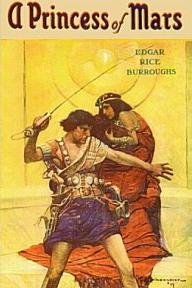
This is the first John Carter of Mars novel by Edgar Rice Burroughs, the author of the Tarzan books. It was his first novel, published in 1917 and it’s a work of rip-roaring science fiction that has inspired many of the great writers in the genre.
Chapter 21: John Carter, meets a friend and learns to fly.
You can find all the previous chapters of the book here.
You’ll find regular podcasts of all the chapters over the next couple of months. Subscribe to our feed.
Duration: 00:19:54
Read by Alessandro Cima
All audio stories are Copyright © Candlelight Stories, Inc., All Rights Reserved.
A Film About the Secrets of Alchemy
With all of the talk recently about religions that forbid the fundamentally human act of drawing, it is perhaps refreshing to think about a spiritual pursuit that not only encourages the act of drawing, but expresses itself almost entirely through drawings. Alchemy is the subject of this fascinating film. It’s in eight parts and well worth clicking through all the way to the end. The later part of the film features some comments by Carl Jung and there are tons of illustrations to puzzle over. If you can get past some of the slightly amateurish narration, you will be well-rewarded with a presentation of ideas that might be completely new to you. The film gets more interesting toward the last three parts.
Part 2
Part 3
Part 4
Part 5
Part 6
Part 7
Part 8
What I like about alchemy is the sense I get of people working toward something. The entire history of alchemy is one of people searching for what amounts to a spiritual understanding of themselves through constant questioning and investigation. This seems to me to be superior to most religious practice which primarily involves people accepting instructions from an outside and unverified source.
Thinking About Underground Film – Part 1
If you live in Los Angeles you’ve probably seen it many times: the caravan of white trucks parked along the block and around the corner, diesel generators roaring, cables strung along the gutters, piles of lights, rolls of cables, racks of costumes, makeup trailers, bored extras, bored crew members, bored motorcycle police, and fascinated passersby.
That’s all you need to see to know that something mainstream – feature film, TV show, or commercial – is being made.
But what’s an underground film?
Bad Lit, my favorite site devoted to underground film, has an article about the problem of defining something as slippery as ‘underground film’ in which several definitions are offered by different people. Mike Everleth, the site’s editor, defines underground film this way:
Essentially, I believe it is a film that is a personal statement by one person and a film that dissents radically in form, or in technique, or in content, or perhaps in all three. However, that dissension can take on any number of forms.
I agree with that, but would add the requirement of hostility. There should be an element of combativeness which attempts to counter a much larger established force. There must be some rebellion in the work. It can be very subtle – nearly imperceptible – but it’s usually there somewhere. In fact, I think the hostility should even tend to include the general culture surrounding the filmmaker/s. Dissent, by itself, can be rather subdued, soft-spoken and shy. I think underground film requires a willingness not only to dissent but to kick apart.
While thinking about all this mainstream versus underground stuff, I went searching around on YouTube for something that might fit the discussion. I found this peculiar British documentary film about filmmaker Donald Cammell who co-directed, along with Nicolas Roeg, the 1968 film Performance. The film is one of those odd mixtures of underground and mainstream. It features Mick Jagger and involves a lot of mind-bending drugs, sex and criminal underworld shenanigans. It’s actually impossible to forget once you have seen it.
This film contains adult subject matter, language, nudity and sexual situations.
Part 2
Part 3
Part 4
Part 5
Part 6
Part 7
The documentary, Donald Cammell: The Ultimate Performance, describes a time when a group of intensely creative artists from various disciplines could operate on the fringes of the mainstream to create an essentially underground film with something resembling support from a mainstream production company. It’s a scenario that does not exist today. If you watch all 7 parts of the film, you will be immersed in that strange hybrid world of the ‘popular underground’ that defines much of what was happening in the 1960s and 70s. Today, if it cannot be jammed into a mall and sold with Sour Patch Kids, it won’t get any money. That holds as true for ‘independent’ films as it does for summer blockbusters.
Watching this documentary makes me wonder why so many filmmakers seem to have such trouble making the films they really want to make. After all, one can purchase a cheap camera and make exactly what one wants regardless of what one’s career and money-earning responsibilities might be. Tormented filmmakers who are battling studois for creative freedom should simply make films with video cameras during their spare time. This would not only foster a healthy underground, but it would quite possibly prevent a few tragic endings.
Animation: Velocity
Official selection at CINEME, 2003 Chicago International Animation Film Festival.
This is a short film that I started back in 2001. 9/11 happened and I put the film on hold for almost 2 years. When I returned to it I was able to finish it in several months of hard effort. I was working with Flash and my process was kind of awkward. The drawing is actually very crude. But the film came out decently. It got into a Chicago film festival in 2003 and it has remained in its Flash form on CandlelightStories.com ever since. It was recently shown by NewGrounds.com as part of their ‘Treasure Hunt’ festival of animation.
But getting the film out of the Flash ghetto and into video proved to be more work than I thought. So I’ve made a few little updates and improved some of the film effects a little. So now the film is actually closer to the film I was imagining back in 2001.
Sesame Street Bans Boobs
Katy Perry sang this song for Sesame Street and then some nasty parents complained about her showing too much cleavage for the little tot audience and so the piece was banned from the TV show! Oh no! What’s going on with parents? Maybe they’re turning into boobs. Don’t kids like boobs anymore? I did when I was a little guy. It ain’t called the boob tube for nothing. What’s the problem? She just wants to play. I’ll play with her. It’s actually a rather good music video.
Kids, if you have a parent who’s afraid of boobs you’ve got real problems ahead. Beware and seriously consider changing who you hang out with.
Film: Arma de Reconstrução Massiva
Now this is how you teach somebody about art.
From boulerouge1.
Documentary Film: The Century of the Self
The Century of the Self is a 2002 British documentary by Adam Curtis that explains how the psychological theories of Sigmund Freud were used by those in power to control the dangerous masses in democratic countries. Many of the most basic ideas behind American marketing and public relations during the 20th century, including the focus group, were invented by Freud’s nephew, Edward Bernays. The American economy was converted into a consumer economy that relied upon people wanting things and feeling a need for things that were designed to increase the feeling of want.
The idea underlying this entire documentary, its fundamental observation is simply that in a democracy nearly the entire population is made up of stupid cow-like people who can be very easily controlled into thinking of themselves as unique individuals who are making their own decisions. The fact is that people, for the most part, are cannon fodder. They are willing to throw their sons and daughters into the meat grinder of war for the pretense of defending an economic structure completely dependent upon people earnestly believing that they really really need the new version of the iPhone. The mind control has worked. You can tell from the lines in front of the Best Buy at midnight waiting for the new Xbox. If you find yourself standing in line to buy the first new iPhone, you are simply mindless meat strung between bones without the slightest capacity for self-direction. You are one of the people in the crowd being laughed at by the guy in the window at the top of the skyscraper.
But it gets even worse. If you are making a call on your iPhone you are very likely the same mindless meat as the person waiting in line to buy the phone. Phone calls don’t exist anymore. They are now just pools of water where you throw your quarters and make a wish.
The series consists of four episodes. Each episode is presented in six parts on YouTube. You can find all the related parts if you click through to YouTube.
Episode 1: “Happiness Machines”
Episode 2: “The Engineering of Consent”
Episode 3: “There is a Policeman Inside All Our Heads: He Must Be Destroyed”
Episode 4: “Eight People Sipping Wine in Kettering”
Film: Fellini’s Death
Jeff Alu is a photographer making films who I met at the Downtown Film Festival Los Angeles a couple of weeks ago. Cool guy. He’s also made this perfectly dream-like dream sequence that’s a part of his in-production film, 12 Dreams. I look forward to seeing all twelve! We had a brief discussion at the opening night of the film festival about the cameras we use and the filming of dream sequences. I said I thought they were kind of difficult, but Jeff clearly stated that no, I was wrong, they are easy! Well, they are easy for him and I like what he ends up with. The Fellini thing comes through clearly. Alu is onto it somehow. The pillow fight is extraordinary and I think the inclusion of the tabletop city model is brilliant.
During the film festival week in downtown L.A. they played Alu’s film on a video monitor in one of the galleries at the Los Angeles Center for Digital Art. I love watching gallery films and Fellini’s Death look great there.
Film: Homeboy
Here’s another great film from Marvin Tiberious in Italy. ‘Nobody really talks about it, but we are moving peoples.’ That’s what he says in the film. It is one of the most beautiful thing’s I’ve ever seen on YouTube. He draws and speaks. The film shows how natural it is for people to move around and to not want to offer up their lives fighting for some spot of land.
Film: Metropolis Part 1
Having realized in a blinding flash of insight this week that the geek/tech outlook has essentially taken over most of the web world like some sort of a skin cancer and is absolute death to art, I offer an artist’s messy and incoherent view of urban life. It is very uncool and not technically proficient. But it is an artist speaking directly, without falsehood intervening. This piece is by Marvin Tiberious who lives in Italy.
I’m having a huge vomit reaction to these blogs run by little gangs of cool-cats who spread themselves thinly across all domains and offer a smug smirk when photographed. We’ve turned too much of the web over to the ugly little nerd group that wants everything to be just a tad retro. If I see something that looks steampunk I’m going to smash it. Steampunk is the white-supremacist version of cyberpunk which is simply a reference to any book you have read but cannot remember.
Boing Boing, Censorship, and Hypocrisy: Commenters, Watch Your Language!
This article incorporates adult themes and language.
This is a flat-out attack on the hypocrisy and thin-skinned holiness of a major blog that purports to stand for freedom of expression and open ideas. The blog is BoingBoing.net. I’ve had my problems with the site before, having made comments that their moderators found to be excessive or too foul-mouthed for their rather puritanical tastes. I say puritanical and I mean exactly that.
Boing Boing has a problem with genitalia. You’ll see why in a few moments.
Yellow Plastic Raygun Wins Best Experimental Film Award at Downtown Film Festival Los Angeles

Well I’m just very pleased about this. The Downtown Film Festival Los Angeles has given my film, Yellow Plastic Raygun, the award for Best Experimental Film. I was having quite a nice week attending various parties and screenings at the festival. Its use of multiple locations in the heart of downtown Los Angeles gives one a real sense of taking part in the life of the city and being involved with something that’s helping to foster the exploding art and film scene in downtown. Most of the short films were screened in the new Civic Center Theater at the intersection of First and Main Streets, in the shadow of the famous City Hall tower that has appeared in so many crime shows and film noir classics. I attended the screening of my own film this past Saturday evening and was amazed at seeing it large since I had put so much work into it on small monitors. What’s great about the Downtown Film Festival is that it shows a wide range of filmmaking styles, crew sizes and budgets. They show films made with lots of production resources right alongside films made by individual artists working with inexpensive HD cameras and even cell phone cameras. I am very proud to have won this and I look forward to more great festivals in downtown Los Angeles from the people who put this together.
Film: The Beat of New York
A film by Thomas Noesner, Tim Hahne and Toussaint. Some professionals go to New York to film a car commercial and end up making something that’s actually worth watching while they’re on their own free time. Nice colors, movements and lots of sneaky cool people watching!