The Little Mermaid: 1968 Soviet Animation of the Tale by Hans Christian Andersen

Mermaid1

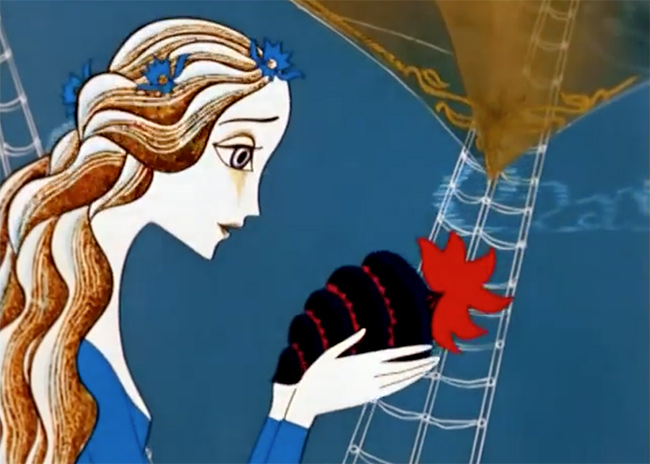
This is a beautiful 1968 Soviet adaptation of ‘The Little Mermaid,’ by Hans Christian Andersen. It was produced by the great Soyuzmultfilm studio. There are no subtitles. Just enjoy it as a brilliantly animated musical approach to a great tale.

The film begins with a busload of tourists sightseeing in Copenhagen. Then it moves to sea and our story begins…

Mermaid2

The Tale of the Dead Princess and the Seven Knights: Russian Fairytale Animation

RussianSnowWhite

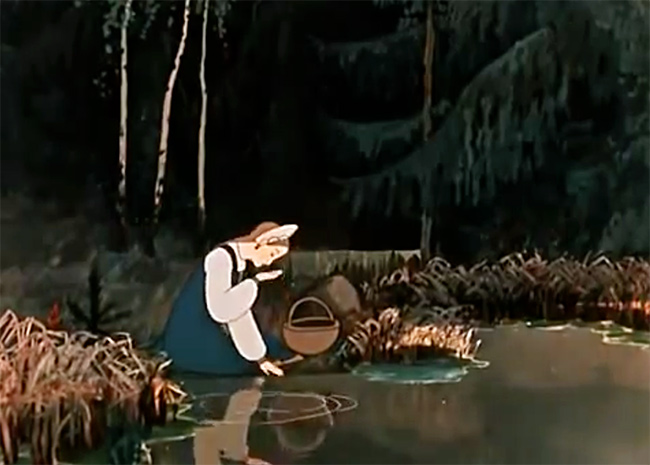
This is a 1951 Russian animation of an 1833 fairytale poem written by Alexander Pushkin that is based upon the classic Grimms tale, Snow White and the Seven Dwarfs. It was directed by Ivan Pyetrovich Ivanov-Vano, known as the ‘patriarch of Soviet animation.’

You can read Pushkin’s The Tale of the Dead Princess and the Seven Knights.

The film is in Russian so you can use the YouTube settings to turn on English subtitles.

Cinderella: Fantastic 1947 Soviet Union Feature Film

Cinderella1

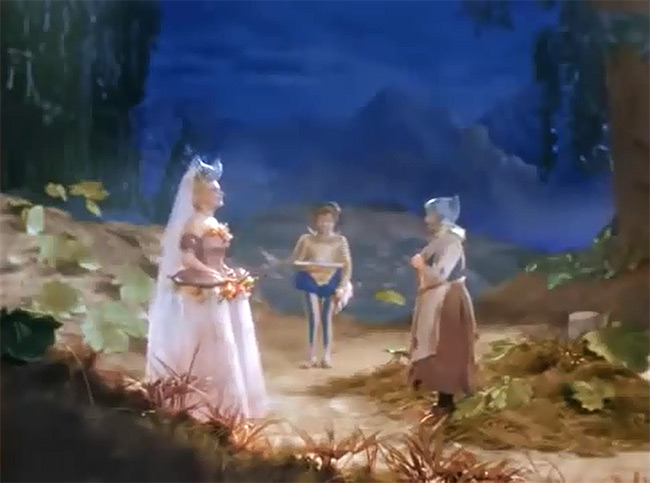
Filmed in the Soviet Union just after World War II, this is a rare gem of fairytale movie making. It’s a fantastically colorful telling of the tale that stands as a welcome contrast to the Disney approach. The film features one of Russia’s greatest stage actresses, Faina Ranevskaya, as the stepmother. It was produced by the Soviet LenFilm studio and directed by Mikhail Shapiro and Nadezhda Kosheverova. I think it was originally filmed in black & white but was recently colorized for a DVD release. The colorization works well within the context of a fairytale with grand stage scenery and theatrical costumes.


Cinderella2

Stephen King’s ‘Battleground’ Short Story Animated in Soviet Era Ukraine

Battleground

This is a 1986 adaptation of a Stephen King short story called ‘Battleground.’ It was produced by the Soviet Ukrainian Kievnauchfilm studio, which was primarily a documentary outfit during the Soviet era. After the fall of the Soviet Union, the studio became the National Cinematheque of Ukraine.

The story concerns a seemingly innocuous package that turns out to contain an invading force of toy soldiers. One man wages a battle for survival against what he assumes is an inferior opponent.


Pereval: 1988 Soviet Science Fiction Animation by Vladimir Tarasov


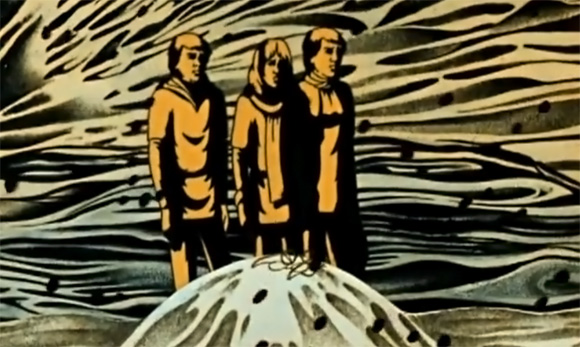
Humans have crash-landed on an alien planet. Sixteen years later, they send a small search party consisting of their children – born at the time of the crash – back toward the broken ship. The young members of the party make their way through a hostile and surreal landscape that holds surprises for them. Finding the ship well-preserved gives one of the young people an important connection to his past and to his origin.

This film was directed by Vladimir Tarasov and was adapted from a novel by Kir Bulychev.

Solaris: 1972 Science Fiction Classic by Andrei Tarkovsky

Have you ever watched Andrei Tarkovsky’s brilliant 1972 Russian science fiction film, Solaris? Well, you should. It’s long and it moves at its own leisure, but you’ll be richly rewarded with an unforgettable cinematic experience. When I was a kid I was a huge fan of Kubrick’s 2001: A Space Odyssey. So when I went to see this film I was very cranky about it because it just didn’t have the same look as 2001. But Tarkovsky was not interested in spaceships or realistic zero gravity. He was looking for the soul. Solaris is a deeply emotional film that points the way toward a science fiction that does not rely on science or technology for its visuals.  If you have seen the recent version of Solaris by Steven Soderbergh, you really should consider watching this one.  Tarkovsky was not afraid to dismantle the normal narrative drive and pacing of the majority of Hollywood films.  He allowed time to play itself out in his films.  No scene was ever cut to spare an audience’s attention span.  Soderbergh, for all his efforts to look independent, is completely at the mercy of the prevailing winds of Hollywood and makes every film to suit the intellectual capacities of a thirteen year old audience. This is usually apparent in the editing, not the writing. Hollywood filmmakers edit films as if they are flashcards for the slow learners.  You can’t call yourself an independent filmmaker if you are really just a prostitute.  Tarkovsky was, in spite of the constant oversight by the authoritarian Soviet government, a true unbending independent.

The film is an adaptation of the novel by the great Polish science fiction writer, Stanislaw Lem.

It has been made available by Mosfilm for free viewing on their new YouTube channel.


Part 1:


Part 2:

Road to the Stars – 1957 Soviet Space Vision with Stunning Special Effects

Excerpt 1 – First Men in Space:

The film is in Russian but you absolutely do not need to know Russian to enjoy it!  Unfortunately, I can’t find the entire film, only these three excerpts.

Pavel Klushantsev’s 1957 film, Road to the Stars, features astoundingly realistic special effects that were an inspiration and obvious blueprint for Stanley Kubrick’s 2001: A Space Odyssey ten years later.  The film is an extended form of science education, building upon existing 1950s technology to predict space exploration of the future.  The sequences with astronauts in zero gravity are incredibly realistic.  The second excerpt from the film features the construction of and life aboard a space station in earth orbit that is not only convincing but also beautiful.  There are several scenes with space station dwellers using videophones that anticipate the famous Kubrick videophone scene.

Excerpt 2 – Space Station:

Excerpt 3 – Moon Landing:
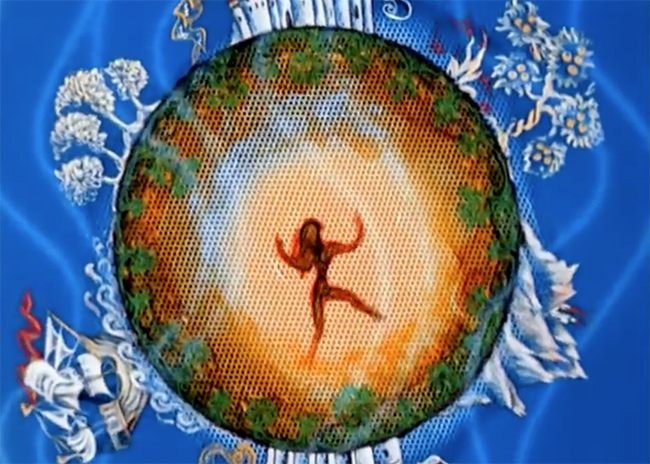
Interplanetary Revolution – 1924 Soviet Animation

Paul Gallagher at Dangerous Minds posted this 1924 Russian propaganda masterpiece. It’s a wild, science fiction, abstract work of art that just keeps pumping out wondrous images, one after the other. I love the ragged edges and mix of photographs, hand-drawn animation and cutouts.

Russian Feature Animation: The Lost Letter

Here’s a 1945 Russian animated feature about a Cossack who is traveling to deliver a letter to the Tsarina in St. Petersburg. The letter is stolen by a devil and the Cossack goes into hell to retrieve it. It’s a dark and beautiful film with a good sense of humor and wonderful character animation. The backgrounds are mysterious and I have seldom seen nighttime so perfectly depicted.  It’s based on a story by Nikolai Gogol and was directed by the Brumberg sisters and Lamis Bredis.

Click the  Continue reading link for parts 2, 3, and 4.

I found this at Cartoon Brew

Continue reading

Animation: Khabrahol (From Russia’s Toonbox Studio)

From Russian animation studio Toonbox comes this marvelous animation based on a poem by Sasha Svirsky. I don’t understand a word of it but I love the sound of it. I really must find the woman who does the voice-over.  She is just magnificent and totally fearless.  The drawings are fascinating.  The rhythm is catchy.  Toonbox does so many of the best animations that I see.  They seem to balance their commercial projects with artistic ones very well.

Via Cold Hard Flash