Publishers Doomed by Predatory Book Pricing? So what?

John Grisham on NBC’s Today Show discusses his new book, writing novels versus short stories, and so-called predatory book pricing by large retailers like Walmart, Target and Amazon.com.  I like Grisham in this interview.  He’s a good interview and he seems sharp.  He talks about how it’s much more difficult to fix a problem in the middle of writing a novel than to do so with a short story.  So he advises writers to ‘not have a problem.’  The trick is to thoroughly outline your entire novel before you even start to write it so that you know every single thing that happens along the way.  Pretty sound advice in most cases.  Not all.  Some of the greatest novels in the world were written by writers who had absolutely no idea where the novel was going from page one.  It depends on what kind of book you’re writing.  I think his advice is perfectly good for most books that are intended for sale in a grocery store.  Certainly.  But writers should never listen to famous writers.  They’re full of crap.  You write what makes you sweat and drink lots of coffee late into the night and bang your fingers on your keyboard until they hurt.  Or not.  Whatever.  I hate outlines.  Especially in word processors.  Awful things.  They destroy good minds and belong mostly in PowerPoint presentations for corporate managers.  I’m not sure what the hell Grisham is talking about quite frankly.  But then again, I’m not selling thrillers in the grocery store either.

But what mainly interests me in this interview is the discussion about ‘predatory pricing’ by the giant retailers.  Apparently, if you listen to publishers, this spells doom for publishing and book selling as we know it.  When asked what he thinks about his latest book being available for nine dollars at Target, Grisham says:

It’s shortsighted. Short term, they know what they are doing, I think. But if a book is worth $10 then suddenly the whole industry is going to change. You are going to lose publishers and book stores, and though I’ll probably be alright, aspiring authors are going to find it difficult to get published.

Yeah? So what.  So we lose publishers and book stores.  Who cares?  The key in Grisham’s statement is where he says, ‘…and though I’ll probably be alright.’ He means writers will be alright.  The big scary fact of the matter is that we simply don’t give a tiny damn whether or not a publisher prints a book or an author does.  Publishers read, accept, edit, design, print and promote books.  At least they used to.  I don’t care what anyone tells you, but we do not need the editors.  Writers can do that.  You write the book and you edit it and you’re done with it.  Readers are getting used to reading writers without editors.  That’s why blogs are so popular.  No editors.  If you have an editor poking around in a blog, trust me, it’s not a blog.  It’s a corporate front-end.  A writer can also design and print a book.  And sell it.  Writers are publishers.  No reader cares about Penguin.  They care about the guy holding the gun.  The guy holding the gun is put there by the writer.  Writers will make guys, guns and gals forever.  It’s what they do and it’s what readers want.

I don’t care if the guy with the gun says, ‘I’ve been looking for you for a long time, Mr. Peabody.  Smile, because it’s the last thing you’ll ever do.’  Or if he says, ‘I’ve been looking for you.  Smile.  It’s your last.’

The writer can pick.  The editor can go watch Kitchen Nightmares.

There is absolutely no excuse for a writer to work hard on a story, hammering it into existence from nothing, polishing it and making it exactly what he or she wants it to be… and then sit around to wait for some agent or publisher to get back via the U.S. mail so that said writer can be allowed to move on and send out yet another plea for acceptance.  This is old technology.  Twentieth century.  It’s gone.  In this century a writer writes and edits and publishes and sells.  His book can sell in Target for nine dollars or three dollars.  Magnificent.  Literature available to people who don’t make lots of money.  What a novel idea!  If you’re griping about Target selling books for nine dollars, you must not be buying books.  Go watch His Girl Friday and pretend that typewriters still make newspapers.

And you know something else?  The guy with the gun doesn’t care.  He’ll always be there.  He’s not going anywhere.  All the publishers and book stores could burn and all the editors could go to their early graves, and you know what?  The guy with the gun is still gonna getcha.  He’s going to find you wherever you go.  He’s alive.

Enormous Whale Swimming Through Internet

BlueWhaleThere’s a huge blue whale swimming the internet.  It’s monstrous.  Life-size.  This is no laughing matter.  You should see this thing.  It’s gigantic and blue.  The mouth alone could swallow you whole.  You could probably live inside this creature for a few weeks at least.
Want to see it?  The ginormous blue whale is right here.

The Whale and Dolphin Conservation Society had something to do with perpetrating this gargantuan act of underwater mammal-watching.

Marvel Makes a Create Your Own Comic Tool

IronDolt

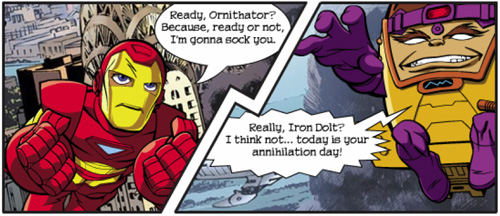
Marvel Comics has a Create Your Own Comic tool that lets you put together either a simple 3-panel strip or an entire 22-page comic book.  You don’t actually draw anything, but you choose layouts, backgrounds, characters and objects.  You can re-size everything and layer objects on top of each other.  It’s great for trying one’s hand at designing a layout that tells a story effectively.  So write your comic book and start designing!

National Film Board of Canada Releases Huge Film Library for iPhone App

Iphone-App_blanc_horizontal1

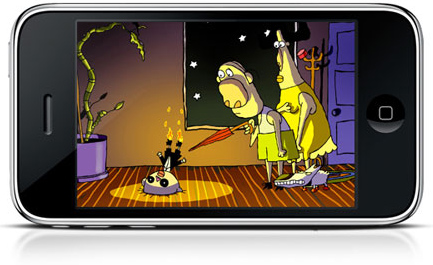
The NFB (National Film Board of Canada) has just released a new free iPhone app that lets you watch hundreds of their films.  You can use the app even while you’re away from hotspots by downloading films for viewing during a 24-hour period.  The NFB is one of my favorite places on the web for film.  They just do it the right way.  They make it easy.

This is an excellent way to distribute their huge collection of ground-breaking films.

You can get the app at the iTunes store.

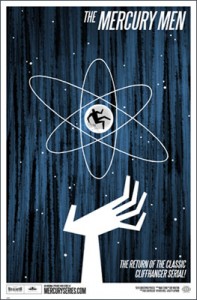
Online Science Fiction Serial: The Mercury Men

A science fiction web serial!  The Mercury Men.  This is amazing. I love stuff like this. A group of filmmakers are producing a series of cliffhanger shorts just for the web. The trailer looks very interesting, well-shot, exciting, and perfect for web viewing. These people seem to really know what they’re doing.

The director is Chris Preksta who made the Captain Blasto series.  The producer is Kati LightholderMark Tierno, who acted in George Romero’s Day of the Dead and will appear in the upcoming feature, The Road, plays the lead role.

I know it’s going to sound silly, but the Mercury Men Pictures logo with the light bulb is one of the best movie production logos I’ve ever seen.  I also love the way the trailer clip uses light and shadow to maximum effect.  And the alien is really creepy and looks amazing.

poster_previewThey even have this wonderful poster.

When people do this kind of work on the web they do it with limited means that require them to use real creativity in order to bring their vision to fruition.  It lends a sense of adventure and excitement to the endeavor which translates directly to the viewer.  This is something that is mostly lacking when you turn to a television.  Science fiction is going to have a fantastic golden age because of the web.  Keep watching.

Panoramic Image of Milky Way Galaxy

Two French photographers, Serge Brunier and Frédéric Tapissier, spent weeks in the desert highlands of Chile, and a week in the Canary Islands, taking photos of the stars. Using a Nikon D3 digital camera, they took thousands of photos of the night sky and then stitched the photos together to make a panoramic view of the Milky Way Galaxy as seen from Earth. The pictures are extremely high-resolution because the photographers took them from some of the darkest spots on Earth, giving unsurpassed clarity of view.

You can see an excellent interactive zoomable version of the image at photographer Serge Brunier’s web site.

You can also see a zoomable version of the image at Gigagalaxyzoom.

Edgar Allen Poe Digital Collection

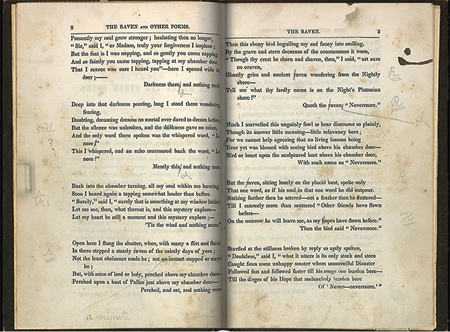
PoeRavenThe University of Texas has an excellent program online called The Edgar Allen Poe Digital Collection.  They’ve got digital copies of Poe manuscripts, letters, early editions, books that he owned, newspaper clippings, and photos.  This image shows an edition of collected poems owned by Poe in which can be seen his handwritten notes and corrections for the publisher.  Look at how pissed off he was about the word ‘Raven’ consistently appearing with a lowercase ‘r.’
Halloween is coming.  What better way to prepare than by reading some Poe?

Via Boing Boing

Harvey Pekar Web Comic

Pekar3Smith Magazine has another Harvey Pekar comic with drawings by Sean Pryor.  It’s called Searchin’.  I buy every book Pekar publishes.  His collected editions keep me fascinated for weeks because I try to read them slowly to make them last.

Pekar makes comic books out of the ordinary.  Of course they are much more interesting than anything Marvel has published in forty years.  He’s actually one of America’s finest short story writers.  No, wait, he is America’s finest short story writer.

Harvey Pekar Making Web Comics

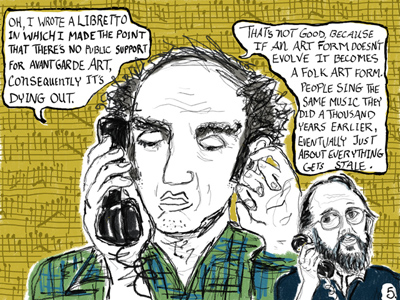
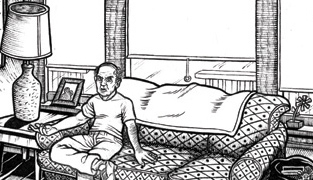
PekarProjectI don’t think there is a more significant American comic book writer than Harvey Pekar.  Now he is making comics on the web.  Smith Magazine offers the first installment of what promises to be a series.  It’s called The Pekar Project.
The first story is Pekar & Crumb: Talkin’ ’bout Art.  It’s drawn by Tara Seibel.

This might be the best thing on the web today.

Animator Nina Paley Releases Source Files for Sita Sings the Blues

Animator Nina Paley, who single-handedly made the feature film, Sita Sings the Blues, has released all of the Flash animation source files (.fla files) that make up the entire film.  She’s giving away the building-blocks of the entire film!  That’s like a traditional animator giving you all the drawings.  Paley has given the files a Creative Commons License which means animators can use her art and animation techniques in full or in pieces for their own projects as long as she is credited.

Sita Sings the Blues is a musical, animated personal interpretation of the Indian epic the Ramayana.

Amazon Shows Us Why DRM Must Go

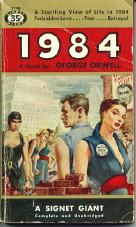
1984Last week, Amazon.com unwittingly dealt an enormous body blow to the concept of Digital Rights Management (DRM) by remotely deleting legally purchased copies of George Orwell’s Nineteen Eighty-Four from all Kindle ebook devices.  The excellent TeleRead site devoted to all things e-book and e-reader has a very well-considered post about the dangers of DRM and how we must protect ourselves against a world where customers don’t really end up owning digital copies of things they buy online.
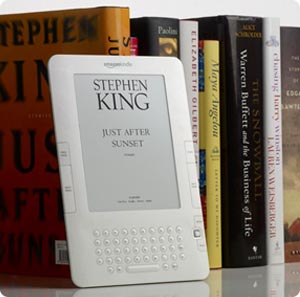
When Amazon can connect to your Kindle device and blow away the book you bought, it means that you never really owned it at all.  You’re a renter.  Get used to it.  Almost any online service you can think of that sells you a book or a piece of music can come into your device and zap your stuff.  They consider it their right to do so.  We need laws that make our digital purchases our very own property and forbid anyone from modifying or deleting them for any reason.

The TeleRead article draws the connection between the ability of a company like Amazon to zap books and government censorship.  Since the technology can zap books, it will zap books because governments will consider it an effective means of censorship.

Amazon Deletes Purchased Copies of ‘1984’ and ‘Animal Farm’ From Kindles

KindleWe have totally had enough of Amazon.com at Candlelight Stories and have completely removed them from advertising space on this site and permanently severed our ‘associate’ relationship with the company.  The reason is simple.  Over the weekend, Amazon went into customers’ Kindle ebook devices and deleted purchased copies of George Orwell’s classic novels, Nineteen Eighty-Four and Animal Farm.  Apparently, the U.S. owner of the novels’ copyrights either decided to change its mind about offering an ebook of the novels or complained about illegal electronic copies on Amazon.  So Amazon removed them from the site and then reached out into Kindle devices that are legally owned and whose owners had legally purchased Nineteen Eighty-Four and Animal Farm from Amazon’s own site and completely removed all traces of the novels from those devises.  I call it an eBurn.
What this means is that when you buy a Kindle ebook device you don’t actually own the device or anything on it.  Amazon does.  They can simply reach into your device and destroy any file they want to at any time, without your knowledge or permission.  I call that vandalism.  I think any company behaving that way should face a class action lawsuit and be investigated for violations of law.  I will not allow Candlelight Stories to engage in any further business with such a company and cannot recommend that anyone purchase a Kindle or any electronic file from Amazon.com whatsoever.  What Amazon did was basically like this:  imagine you go to buy a book for $14.95 at a Barnes & Nobel store.  Then Barnes & Nobel decides for whatever reason that they actually didn’t really want to sell you that book.  So they send an employee into your home while you’re out to remove the book from your bookshelf and leave $14.95 under your pillow.  That’s exactly what Amazon thinks it can do to you.  Appalling.  George Orwell must at this moment be laughing in his grave.  And the joke’s on Amazon.

Amazon has gotten into the habit recently of engaging in digital censorship and then apologizing once they get wind of a public outcry.  They then try to spin their bad behavior as a technical glitch that won’t happen again.  They have replied to this latest debacle by saying that it happens ‘rarely’ and that it will not happen again.  We do not believe them.  What this episode proves beyond any shadow of doubt is that the company can press a button and blow away any book you may have purchased.  Refunding the purchases simply does not make up for this grotesque behavior.  So, when you buy a Kindle, you really don’t own anything.  You are simply renting a little portable Amazon cash register that Amazon retains full rights to.  Companies like Amazon are building distribution systems that make censorship as easy as the press of a button.  How far are we willing to go in allowing just a few companies to control the distribution of most of our literature and reference material.  If that handful of companies decides it doesn’t like the politics of a certain kind of literature, it can blow it away completely by pressing a button or entering a simple code.  Book burnings have never been able to eradicate ideas so efficiently.  We now have something new: the eBurn.  No company that cared in the slightest for literature or for books would ever behave this way for any reason.  I am disgusted and horrified by Amazon.  I actually bought a television through Amazon.  Now I’m wondering if they can get inside it and delete my favorite TV shows.  My digital camera.  Can they blow away my vacation photos?

We have an excellent open-source web browser called Firefox, we now desperately need an open-source ebook device that allows us to purchase from any bookseller in any format available.  Hey, Mozilla, are you listening?

Oh, and by the way, here’s a technology writer to stay away from.  He actually says he thinks it’s a good idea for Amazon to sneak into Kindles and destroy books: Read his dimwitted comments on nothing other than C-Net.com.

But here’s a writer who understands the problem.

Here’s a New York Times article about the eBurn.

Interactive Moon Mission Underway

MoonMission

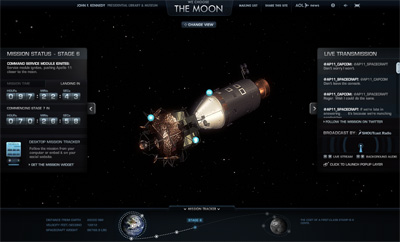
Yesterday I posted about the JFK Presidential Library’s interactive recreation of the 1969 Apollo 11 moon landing mission. The mission has now reached stage 6 with the command module at a distance of 22,000 nautical miles from earth. The site is doing an absolutely marvelous job of making you feel as if you are riding along with the historic Apollo 11 mission. They have all the real-time radio communications between the astronauts and Mission Control. So you can listen to exactly what was happening through every second of the entire mission! They also have video clips that fit the current point you are watching in the mission.

This was an excellent web idea and it is extremely well executed. I can’t wait until they reach the part with the Lunar LEM trying to find its landing spot on the moon!  Go see the We Choose the Moon site right away!

Real-Time Interactive Recreation of 1969 Trip to Moon

WeChooseMoon

At 8:02 am Pacific Time, Thursday July 16, the John F. Kennedy Presidential Library’s We Choose the Moon project recreates the launch of the Apollo 11 moon rocket.  The interactive site will recreate the entire mission to the moon down to the minute, complete with status reports, images, 3D animations and even Twitter updates.  The site is very  slick and recreates the anticipation before a launch at the space center quite well.  You even hear the seagulls flying around the launchpad as you watch the rocket on waiting for liftoff.

This is about as close to the moon as we’re likely to get for quite some time since the national ‘let’s go to the moon again’ quagmire persists in spite of the fact that Nasa has no more spaceships to fly once the shuttle heads for the junkyard.  The International Space Station is quite possibly going to be dumped into the ocean in 2016 due to lack of interest.  But a space agency that can run radio-controlled cars on the surface of Mars is at least doing something with its money.

YouTube Offering Citizen Journalism

A fascinating development at YouTube: The Reporters’ Center, where you can get tips on effective journalism from prominent reporters. The new YouTube channel went live today and is already offering some interesting how-to videos like the one above by reporter Nicholas Kristof of the New York Times. He shows you how to be careful when trying to interview war lords with big guns, how to hide your money, and how to always be a little skeptical and double-check witness accounts and stories that sound too good. Arianna Huffington of The Huffington Post has a video about the impact of citizen journalism best demonstrated by the recent uprising in Iran. During the past few weeks, the government of Iran tried to shut down the operations of journalists and restrict the use of internet and text messaging in order to suppress information about government violence against protesters. But they were not able to prevent people with cell phone cameras from making videos and sending them out of the country for the world to see. These people have also been reporting on the situation via Twitter to give real-time coverage of many events in Iran.

This movement toward citizen journalism is extremely interesting because it democratizes the press. Cameras in the hands of millions become a formidable tool for keeping an eye on government and limiting its ability to suppress information.  The press has always functioned like a fourth branch of the U.S. government, preventing the administrative, legislative, and judiciary from thinking they operate out of sight.  In fact, it probably wouldn’t hurt to constitutionally formalize the press as some kind of fourth branch!

Continue reading