Carl Jung’s Anima Projection


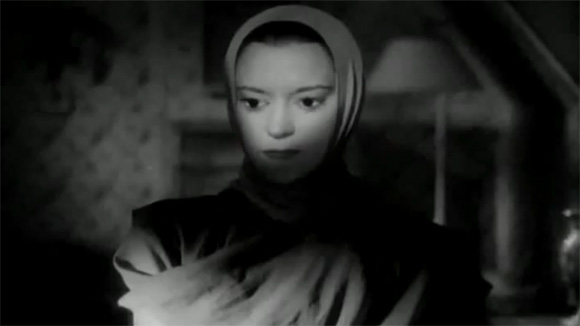
Here’s a short film made by YouTube user VioletPsychofluid. It features narration taken from an audiobook version of Carl Jung’s book, ‘Man and His Symbols,’ overlaid with various feature film and documentary clips that seem to illustrate the points made by Jung on the ‘anima,’ which is the feminine aspect of the male personality or psyche. I particularly like the inclusion of clips from Jean Cocteau’s film, ‘Orpheus,’ which is one of the greatest depictions of the underworld ever put on film. This is really magnificent work done by someone willing to upload into the wilds of YouTube, potentially unnoticed. The filmmaker is deeply connected to the subtleties of Jung’s thought and seeks out images that illustrate and compliment the very difficult to grasp ideas and theories about the anima. When I read Jung I experience great excitement about his ideas. But when I put the books down I have difficulty keeping it all straight and remembering what an anima or a projection represents. For me, it’s almost as if Jung’s work itself exists in a hazy dreamworld that only intermittently connects with logic, rationality or memory.
Hollywood Holidays: 1946 Documentary Short


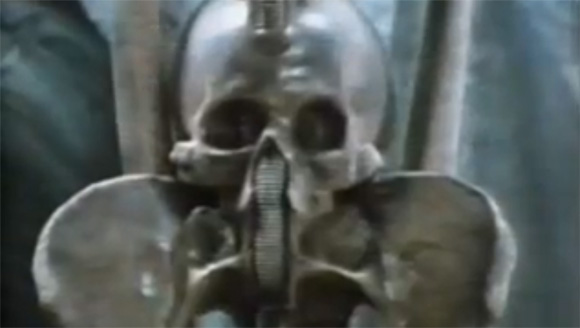
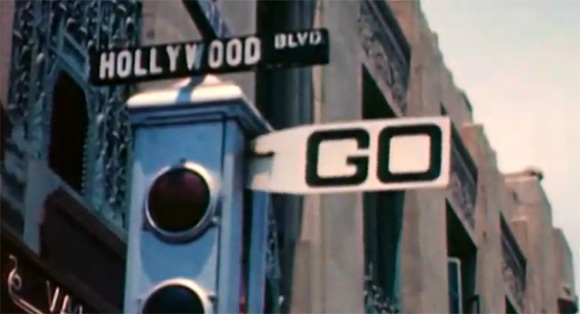
Imagine trying to make such a film today! The attempt to capture an area with a broad overview actually strikes me as an amusingly naive effort – except for the film’s witless touch of that casual Hollywood racism in part 2. Yes, come to Hollywood! Land of eternal sunshine and myth making. But whites only please!

The film eventually tries to justify its title with a few shots of Christmas decorations and clubs where New Years could be properly celebrated.

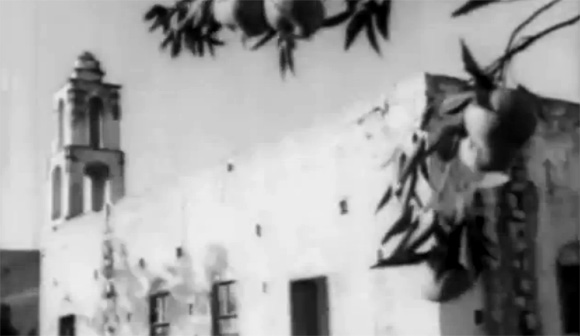
Short Documentary About Saint Nicholas, Turkey and Santa Claus


This short documentary seems to be from the late 1940s or early 50s. It was produced by the Turkish Broadcasting and Tourism Department to explain the connection between Saint Nicholas of Myra, which is in present-day Turkey, and the modern conception of the gift-giving Santa Claus who lives at the North Pole.

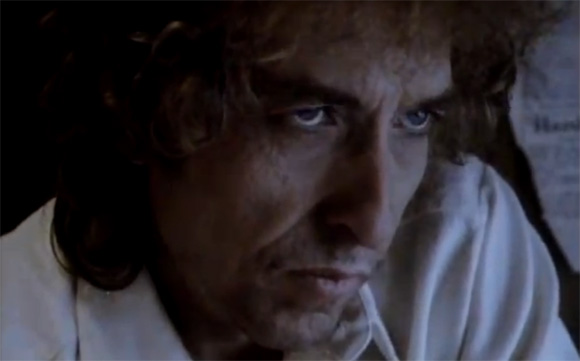
Bob Dylan Talks Music and Draws in a Trailer (1986)

Bob Dylan has always been in the enviable position of being taken seriously even when he is just messing around. God he must be fun to hang out with. I think he is one of the funniest human beings I have ever seen. He carries on here as if beginning an interview but he’s really drawing the interviewer with total focus and determination. He then proudly holds up one of the worst drawings I’ve ever seen in the long history art. But have you ever seen someone answer questions this way? I like the way in part 2 he predicts the sudden change in music about to happen when the kids who don’t like all the machine music of the eighties make something new in four or five years. He was predicting the emergence of the alternative scene and bands like Nirvana I think.

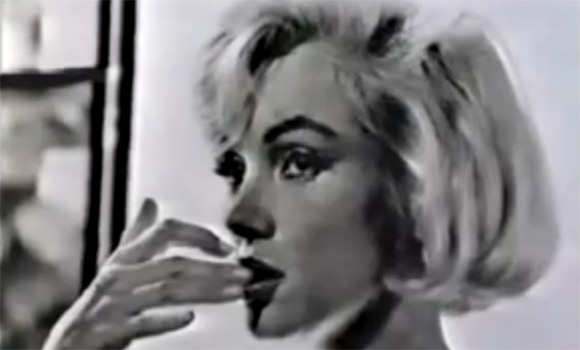
Marilyn Monroe – The Last Interview


This is the last interview Marilyn Monroe ever gave. It was for Life Magazine in 1962. The interviewer is editor Richard Meryman. The film includes various pieces of Monroe documentary and news footage. As she speaks, she seems delicate and somewhat forced in her cheerful girlishness. I’ve never given much a damn about Monroe. I view her as one of those totally false put-ons of sexuality that worked for a while because of the grotesque and revolting American male of the 1950s. Men were so totally warped about their own bodies and what they thought women should be that they were willing to worship one who walked out and turned them all into jokes. That’s Monroe – a vicious mockery of American sexuality in the 50s. She knew it and she couldn’t find a way out of the role she had chosen.

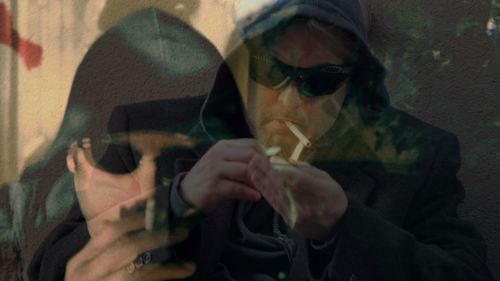
Detective City Angel: A Film by Alessandro Cima


MATURE CONTENT AND LANGUAGE
First, here’s a nice review and interview about the film at Dangerous Minds. Want to follow a secret identity artist through a dangerous Los Angeles as he escapes and hits like a criminal? Hang on and watch carefully. You may need to watch it 14 times to catch the drift. But you’ve probably got that kind of time anyway. This is a Los Angeles crime film. But it’s as if several films on celluloid fused together and what you end up with is an art film that gets overwhelmed by urban documentary and then collapses into a narrative thriller. It’s filled with hints, clues, evidence and misdirection. Images, ideas and sounds bounce off each other, mirror each other. There are secrets in this film. You have to watch carefully, through layers to catch things. I’ve tried to make a film that moves like disjointed thoughts toward the preordained ending. Continue reading

Crosscurrents: Film About Pacific Standard Time Art Exhibits Focused on Los Angeles Art From 1945 – 1980

Pacific Standard Time is a massive overview of Los Angeles art from 1945 to 1980. At least sixty galleries and museums are taking part over the next few months. I have already been to the largest exhibits at the Museum of Contemporary Art, Los Angeles County Museum of Art, and the Getty Center. The whole thing is a lot of fun and I have discovered artists I never knew about before. There are magnificent things on display and the curators have also published big books to go along with each exhibit. I seriously recommend that you always get the books because they have far more information in them than the exhibits themselves. I view it as my own effort to compile a record of this unique regional art show.

You can find almost everything you need at the Pacific Standard Time web site.

This film was put together for the Getty Center’s flagship exhibit, Crosscurrents, which covers 1950 to 1970. It’s a very nice little documentary about some of the major art developments in Los Angeles.

The Mad Ones: A Brief History of the Beat Generation

Krystal Cannon (PersonTV) made this short documentary about the Beat Generation in which she not only narrates as Queen Elizabeth, but also plays various roles including Allen Ginsberg, Joan Vollmer, Bob Dylan, Jack Kerouac, John Lennon, Edie Sedgwick and Abbie Hoffman. She gives a clear account of the Beat movement then moves into the general social reaction. She also makes some very interesting points about how women were sidelined even though many of them made great contributions to Beat culture. I think that what the Beats were working on is in very fine hands indeed with Ms. Cannon at work.

Thanks to Marc Campbell at Dangerous Minds.

Behind The Wall: The Battle for LA’s Murals

Oliver Riley-Smith made this short documentary about the disappearing mural art of Los Angeles. It features a prominent muralist complaining about how murals have been ‘bludgeoned by graffiti’ and ‘censored by the city.’ Perhaps so. The city does make it difficult to get permits for murals. But I don’t really like murals. They tend to be stiff and unoriginal. I like the murals that have been vandalized by the graffiti artists. Sorry but I do. They are much more interesting than the clean murals which are entirely unimaginative and offer nothing to move art in any direction whatsoever. If muralists want to preserve their images, they should paint indoors. Look at the mural on the highway underpass wall that’s covered with graffiti at the 42 second mark in the film. Beautiful. Much better than the mural ever was. The muralist in the film says, ‘Museums are for the dead. I want life.’

Bullshit.

There’s a guy in this film called ‘Ghost One.’ I like what he says about art.  He’s realistic and open to whatever comes along.  He says that taggers mark up murals because they assume that their marks will have more longevity that way. That’s a very interesting thought. An artists seeks longevity by making his mark inside the work of another artist. Fascinating. Much more interesting than the murals. Such thinking shows possibility.

But then the film draws the two sides together and our muralist says he ‘hopes our two styles can work together.’ Well, they can’t really, but it’s a nice thought.

Robert Frank Film of The Rolling Stones

It’s all very confused and mysterious. In 1972, the Rolling Stones hired photographer and filmmaker Robert Frank to make a film about their American tour. He made something wonderful called ‘Cocksucker Blues,’ which immediately angered the Stones because it actually showed them to be the ultra coolest and baddest band in the world. They sued him to keep the film out of circulation. Go figure. Why would you sue a guy for making the one absolute piece of evidence that you are what you say you are: ‘The greatest rock & roll band in the world?’ Well I don’t know the answer. Drugs and addled minds perhaps. This short film is actual footage taken by Frank on Super 8 cameras. It’s been edited by someone called Videodrumz on YouTube and put together with ‘Rocks Off’ from the ‘Exile on Main Street’ album. It’s good. It works. The footage is absolutely recognizable as Frank’s.

The Dystopian Trilogy: A Film by James Schneider

James Schneider made ‘The Dystopian Trilogy’ in 1993, mainly through the use of found footage. Its three parts, ‘Faerie-Monition,’ ‘Oasis,’ and ‘Median Strip,’ convey modern Americans’ infatuation with closing off entire communities from the rest of the world for some theoretical benefit. The first part deals with the corporatization and homogenization of imagination through eerie footage of Euro-Disney. The second part focuses on a gated community near Las Vegas. The third contrasts and connects the freedom of the modern highway to the growth of our prison system and the fast-growing outrage of private prisons run for profit. This last part, when seen in light of today’s use of immigration law to fill corporate-owned prisons with people who are turned into a slave workforce, is particularly frightening.

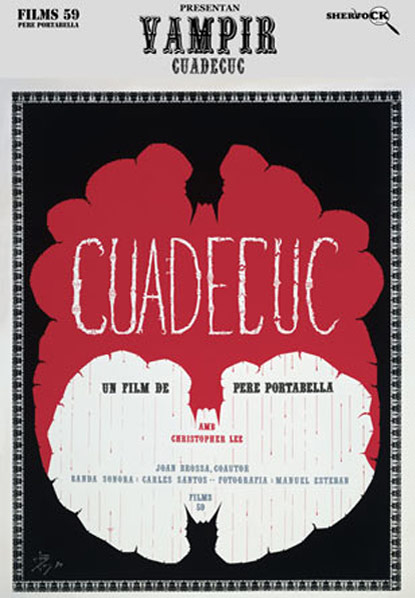
Cuadecuc, Vampir: 1970 Spanish Underground Dracula Film Shot as Attack on General Franco

Here’s an extremely rare underground Halloween treat for anyone who loves film.  Ah, but only the very fewest of you will actually watch this all the way through! Give it a try. Not only is this film underground… it’s underhanded. Pere Portabella made ‘Cuadecuc, Vampir’ in 1970 by filming on the set of a Christopher Lee film called ‘Count Dracula’ that was being directed by Jesus Franco.  Portabella’s underground classic is on its surface a silent horror film. But it’s also a documentary about the making of the Dracula film.  It tells its story by stealing scenes from the feature being shot around it, almost as if the film were a mashup of existing footage! The high-contrast black and white photography evokes such cinema greats as Carl Theodor Dreyer’s ‘Vampyr’ and F.W. Murnau’s ‘Nosferatu.’ We see typical horror scenes like a stagecoach racing through the wilderness, or a dusty crypt, interrupted by the arm of a prop person using a fan to blow fake spiderwebs or a cameraman shooting from behind furniture. These slippages from horror into documentary actually produce a weird terror when you realize that the film was being shot under the watchful eyes of Spain’s dictator, General Francisco Franco.  What the film really is underneath all the fantastic and disturbing imagery is a vicious attack on Franco and the false media manipulation that keeps all dictators in power.  The portrait it paints of Franco himself is one of a sad, disturbed and largely ineffective vampire who lives inside a mental construction based on the past.  The other characters in the film seem to be wandering through this psychotic realm, trying to find a way out.

The soundtrack incorporates jet engines, muzak, electronic music, opera singing, jackhammers, stuck records and various other electronic sounds. Don’t let this throw you because the soundtrack is one of the most eerie and unsettling that you will ever hear.

And I’m thinking that Criterion needs to jump on this and make a nice blu-ray release out of it.

Pere Portabella has a web site.

Now, just for kicks, here is a scene from the actual color film of Dracula being shot while Pere Portabella stole his own film right under Christopher Lee’s nose! You decide which film seems scarier.

Four Reasons to Support Occupy Wall Street

Yes, deregulation of the banking industry has led to absolute chaos and total criminality. It is abundantly obvious. The presidents serving since 1980 have been completely owned by corporate lobbyists, as have all senators, representatives and Supreme Court justices. I have arguments with some of the tactics of Occupy Wall Street, but I think they are very minor compared to the overall message. The separation of government from corporations has become an urgent necessity and does in fact require a mass movement of people across the placid lawns of government. Politicians should be examined for any corporate connections whatsoever and immediately dismissed if they fail the test. Corporations should be checked for any attempts at electoral influence. A Constitutional amendment that declares corporations to be nothing more than legal abstractions and forbids them from influencing the federal government is essential. After all, corporations seek to produce products at the lowest possible cost and currently do so by using concentration camps in China. They would gladly build those concentration camps in the U.S. if it was cost-effective. Such entities cannot be allowed the slightest influence on American politics. We may be forced to totally ban all political contributions that do not come directly from an individual person.