Weird Tales: Reaping

CandlelightWeirdTalesLogoBy Pam Farley

Pamela Farley is an Australian author of dark fiction. She is a member of the Australian Horror Writer’s Association and has had more than a dozen of her short stories published in magazines in Australia and the UK. Pam lives in rural South Australia with family and assorted animals. She works in a country veterinary practice.

http://www.lulu.com/spotlight/PamelaFarley

Today’s weird tale takes us to a remote farmhouse… at night.  The power goes out… Where are the matches?  Where’s the cat?  What’s that glow through the trees?

Adult Themes

Reaping

Samantha had been away for the weekend with her girlfriends. The break had been fun and all the girls were still laughing raucously when they dropped her at the gate. Her small farm house was ten kilometers from town, and in the still rural-twilight the din the girls made seemed to linger in the air.

As she got out of the car Samantha could hear the telltale clinking of empty Cruiser bottles rolling around on the car’s floor. The girls were singing, loud and off key while she got her bag from the boot. When the tooting vehicle departed there were limbs flailing from all four windows. The car turned at the end of the road and disappeared. Darkness came on suddenly, accompanied by a cool wind. Samantha swayed and clutched the gate post. The three drinks she had gulped down in the last hour had gone to her head. She gave a giggle.

The sensor light failed to come on when Samantha walked to the porch. The area was in shadow and she couldn’t see a thing. She tripped on the metal boot scraper by the door and swore. It was sheer luck when the key in her hand found its way into the lock, and the back door sprung open.

It was darker in the house than it had been outside and Samantha’s hands fumbled along the walls from memory, but there was no response from any of the light switches. More obscenities sprang from her mouth as she realized that the problem was within the fuse box outside. By bumping and feeling her way to the laundry she located the torch on a shelf next to the clothes dryer.

‘At least this still works,’ she muttered to the night.

But the globe glowed dim and she knew it would not last for long. She rushed outside to check the fuses. Panic had rendered her sober and dexterous. A systematic check of the old porcelain plugs soon helped her to identify the blown one. She re-threaded it with the fine steel wire kept inside the power box. But when she replaced the plug and threw the switch there was a loud bang as it blew again.

Continue reading

Image Showing The Top One Million Web Sites

This is a visualization of the top one million web sites in the world according to Alexa traffic data.  You can go to Icons of the Web at NMap.org to search for domain names that might be included in the image.  Candlelight Stories is there!  We are ranked 517,582 in the world!  So our tiny little flame logo is buried in there just below the lower right corner of the big CNN logo on the righthand side of the image.

Check it out.  It’s fun.

Animation: Call of the Cthulhu In Under 2 Minutes

In general, I am deeply suspicious of the web trend for geeks to head toward steampunk, octopuses, and all things Cthulhu.   There’s a vague and creeping racism underneath the cute old-fashioned, brass-fitted surface.  I’ve also held a certain amount of contempt for H.P. Lovecraft. I think the guy was a closeted white supremacist with a knack for telling horrifying tales that are about white supremacists.  I can imagine him as Sarah Palin’s favorite author… if she reads.  The Cthulhu stories are genuinely frightening and his writing does contain a high creep quotient. But I’m just about ready to launch DOS attacks on sites that dig every alien octopus that shows its tentacles.

This, of course, is Lovecraft’s Call of the Cthulhu in under 2 minutes. It’s very well done and I like the use of the newspapers to move the story. Declan Moran made it. He also made Dante’s Inferno in Under 2 Minutes.

Why I Think the New York Mosque Near Ground Zero is Good

Today, I found out, purely by accident, that I am connected to the ‘ground zero’ mosque in an unexpected way.  First of all, ‘ground zero mosque’ is a terrible name.  The building is not on ground zero.  It’s a couple of blocks away.  It’s simply a New York Islamic center.  I lived in New York for many years and I know perfectly well that lower Manhattan is tiny.  Everything is near ground zero!  For weeks, I have been reading articles about the plans for converting a building in lower Manhattan into an Islamic center and the accompanying controversy, based in large part upon the notion that an Islamic center close to ground zero somehow insults the memories of the 9/11 victims.  I have made my thoughts on the virulent anti-Muslim bigotry spreading across the United States and Europe very clear in an earlier post.  This form of bigotry is going to be seen eventually as one of the great shames of the early 21st century.

During my web travels this morning, I came across a Salon article about how all the fear-mongering surrounding this Islamic center got started.

Here’s a quote from the article:

Dec. 8, 2009: The Times publishes a lengthy front-page look at the Cordoba project. “We want to push back against the extremists,” Imam Feisal Abdul Rauf, the lead organizer, is quoted as saying. Two Jewish leaders and two city officials, including the mayor’s office, say they support the idea, as does the mother of a man killed on 9/11. An FBI spokesman says the imam has worked with the bureau. Besides a few third-tier right-wing blogs, including Pamela Geller’s Atlas Shrugs site, no one much notices the Times story.

Well, as chance would have it, Imam Feisal Abdul Rauf is the older brother of my very best friend throughout my teenage years.  I grew up in Washington, D.C. where Mr. Abdul Rauf’s father was the director of the Islamic Center.  It is a beautiful mosque located on Massachusetts Avenue in Northwest D.C.  I spent many of my days there in the seventies and early eighties because my friend’s family had their apartment inside the center.  Those were days filled with the adventure of young minds trying to explore and figure out what they were going to do in life.  I was – and still am – a non-religious liberal-minded fellow, more interested in riding bikes than attending services.  My friend was the youngest of three brothers and he was very intelligent, rather sensitive, but always an irritatingly persistent arguer on almost any topic we could find.  We’d argue on buses, in cars, walking through D.C., watching TV, going to movies, playing football – just about anywhere was a good spot for an argument.  I spent many weekends there at the Islamic Center playing soccer with my friend and the young men who worked there.  They tried to teach Backgammon to me down in the basement of the mosque where they smoked in secret because if Mr. Abdul Rauf found out about it they would have been in a little trouble with him.  The father took his work seriously.  But he was a gentle and kind man.  He treated me like his son.  I had many dinners at home with the family and Mr. Abdul Rauf never once tried to make me feel bad for not being a Muslim.  He would answer my questions with simplicity and understanding.  He would tell some little stories in order to illustrate a point.  I was always told that he spent much of his time studying the Holy Qu’ran and writing books about it.  I was amazed by his library of books.  His office was a quiet place where books were piled and papers were spilled across his desk.  I liked this man.  He was reserved and slightly imposing, but profoundly kind and he took care of everyone I ever saw him come into contact with.

My friend’s father knew that his son and I had developed a keen interest in Super 8 film cameras.  He invited us to come into the mosque for a wedding ceremony and he said we could film it.  We were to be the chroniclers of a real Muslim wedding!  We prepared for this over several weeks.  My friend taught me the ways of showing respect in a mosque.  He showed me the beauty inside a mosque.  I felt comfortable there even though I didn’t have a religious bone in my body.  Frankly, I felt more comfortable there than I’ve ever felt in a Catholic church.  Much more relaxed.  And the beauty is of a much less imposing and ostentatious nature.  The beauty is subtle and serene.  Like water.

So my best friend and I filmed his father performing an Islamic wedding.  We felt very much in charge of what we were doing and we did the best job we knew how.  I always felt proud that I had this connection to the mosque and its activities.  There were plenty of other occasions the family invited me to.  I even helped them prepare for some of the big feasts and celebrations.  I’d haul dessert trays and pile foods onto tables out in the courtyard.  I’d help clean the family apartment after some big gathering or dinner.  Then my friend and I would sneak into all the leftovers when his parents were asleep.  I believe that this was where I had my first taste of a magnificent dessert called baklava.  It was a good time then and I had experiences that are very rare for an American boy who doesn’t worship a god.
Continue reading

Film: Sweetheart

Here’s a music video made entirely out of illustrations, photos, and text from second-hand books! I never watch music videos all the way through. But I watched this one and admired its clever associations of images to lyrics. It’s all spelled out for you in the most charming and humorous way.  Good song too!  Ben Reed made this for a band called The Wave Pictures.

Art: Don’t Look Now!

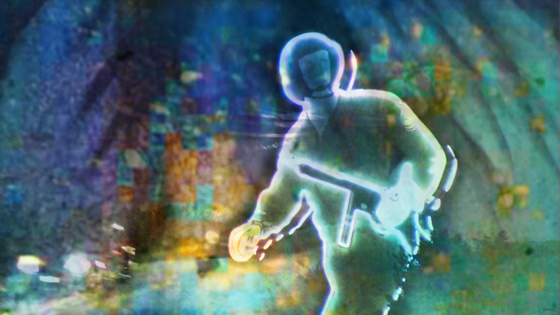
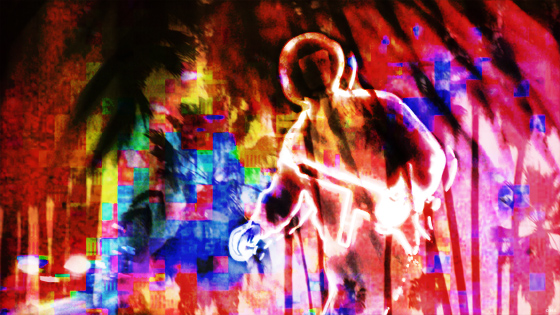
This is the latest version of a print I’ve been working on that’s loosely based on my Yellow Plastic Raygun film. I printed what I thought was my final version on a large canvas and looked at it for several weeks until I decided that it was timid and boring. So I went back to work and tried to let loose with the image and not worry about mooring the thing in some kind of reality. So this is what I’ve got to show for the effort. I like it much better this way.

I also renamed it from Don’t Turn Back to Don’t Look Now!

Here are the first two versions of the print.

Art: John Baldessari Designs iPhone App to Rearrange Crappy Dutch Painting

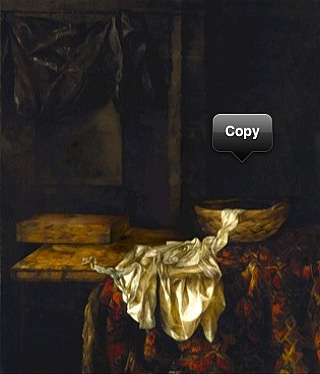
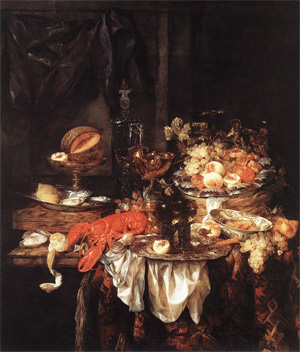
Artist John Baldessari has designed a curiously dopey iPhone app that allows a user to rearrange most of the objects in a 17th century still life painting called Banquet Still Life, by Abraham van Beyeren.  Looking at this mess of a Dutch painting is like being beaten about the eyes with a hammer.  But Baldessari is promoting his huge current retrospective, Pure Beauty, at the Los Angeles County Museum of Art.  The show is extraordinary.  If you are in L.A. between now and September 12, you should certainly go see it.

The app is called In Still Life 2001 – 2010.

This is the still life I came up with on my iPod Touch.  I got rid of all the annoying little objects and just kept the good part of the painting. But my main question is, who painted in the parts of the background that are hidden in the original? Baldessari? That would be mildly amusing. Frankly, it would be more interesting than the app. Original missing parts of 17th century paintings by John Baldessari!

Here is the horrific original painting:

Posted in: Art |

Can a Video Game be Art?

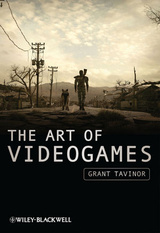
Here’s a relatively uninteresting article by Grant Tavinor called Video Games and the Philosophy of Art.  Can video games be art?  I don’t know.  Can a tree be art?  Can a car be art?  Can a rear end be art?  Certainly, under certain circumstances they can all be art.  But forgive my asking why do people spend so much time discussing a question that is equivalent to, ‘Can a hairbrush be art?’

In most cases I think a video game can only be art because of the player.  Any video game, no matter how crappy, can be art in the hands of… well… an artist.  Artists make art.  If you ain’t an artist you can’t get no art.  An artist can load up a copy of Grand Theft Auto on their Xbox 360 and walk into that gigantic world of violence and stand perfect still on a virtual street corner doing nothing but stare at a lamp post for days on end and turn that video game into art.  It’s magic.  Not theory.  Magic.  You know it when you see it.

Here’s a film with my own use of a video game as art.  Well, I think it’s art, but you may think it’s idiotic.  Check it out.  You’ll know it when you see it.  It contains extreme violence and nudity (just like video games!).  It’s intended for an adult audience. There’s my disclaimer.  Here’s the film.

Art: Don’t Turn Back (Two Versions)

Don’t Turn Back (Final Version)

Don’t Turn Back (First Version)

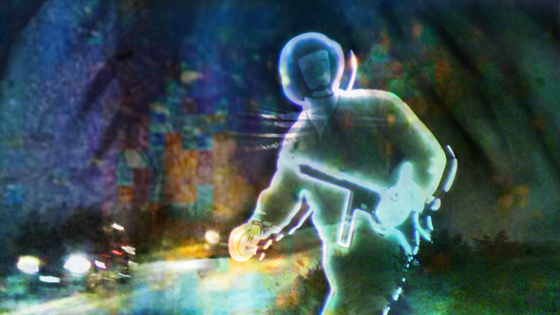
Here’s the little art problem I’ve been working on for the past few weeks.  It’s one of those things where I have no theory or rule to fall back on in order to make the decision.  Aside from some small touches like removing the Sergeant stripes from the figure’s shoulder, I was mainly trying to decide whether the right side of the image should be dark or light.  Ultimately, after scrutinizing the picture from a distance time after time, I decided that it was more dramatic if it depicted a night scene and if the figure was moving away from a more painterly zone toward a more digitized one.  I also made the road on the left a little more defined.  But canvas isn’t that expensive and I might just decide to hang both versions right next to each other in a gallery.

My own favorite part of the picture is right around the figure’s legs where you can see through to the landscape with that slight glow on the ground and how the shrubbery overlaps the neon line of the leg.  The image is about fear.  It is also connected directly to Jean Cocteau and the myth of Orpheus.  The figure looking back is from a single frame of video I shot of a store sign while walking along Hollywood Boulevard at night.  The road is a sharp bend in Laurel Canyon Boulevard near Mulholland Drive above Los Angeles that I shot through a windshield.  The background landscape is a shoreline I shot from a moving car near Rehoboth Beach, Delaware.  The dark palm fronds hanging down are from some throw-away footage I shot in high winds.  The pixelation is the product of blowing up a frame of a digital copy of decomposed celluloid film until the digital artifacts became pronounced.  I made all of these things individual layers and then went in with a digital pen and worked on a trial and error basis to make things come out the way they did.  What is interesting to me about making such an image is how I begin with an initial image – the glowing figure – and shuffle parts of other images on top of and underneath it to build a new image.  It requires an extreme confidence that you will know what you need exactly when you see it.  So you start going through piles of video or photos both on screen and in your head and pull out the pieces that snap into place for a new picture.  It’s like walking up to a leaf on a tree and taking it as the basis for a painting.  You know that from the leaf you will be able to connect to other things and end up with exactly the right final result.

This print measures 68″ x 38″. It’s an original work created from elements used in my film Yellow Plastic Raygun.

Art: Don’t Turn Back

Don’t Turn Back

This is my next large canvas print.  I’ve been making original artist prints through a gallery in Los Angeles. They measure 68″ x 38″. They are original works created from images used in my film Yellow Plastic Raygun.  They are not exact frames from the film, but rather artworks based on segments of the film.

Art: Digital Prints on Canvas

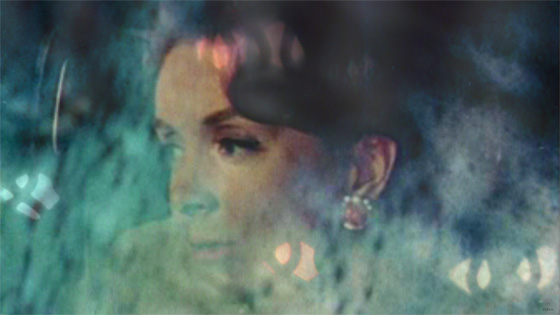
I Was Thinking

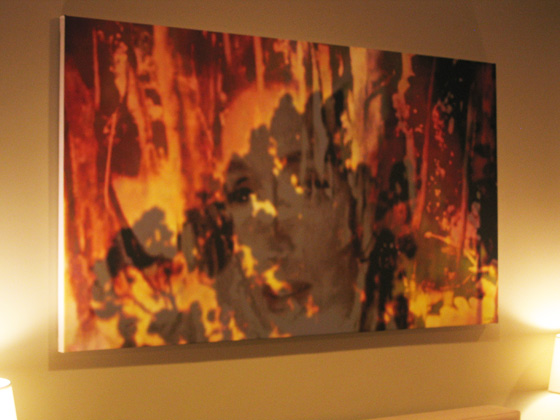
I’ve been making large original artist prints of these images through a gallery in Los Angeles. They measure 68″ x 38″. They are original works created from images used in my film Yellow Plastic Raygun.  They are not exact frames from the film, but rather artworks based on fragments of the film.  I make the film, then I mine it for artworks that will stand on their own.  So the film becomes a sort of a paintbox or a scrapbox that I dig through and manipulate.  I could go on working like this forever.  It’s an endless trove to explore.

Wave Rider

I Was Thinking hanging on a wall: