Film: Objets Oubliés

Italian filmmaker, Fabio Scacchioli, works with zero budget and creates masterpieces of Italian cinema.  I think the great movement of cinema in the 21st century is underway and it looks to me like Italy is riding the top of the wave.  We are finally reaching the point where an artwork is created with a ‘zero budget,’ just like a painting is.  Picasso painted for just the cost of his canvas, his paints, and his own time.  Filmmakers can now work the same way, enjoying the privacy of their studios and making things with their hands and their computers and their cameras.  Filmmaking has finally become a visual art.  Online cinema is the most powerful movement in all of art today.  It is alive and aware of its potential.  Artists like Scacchioli are going to take it very far indeed and they are going to become the Picassos of the future.  It is time to start paying attention to this cinema, not as a silly form of entrance into the moribund feature film studio career, but as a major art form in and of itself.

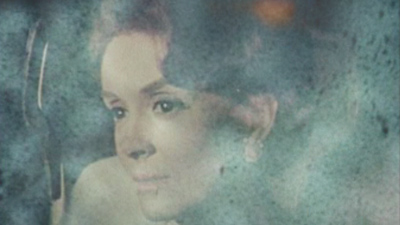
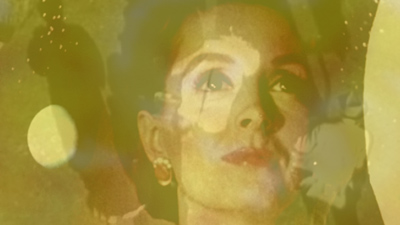
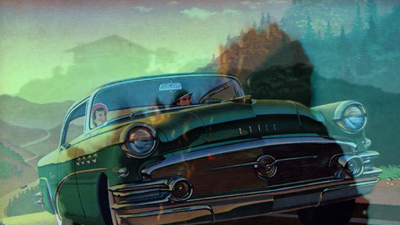
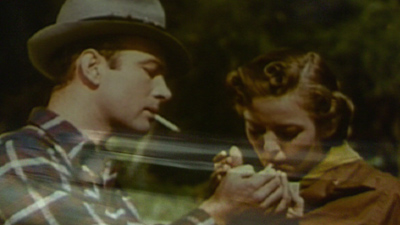
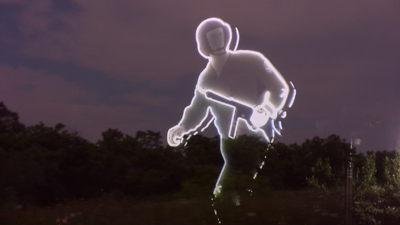
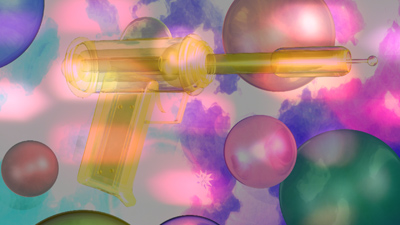
This film, Objets Oubliés, is built upon four pieces of film found on the street.  The filmmaker attempts to connect the unknown images into some sort of coherent whole.  The narrating voice exists only in relationship to this attempt to create life and continuity from unknown materials discovered by pure chance.  There is something like a form of grace and true love of film or cinema in this act.  It seems to me to represent the very life of film.  It also seems like an effort that would quite obviously and most certainly originate in Italy.  It is mindful romance.  It is the literal taking of the baton from an unknown hand and carrying it forward to make something unexpected and marvelous.  One person makes something without knowing it is part of an artwork that has not come into existence yet.  But it will and it does.  The artist comes along and picks it up and shows us that the artwork existed even before he arrived.

Film: Look at that fire! Oh boy!

Sit down, turn off your cell phone, close the door. You are about to see something magnificent. Several days ago, I posted a film, Yellow Plastic Raygun, on Vimeo. And today I catch this big fish of a filmmaker from Italy who made a comment about the film and who has made a gorgeous and moving statement about war and destruction. It grabs you and just won’t let you go until it finishes.  The use of old images, combined, layered and cut into pieces to form new images and artworks fascinates me when applied to video.  This is an example of the art form at its finest.

Fabio Scacchioli made this.  He’s made others, but this is the first one I’ve viewed and I’m convinced already.  Italy appears to be very healthy in its cinema heart.

The filmmaker has a web site.

Film: 21-87

Another film by Arthur Lipsett, the filmmaker who is the subject of an upcoming animation by Theodore Ushev. This one is called 21-87 and it’s a masterpiece.  It seems to have something to do with trying to see how people are deadened somehow by the modern world.  The filmmaker uses documentary clips in a mix-up with collage audio that unsettles the viewer.  What is this life force behind us?  And why do we keep trying to behave like machines?

Film: Very Nice, Very Nice

Here is a well-known film by Arthur Lipsett, the filmmaker who is the subject of an upcoming animation by Theodore Ushev. It’s called Very Nice, Very Nice. It features a layered collage soundtrack with still photos and film clips. It conveys a general sense of unease and remoteness in urban people of 1961. I like it with the possible reservation that it relies too heavily on photographs. I think it’s very tricky to use still photos in a film and pull it off and I’m not sure that Lipsett is entirely successful.  It’s good, but has a static quality, a reserve that I don’t fully admire.  The filmmaker is too well-behaved and does not pull the trigger.

Yellow Plastic Raygun: Film Images

For Only Your Eyes.  These images are from my upcoming Yellow Plastic Raygun.  Distilling single frame images is almost as much fun as making the film.  What kind of a film does it seem like?

Traffic Flow

Wave Rider

Planetary Intersection

War Drive

Hairpin

Whatever You Do, Don’t Look Back

Telefog

Gun Sight

Vision Rays

Mourning Sun

Jonas Mekas Film: As I Was Moving Ahead, Occasionally I Saw Brief Glimpses of Beauty

Jonas Mekas is one of our great independent filmmakers. He spent years writing a film column in the Village Voice. He founded the Anthology Film Archives in New York City. He makes lots of films with small cameras that he can carry almost anywhere he goes. That is, by the way, how filmmakers should be working today. If a filmmaker needs a truck, he or she is making a commercial.  I found this via the exceptionally brilliant underground film site, Bad Lit.

Stan Brakhage Film: Water For Maya

Stan Brakhage was one the most important experimental filmmakers of the 20th century. He used many techniques to make his films, one of them being direct painting on the film itself. This is one of his pieces from 2000. It is very beautiful and goes through several distinct movements during its short length.  I am going to post some more examples of his films because I think they capture an essential quality of an artist’s happiness that must be very rare.

Film: Revisit November North Five

Here’s a new film for the film fans who happen to stumble by. It’s a film about memory shifts, searching, losing something, trying to find the old image, trying to regain an old feeling or impression, capturing a season of life or the mind. As if one were thinking, “I can almost remember how it was and what we did that day so long ago. Where were we again? North somewhere? It was dark? No, the sun was out… wait, it was cold… I think.

Paris Filmmaker in 1929 Shows Us What a Camera is For

This is an odd post and I’m not entirely sure I can pull it off. The film above is called Montparnasse. It was made in 1929 by Eugene Deslaw.  I watched the film and want to write about it cold, without looking up Mr. Deslaw on Google.  I’ll check up on him after I’ve posted this and see if I’m even in the ballpark.

Watch the film all the way through.  If you think it’s just a collection of boring tourist shots in Paris with nothing happening, then stop reading and leave now because this post is for the four out of one hundred who catch the drift of the camera work.  Deslaw was shooting in the Paris of Pablo Picasso and Matisse.  He appears to have had a close connection to art and the cafe life of the city.  His film is full of odd angles and closeups.  He runs up onto a balcony in order to shoot straight down at some tabletops.  He catches a woman applying makeup at about the 13-minute mark and makes a shot that is worth paying for.  He films traffic and buildings, windows, curbs, chairs, newspapers, smokers, drinkers, snake-handlers, paintings, and water.  He’s fascinated by his city and by his camera.  He’s making art.  He set out one morning with his camera and went around making art.  Everyone was happy to be alive there in Paris in 1929 and he was playing his part in it.  Films made at that time tend to have this cheerful experimental quality.  Deslaw is nearly drawing with his camera.  It’s an immediate act of finding visual meaning.  He was walking and was struck by something and filmed it in an excited state.  He was consciously being an artist.

The film he made is beautiful.  It’s very hard to make a film with its kind of beauty today.  Think about it a little.  What would you do?  Go to a Best Buy and look around for a brand new digital camera.  You know, one of those shiny silver things with the HD viewfinder and all the buttons.  One of those?  Then what?  You’d march out into the neighborhood with this gleaming tourist gizmo and look like a ninny bending over to film trash as it floated down into a storm drain?  You’d walk up to a guy behind a news stand and ask to film him?  Really?

Yes.  That’s what you’d do.  You’d get a little camera and do just that.  And here’s your assignment: you must do this with the total conviction that you are about to make the greatest film ever made about your subject matter.  Set out for a particular street corner and make a magnificent short film or a long one about that corner and everything on it.  Spend an entire day doing only that.  Skip lunch.  Just stay there and make your film without ever entertaining even the slightest doubt that you are working on something of incredible importance and value.  It’s going to be very hard to do.  Some people will walk by and giggle.  Some will become belligerent and tell you to stop.  Film those people.  Run away if they chase you.  Then come back and continue your work.  Remember that you are an artist on a mission to make something and absolutely nothing will stop you.  Then come back home and figure out how to edit it and then put it online.  Tell me about it even and I’ll watch it.

In 1929 it would have been recognized by the maker of this film that a camera is a camera and it will make your film if you want it to.  Ever wonder why you don’t ever see Steven Spielberg out and about with his little camera making a movie for himself?  It’s strange isn’t it?  Could you imagine Pablo Picasso or David Hockney never carrying a sketchbook to make some quick pictures while having coffee or dinner?  I couldn’t imagine such a thing?  So when was the last time you ever heard of a Spielberg or Scorsese out with a camera making little films for their web site?

You could almost think of all the decades of massive budget film production and the studio structures built to support the film industry and film schools as an organized effort to confuse the issue and make people forget what a film actually is.  We think of screenwriters and producers and agents and superstars and all the talk shows.  But it’s very hard for the artist to walk out with the camera and go make a film the way a painter would work alone on a canvas.  The Montparnasse film should help to illuminate the proper use of the camera for anyone who’s interested.

The film comes from UBUWeb
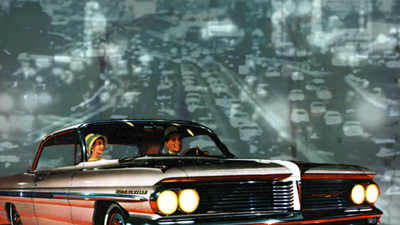
Animated Film Velocity in Newgrounds Treasure Hunt

Our animated film, Velocity, has just been featured as a Hidden Gem in the Newgrounds Treasure Hunt experimental films category. The Newgrounds site is the best Flash animation and gaming site in the world because it is open to all comers. Submissions are then voted on by the viewers and stay in the library if they maintain a certain level of popularity. Being picked as a ‘Hidden Gem’ is an honor and we are proud to have our little film there.