Histoire(s) du cinema: According to Jean-Luc Godard

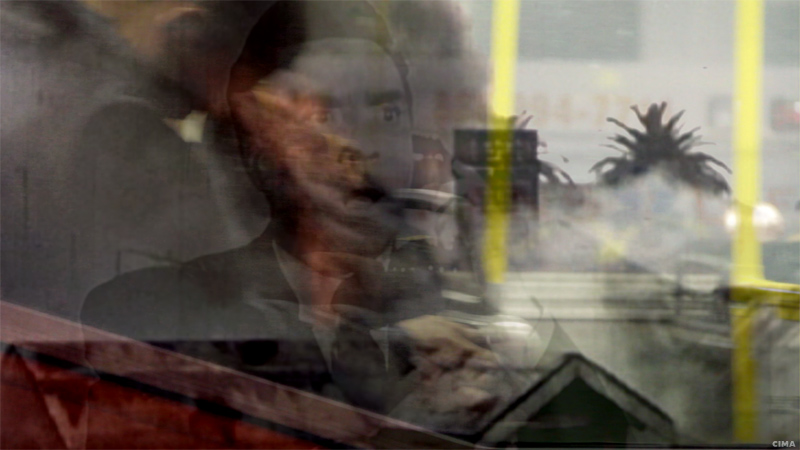
Between 1988 and 1998 filmmaker Jean-Luc Godard made a film called ‘Histoire(s) du cinéma.’ Though it purports to be a sort of cinema history, reflecting on how cinema intersects with the 20th century, I think it is more likely a vision of how cinema works in the mind of one filmmaker. The images drift in and out, overlapping and complimenting one another just as they would in the mind. Don’t look for accuracy or understanding. Just watch the film. It’s very difficult to find pieces of this lengthy work online. But these are three good chunks and they certainly stand up as a taste.

More about the film at Mubi.

Seizure: A Magnificent Cry for Art by David Vaipan

At the start, I’ll say that this is one of the most magnificent films I have seen in years. David Vaipan has made this relentless and fully-committed scream of artistic intent, desire, confusion, effort and love. This is a film about being an artist. It is a film about fear and confidence. About effort, will and failure. Vaipan simply takes the entire history of art and all that it has given him and dumps it out on his desk and turns it all into his own material. All of art, music, film, literature and poetry become Vaipan’s crayons and he uses them to tell his own personal story.

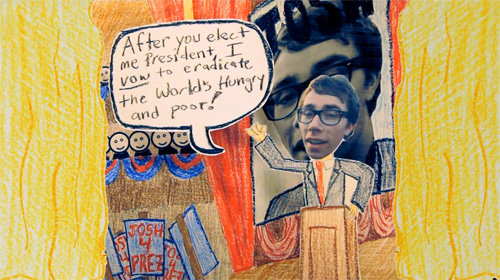
The film bombards with imagery. Just gaze in wonder at the crayon animated memoir that’s presented like a little puppet theater show. It moves from birth to boarding schools to Wall Street and beyond with effortless skill. The drawings are amazing and funny. Just when you think you’ve seen plenty Vaipan moves into a stick figure run through the history of art and it just keeps coming at you. He cuts and chops and mixes and slides and just keeps streaming the grandeur of art at us like a force of nature. He’s completely lost inside the world of inspiration. He sees the fear of getting lost in the pile – the fear of being ignored – and he literally revels in the fear itself. He makes the fear seem like something to seek. This is a grand and important statement from someone who I think is a young artist. The tools of his trade are digital and he uses them freely with a wild eagerness to explore that is extremely difficult to maintain. The unabashed use of video effects and computer equipment as if they are the oil paints and charcoals inside a painter’s box is one of the hallmarks of the emerging American video art movement. I can see the influence of Ryan Trecartin’s work in this. There’s a familiarity with digital layers that is of primary significance in this recent art. There’s a hard-edged willingness to allow the digital processes to show through. It’s sort of a freedom with the computer and video that means one doesn’t have to make anything necessarily look the right way or look like something it isn’t.

You have to really watch this film very closely and try to catch the pieces of the roaring mass of art thrown at you. Even the ending credits are a complete statement in themselves with the director drunkenly singing the Rolling Stones’ ‘Sympathy For the Devil’ in the background.

So many people are part of this film. Kenneth Anger, Stan Brakhage, Jean Luc Godard, Maya Deren, Luis Bunuel, Stanley Kubrick, David Foster Wallace, Michael Snow, Agnes Varda, to name but a few.

I know that the intertitles and other things flash by too quickly to grasp and maybe that intimates something about the info-age and attention spans, it’s why your lord Hiesos Kristos, magician of the beautiful, invented the pause button and that’s also why the real Creator (one D. Vaipan) put this on the internet rather than wherever, because you have control.

See? That’s one of the little treasure waiting for you in the end credits of this gigantic and raving epileptic fit of a film that should ultimately bring you close to tears and make you want to explode in all directions and actually truly and finally… make something!

Here is the artist’s web site.

The Incredible Remix Films of Cosmotropia de Xam

ADULT CONTENT – NUDITY

When I look for films on the web I always hate it when I find well-produced films on sites like Vimeo that are made by filmmakers who treat their films as business cards leading to bigger things. When I make a film I make it for that little box on the white web page. I work like madman on those films and play them on the web because that is why they are made. This filmmaker submitted work this week to my Vimeo short films group and I was stunned by it.

The filmmaker, Cosmotropia de Xam, makes these beautiful haunting films for a European band called Mater Suspiria Vision. The films have a deep involvement with cinema and exist for themselves. They include transformed shots from 70s horror and exploitation films, but they are reborn in a totally unique and individual art form that stands on its own. Gorgeous. Captivating. This filmmaker is well aware of the great underground work in film going back fifty years. These films have depth and illusion. They seek the magic and the demons. Really fine work.

Many more films by Cosmotropia de Xam can be seen on Vimeo.

Voices: Documentary on Jean-Luc Godard Filming ‘One Plus One’ with the Rolling Stones

Here’s a film begun by director Richard Mordaunt. It shows Jean-Luc Godard working on scenes from his film, ‘One Plus One,’ that featured the Rolling Stones as they recorded ‘Sympathy For the Devil’ in 1968. Godard always has something nearly unintelligible to say but which ends up making perfect sense later on. You might also note that Godard seems to have very little in the way of a plan as he shoots his scenes. He appears to discover his scenes as he goes.  That is the only kind of intelligence in filmmaking that I can truly respect.  A director with a storyboard is usually a jackass.

Thanks to Paul Gallagher at Dangerous Minds.

The Grand Master: Wong Kar Wai Film Trailer

The magnificent Hong Kong film director, Wong Kar Wai, is nearing completion of a new film called ‘The Grand Master.’ It’s a kung fu flick! The film was rumored to have been in a production halt, but now it looks as if things are coming together. It’s hard to find accurate information about this director’s work so I’ll just leave you with this very wet trailer.

Los Angeles Plays Itself: Documentary Through the Eyes of Fiction

This astounding 2003 documentary by Thom Andersen takes what I am certain is the most thorough look ever at how films, both popular and obscure, have depicted the city of Los Angeles. Through the accumulation and precise organizing of clips, Andersen actually describes the essential heart of Los Angeles better than anyone I have seen before. Unfortunately, the film has never been released due to rights issues with some of the clips in the film. I can’t imaging what those issues might be since this all looks like fair use for a documentary to me. This is quite obviously a journalistic essay and he has every right to use the clips in short portions.

The film’s narration has a sort of dry weariness that tends to fit the general tendency toward crime or noirish films and their views of the city. His description of the brutal destruction of Bunker Hill is a masterpiece of documentary filmmaking, illustrating the horror of a corporate dead zone built on top of a once vibrant and colorful community that served as inspiration to many down-at-the-heel artists like John Fante, the great Los Angeles novelist who wrote ‘Ask the Dust.’

Andersen moves through a dizzying array of films including, Point Blank, Zabriskie Point, Double Indemnity, The Outsider, The Exiles, Kiss Me Deadly, Chinatown, The Omega Man, Blade Runner, Heat, Rebel Without a Cause, and many many more. It’s a tour with attitude through Hollywood’s fascination with Los Angeles. It’s also a look at how wrong many depictions of the city have been – how twisted, altered, faked and misrepresented L.A. has been. The film is a lifelong Los Angeles resident who knows what’s missing in the superficial portraits of the city and gets mad about it. But in general, Andersen’s film gradually and unremittingly builds a detailed portrait of the city like no other portrait ever attempted. He reserves some snide comments for a director that I have always considered to be one of the best at portraying L.A., Michael Mann. Andersen’s comments about the characters of ‘Heat’ who live in the hills overlooking the flats of L.A. are accurate but somewhat literal. Here’s an article that Andersen later wrote about Mann’s film ‘Collateral’ which was apparently an improvement on the city’s portrayal.

But Andersen’s irritation with fakery and distortion are what make this film work. He insists on showing the false, exposing it for what it is, and then showing us a contradictory viewpoint. One of the kickers in this magnificent film is when Andersen makes a very obvious and clear note of Steve Martin’s racist perspective on Los Angeles in ‘L.A. Story,’ where any non-white character must work in a restaurant. Frankly, I’m so tired of hearing about how brilliant the idiotic and dull Martin is that I vote for this film on that basis alone! He has scathing remarks for writers like Joan Didion who wrote about car culture, maintaining that nobody walked in L.A., but really meant to say that no rich white people walked in L.A. Meanwhile, the city has always had a huge and fully utilized mass transit system.

A further thought that comes to me while watching this film is that over the past 100 years, racism in the U.S. has in fact been led and encouraged by Hollywood. The mass majority of its product over the decades has portrayed non-whites in demeaning fashion. The treatment of black characters throughout the Hollywood studio heyday is an embarrassment to the nation. All you need to know about Hollywood is on view in any Spencer Tracy/Katherine Hepburn romantic comedy. Just watch the way they treat their household employees. Casual and appalling.

I found this film while working on my own Los Angeles film that looks at the city through the prism of the imagination as conditioned by films. But my film looks at this distortion as actually being the real heart and living soul of the city. What makes Los Angeles the greatest American city is precisely its hidden history, its distorted images, and its ability to exist in different forms entirely within the imaginations of people who think they live there. There are vast numbers of people who live and work in Los Angeles who have never actually seen Los Angeles. When you summon the false gods and demons of L.A. they actually appear.

Part 2:

Parts 3 – 12 after the jump…

Continue reading

Short Film: Attackazoids!

Here’s a wild underground science fiction short produced by a company called Robot Hand. This fun and narratively loose assault on the alien invasion/mechanical overlord genre was directed by Brian Lonano and uses old-style lo-fi analog techniques for its special effects. The apparently concerned and helpful robots seem intent on wiping out every last vestige of life on the planet. Maybe they come from Wall Street!

Bad Lit: The Journal of Underground Film has posted more about the filmmakers and festivals showing their work.

Henry Miller Discusses Life, Love, Sex, Art, Writing, Jung and Enlightenment in His Bathroom

MATURE CONTENT – NUDITY:

The great American writer, Henry Miller, walks into his bathroom in 1973 and talks about all the fascinating pictures on the walls. Here’s a guy who can kill zombies with his words. I’ve always considered him to be an antidote to the lifeless people one must engage with on a daily basis. The people who get into cars and make their way to offices, then return to relax with a television and cook at the barbecue built into the island on the patio. You can reconnect with life by reading Miller’s books. You can once again feel that the world is actually a place where art and passion exist. Miller excites imagination. He makes you want to live harder and better. Listen to him talk in his bathroom! Anyone who can be this fantastic in his bathroom has got something marvelous going on.  The film was shot and directed by Tom Schiller.

Splitscreen: A Love Story

This is a very nice and expertly done split-screen romance by J.W. Griffiths that leads up to a sweet ending that one can see coming right from the start.  That’s kind of the point of the film actually. It’s the matching details that make the film work so well.  It was shot entirely on a Nokia N8 mobile phone and it won the Nokia Shorts Competition 2011.

With thanks to Jill Coyne.

Ready (Re’Search Wait’S), 2009-2010: A Film by Ryan Trecartin

Do you know who Ryan Trecartin is? You better. He’s making the wildest and best videos to be found online or in a gallery anywhere. This piece is about to open with six others to form an epic at the Museum of Modern Art P.S.1 in New York. It’s a warped and wicked view of corporate career life and behavior as practiced by characters whom I suspect would not even want to be considered normal. They spout company lingo and get it all twisted back inside of itself until it starts to sound like perfect sense and is just as valid as what you hear daily in the offices of any company. Trecartin is onto the fact that our economy has failed and millions of people are out of work because their jobs were bullshit to begin with. At minimum, 75% of jobs in corporate America are completely unnecessary. They are a busy-work scam based on particular rhythms and mannerisms and they produce nothing at all. The characters in this video revel in their uselessness. They gloat, the whine, they insult, they mock. They are amped up to be as irritating as possible. Their voices grate like demented cartoon characters. These videos are like the visions of a child computer in orbit that scans human beings and then tries to reproduce them but gets it wrong. These are digital creatures more than they are actual human characters.

Not to mention the fact that Trecartin’s intentionally clumsy and cheeseball imagery is simply gorgeous. The videos are extremely deceptive. They are so freely expressive as to be nearly psychotic. But always just enough under control to imply meanings with great subtlety. Right now these films of Ryan Trecartin represent the avant-garde’s leading edge.

Two Directors on Terrence Malick’s ‘The Tree of Life’

I have not had any interest in the work of Terrence Malick over the years. His films tend toward nature and beautifully composed shots that seem much too still for my tastes. I like things that move in sloppier fashion than Malick is willing to show. For instance, the clip shown here makes me want to go see ‘The Tree of Life’ because is looks magnificently gorgeous and might in fact tend toward the non-narrative end of the spectrum. However, look at those ‘hand-held’ shots. Like almost every Hollywood movie, Malick’s hand-held shots look as though they are calculated, calibrated and buffered by sophisticated computer programs designed to give just the right sense of hand-held without being too hand-held. Hand-held on hydro-greased pistons with balancing weights and counter movement devices. Look at how, when he shows the kid’s feet kicking the can on the street, he tilts the horizon line just so. Fussy. Trying to make an interesting shot out of nothing. There’s something too smooth going on with the camera person. Malick needs to punch the camera operator in the mouth just before a shot. I don’t think great film directors can work with the standard kit Hollywood film crew… ever. Everything in this clip moves with a limp swaying quality. Maybe that’s why I sleep through Malick films.

If it were up to me, I’d tell Malick to remake this film with no more than five people helping him aside from the actors.