Attempt: A Short Film by Jennifer Sharpe

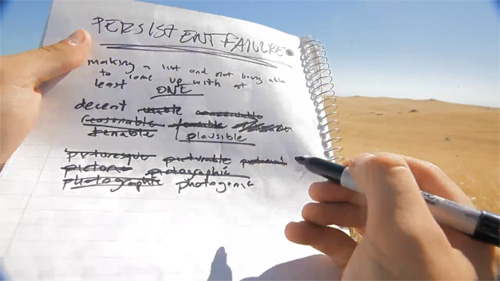
The film seems almost out of time. It could have been filmed fifty years ago. The gently swaying palms of Los Angeles fit between buildings easily but seem to have a romantic life in this film. The music, a piece for theremin and string quartet by Herbert A. Deutsch, fits the imagery in Jennifer Sharpe’s film to perfection. This kind of filmmaking, done with a small camera and then edited and colored in a relatively simple digital editor, is very close to the simplicity of the poet working in a notepad or the artist sketching from her window. Sharpe’s films are deeply felt poetic expressions that seem to exist in the only possible form that they could have. She turns her video images into something close to painting, extending time and finding mystery in simple movements. She has a very gentle approach but with strength in her observation and emotional ability, sort of like a butterfly with steel wings.

You can find out more about Jennifer Sharpe’s digital videos and paintings at her web site.

Behind The Wall: The Battle for LA’s Murals

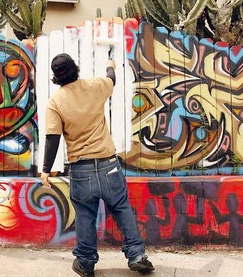
Oliver Riley-Smith made this short documentary about the disappearing mural art of Los Angeles. It features a prominent muralist complaining about how murals have been ‘bludgeoned by graffiti’ and ‘censored by the city.’ Perhaps so. The city does make it difficult to get permits for murals. But I don’t really like murals. They tend to be stiff and unoriginal. I like the murals that have been vandalized by the graffiti artists. Sorry but I do. They are much more interesting than the clean murals which are entirely unimaginative and offer nothing to move art in any direction whatsoever. If muralists want to preserve their images, they should paint indoors. Look at the mural on the highway underpass wall that’s covered with graffiti at the 42 second mark in the film. Beautiful. Much better than the mural ever was. The muralist in the film says, ‘Museums are for the dead. I want life.’

Bullshit.

There’s a guy in this film called ‘Ghost One.’ I like what he says about art.  He’s realistic and open to whatever comes along.  He says that taggers mark up murals because they assume that their marks will have more longevity that way. That’s a very interesting thought. An artists seeks longevity by making his mark inside the work of another artist. Fascinating. Much more interesting than the murals. Such thinking shows possibility.

But then the film draws the two sides together and our muralist says he ‘hopes our two styles can work together.’ Well, they can’t really, but it’s a nice thought.

Los Angeles to Ease Restrictions on Murals

The Los Angeles Times reports that the City Council is easing its restrictions on outdoor murals.  It will no longer classify them the same way it does billboards.  Since 2002 it has been illegal to paint a mural on private or public property because the artworks are considered advertisements.  But Los Angeles is going to try to do a better job of distinguishing between the two.

Of course this will all get muddled again as soon as an artist paints a figure holding a can of Coke!  Is it art or is it an ad?  As a rule though, it is never difficult to tell when something is a giant ad and when it’s not.  It just takes a little common sense and observation.  Surely the City Council can manage this.

But the bottom line is that the murals of L.A. are inspiring and extraordinary.  The city needs to reclaim its title as ‘The Mural Capital of the World!’

The photo is a portion of a photo by Al Seib for the Los Angeles Times,  April 6, 2011.

Pacific Standard Time: Anthony Kiedis Celebrates Ed Ruscha

Red Hot Chili Pepper, Anthony Kiedis rides along with L.A. artist, Ed Ruscha. They talk about using words for art and how that inspires them. I like shooting L.A. this way. The film uses the car and the streets well. I think I even see some duct tape holding Kiedis’ passenger door mirror together.

Pacific Standard Time web site.

VSV Taos to Topanga: A Film Visit with Artists George Herms and Dean Stockwell

George Herms is one of Los Angeles’ great artists, having been a founder of the ‘assemblage’ or found object kind of art. Actor Dean Stockwell has been making art for many decades and apparently lives out in the desert somewhere.  I think he’s one of those fake grumpy guys.  I’m familiar with them.  They try to set you off balance by pretending to be asses. The filmmaker, Paul Hasegawa-Overcracker takes his friends to visit both artists at home. Watch for Herms’ personal definition of High Definition.

The Eye Like a Strange Balloon Mounts Toward Infinity: A Film by Guy Maddin

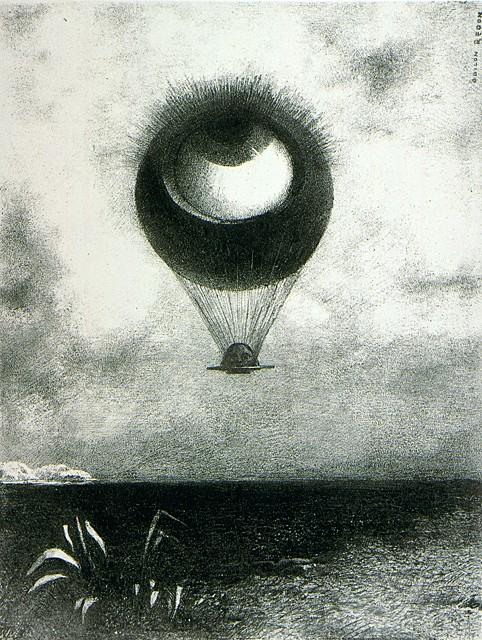
Canadian filmmaker Guy Maddin made this short film which is inspired by an 1882 illustration by Odilon Redon that was in turn inspired by the writing of Edgar Allan Poe.  It has a kind of wild sinister fantasy about it that fascinates me.  I like the way Maddin builds little sets that end up looking almost like illustrations.  He also does a quick visual quote of a great old French film called L’Atalante by Jean Vigo.  This is a frightening and beautiful dream film.


Pacific Standard Time Celebrates Artist John Baldessari

Pacific Standard Time, the roaringly cheerful celebration by Southern California of its own art from the late 40s through the early 80s is releasing short videos to pump everyone up for its brand of art. I should be horrified by this silly video, but I’m not. I kind of like Baldessari’s big ass head on the wall. It works all the way up until he says ‘Art should be fun.’ Yeah, really? I dunno. Sounds like the kind of thing you say to an idiot.

But whatever. I’m going to see a lot of the exhibitions that are part of this festival. Should be really great.
 

Pacific Standard Time: Los Angeles Art From 1945 to 1980

Don’t let anyone ever tell you that it doesn’t matter where you are when you make art. It matters very much. You have to know who’s buried in the ground that you’re dancing on. You have to know what’s in the air. You have to know who walked where you are walking now. If you don’t know those things, you might as well be working via modem from an igloo in the antarctic. This Pacific Standard Time thing is a bunch of galleries in Southern California working under the general umbrella of the Getty Center to put on exhibits of post World War II through 1980 art by Southern California artists. Los Angeles is the only great American city that hasn’t been entirely bombed by corporations yet. New York has been a dead zone since 1980. I lived there for almost ten years. Every footstep taken in that city was like a death march for me. The oppression of mind that goes on in New York is akin to being trapped inside some sort of giant grinding machine that keeps on working even though all its parts are broken. Coming to Los Angeles was like seeing the horizon for the first time. The city opens out and spreads with a psychotically unhinged freedom and chaos that is the very essence of creativity. It is the perfect antidote to the black death of New York. This is apparently the first art exhibition of its kind ever. An entire region is presenting its art and imagination for all the world to see. There are going to be roughly sixty different shows happening over the six months of this thing.

Pacific Standard Time is a collaboration of more than sixty cultural institutions across Southern California, coming together for six months beginning in October 2011 to tell the story of the birth of the Los Angeles art scene and how it became a major new force in the art world. Each institution will make its own contribution to this grand-scale story of artistic innovation and social change, told through a multitude of simultaneous exhibitions and programs. Exploring and celebrating the significance of the crucial post-World War II years through the tumultuous period of the 1960s and 70s, Pacific Standard Time encompasses developments from L.A. Pop to post-minimalism; from modernist architecture and design to multi-media installations; from the films of the African American L.A. Rebellion to the feminist activities of the Woman’s Building; from ceramics to Chicano performance art; and from Japanese American design to the pioneering work of artists’ collectives. Initiated through $10 million in grants from the Getty Foundation, Pacific Standard Time involves cultural institutions of every size and character across Southern California, from Greater Los Angeles to San Diego and Santa Barbara to Palm Springs.

Seizure: A Magnificent Cry for Art by David Vaipan

At the start, I’ll say that this is one of the most magnificent films I have seen in years. David Vaipan has made this relentless and fully-committed scream of artistic intent, desire, confusion, effort and love. This is a film about being an artist. It is a film about fear and confidence. About effort, will and failure. Vaipan simply takes the entire history of art and all that it has given him and dumps it out on his desk and turns it all into his own material. All of art, music, film, literature and poetry become Vaipan’s crayons and he uses them to tell his own personal story.

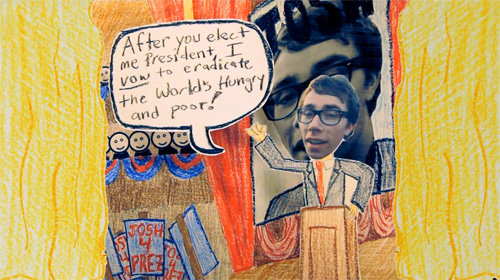
The film bombards with imagery. Just gaze in wonder at the crayon animated memoir that’s presented like a little puppet theater show. It moves from birth to boarding schools to Wall Street and beyond with effortless skill. The drawings are amazing and funny. Just when you think you’ve seen plenty Vaipan moves into a stick figure run through the history of art and it just keeps coming at you. He cuts and chops and mixes and slides and just keeps streaming the grandeur of art at us like a force of nature. He’s completely lost inside the world of inspiration. He sees the fear of getting lost in the pile – the fear of being ignored – and he literally revels in the fear itself. He makes the fear seem like something to seek. This is a grand and important statement from someone who I think is a young artist. The tools of his trade are digital and he uses them freely with a wild eagerness to explore that is extremely difficult to maintain. The unabashed use of video effects and computer equipment as if they are the oil paints and charcoals inside a painter’s box is one of the hallmarks of the emerging American video art movement. I can see the influence of Ryan Trecartin’s work in this. There’s a familiarity with digital layers that is of primary significance in this recent art. There’s a hard-edged willingness to allow the digital processes to show through. It’s sort of a freedom with the computer and video that means one doesn’t have to make anything necessarily look the right way or look like something it isn’t.

You have to really watch this film very closely and try to catch the pieces of the roaring mass of art thrown at you. Even the ending credits are a complete statement in themselves with the director drunkenly singing the Rolling Stones’ ‘Sympathy For the Devil’ in the background.

So many people are part of this film. Kenneth Anger, Stan Brakhage, Jean Luc Godard, Maya Deren, Luis Bunuel, Stanley Kubrick, David Foster Wallace, Michael Snow, Agnes Varda, to name but a few.

I know that the intertitles and other things flash by too quickly to grasp and maybe that intimates something about the info-age and attention spans, it’s why your lord Hiesos Kristos, magician of the beautiful, invented the pause button and that’s also why the real Creator (one D. Vaipan) put this on the internet rather than wherever, because you have control.

See? That’s one of the little treasure waiting for you in the end credits of this gigantic and raving epileptic fit of a film that should ultimately bring you close to tears and make you want to explode in all directions and actually truly and finally… make something!

Here is the artist’s web site.

BOMB: A Manifesto of Art Terrorism

Artist and filmmaker Raymond Salvatore Harmon has written an inspiring and thought-provoking book that insists on changing the way art is perceived and approached by artists, viewers and the ever-problematic gallery world. Harmon presents several stories of his own brushes with law enforcement that are both funny and rather harrowing. He consistently recommends behaving as if you have every business being exactly where you are even if you have no permission to paint the front of a building. Confidence and apparent command of a situation will often get a clever artist out of a jam. Harmon is a very likeable guy and I can’t imagine there would be too many police all that interested in arresting this particular artist whose work always seems to have good intentions behind it.

Here’s an important quote from the book:

Ultimately, corporations play the biggest part in designing our modern world. Corporations sell goods, make cars, pump oil and make medicines. They design city planning and develop urban neighborhoods in order to make profit. They create ghettos to house those people that they pay so little they are unable to afford to live anywhere else. Making them exist at the most nominal part of financial need, particularly outside of the white picket fences of the 1st world nations.

Yet, in the darkness of the city night there are those that go out and change the urban landscape without planning permission of a performance license. These people vary in intent and talent but they collectively do what they do against society and against the law.

I like this book. I find it generally inspiring and agitating in the best possible way. However, I do have arguments with it. In general, I tend to prefer looking at street art that does not actually destroy or harm property. Artists who violate laws by gluing things on walls should I think be treated rather lightly. However, I can certainly imagine scenarios in which a business – even a corporate one – could be seriously harmed by the placement of street art on its walls. Not all corporations are British Petroleum. I don’t see any logical link between artistic statement and one’s attitude about a public or corporate wall. If art should in fact be more focused on the act of creation and viewing by the public without concern for how quickly the art is removed, as Harmon’s book suggests, then street artists should be content with painting their work on paper or cloth and hanging it from those corporate walls. Why is there a link between the making of an image and the destruction of a blank corporate wall? Why not make the art and preserve the blank wall?

Harmon has some harsh words for the art world that links itself inextricably with the art schools, identifying artists it likes, feeding them into a network of wealthy friends and collectors, creating an insular world of wealthy back slappers and promoters. You can see this world in operation all over New York and even in Los Angeles. However, I would point out that crony networks are notoriously good at finding and publicizing actual brilliance.

Elsewhere in the book, famed artist/street prankster Banksy is quoted as saying:

Remember, crime against property is not real crime.

Banksy is of course not someone I would want to be taking very seriously since it is more than likely that he is little more than an employee or creative group working at Urban Outfitters. Thankfully, one of Harmon’s stories about copyright leads right into an episode that reveals Mr. Urban… sorry… Banksy, to be just as copyright-obsessed as any corporation. Banksy is apparently working hard on a piece in model Kate Moss’s bathroom… you kind of get the picture?

You’d do much better reading this marvelous and good-natured jab-in-the-ribs art manifesto than paying attention to Banksy, that’s for sure.

Elsewhere in the book is a thoroughly amusing account of an assault on a major art world event that involves video cameras, dark suits and some very CIA-type stuff going on. Read it and enjoy.

Here is the entire book:
Henry Miller Discusses Life, Love, Sex, Art, Writing, Jung and Enlightenment in His Bathroom

MATURE CONTENT – NUDITY:

The great American writer, Henry Miller, walks into his bathroom in 1973 and talks about all the fascinating pictures on the walls. Here’s a guy who can kill zombies with his words. I’ve always considered him to be an antidote to the lifeless people one must engage with on a daily basis. The people who get into cars and make their way to offices, then return to relax with a television and cook at the barbecue built into the island on the patio. You can reconnect with life by reading Miller’s books. You can once again feel that the world is actually a place where art and passion exist. Miller excites imagination. He makes you want to live harder and better. Listen to him talk in his bathroom! Anyone who can be this fantastic in his bathroom has got something marvelous going on.  The film was shot and directed by Tom Schiller.

Ready (Re’Search Wait’S), 2009-2010: A Film by Ryan Trecartin

Do you know who Ryan Trecartin is? You better. He’s making the wildest and best videos to be found online or in a gallery anywhere. This piece is about to open with six others to form an epic at the Museum of Modern Art P.S.1 in New York. It’s a warped and wicked view of corporate career life and behavior as practiced by characters whom I suspect would not even want to be considered normal. They spout company lingo and get it all twisted back inside of itself until it starts to sound like perfect sense and is just as valid as what you hear daily in the offices of any company. Trecartin is onto the fact that our economy has failed and millions of people are out of work because their jobs were bullshit to begin with. At minimum, 75% of jobs in corporate America are completely unnecessary. They are a busy-work scam based on particular rhythms and mannerisms and they produce nothing at all. The characters in this video revel in their uselessness. They gloat, the whine, they insult, they mock. They are amped up to be as irritating as possible. Their voices grate like demented cartoon characters. These videos are like the visions of a child computer in orbit that scans human beings and then tries to reproduce them but gets it wrong. These are digital creatures more than they are actual human characters.

Not to mention the fact that Trecartin’s intentionally clumsy and cheeseball imagery is simply gorgeous. The videos are extremely deceptive. They are so freely expressive as to be nearly psychotic. But always just enough under control to imply meanings with great subtlety. Right now these films of Ryan Trecartin represent the avant-garde’s leading edge.

Warhol and Maciunas: A Film by Jonas Mekas

This is a film by Jonas Mekas that features Andy Warhol, Yoko Ono, John Lennon, and George Maciunas who founded the New York art movement known as Fluxus. The film shows a Whitney Museum art opening in 1971 and an artists’ party in New York. Home movies become an artform in Mekas’ hands.