Meg Park, a final year student at Duncan of Jordanstone College of Art & Design, made this short film that reminds me of how to be a kid. Fantastic animation of the characters and their movements.
Via Cartoon Brew
Meg Park, a final year student at Duncan of Jordanstone College of Art & Design, made this short film that reminds me of how to be a kid. Fantastic animation of the characters and their movements.
Via Cartoon Brew
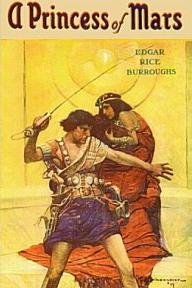
This is the first John Carter of Mars novel by Edgar Rice Burroughs, the author of the Tarzan books. It was his first novel, published in 1917 and it’s a work of rip-roaring science fiction that has inspired many of the great writers in the genre.
Chapter 21: John Carter, meets a friend and learns to fly.
You can find all the previous chapters of the book here.
You’ll find regular podcasts of all the chapters over the next couple of months. Subscribe to our feed.
Duration: 00:19:54
Read by Alessandro Cima
All audio stories are Copyright © Candlelight Stories, Inc., All Rights Reserved.
With all of the talk recently about religions that forbid the fundamentally human act of drawing, it is perhaps refreshing to think about a spiritual pursuit that not only encourages the act of drawing, but expresses itself almost entirely through drawings. Alchemy is the subject of this fascinating film. It’s in eight parts and well worth clicking through all the way to the end. The later part of the film features some comments by Carl Jung and there are tons of illustrations to puzzle over. If you can get past some of the slightly amateurish narration, you will be well-rewarded with a presentation of ideas that might be completely new to you. The film gets more interesting toward the last three parts.
Part 2
Part 3
Part 4
Part 5
Part 6
Part 7
Part 8
What I like about alchemy is the sense I get of people working toward something. The entire history of alchemy is one of people searching for what amounts to a spiritual understanding of themselves through constant questioning and investigation. This seems to me to be superior to most religious practice which primarily involves people accepting instructions from an outside and unverified source.
If you live in Los Angeles you’ve probably seen it many times: the caravan of white trucks parked along the block and around the corner, diesel generators roaring, cables strung along the gutters, piles of lights, rolls of cables, racks of costumes, makeup trailers, bored extras, bored crew members, bored motorcycle police, and fascinated passersby.
That’s all you need to see to know that something mainstream – feature film, TV show, or commercial – is being made.
But what’s an underground film?
Bad Lit, my favorite site devoted to underground film, has an article about the problem of defining something as slippery as ‘underground film’ in which several definitions are offered by different people. Mike Everleth, the site’s editor, defines underground film this way:
Essentially, I believe it is a film that is a personal statement by one person and a film that dissents radically in form, or in technique, or in content, or perhaps in all three. However, that dissension can take on any number of forms.
I agree with that, but would add the requirement of hostility. There should be an element of combativeness which attempts to counter a much larger established force. There must be some rebellion in the work. It can be very subtle – nearly imperceptible – but it’s usually there somewhere. In fact, I think the hostility should even tend to include the general culture surrounding the filmmaker/s. Dissent, by itself, can be rather subdued, soft-spoken and shy. I think underground film requires a willingness not only to dissent but to kick apart.
While thinking about all this mainstream versus underground stuff, I went searching around on YouTube for something that might fit the discussion. I found this peculiar British documentary film about filmmaker Donald Cammell who co-directed, along with Nicolas Roeg, the 1968 film Performance. The film is one of those odd mixtures of underground and mainstream. It features Mick Jagger and involves a lot of mind-bending drugs, sex and criminal underworld shenanigans. It’s actually impossible to forget once you have seen it.
This film contains adult subject matter, language, nudity and sexual situations.
Part 2
Part 3
Part 4
Part 5
Part 6
Part 7
The documentary, Donald Cammell: The Ultimate Performance, describes a time when a group of intensely creative artists from various disciplines could operate on the fringes of the mainstream to create an essentially underground film with something resembling support from a mainstream production company. It’s a scenario that does not exist today. If you watch all 7 parts of the film, you will be immersed in that strange hybrid world of the ‘popular underground’ that defines much of what was happening in the 1960s and 70s. Today, if it cannot be jammed into a mall and sold with Sour Patch Kids, it won’t get any money. That holds as true for ‘independent’ films as it does for summer blockbusters.
Watching this documentary makes me wonder why so many filmmakers seem to have such trouble making the films they really want to make. After all, one can purchase a cheap camera and make exactly what one wants regardless of what one’s career and money-earning responsibilities might be. Tormented filmmakers who are battling studois for creative freedom should simply make films with video cameras during their spare time. This would not only foster a healthy underground, but it would quite possibly prevent a few tragic endings.
Official selection at CINEME, 2003 Chicago International Animation Film Festival.
This is a short film that I started back in 2001. 9/11 happened and I put the film on hold for almost 2 years. When I returned to it I was able to finish it in several months of hard effort. I was working with Flash and my process was kind of awkward. The drawing is actually very crude. But the film came out decently. It got into a Chicago film festival in 2003 and it has remained in its Flash form on CandlelightStories.com ever since. It was recently shown by NewGrounds.com as part of their ‘Treasure Hunt’ festival of animation.
But getting the film out of the Flash ghetto and into video proved to be more work than I thought. So I’ve made a few little updates and improved some of the film effects a little. So now the film is actually closer to the film I was imagining back in 2001.
Katy Perry sang this song for Sesame Street and then some nasty parents complained about her showing too much cleavage for the little tot audience and so the piece was banned from the TV show! Oh no! What’s going on with parents? Maybe they’re turning into boobs. Don’t kids like boobs anymore? I did when I was a little guy. It ain’t called the boob tube for nothing. What’s the problem? She just wants to play. I’ll play with her. It’s actually a rather good music video.
Kids, if you have a parent who’s afraid of boobs you’ve got real problems ahead. Beware and seriously consider changing who you hang out with.