Author Toni Morrison Talks About Free Speech

tonimorrisonIn a time when we have a president who is actually attempting to hide photos purported to show United States military personnel allegedly raping prisoners during torture sessions in Iraq, author Toni Morrison is speaking out in support of free speech.  The two things are related because of the government’s use of fear to justify hiding the photos of brutal criminal conduct by U.S. personnel.

Over the years, Morrison, author of Beloved and Song of Solomon, has had several of her novels threatened with being banned for their content.

Here’s a sampling from an Associated Press article about the launch of the Free Speech Leadership Council which includes Toni Morrison:

Morrison said the problem was fear — fear of information, dating back to the book of Genesis and the fatal temptation of the Tree of Knowledge.

“Knowledge is bad” is the Bible’s message, Morrison said, while being interviewed by author-humorist Fran Lebowitz. “It is sinful. It will corrupt you and you will die.”

Freedom of speech and information is under far greater threat these days than most people seem to realize.  It is extremely important for well-known authors to discuss the issue openly.

The photo is from AP’s Seth Wenig.
Animation: The Legend of the Turning Stone

This French animation was made by Mélanie Climent, Élodie Fraysse, and Émilie Frezet for Supinfocom Arles in 2006.  Some sort of puppeteer tells a story and sets it all in motion with a table-top town.  A puppet woman with a child is tempted to cross toward a mysterious stone that hides a magical secret.

I found this via a fantastic cinema site called No fat clips!!!

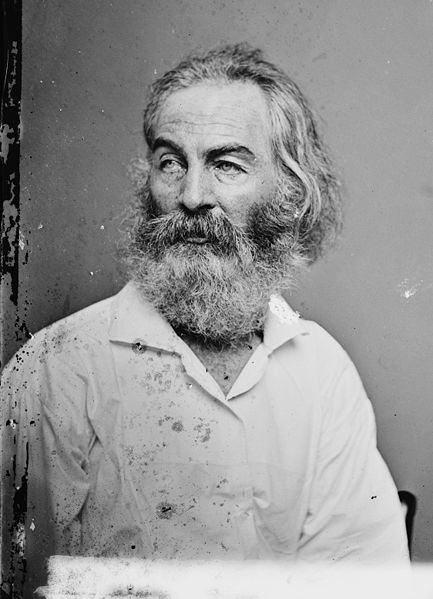
Hear Walt Whitman Reading His Poem ‘America’

The Walt Whitman Archive has a 36-second recording taken from an old wax cylinder of what is thought to be Whitman himself reading four lines from his poem, America.

Listen to Walt Whitman reading America

Here’s the text of the poem:

America

Centre of equal daughters, equal sons,
All, all alike endear’d, grown, ungrown, young or old,
Strong, ample, fair, enduring, capable, rich,
Perennial with the Earth, with Freedom, Law and Love,
A grand, sane, towering, seated Mother,
Chair’d in the adamant of Time.

Gutenberg Bible Coming Online From Cambridge University

The Gutenberg Bible from approximately 1455 was the first book printed in Europe with moveable metal type.  The BBC reports that Cambridge University is preparing to make a scan of this book available online.  Scholars from around the world will soon have access to one of the first printed books in history.  The university will also release the first printed edition of Homer’s works.
While this is good news, one does have to wonder what’s taken so long.

Animation: The Terrible Thing From Alpha-9!

Cartoon Brew TV is showing this student animation called The Terrible Thing of Alpha-9!  It was directed by Jake Armstrong as his thesis for the School of Visual Arts.  It’s got a very free drawing style and combines a great sci-fi sensibility with gentle humor. If you head over to Cartoon Brew, they’ve got a full interview with the director with lots of information about the making of the film.

TheAuteurs.com Offers International Cinema Online

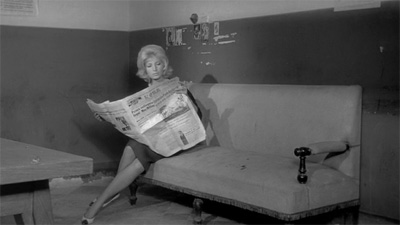
laventuraThe Auteurs (www.theauteurs.com) is a site for art film lovers.  Their mission is to offer a huge selection of international art films by the world’s best directors for simple online viewing.  Last night I watched an Italian film from 1960 called L’Avventura, directed by Michelangelo Antonioni.  The image quality was excellent and the sound was also very clear.  It was one of the best experiences with watching a film online that I’ve ever had.  The image in this post is a reduced screenshot taken while I watched.  The film itself is one of the great examples of Italian cinema and is one you will never forget.  Apparently, The Auteurs has partnered with The Criterion Collection to bring many of the best films online.  Each month The Criterion Collection selects three or four films to run on the site for free viewing in a sort of revolving festival of great cinema.  This is an important connection for The Auteurs because Criterion is probably the very best thing that ever happened to DVDs.  Their efforts at finding the very best sources for their films set them far apart from any other DVD producer.  If you are serious about international cinema on DVD, you always look for what Criterion has to offer.

The site, which is still in beta, has about 120 films available at this point.  Most of these cost $5 for a 7-day viewing period.  There are also articles, film reviews, and member forums for discussing films and writing your own reviews.  The monthly curated festivals look like a really good idea and seem to be offering a few free films each month.

But the key to success with a film site like this is volume.  They must secure the rights to show many more films very quickly.  Nothing makes people lose interest in a film site faster than a limited selection.  For now, there are many films listed on the site which are not actually available which is somewhat disappointing.  The site is trying to give visitors an idea of the kind of films they will offer, but it is a distraction that is unnecessary.  Hopefully, the site will use its relationship with Criterion to drastically increase its library which shows great promise.  The idea for a site that culls the best of international cinema is an excellent and overdue one.  Now it remains to be seen if TheAuteurs.com can keep the attention of film lovers.

Jean-Luc Godard Talks About Critics, Bardot and TV

Jean-Luc Godard is one of the only film directors in the history of cinema to make films as if the camera were a pen.  For some reason, when a writer writes about their own experiences they are called a genius.  When a film director does it they are often called self-indulgent.  Godard has made some of the greatest examples of personal cinema.  His ability to consistently fool producers and studios into believing him and supporting his artistic dreams and whims is a rare talent.  This is a man who is known to have presented film studios and even government censors with entirely fake screenplays that had absolutely nothing to do with the film he was about to make.  This is the true genius of the French New Wave in the 1950s and 60s.  He went farther and deeper into the language of film than any of the other directors famous for New Wave works.

20-Year Anniversary of China’s Public Massacre

Twenty years ago, on June 4, 1989, the Chinese government ordered its military to kill the unarmed peaceful student protesters for democracy gathered in Tiananmen Square in Beijing. The army then shot the students and ran them over with tanks. In its murderous effort to suppress any form of free expression or protest, the Chinese government and its military murdered the people in Tiananmen Square while the entire world watched. China is now preventing any sort of commemoration or discussion of those events or the twenty-year anniversary by almost completely shutting down internet access to any material that could possibly mention the murder of Chinese people in Tiananmen Square.

You can see the police with umbrellas blocking the view of the BBC news cameraman in the embedded video. The entire square is closed to the press on this important day in Chinese history. The government does not want anyone in China to know anything about or understand what happened in 1989.

It is an honor to have a web site banned in China. Candlelight Stories receives a large number of visits from China and is actually used in English classes there. However, Candlelight Stories urges the citizens of China to wake up in the morning and completely overthrow and eliminate their oppressive government. It would be enlightening to see the government officials of China dragged by Chinese citizens into the middle of Tiananmen Square where the world could serve as witness to the end of this horrendous period in Chinese history.  Why any company or country does any business at all with the brutal despots ruling China is a complete and pitiful mystery to any rational thinker.  And people who site see in China would have probably been perfectly comfortable touring concentration camps in 1944.

Now, China, press the red button and ban me.

Podcast Novel: A Princess of Mars (Chapter 7)

DOWNLOAD MP3 AUDIO

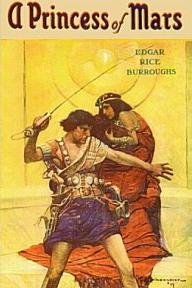
A Princess of Mars

This is the first John Carter of Mars novel by Edgar Rice Burroughs, the author of the Tarzan books. It was his first novel, published in 1917 and it’s a work of rip-roaring science fiction that has inspired many of the great writers in the genre.

Chapter 7: John Carter is allowed to accompany an expedition that explains where martian babies come from.

You’ll find regular podcasts of all the chapters over the next couple of months. Subscribe to our feed.

Duration: 00:12:28
Read by Alessandro Cima

All audio stories are Copyright © Candlelight Stories, Inc., All Rights Reserved.

Saving Books and Finding a Rare Don Quixote

My wife and I were knocking around New York City last week because we visited the excellent show of Picasso paintings and etchings at the Gagosian Gallery on West 21st Street.  Afterward, we stopped into The Strand bookstore in Greenwich Village.  They were selling the book that accompanies the Picasso show for a full twenty dollars less than the gallery.  We decided to go next door to the store’s rare book department where they keep their very valuable and dusty old tomes for the serious collectors of New York.  We went through the steel door and felt that we were entering the high-security wing.  The smell of decaying literature was immediate and sort of relaxing as all rotten literature should be.  We walked around quietly as the employees set up tables of wine glasses for a publisher’s party that would be starting shortly.

I soon found myself strolling down a narrow aisle toward a large window with a massive old air conditioner cranking away near the ceiling.  I could feel the cold air flowing past me and after walking all over the Village it was a welcome respite.  I came to the shelf near the window and noticed a wonderful illustrated volume full of Shakespeare’s history plays.  I pulled it out and began to flip through and was amazed to find a picture on nearly every page.  I wanted it.  I was also enjoying the cold air and the nice fine spray of water droplets on and about my head and shoulders.  ‘Ahh, misters,’ I thought to myself languidly.  ‘They must think of everything here because of the serious collectors who come through each day.  They must be kept comfortable in the heat or they will go elsewhere.’

So I continued to flip through Henry the Fifth and wondered if one hundred and twenty-five dollars was a lot to pay for the histories.  But I didn’t want to leave the misters yet because they were cooling me very nicely… ‘Misters?,’ I thought.  ‘Misters?  Really?  Water spraying about my head in the rare books department?  What on earth kind of idea is this?’ I looked up at the air conditioner and was met with an increased volume of cold water against my face.  Then I looked down at the shelf of rare books beneath the windowsill and saw a large puddle of water on the shelf and droplets of water spattered far and wide over an intimidating selection of fine rare books.  ‘This just can’t be right,’ I thought as I backed away quietly.  I had a bizarre impulse to gather my wife silently and flee.  But I could find no apparent wrongdoing in my situation so I halted.

Continue reading

Essay on the Editing of ‘The Great Gatsby’

gatsbycover1The excellent literary blog called The Elegant Variations has a 4-part post that reprints an essay by Susan Bell about F. Scott Fitzgerald’s revisions to The Great Gatsby through his close work with editor Max Perkins.  Bell discusses the absolutely crystal sharp writing in Gatsby that was the result of meticulous rewrites from Fitzgerald and a strong editorial viewpoint from Perkins that the author was more than willing to acknowledge after publication.
Critical reaction at the time of the novel’s publication noted its incredibly polished writing:

For H. L. Mencken, the novel had “a careful and brilliant finish. . . . There is evidence in every line of hard and intelligent effort. . . . The author wrote, tore up, rewrote, tore up again. There are pages so artfully contrived that one can no more imagine improvising them than one can imagine improvising a fugue.

Here’s another quote from Bell’s essay:

In autumn 1924, Fitzgerald sent Perkins the Gatsby manuscript. The editor diagnosed its kinks, then wrote a letter of lavish praise and unabashed criticism. “And as for the sheer writing, it is astonishing,” wrote Perkins. “The amount of meaning you get into a sentence, the dimensions and intensity of the impression you make a paragraph carry are most extraordinary.” A crucial problem, though, was the hero’s palpability. Perkins explained:

Among a set of characters marvelously palpable and vital—I would know Tom Buchanan if I met him on the street and would avoid him—Gatsby is somewhat vague. The reader’s eyes can never quite focus upon him, his outlines are dim. Now everything about Gatsby is more or less a mystery, i.e. more or less vague, and this may be somewhat of an artistic intention, but I think it is mistaken.

George Orwell’s Quest for Truthful Language

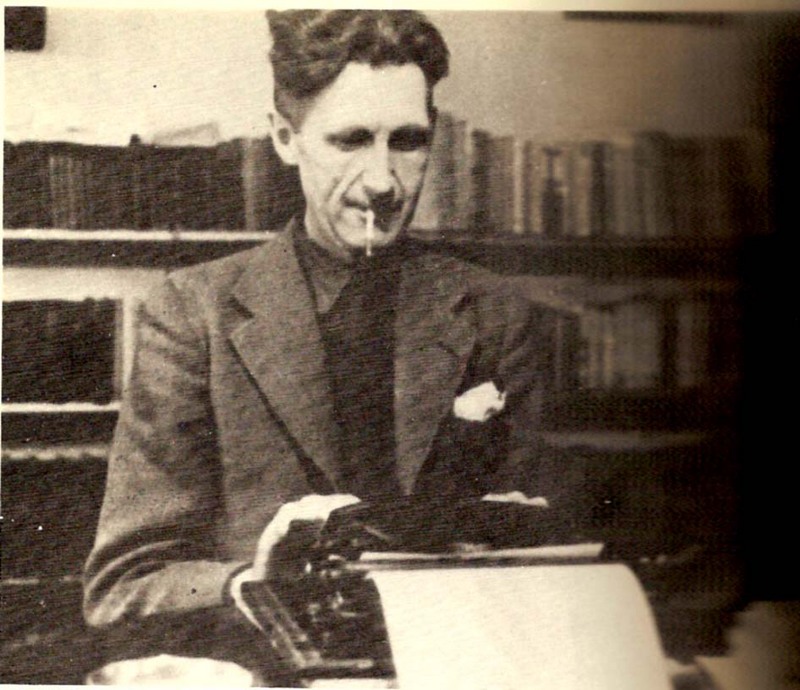
New Statesman has a very interesting article by Keith Gessen about George Orwell’s ‘plain spoken’ style that manifested itself in a series of essays in the 1940s and found its full expression in his masterwork, Nineteen Eighty-Four. It’s fascinating to read about how Orwell’s experiences with fighting in Spain during the civil war in the 1930s and journalistic coverage of the events of that war influenced his use of altered and entirely untrustworthy newspaper articles in Nineteen Eighty-Four.  Orwell apparently believed in clear, sharp and truthful language.  He did not want ready phrases or dead metaphors.  He wanted keen observation and simple expression.

I think he achieved this in Nineteen Eighty-Four to a great degree.  Mr. Gessen says one thing in his article that I don’t necessarily agree with: “In truth, Orwell was wrong about all sorts of things, not least the inner logic of totalitarianism: he thought a mature totalitarian system would so deform its citizenry that they would not be able to overthrow it. This was the nightmare vision of Nineteen Eighty-Four. In fact, as it turned out in Russia, even the ruling elite was not willing to maintain mature totalitarianism after Stalin’s death.”

I don’t think that’s quite right.  The totalitarian regime in Nineteen Eighty-Four is overthrown.  In the last section of the book the writing jumps out into the future and discusses a quite obviously defunct and long-gone totalitarian state that tried to reduce language to its own ends.  I think the point of Nineteen Eighty-Four is that complete control of a population can be largely achieved with various mind-control techniques and the constant application of fear, but that it requires only a modest intelligence to resist and eventually overthrow such control.  The novel’s protagonist, Winston Smith, is just an ordinary schlump.  He’s not very bright.  Pretty dim in fact.  The idea with Winston Smith is if he can do it then anyone can.  And yet he is capable of resisting until his will is ultimately beaten out of him.  But the point is that the will to resist is a real pest.  You can’t remove it from society.  It always comes up and eventually overpowers all control structures.

Purchase Nineteen Eighty-Four

Japanese Toilet Paper Horror

Lucky Koji Suzuki is the Japanese author of a 9-chapter novella to be printed on toilet paper rolls.  The story takes up approximately 3 feet of toilet paper and allows readers to enjoy their fill of horror from the comfort of their toilets which may in fact turn out to be the best place for them to be in case the little story scares the **** out of them.  But what happens if you’re in the middle of the story and you stop and then a friend comes over and uses up a couple of chapters?  Also, how do you bookmark your place?  Or do you even have to?  I might buy this for a Halloween joke.  But then all my party guests might spend the entire evening in the bathroom which would be pretty weird.