Audio Podcast Novel: Robinson Crusoe (Part 17 – Conclusion)
DOWNLOAD ROBINSON CRUSOE – PART 17
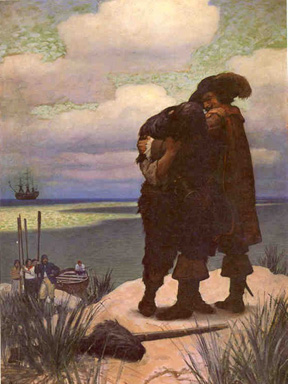
Robinson Crusoe and Friday finally have a ship and a way off the island. Crusoe relates his journey home and how he resolves the outstanding issues he left behind in his life. He meets with one final harrowing adventure on his journey home and uses it to lead into the final thoughts of his great tale. So ends one of the greatest adventures ever written and so began the great art of the English novel. Daniel Defoe created a character that has influenced every writer and every reader’s imagination since he wrote this incredible book.
It has been an uncommon pleasure to read this difficult book and to make my way through the unusual language of Mr. Defoe. Perhaps by reading him, one can learn to think a bit like him. With great language comes great subtlety of thought.
By the way, Defoe did write a sequel to this book. It’s called ‘The Farther Adventures of Robinson Crusoe.’ Perhaps a podcast of that book should be…
 Subscribe to audio with iTunes
Read by Alessandro Cima
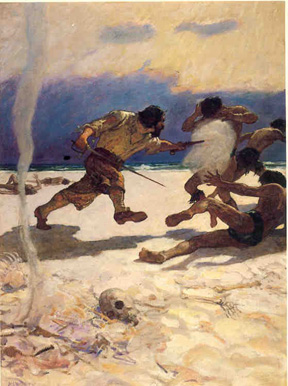
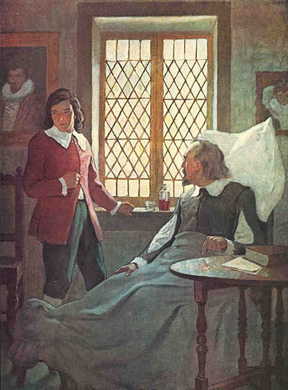
Illustration is by NC Wyeth (1920)
Crusoe is grateful to the ship’s captain for his opportunity of rescue
All audio stories are Copyright © Candlelight Stories, Inc., All Rights Reserved. Do not distribute copies of our MP3 audio or video stories. They are for your personal use. If you choose to burn our MP3 stories onto a personal CD, do not make copies of the CD or distribute them to other people. Also, do not sell CDs containing our audio stories. All audio stories are copyrighted by Candlelight Stories, Inc.
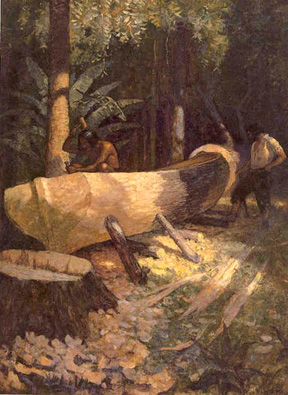
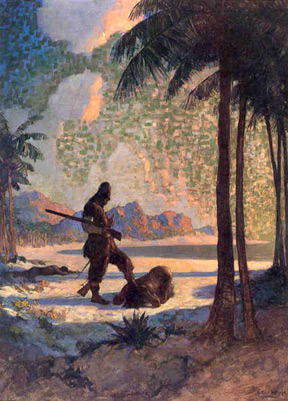
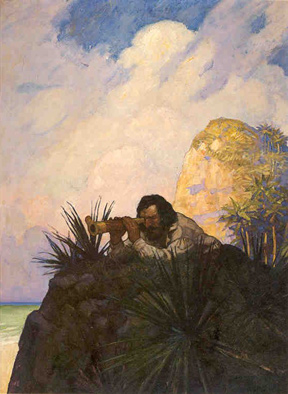
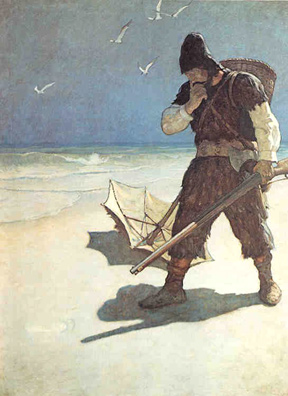
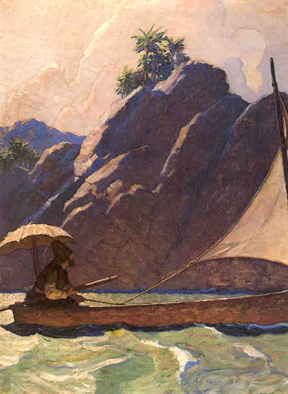
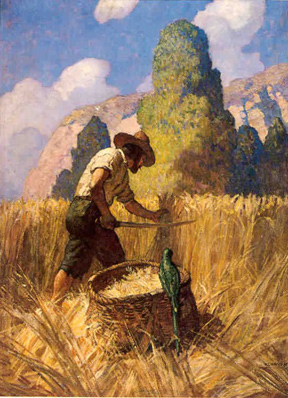
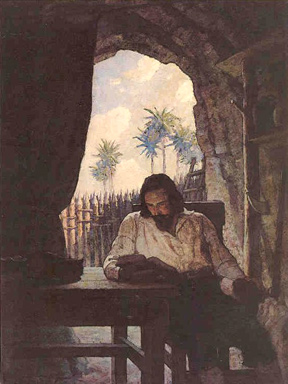
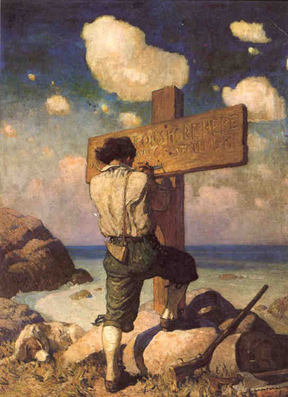 Crusoe explains how he made his own tools and built his home on the island. He begins to show us his journal entries which track each day’s activities. He goes hunting and, much to his surprise, begins to use agriculture. All his mental efforts are bent toward making his survival upon the island long-term. He even considers what he will have to do to ensure his survival when his health and strength begin to fail. The inclusion of the journal entries, which actually repeat some of the very things Crusoe has already told us, are a striking literary device on the part of Daniel Defoe. Pay attention to how the voice (I mean the literary voice, not the audio voice!) of Crusoe changes ever so slightly with these journal entries as compared to the rest of his narration. Crusoe also begins to struggle with religious thoughts and wonders whether some sort of divine providence is behind his being the sole survivor of the shipwreck.
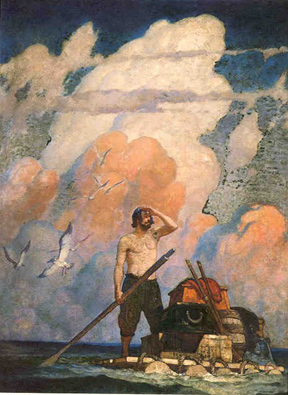 Crusoe experiences a terrifying shipwreck and is the only survivor. His struggle for food, water, and a place to sleep begin. No matter what situation Crusoe finds himself in, he never stops thinking.
 This novel written by Daniel Defoe in 1719 is considered to mark the beginning of English novel-writing. It is one of the greatest books ever written and will completely enthrall readers and listeners alike. If you have only seen movies from the book, you are in for a big surprise. So get comfortable, turn off the TV and listen to the original ‘lost at sea’ novel.