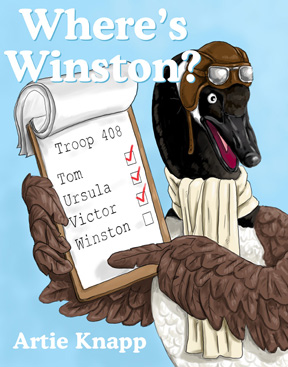
Storybook: Where’s Winston?

by Artie Knapp (USA)
the author has an excellent story site: artieknapp.com
illustration by Emily Doyle (emilydoyledesign.com)

whereswinston

The cold wind blew past the geese with the weight of a freight train and the sting of a hundred bumble bees. It was a strong reminder of why they were migrating south for the winter. As the geese did their final stretches in preparation for the long flight that lay ahead, Ralph, the flock’s flight commander, proceeded to do a final roll call.

Continue reading

Storybook: Hannah Banana

By Joshua Ingram

In the deepest jungle of Africa, there lived a family of monkeys. There was a Mama Monkey, and a Papa Monkey, and they had a young daughter named Hannah.
The monkey family lived very happily swinging and playing in the trees and vines. But unfortunately, it wasn’t all play. Papa Monkey had to make sure their home in the canopy was warm and protected.

Mama was responsible for the sewing and cooking of the family’s meals. Hannah helped with the cleaning, but her main chore was to collect all the bananas and other fruit for the monkey family’s meals.

Continue reading

Storybook: Gentian’s Grumpy Day

by Kristen Collier (USA)
illustration by Kevin Scott Collier
There is also a Joy the Jellyfish web site.

Gentian the Great White Shark was grumpy. Nobody wanted to approach him today! Fish fled from his path. Joy the Jellyfish saw the commotion. She gulped and then approached the out of sorts shark.

Continue reading

Storybook: Fairy of the Dawn – An Epic Fairy Tale

This is an epic fairy tale  that reworks the classic Grimm’s story, ‘The Water of Life,’ into a grand Nordic tale of magic, goddesses, fairies and heroes. Go on an epic quest with the young son of an emperor to find the magic of the Fairy of the Dawn.

Fairy of the Dawn
By John Brookes

There was once an emperor, very great and mighty, and he ruled over an empire so large that no one knew where it began and where it ended. But if nobody could tell the exact extent of his Sovereignty everybody was aware that the emperor’s right eye laughed, while his left eye wept. One or two men of valour had the courage to go and ask him the reason of this strange fact, but he only laughed and said nothing; and the reason of the deadly enmity between his two eyes was a secret only known to the Monarch himself.

Continue reading

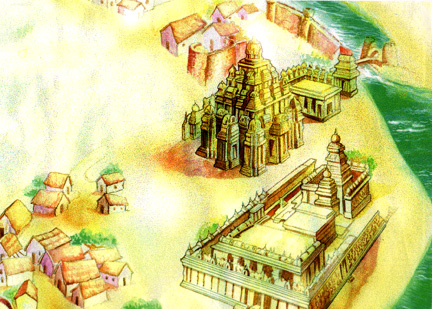
Storybook: The Panchatantra (a folktale from India)

translated and illustrated by Vaibhav Kodikal (Mumbai, India)

This illustrated story is one of the most wonderful things we ever received at Candlelight Stories. It was sent to us back in 1997 by a young man named Vaibhav Kodikal from Mumbai, India. This was one of his first illustration projects, finished while he was still in school. The Times of India did an article about how he made this story and published it on Candlelight Stories. He was and remains one of our very favorite artists. We hope he is doing very well indeed today.

The Panchatantra – The Brahmin’s Tale is from the oldest extant collection of fables in Sanskrit literature. Dating from the 4th century AD, it is based on still earlier collections of folk tales. The Panchatantra is sometimes attributed to an Indian sage, Bidpai (flourished about 300 A.D.). The tales, primarily about animals, are organized into five books on such topics as winning friends, losing property and waging war. They were originally intended to instruct a young prince in the conduct that would ensure his worldly success.

The Tale Begins

Long, long ago there was a poor Brahmin named Krishnan. He could not find enough work to do. Sometimes, he and his family had to go without food.

Continue reading

Inspiration From the Arabian Nights

The Arabian Nights have inspired writers, poets, composers and painters in the West.

In 1882, Robert Louis Stevenson, the author of ‘Treasure Island,’ wrote:

‘There is one book, for example, more generally loved than Shakespeare, that captivates in childhood, and still delights in age – I mean the ARABIAN NIGHTS – where you shall look in vain for moral or for intellectual interest. No human face or voice greets us among that wooden crowd of kings and genies, sorcerers and beggarmen. Adventure, on the most naked terms, furnishes forth the entertainment and is found enough.’

Continue reading

The History of the Arabian Nights

The Arabian Nights have a history that is largely mysterious. However, it is widely considered that they may include tales told by ancient travelers and merchants along the Chinese Silk Route. As they made their way from Northern China to the Middle East and Egypt, the travelers stopped in various towns and trading posts where they would tell these stories to each other for entertainment.

Continue reading

Arabian Nights: The Ruined Man Who Became Rich Again Through a Dream (the John Payne translation)

Translated by John Payne (1901)

There lived once in Baghdad a very wealthy man, who lost all his substance and became so poor, that he could only earn his living by excessive labour. One night, he lay down to sleep, dejected and sick at heart, and saw in a dream one who said to him, ‘Thy fortune is at Cairo; go thither and seek it.’ So he set out for Cairo; but, when he arrived there, night overtook him and he lay down to sleep in a mosque.

Continue reading

Arabian Nights: Ali Baba and the Forty Thieves (the Edward Lane translation)

Translation by Edward Lane (1841)
Illustration by Edmund Dulac (1907)

IN former days there lived in a town of Persia two brothers, one named Kasim, and the other ‘Ali Baba. Their father divided a small inheritance equally between them. Kasim married a rich wife, and became a wealthy merchant. ‘Ali Baba married a woman as poor as himself, and lived by cutting wood and bringing it upon three asses into the town to sell.

Continue reading

Arabian Nights: The Story of the Merchant and the Jinni (the Edward Lane translation)

Translation by Edward Lane (1841)

IT has been related to me, O happy King, said Shahrazad, that there was a certain merchant who had great wealth, and traded extensively with surrounding countries; and one day he mounted his horse, and journeyed to a neighbouring country to collect what was due to him, and, the heat oppressing him, he sat under a tree, in a garden, and put his hand into his saddle-bag, and ate a morsel of bread and a date which were among his provisions. Having eaten the date, he threw aside the stone, and immediately there appeared before him an ‘Efrit, of enormous height, who, holding a drawn sword in his hand, approached him, and said, Rise, that I may kill thee, as thou hast killed my son. the merchant asked him, How have I killed thy son? He answered, When thou atest the date, and threwest aside the stone, it struck my son upon the chest, and, as fate had decreed against him, he instantly died.

Continue reading

Arabian Nights: Introduction (the Edward Lane translation)

Translation by Edward Lane (1841)

In the name of God, the Compassionate, the Merciful.

PRAISE be to God, the Beneficent King, the Creator of the universe, who hath raised the heavens without pillars, and spread out the earth as a bed; and blessing and peace be on the lord of apostles, our lord and our master Mohammad, and his Family; blessing and peace, enduring and constant, unto the day of judgment.

Continue reading

Arabian Nights: Ali Baba and the Forty Thieves

Translated by Sir Richard Francis Burton (1885)

If you want to listen to our 1-hour audio version of Ali Baba and the Forty Thieves, click here.

IN days of yore and in times and tides long gone before, there dwelt in a certain town of Persia two brothers, one named Kasim and the other Ali Baba, who at their father’s demise had divided the little wealth he had left to them with equitable division, and had lost no time in wasting and spending it all. The elder, however, presently took to himself a wife, the daughter of an opulent merchant, so that when his father-in-law fared to the mercy of Almighty Allah, he became owner of a large shop filled with rare goods and costly wares and of a storehouse stocked with precious stuffs, likewise of much gold that was buried in the ground. Thus was he known throughout the city as a substantial man. But the woman whom Ali Baba had married was poor and needy. They lived, therefore, in a mean hovel, and Ali Baba eked out a scanty livelihood by the sale of fuel which he daily collected in the jungle and carried about the town to the bazaar upon his three asses.

Continue reading

Arabian Nights: The Tale of the Ensorceled Prince

Translated by Sir Richard Francis Burton (1885)

KNOW then, O my lord, that whilom my sire was King of this city, and his name was Mahmud, entitled Lord of the Black Islands, and owner of what are now these four mountains. He ruled threescore and ten years, after which he went to the mercy of the Lord and I reigned as Sultan in his stead. I took to wife my cousin, the daughter of my paternal uncle, and she loved me with such abounding love that whenever I was absent she ate not and she drank not until she saw me again. She cohabited with me for five years till a certain day when she went forth to the hammam bath, and I bade the cook hasten to get ready all requisites for our supper. And I entered this palace and lay down on the bed where I was wont to sleep and bade two damsels to fan my face, one sitting by my head and the other at my feet.

Continue reading

Arabian Nights: The Fisherman and the Jinni

Translated by Sir Richard Francis Burton (1885)

IT hath reached me, O auspicious King, that there was a fisherman well stricken in years who had a wife and three children, and withal was of poor condition. Now it was his custom to cast his net every day four times, and no more. On a day he went forth about noontide to the seashore, where he laid down his basket and, tucking up his shirt and plunging into the water, made a cast with his net and waited till it settled to the bottom. Then he gathered the cords together and haled away at it, but found it weighty. And however much he drew it landward, he could not pull it up, so he carried the ends ashore and drove a stake into the ground and made the net fast to it. Then he stripped and dived into the water all about the net, and left not off working hard until he had brought it up.

Continue reading