Storybook: The Panchatantra (a folktale from India)

translated and illustrated by Vaibhav Kodikal (Mumbai, India)

This illustrated story is one of the most wonderful things we ever received at Candlelight Stories. It was sent to us back in 1997 by a young man named Vaibhav Kodikal from Mumbai, India. This was one of his first illustration projects, finished while he was still in school. The Times of India did an article about how he made this story and published it on Candlelight Stories. He was and remains one of our very favorite artists. We hope he is doing very well indeed today.

The Panchatantra – The Brahmin’s Tale is from the oldest extant collection of fables in Sanskrit literature. Dating from the 4th century AD, it is based on still earlier collections of folk tales. The Panchatantra is sometimes attributed to an Indian sage, Bidpai (flourished about 300 A.D.). The tales, primarily about animals, are organized into five books on such topics as winning friends, losing property and waging war. They were originally intended to instruct a young prince in the conduct that would ensure his worldly success.

The Tale Begins
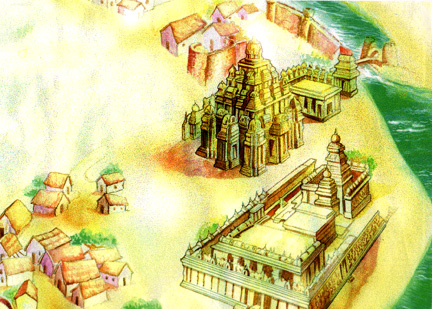
Long, long ago there was a poor Brahmin named Krishnan. He could not find enough work to do. Sometimes, he and his family had to go without food.

Continue reading

Inspiration From the Arabian Nights

The Arabian Nights have inspired writers, poets, composers and painters in the West.

In 1882, Robert Louis Stevenson, the author of ‘Treasure Island,’ wrote:

‘There is one book, for example, more generally loved than Shakespeare, that captivates in childhood, and still delights in age – I mean the ARABIAN NIGHTS – where you shall look in vain for moral or for intellectual interest. No human face or voice greets us among that wooden crowd of kings and genies, sorcerers and beggarmen. Adventure, on the most naked terms, furnishes forth the entertainment and is found enough.’

Continue reading

The History of the Arabian Nights

The Arabian Nights have a history that is largely mysterious. However, it is widely considered that they may include tales told by ancient travelers and merchants along the Chinese Silk Route. As they made their way from Northern China to the Middle East and Egypt, the travelers stopped in various towns and trading posts where they would tell these stories to each other for entertainment.

Continue reading

Arabian Nights: The Ruined Man Who Became Rich Again Through a Dream (the John Payne translation)

Translated by John Payne (1901)

There lived once in Baghdad a very wealthy man, who lost all his substance and became so poor, that he could only earn his living by excessive labour. One night, he lay down to sleep, dejected and sick at heart, and saw in a dream one who said to him, ‘Thy fortune is at Cairo; go thither and seek it.’ So he set out for Cairo; but, when he arrived there, night overtook him and he lay down to sleep in a mosque.

Continue reading

Arabian Nights: Ali Baba and the Forty Thieves (the Edward Lane translation)

Translation by Edward Lane (1841)
Illustration by Edmund Dulac (1907)

IN former days there lived in a town of Persia two brothers, one named Kasim, and the other ‘Ali Baba. Their father divided a small inheritance equally between them. Kasim married a rich wife, and became a wealthy merchant. ‘Ali Baba married a woman as poor as himself, and lived by cutting wood and bringing it upon three asses into the town to sell.

Continue reading

Arabian Nights: The Story of the Merchant and the Jinni (the Edward Lane translation)

Translation by Edward Lane (1841)

IT has been related to me, O happy King, said Shahrazad, that there was a certain merchant who had great wealth, and traded extensively with surrounding countries; and one day he mounted his horse, and journeyed to a neighbouring country to collect what was due to him, and, the heat oppressing him, he sat under a tree, in a garden, and put his hand into his saddle-bag, and ate a morsel of bread and a date which were among his provisions. Having eaten the date, he threw aside the stone, and immediately there appeared before him an ‘Efrit, of enormous height, who, holding a drawn sword in his hand, approached him, and said, Rise, that I may kill thee, as thou hast killed my son. the merchant asked him, How have I killed thy son? He answered, When thou atest the date, and threwest aside the stone, it struck my son upon the chest, and, as fate had decreed against him, he instantly died.

Continue reading