Short Documentary About Saint Nicholas, Turkey and Santa Claus


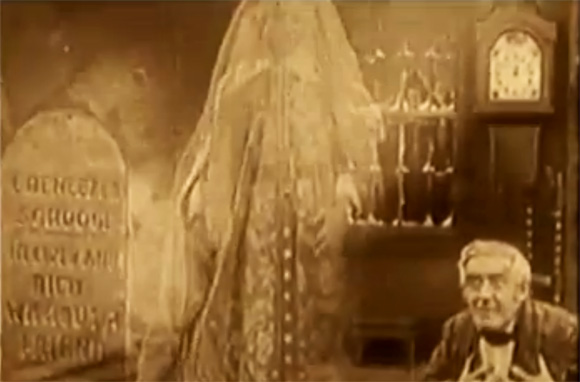
This short documentary seems to be from the late 1940s or early 50s. It was produced by the Turkish Broadcasting and Tourism Department to explain the connection between Saint Nicholas of Myra, which is in present-day Turkey, and the modern conception of the gift-giving Santa Claus who lives at the North Pole.

Bob Dylan Talks Music and Draws in a Trailer (1986)

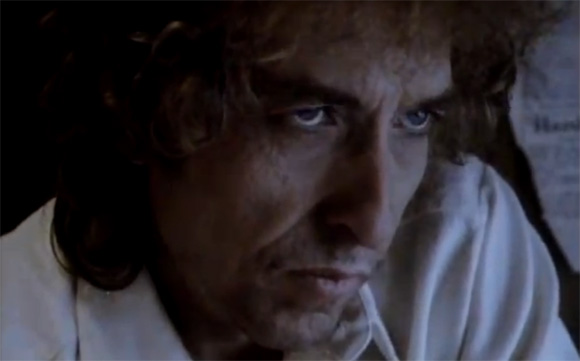
Bob Dylan has always been in the enviable position of being taken seriously even when he is just messing around. God he must be fun to hang out with. I think he is one of the funniest human beings I have ever seen. He carries on here as if beginning an interview but he’s really drawing the interviewer with total focus and determination. He then proudly holds up one of the worst drawings I’ve ever seen in the long history art. But have you ever seen someone answer questions this way? I like the way in part 2 he predicts the sudden change in music about to happen when the kids who don’t like all the machine music of the eighties make something new in four or five years. He was predicting the emergence of the alternative scene and bands like Nirvana I think.

Sally Saves Christmas

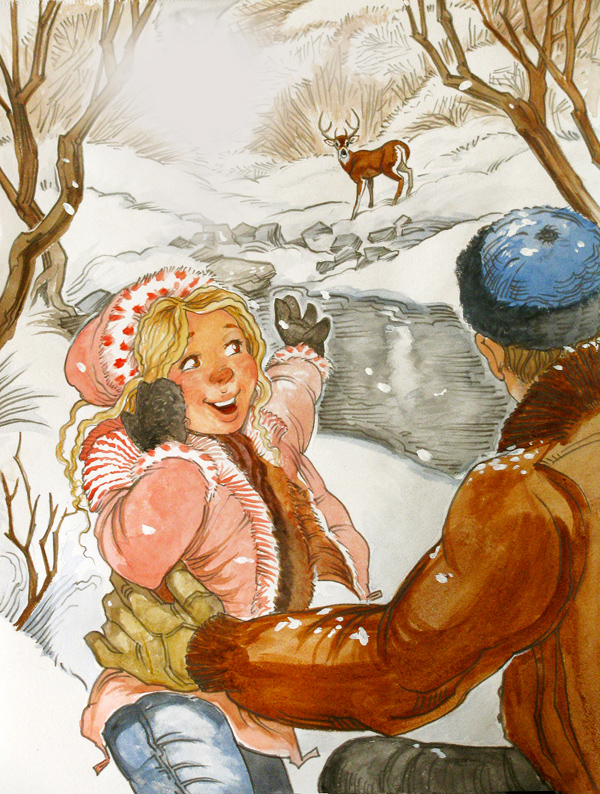
Some of the readers of this site will know that this story is the original piece of material behind Candlelight Stories. Back in 1994, I sat at a very flimsy folding table in a Los Angeles apartment with a box of pastels, crayons and ballpoint pens to scratch out a pile of illustrations that vaguely added up to some kind of Christmas tale. I still have all those original drawings in a big department store box. The interesting thing about the illustrations for me is the series of actions that they caused which led me directly into the various skills and technologies that I have used and made a living from ever since. After finishing the illustrations and creating a large bound book to give as a Christmas gift, I scanned the pictures and decided to try to put them into a slide show. I had an early version of the Mosaic web browser and soon realized that I could use my AOL account to post things in a folder that could be accessed by the web browser. Having done that and been very impressed with myself I showed it to my non-technical friends and received some half-hearted congratulations and was asked how I could ever hope to make any money that way. Within a few months I received a letter in the actual mail from the USA Today newspaper requesting permission to put an illustration and a web link in a listing of good things on the web. So I said they could and they printed their thing. So I began to add new things to the web site as I could.

It’s pretty much the same today. You just make a little thing and stick it on the web to see who likes it. But back then it was a little like magic. My web experiment grew quickly and when the higher-speed DSL technology first came into Los Angeles I jumped on it and got myself a Digital Alpha server and put it at the end of a DSL line in my own home to serve the web site. According to the company which was the first one up and running in L.A., I was the first person to attempt running a web server over the DSL technology in Southern California! They gave me totally free ISP service for several years in exchange for a little advertising. I’d actually have late night conversations with their engineers – sometimes from their cars as they made their way to hubs and switches in the dead of night to fix something. Imagine that kind of technical support today with your blog host! Won’t happen! This all worked well for a time. But then the DSL technology began to fail and I quickly realized it was a dead-end technology with too many players involved on the back end who could not adequately maintain the service without blaming each other for failures. But my point is that during that time, with that kind of approach, one could really get a sense of being visited by the world. I could watch the lights blink as people came onto the server to visit. There were times, during serious outages of some sort or other, when I’d throw the big Alpha server into my car and drive it to some other location for a temporary connection. Amazing. Fun.

It’s still fun today. That’s why I still post this odd little story every Christmas. It’s the original first thing of this site.

Marilyn Monroe – The Last Interview


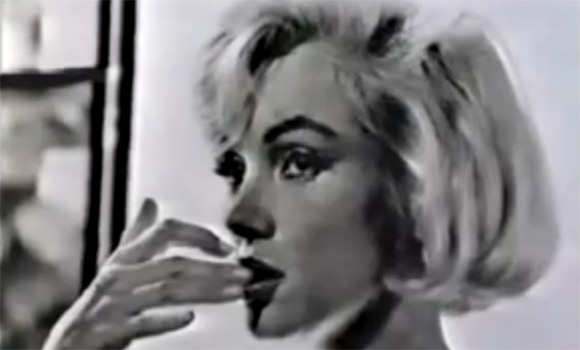
This is the last interview Marilyn Monroe ever gave. It was for Life Magazine in 1962. The interviewer is editor Richard Meryman. The film includes various pieces of Monroe documentary and news footage. As she speaks, she seems delicate and somewhat forced in her cheerful girlishness. I’ve never given much a damn about Monroe. I view her as one of those totally false put-ons of sexuality that worked for a while because of the grotesque and revolting American male of the 1950s. Men were so totally warped about their own bodies and what they thought women should be that they were willing to worship one who walked out and turned them all into jokes. That’s Monroe – a vicious mockery of American sexuality in the 50s. She knew it and she couldn’t find a way out of the role she had chosen.

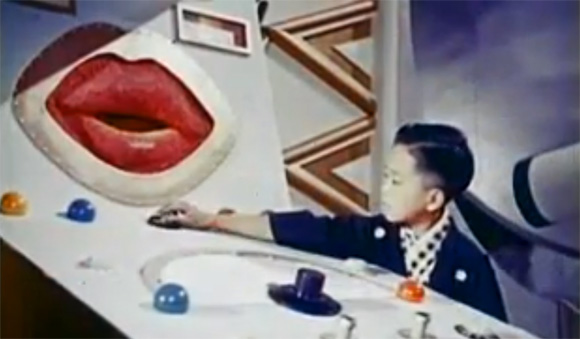
Santa Claus: 1959 Christmas Movie From Mexico


Here’s a Mexican take on the story of Santa Claus. It was released in 1959 and then dubbed into English for a 1960 release. It was directed by René Cardona. The story has Santa working in space and relying on his assistant, Merlin the Wizard, to battle with the Devil’s minion who is sent to ruin Christmas. Even though it won several awards and was featured on television stations during the 60s and 70s, it is widely considered to be one of the worst movies ever made! But I enjoy the Mexican flavor that permeates all the typical North Pole settings.

Detective City Angel: A Film by Alessandro Cima


MATURE CONTENT AND LANGUAGE
First, here’s a nice review and interview about the film at Dangerous Minds. Want to follow a secret identity artist through a dangerous Los Angeles as he escapes and hits like a criminal? Hang on and watch carefully. You may need to watch it 14 times to catch the drift. But you’ve probably got that kind of time anyway. This is a Los Angeles crime film. But it’s as if several films on celluloid fused together and what you end up with is an art film that gets overwhelmed by urban documentary and then collapses into a narrative thriller. It’s filled with hints, clues, evidence and misdirection. Images, ideas and sounds bounce off each other, mirror each other. There are secrets in this film. You have to watch carefully, through layers to catch things. I’ve tried to make a film that moves like disjointed thoughts toward the preordained ending. Continue reading

Light On a Snowy Day: Children’s Holiday Story by Artie Knapp

Story by Artie Knapp
Illustration by Maya Ramaswamy

Light On a Snowy Day

IT WAS TWO DAYS before Christmas and young Maggie Dotson was already being told that her Christmas wish would not be coming true. Paxton she was told, would not be coming back.

A year before that December day an injured baby deer had been abandoned in the woods behind the Dotson’s home. So weak was the little deer, that he hadn’t the strength to run from Maggie’s father when he approached him.

As he carried the little deer towards their home, Maggie rushed outside and greeted her father with great excitement.

“Wow, a deer! What happened to him, Daddy?” asked Maggie.

“Well, I’m not sure how he managed to do it, but he mangled one of his hoofs pretty severely,” Mr. Dotson said.

Maggie leaned in to take a better look. “Poor little reindeer. Can we keep him, Daddy?”

“First of all, he’s a white­-tailed deer,” laughed Mr. Dotson. “And no, we can’t keep him. He’s a wild animal, Maggie. I’ll do everything I can and then he’ll have to be set free.”

While gently rubbing the little deer’s nose it licked Maggie’s hand, which made her laugh. Mr. Dotson smiled and just shook his head. He proceeded to carry the little deer to the garage.

After Mr. Dotson carefully placed the little deer on the floor, he asked Maggie to go to the house and get his medical bag. The little deer was in luck. He was being attended to by James Dotson, local Veterinarian.

In what seemed like two seconds to Mr. Dotson, Maggie rushed inside the garage carrying his medical bag, and a handful of lettuce she had grabbed from the refrigerator. Maggie handed her father the bag, and then placed the lettuce by the little deer’s mouth – but he wasn’t interested.

“Why isn’t he hungry, Daddy?”

“Maybe he’s just too scared to eat right now.”

“I know what he needs,” Maggie said. “He needs carrots, because that’s what Santa’s reindeer like to eat.”

“He’ll get plenty of food, alright. Right now he just needs to have his hoof cleaned and bandaged.”

As Mr. Dotson placed a bandage around the little deer’s injured hoof, Maggie became excited as the little deer began to nibble on the lettuce. And then, she pointed out to her father that the little deer had markings above its eyes that looked like the sun. After a quick observation, Mr. Dotson was struck by how much the little deer’s markings did in fact resemble the sun with protruding rays of light.

It was dark outside and the temperature was quite cold. Despite her reluctance to leave the little deer, Maggie’s father convinced her that he would be safe in the garage. Maggie insisted that her father return with carrots and warm blankets for him. He promised he would.

After he turned off the light in the garage, Maggie turned to her father and said, “I’m going to name him Paxton, Daddy.”

“That’s a fine name for a deer, Maggie.”

“You really think so, Daddy?”

“Sure do.”

“Daddy?”

“Yes.”

“Are you sure Paxton is going to be alright?”

“He’s going to be fine, Maggie. Now let’s get inside where it’s warm.”

Later that night Maggie could barely sleep. She kept getting up to view the garage from the window in her room. Even though she couldn’t see Paxton, looking out at the garage comforted her.

After she awoke the next morning, Maggie rushed down the stairs and was heading for the front door, when her mother asked her where she thought she was going.

“I’m going to go see Paxton, Mommy.”

“Not before you eat your breakfast, young lady.”

To the dissatisfaction of her mother, Maggie wolfed down her breakfast. She had two eggs, scrambled, and a piece of toast. Her glass of orange juice never left the table.

“Where’s Daddy? Is he in the garage with Paxton?”

“Yes, he’s in the garage tending to your little….” Before Mrs. Dotson had finished her sentence, Maggie was out the door.

As Maggie darted into the garage she nearly knocked her father over.

“How’s Paxton, Daddy?”

“He’s doing fine, Maggie.”

“Is his hoof all better now?”

“Well, it’s going to take time to heal. Right now he just needs to work on getting his strength back.”

Paxton was very timid as Maggie approached him.

“Why is he afraid of me, Daddy?”

“He’s still not used to us. This is a strange place to him.”

But with time and persistence, Maggie finally gained the little deer’s trust. In fact, he was soon eating carrots right out of her hand. And when the holidays were over and Maggie was back in school, she never left without feeding Paxton first thing every morning.

Mr. Dotson could see the bond that his daughter felt for the little deer. That scared him, though, because he knew Maggie would never be able to say goodbye. So when his hoof had finally healed, Mr. Dotson came home early one afternoon to set Paxton free.

When Maggie learned that her father had released Paxton, she was devastated. Mr. Dotson had believed it would be easier on Maggie that way, but he was wrong. His daughter never forgot the little deer and she called out to him every day, hoping he would hear her.

In time, though, Maggie did come to understand that deer are not like puppies, or kittens. She understood that wild animals, even little deer, need to be in their natural habitat. But that didn’t change how much Maggie cared for and missed Paxton.

Between the Dotson’s home and acres of woods lay a pond that always froze-solid in the winter months. It was a large pond, and many children would come over to ice-skate on it. But the pond hadn’t frozen over that winter yet, because the weather had been warmer than usual.

As Maggie stood by the pond one afternoon, it started to snow. Mr. Dotson saw Maggie through the kitchen window and could tell she looked upset. Without having to ask what was wrong, he knew.

Mr. Dotson felt guilty about having not been more supportive of his daughter’s belief that she would see Paxton again. And even though he didn’t want to give her false hope, he realized that no longer mattered. Maggie was hurting and he wanted to help.

As Mr. Dotson walked outside to greet his daughter, he carried a pair of binoculars with him. He and Maggie would spend the next couple of hours in the woods, where they searched for deer tracks in the newly fallen snow. But as Mr. Dotson had expected, their search came up empty.

“I’m sorry we didn’t have better luck, Maggie.”

Maggie sadly nodded at her father, who was now carrying her because her toes felt like popsicles. But then something happened! As they were exiting the woods, two deer were standing next to the pond. One of the deer was female, and the other was a buck with antlers. Based on the size of the deer, Maggie never considered that either could be Paxton. But her father quickly reminded her of how much Paxton would have grown over the past year.

As Maggie and her father edged closer to the pond, the doe quickly abandoned her attempt at a drink of water. The buck turned and saw them staring in his direction. But the buck stood still, barely flinching. Maggie, who was no longer being held by her father, watched as he peered through his binoculars. As Mr. Dotson got a closer view of the buck, something stood out through the falling snow; it was the markings above the buck’s eyes. He handed the binoculars to his daughter, and whispered if she recognized anything special about the deer with antlers. Maggie immediately recognized the markings on the buck as Paxton’s. With great excitement, Maggie called out to him, and then the two deer darted away. She continued to call out to Paxton, who briefly stopped in his tracks and looked back at her. After a few moments, he darted off again to catch up with the doe and then disappeared into the woods.

At first, Maggie felt happy, but her happiness soon turned to sadness. She felt as if she had lost Paxton all over again. But her father explained to her the gift she had received in getting to see him once more.

As Maggie stood next to her father, with the snow still falling, a carp jumped making a large splash in the pond. It had been a long day. They went inside to thaw from the cold.

Many years later when Maggie told this story to her grandchildren, she reminded them that the best Christmas presents often aren’t found under a tree, but in your heart.

The End

Here’s a post with information on how you can buy Artie Knapp’s ‘Living Green: A Turtle’s Quest For a Cleaner Planet.’

Here’s a link to the author’s web site where you can purchase more books.
Creepy Claymation Brings Satan to Mark Twain’s Door

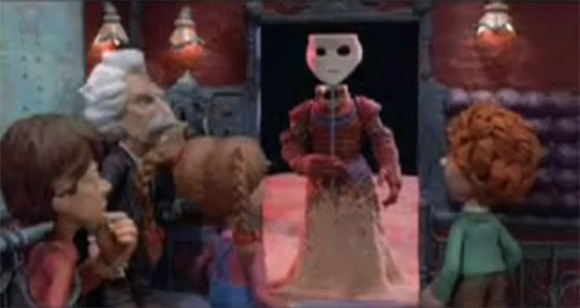
This is a genuinely disturbing look at how you can teach your kids all about the cruel world they find themselves living in. Today’s pleasant little lesson comes courtesy of Mr. Mark Twain’s novel ‘The Mysterious Stranger‘ which had this scene adapted to claymation for the 1986 feature film, ‘The Adventures of Mark Twain.’ Satan him or herself pays an unannounced visit to Tom Sawyer, Huck Finn and Becky Thatcher so that he can show them how to build their very own little world of people and then destroy it with all the plagues and violence of mankind.

TV Commercials From the 1970s

Imagine yourself sitting in a finished basement room with wood panel walls, a nice thick shag carpet, and a long low console television. In the 70s, I remember running from house to house to see everyone’s color screens because I had a black & white at home. An episode of Star Trek in full color glory was a rare form of Nirvana for me. I wasn’t really as uncool as that sounds. Don’t let it fool you. Pretty soon our current infatuation with HD will seem just as naive.

Aleph: California Beat Artist Wallace Berman’s Only Film

While I was running through the Getty Center’s flagship portion of the massive citywide ‘Pacific Standard Time‘ art exhibit, I was struck by just how great this Wallace Berman fellow really was. Known primarily as the ‘father’ of assemblage art, he was also a member of the Beat Movement. He made a single film which occupied much of his time through the 1960s and 70s. It’s less than eight minutes long and it’s a drop dead gorgeous thing to see. He’s one of those film artists interested in what I like to call the messy image. The film seems to have been dragged through ink and dirt. It’s been scratched, wrinkled, folded, cut, slashed and stained. Letters flash by like subliminal messages. Pop culture crashes into modern art. He films magazines, papers, radios, faces, hands, rock stars, body parts, buildings, streets and apparently just about everything he had lying around in his studio. This film is a quiet little reminder that crystal clear HD and super sharp focus are not anywhere near the concerns of some artists.

And here is California assemblage artist George Herms talking about Berman recently as part of the Pacific Standard Time series of exhibits:

Crosscurrents: Film About Pacific Standard Time Art Exhibits Focused on Los Angeles Art From 1945 – 1980

Pacific Standard Time is a massive overview of Los Angeles art from 1945 to 1980. At least sixty galleries and museums are taking part over the next few months. I have already been to the largest exhibits at the Museum of Contemporary Art, Los Angeles County Museum of Art, and the Getty Center. The whole thing is a lot of fun and I have discovered artists I never knew about before. There are magnificent things on display and the curators have also published big books to go along with each exhibit. I seriously recommend that you always get the books because they have far more information in them than the exhibits themselves. I view it as my own effort to compile a record of this unique regional art show.

You can find almost everything you need at the Pacific Standard Time web site.

This film was put together for the Getty Center’s flagship exhibit, Crosscurrents, which covers 1950 to 1970. It’s a very nice little documentary about some of the major art developments in Los Angeles.

Congress Attempting to Hand U.S. Military the Power to Disappear Americans

The U.S. Senate passed the National Defense Authorization Act which codifies into law the power of the U.S. military to arrest and detain Americans indefinitely, without any legal charges and without any oversight whatsoever. In other words, the United States government is handing its military the power to disappear anyone it wants to. The bill apparently designates the entire planet as a battlefield and makes it legal for the military to imprison U.S. citizens for any reason. No evidence of any wrongdoing is required. The military could simply suspect or dislike you and make you vanish. Forever. No one will even know what happened to you. A soldier can drive up, grab you, put you in an unmarked van, take you to a military prison, and keep you there until you die. That is exactly the same authority wielded by every South and Central American dictator over the past sixty years. It’s a power used by dictators and authoritarian police states across the globe.

Only seven Senators voted against this terrifying bill. They are:

R-Rand Paul (KY)
R-Thomas Coburn (OK)
R-Mike Lee (UT)
D-Thomas Harken (IA)
D-Ron Wyden (OR)
D-Jeff Merkley (OR),
I-Bernard Sanders (VT) (one of 2 Independen­ts in the Senate)

Well, now you know. It would seem clear that the other senators are becoming a threat to civil rights and the protections of the U.S. Constitution. I don’t really see any way to logically argue in favor of these people or support their continued presence in the Senate.

The Obama administration has said that the President will most likely veto this bill if it reaches him. But it is Obama who has opened the door for this bill by resolutely defending his right to kill any American citizen that he defines as an enemy… without charges and without trial. Our President now executes Americans without trials. And now our Senate wants the military to snatch people without trials.

Here’s the Facebook page for ‘One Billion Against Indefinite Detention Without Trial Law.

Trailer for Disney’s John Carter Film

Here’s the first official trailer for Disney’s upcoming film, ‘John Carter.’ It’s an odd way to retitle Edgar Rice Burroughs’ science fiction novel, ‘A Princess of Mars.’ But that’s what they’ve done. I don’t imagine there are too many people who will go see a movie named for someone called John Carter. But anything is possible. If you’d like to put up with some very bad writing by Mr. Burroughs, you can listen to Candlelight’s complete audio book version of the novel. I’m not sure why I recorded it at all. Burroughs turned what should have been a short story into a novel by making all of his sentences run the length of football fields.