Podcast Novel: A Princess of Mars (Chapter 7)

DOWNLOAD MP3 AUDIO

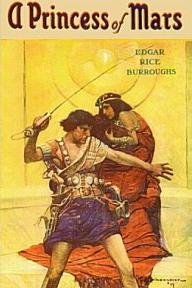
A Princess of Mars

This is the first John Carter of Mars novel by Edgar Rice Burroughs, the author of the Tarzan books. It was his first novel, published in 1917 and it’s a work of rip-roaring science fiction that has inspired many of the great writers in the genre.

Chapter 7: John Carter is allowed to accompany an expedition that explains where martian babies come from.

You’ll find regular podcasts of all the chapters over the next couple of months. Subscribe to our feed.

Duration: 00:12:28
Read by Alessandro Cima

All audio stories are Copyright © Candlelight Stories, Inc., All Rights Reserved.

Saving Books and Finding a Rare Don Quixote

My wife and I were knocking around New York City last week because we visited the excellent show of Picasso paintings and etchings at the Gagosian Gallery on West 21st Street.  Afterward, we stopped into The Strand bookstore in Greenwich Village.  They were selling the book that accompanies the Picasso show for a full twenty dollars less than the gallery.  We decided to go next door to the store’s rare book department where they keep their very valuable and dusty old tomes for the serious collectors of New York.  We went through the steel door and felt that we were entering the high-security wing.  The smell of decaying literature was immediate and sort of relaxing as all rotten literature should be.  We walked around quietly as the employees set up tables of wine glasses for a publisher’s party that would be starting shortly.

I soon found myself strolling down a narrow aisle toward a large window with a massive old air conditioner cranking away near the ceiling.  I could feel the cold air flowing past me and after walking all over the Village it was a welcome respite.  I came to the shelf near the window and noticed a wonderful illustrated volume full of Shakespeare’s history plays.  I pulled it out and began to flip through and was amazed to find a picture on nearly every page.  I wanted it.  I was also enjoying the cold air and the nice fine spray of water droplets on and about my head and shoulders.  ‘Ahh, misters,’ I thought to myself languidly.  ‘They must think of everything here because of the serious collectors who come through each day.  They must be kept comfortable in the heat or they will go elsewhere.’

So I continued to flip through Henry the Fifth and wondered if one hundred and twenty-five dollars was a lot to pay for the histories.  But I didn’t want to leave the misters yet because they were cooling me very nicely… ‘Misters?,’ I thought.  ‘Misters?  Really?  Water spraying about my head in the rare books department?  What on earth kind of idea is this?’ I looked up at the air conditioner and was met with an increased volume of cold water against my face.  Then I looked down at the shelf of rare books beneath the windowsill and saw a large puddle of water on the shelf and droplets of water spattered far and wide over an intimidating selection of fine rare books.  ‘This just can’t be right,’ I thought as I backed away quietly.  I had a bizarre impulse to gather my wife silently and flee.  But I could find no apparent wrongdoing in my situation so I halted.

Continue reading

Essay on the Editing of ‘The Great Gatsby’

gatsbycover1The excellent literary blog called The Elegant Variations has a 4-part post that reprints an essay by Susan Bell about F. Scott Fitzgerald’s revisions to The Great Gatsby through his close work with editor Max Perkins.  Bell discusses the absolutely crystal sharp writing in Gatsby that was the result of meticulous rewrites from Fitzgerald and a strong editorial viewpoint from Perkins that the author was more than willing to acknowledge after publication.

Critical reaction at the time of the novel’s publication noted its incredibly polished writing:

For H. L. Mencken, the novel had “a careful and brilliant finish. . . . There is evidence in every line of hard and intelligent effort. . . . The author wrote, tore up, rewrote, tore up again. There are pages so artfully contrived that one can no more imagine improvising them than one can imagine improvising a fugue.

Here’s another quote from Bell’s essay:

In autumn 1924, Fitzgerald sent Perkins the Gatsby manuscript. The editor diagnosed its kinks, then wrote a letter of lavish praise and unabashed criticism. “And as for the sheer writing, it is astonishing,” wrote Perkins. “The amount of meaning you get into a sentence, the dimensions and intensity of the impression you make a paragraph carry are most extraordinary.” A crucial problem, though, was the hero’s palpability. Perkins explained:

Among a set of characters marvelously palpable and vital—I would know Tom Buchanan if I met him on the street and would avoid him—Gatsby is somewhat vague. The reader’s eyes can never quite focus upon him, his outlines are dim. Now everything about Gatsby is more or less a mystery, i.e. more or less vague, and this may be somewhat of an artistic intention, but I think it is mistaken.

George Orwell’s Quest for Truthful Language

New Statesman has a very interesting article by Keith Gessen about George Orwell’s ‘plain spoken’ style that manifested itself in a series of essays in the 1940s and found its full expression in his masterwork, Nineteen Eighty-Four. It’s fascinating to read about how Orwell’s experiences with fighting in Spain during the civil war in the 1930s and journalistic coverage of the events of that war influenced his use of altered and entirely untrustworthy newspaper articles in Nineteen Eighty-Four.  Orwell apparently believed in clear, sharp and truthful language.  He did not want ready phrases or dead metaphors.  He wanted keen observation and simple expression.

I think he achieved this in Nineteen Eighty-Four to a great degree.  Mr. Gessen says one thing in his article that I don’t necessarily agree with: “In truth, Orwell was wrong about all sorts of things, not least the inner logic of totalitarianism: he thought a mature totalitarian system would so deform its citizenry that they would not be able to overthrow it. This was the nightmare vision of Nineteen Eighty-Four. In fact, as it turned out in Russia, even the ruling elite was not willing to maintain mature totalitarianism after Stalin’s death.”

I don’t think that’s quite right.  The totalitarian regime in Nineteen Eighty-Four is overthrown.  In the last section of the book the writing jumps out into the future and discusses a quite obviously defunct and long-gone totalitarian state that tried to reduce language to its own ends.  I think the point of Nineteen Eighty-Four is that complete control of a population can be largely achieved with various mind-control techniques and the constant application of fear, but that it requires only a modest intelligence to resist and eventually overthrow such control.  The novel’s protagonist, Winston Smith, is just an ordinary schlump.  He’s not very bright.  Pretty dim in fact.  The idea with Winston Smith is if he can do it then anyone can.  And yet he is capable of resisting until his will is ultimately beaten out of him.  But the point is that the will to resist is a real pest.  You can’t remove it from society.  It always comes up and eventually overpowers all control structures.

Purchase Nineteen Eighty-Four
Japanese Toilet Paper Horror

Lucky Koji Suzuki is the Japanese author of a 9-chapter novella to be printed on toilet paper rolls.  The story takes up approximately 3 feet of toilet paper and allows readers to enjoy their fill of horror from the comfort of their toilets which may in fact turn out to be the best place for them to be in case the little story scares the **** out of them.  But what happens if you’re in the middle of the story and you stop and then a friend comes over and uses up a couple of chapters?  Also, how do you bookmark your place?  Or do you even have to?  I might buy this for a Halloween joke.  But then all my party guests might spend the entire evening in the bathroom which would be pretty weird.

Green Lantern in Absurd Fan-Film Trailer

Jaron Pitts has made a movie trailer for a non-existent Green Lantern superhero movie.  Quite frankly, it’s an odd thing to do and I don’t honestly know why anyone would do it.  I certainly like the way it looks for the most part.  I’ve always liked the idea of the Green Lantern.  But a fan film trailer?  I don’t know.   There’s a mashup of various films going on in here with some effects on top. The main problem with this kind of work is that you take popular and well-understood tropes from Hollywood super-hero action movies and reproduce them with sometimes astounding faithfulness, but what you end up with is a photocopy of current filmmaking habits.  It’s like jumping up and down shouting, “Look!  I can do it!  I can make the ship, you know… like fly just like in the big Hollywood pictures!  Like, you know, it zooms in at you and then it stops, and dips its wings and then darts off in another direction with a big ‘WOOSH’ and a little burst of energy and then the music goes ‘CRASH’ and then we see the guy in the pilot’s seat…”  and so on and so on.  My Green Lantern trailer would just have a tired nut-job sitting at his dining room table with a flashlight and a roll of Scotchtape, trying to fashion himself a green light logo to stick on his chest while he poses in front of a full-length mirror.  But that’s just me.  I would generally advise skilled and talented filmmakers to avoid wasting their time.