Photo: She Was Barely Even There
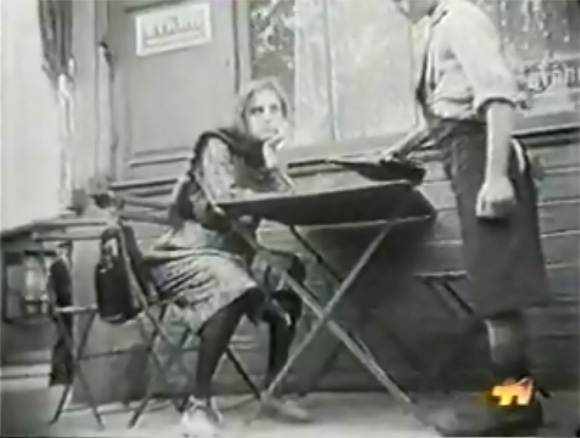
Germaine Dulac was one of the original French film ‘auteurs.’ She was also a film theorist and feminist. She had a relatively short career as an avant-garde filmmaker, making such works as ‘The Smiling Madam Beaudet (1923) and ‘The Seashell and the Clergyman’ (1928) which is often credited as being the first Surrealist film.
In this film, the title translated as ‘Those Who Make Themselves,’ we follow a destitute drunk woman who appears to yearn for the life of a prostitute or to engage in some sort of tryst. It is also possible that she is simply despondent over rejection by a lover. She appears to fail at everything she tries and eventually walks down a staircase into the Seine river. It’s a very simple film that manages to convey a deep sense of loneliness.
Dulac insisted on being credited as the author of her films, not accepting the standard partnership between a screenwriter and director.
Here’s a 1923 quote from Dulac:
I believe that cinematographic work must come out of a shock of sensibility, of a vision of one being who can only express himself in the cinema. The director must be a screenwriter or the screenwriter a director. Like all other arts, cinema comes from a sensible emotion … To be worth something and “bring” something, this emotion must come from one source only. The screenwriter that “feels” his idea must be able to stage it. From this, the technique follows.
Here’s a Senses of Cinema article on Germaine Dulac entitled ‘The Importance of Being a Film Author: Germaine Dulac and Female Authorship.’
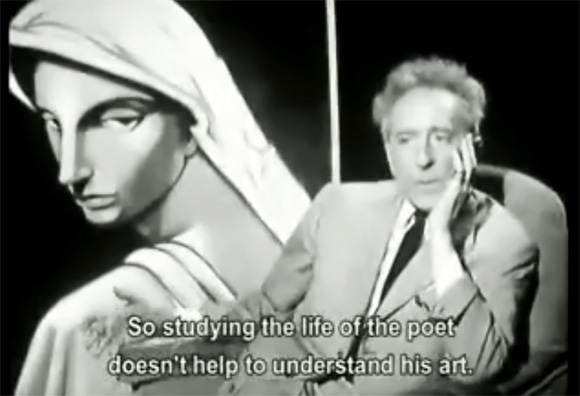
Even though I never really understood what was being said in the ‘Orpheus’ film, it is probably one of the most important influences on the little bits of work that I do in film and video. Various images and scenes from ‘Orpheus’ regularly pop into my head as I work.
One of the best things I think an artist can learn from looking at Jean Cocteau is to follow one’s own interests without worrying about being unqualified – pretending can eventually get you where you want to go if you do it absolutely.
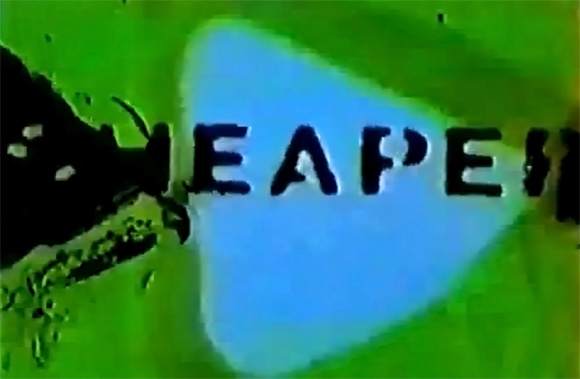
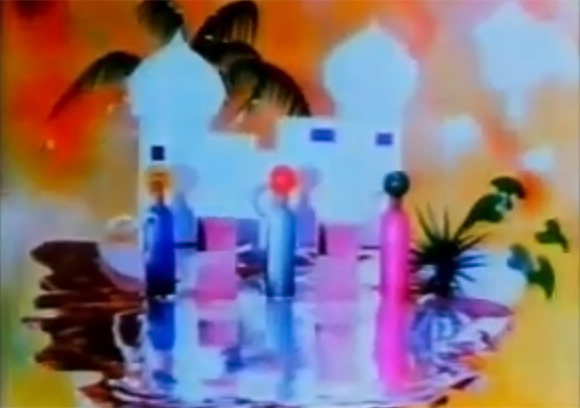
Lye was from New Zealand and worked not only as an experimental filmmaker but also in newsreels and advertising. He was a kinetic sculptor, poet, painter and a writer of essays on artistic theory and philosphy. He made a 1935 short film called ‘A Colour Box’ which was the first generally exhibited film made by painting directly on the film emulsion. It’s a brilliant experimental animation posing as an advertisement for cheaper parcel post. I’m sure the great direct paint filmmaker Stan Brakhage must have been familiar with Lye’s work.
Here’s a gallery site with information and examples of his artwork.

Patrick O’Neill is one of the Los Angeles artists currently featured in the huge citywide exhibit known as ‘Pacific Standard Time.‘ He has made many experimental films using techniques perfected with an optical printer. This film incorporates footage of oil derricks in Venice, California and nude models filmed in the artist’s studio. Its synthesizer score is by Joseph Byrd. I don’t know much about optical printers, but I do know that they allow images or films to be projected and rephotographed by a movie camera. So my guess is that one could set up multiple layers of screens and projections to film them and blend them into a single image. Optical printers were used to create special effects in Hollywood films. I think perhaps the most famous use of the printer was in the creation of the light show sequence near the end of Stanley Kubrick’s ‘2001: A Space Odyssey.’
O’Neill is one of the people who form the incredible fabric of the Los Angeles art scene post World War II. I did not know of him until I found his work through the Pacific Standard Time exhibit which is really something remarkable and I think that its effects will be felt in the art world for quite some time. Its broad scope, grouping and explanation of the Los Angeles art history and its significance cannot help but influence artists here in the city and far beyond. It’s essentially saying, ‘Look, here’s a great and fascinating body of work inspired by a city for the second half of the twentieth century. Here’s how it all happened, who the people were and what they were trying to do.’ It’s a very strong impression to make on a city. It must be a very great honor for an artist to be included in it.
O’Neill from a 1997 Millennium Film Journal interview:
I finished my first film in 1962. Then I started doing abstract or composite films. I began to use the camera as a sort of gathering device to provide elements for manipulation through re-photography. This led to 7362 which was finished in 1967. I didn’t have much knowledge about the history of the medium at that time. I’d had maybe three film classes at UCLA and beyond that the midnight screenings at the Coronet and the Cinema Theater were my education. That series at the Cinema Theater was going on from the early sixties.
The artist’s Lookout Mountain Studios has a web site.
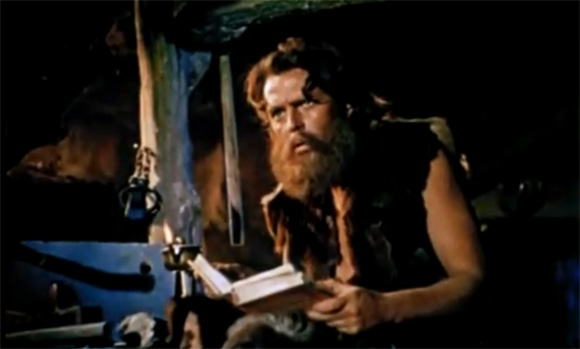
Spanish film director and original member of the Surrealist movement, Luis Buñuel, directed this version of Daniel Defoe’s ‘Robinson Crusoe‘ in 1954. It’s a very good and straightforward telling of the story with a totally convincing island locale. The Defoe novel is now more important reading than it’s ever been. That’s because it is the greatest story ever told about being alone with one’s self. All you have to do is live in Los Angeles for a while with your eyes open to understand how few people want to ever be alone with themselves. You see this problem with people very clearly when they break up with significant others and immediately slide into whatever relationship presents itself. It signifies a profound weakness of mind and character. Defoe wrote about the intricate workings of a mind alone with itself and the unexpected joys and truths one discovers in one’s self. So, read the book. It’s a tough book, full of very fine sentences and very subtle thought. Give it a try.
If you are so inclined, you can listen to the entire book right here because I sat down and read the whole thing into a microphone several years ago. But I suggest you listen now and then while making your way through the book on your own.
Here’s an article on Luis Buñuel at the Senses of Cinema site.
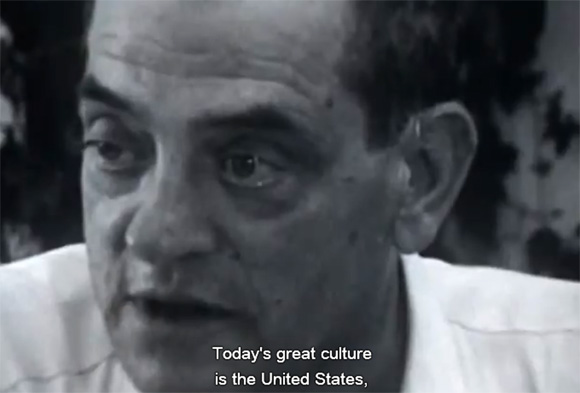
I enjoy listening to people like him talk about their work because they talk about how they see things – how they interpret the world. Compare the way he talks in this film to what you normally see coming from people like Steven Spielberg or Martin Scorsese. Those people don’t seem real. They don’t seem to have any point of view. Notice how people in the film consistently associate Buñuel’s filmmaking with the work of painters. It is the continual grinding down of art into business that destroys real culture. One should immerse one’s self in better ideas and more subtle things if one wants to avoid the dullness that permeates most film work currently going on in the United States. I have found it to be a general rule that people with real talent who are artists answer questions in a slightly confusing manner. Clarity is another word for fake. Buñuel appears to me to fit this general principal.
Buñuel wrote a short and very beautiful autobiography called ‘My Last Sigh.’ I recommend it very highly if you want to know more about the mind behind Surrealist film.
And of course, here is the great Surrealist short film, ‘Un Chien Andalou,’ made by Buñuel in 1929.

A free, open, uncensored Internet is a basic and fundamental right that must be preserved here in the United States if it is to have any chance at all on a worldwide basis.
Join us to protect our rights to free speech, privacy, and prosperity.
Here’s a massive list at the Center For Democracy & Technology of organizations, companies, web sites, blogs and individuals who are opposed to the censorship bills.
At the links below you can send your protest to Congress and learn much more about these bills and how they seek to end the open Internet.
Take action by contacting Congress via the Electronic Frontier Foundation.
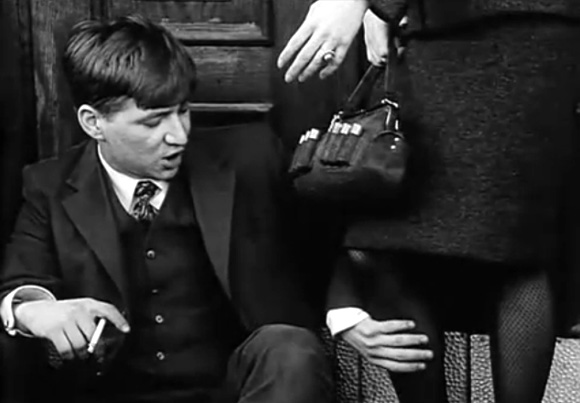
Here’s an article about Fassbinder on the Senses of Cinema site.
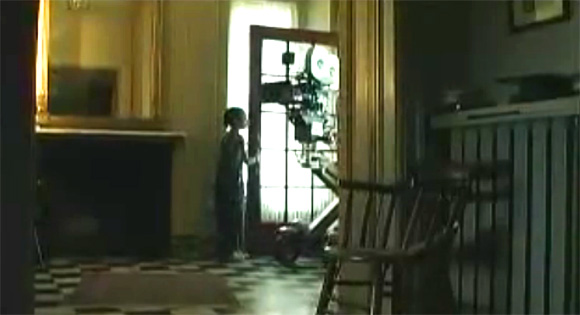

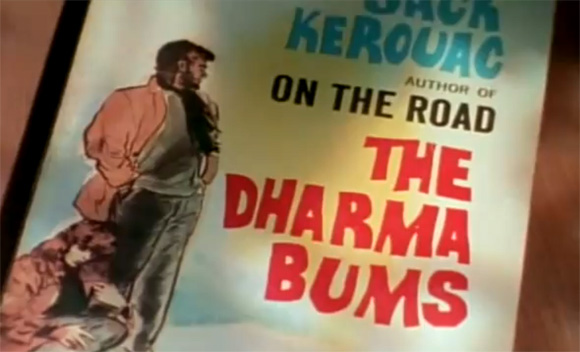
What I like about this documentary is that it does in fact touch upon this subject. What I don’t like about it is Johnny Depp prancing around with an unsmoked cigarette trying to convince us of his Beat/hipster/baggy jacket coolness.
The Beat hatred of all things female manifests itself most obviously in the fact that Burroughs stood his wife, Joan Vollmer, up against a wall in Mexico and blew her brains out with a gun. There’s great mystery surrounding his escape from the authorities in Mexico who quite naturally wanted to investigate and prosecute the man for murder. I would have prosecuted him too. He told various stories about playing a game of ‘William Tell,’ or inebriation or drug use to explain how it happened. But in order to fire a bullet through his wife’s forehead he had to lift the gun and point it at her. It sort of goes without saying. Would you be able to point a gun at your spouse? Hopefully not. I wouldn’t be able to even lift a gun in my wife’s general direction. So why was a man who blasted his wife’s head open welcomed back into his little group of Beat friends? Why would such a man become the life of the party in literary circles? Why would such a man love guns and fire them at tin cans in his backyard for the rest of his life? Good questions. Easily answered. Nobody gave a shit about the man’s dead, blown-open wife. She was just a lady in Mexico married to a bisexual genius. That’s the problem with the Beats. That’s the rock bottom attitude of the most important literary movement in America during the twentieth century.
Here’s what Burroughs had to say about killing his wife:
I am forced to the appalling conclusion that I would never have become a writer but for Joan’s death, and to a realization of the extent to which this event has motivated and formulated my writing. I live with the constant threat of possession, and a constant need to escape from possession, from control. So the death of Joan brought me in contact with the invader, the Ugly Spirit, and maneuvered me into a life long struggle, in which I have had no choice except to write my way out.
Let me translate that for you: “I killed my wife and was so inspired by the act of killing a female that I became a great writer. And I want to kill again. I have to constantly struggle with the urge. My writing helps with that.”
Get the idea? Murder inspires good writing… according to one-third of the Beat literary movement. The other two-thirds were just fine with that.
You may think I’ve gone too far or have some literary ax to grind. But I would suggest that reading the Beats without keeping these ideas in mind is self-deception. It’s all right there on the page if you actually read the stuff. These guys weren’t gentle spirits with open hearts and minds. They were brutal little elitists from Columbia University who were willing to kill and dump dead bodies into rivers in order to protect their group. Kerouac helped a friend dispose of a murder weapon, then took the murderer out to a movie. That murder, which was in fact the brutal slaughter of a gay man who was making advances, led to inspiration for Kerouac, Burroughs and Ginsberg who all attempted and partially succeeded at novels based on the incident. Again, murder inspires Beat writings. If one really wants to get down in it, one would go so far as to say that the prime mover behind the Beat movement – its basic inspiration – was a gay-bashing murder in Riverside Park. People may say whatever they like about writers trying to work out the demons, but I see something much darker than that.
Kerouac later based the main character of ‘On the Road’ on Neal Cassady, a man who appears on film to be a psychopath. I’d be looking for dead bodies buried under any house that guy ever lived in.
I think the Beat movement should be done over for the twenty-first century. This time, try not to blast anyone’s brains out across a wall.